Experience
Saiki International Archery Land: Kyudo in the Forest

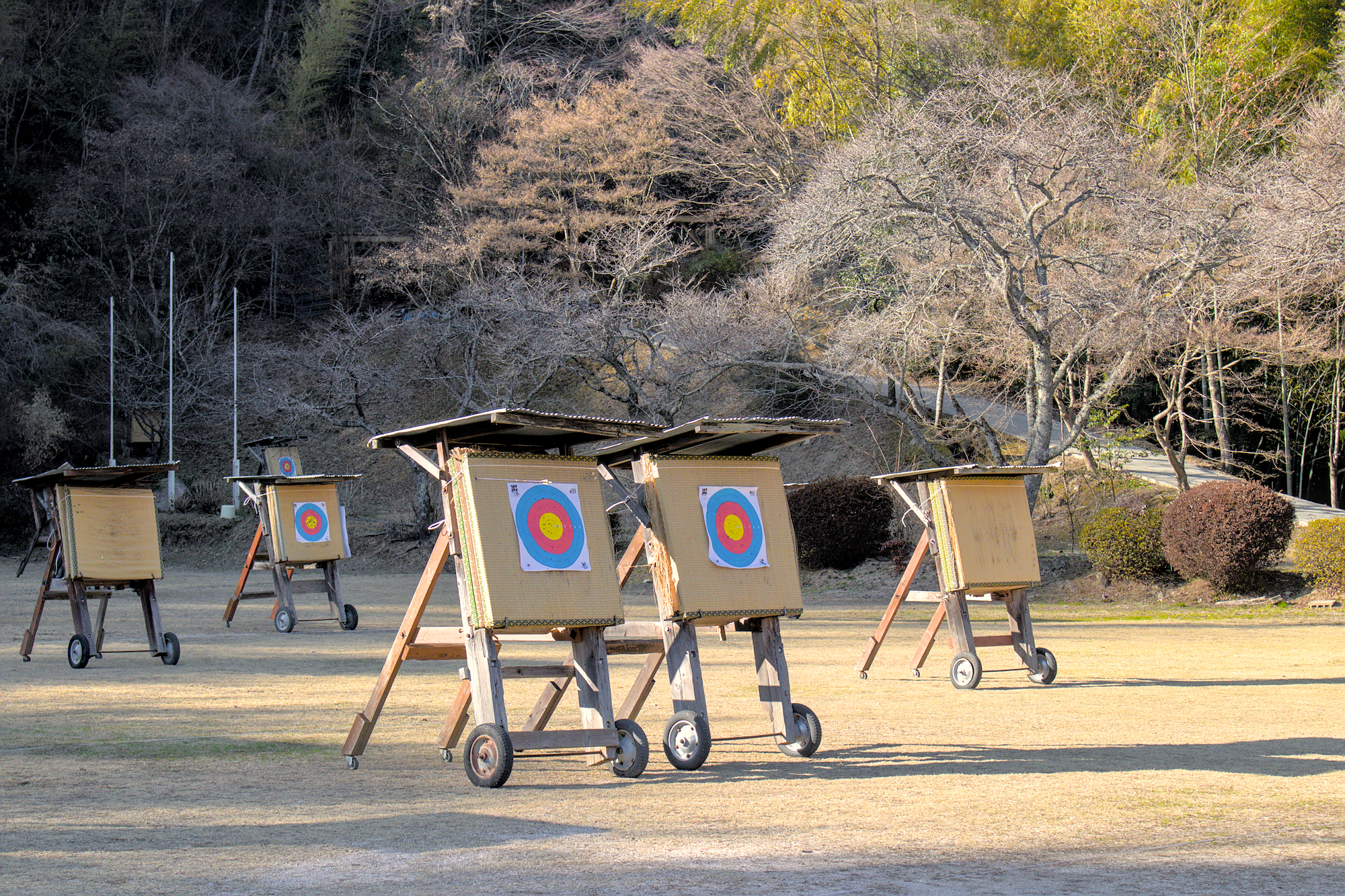
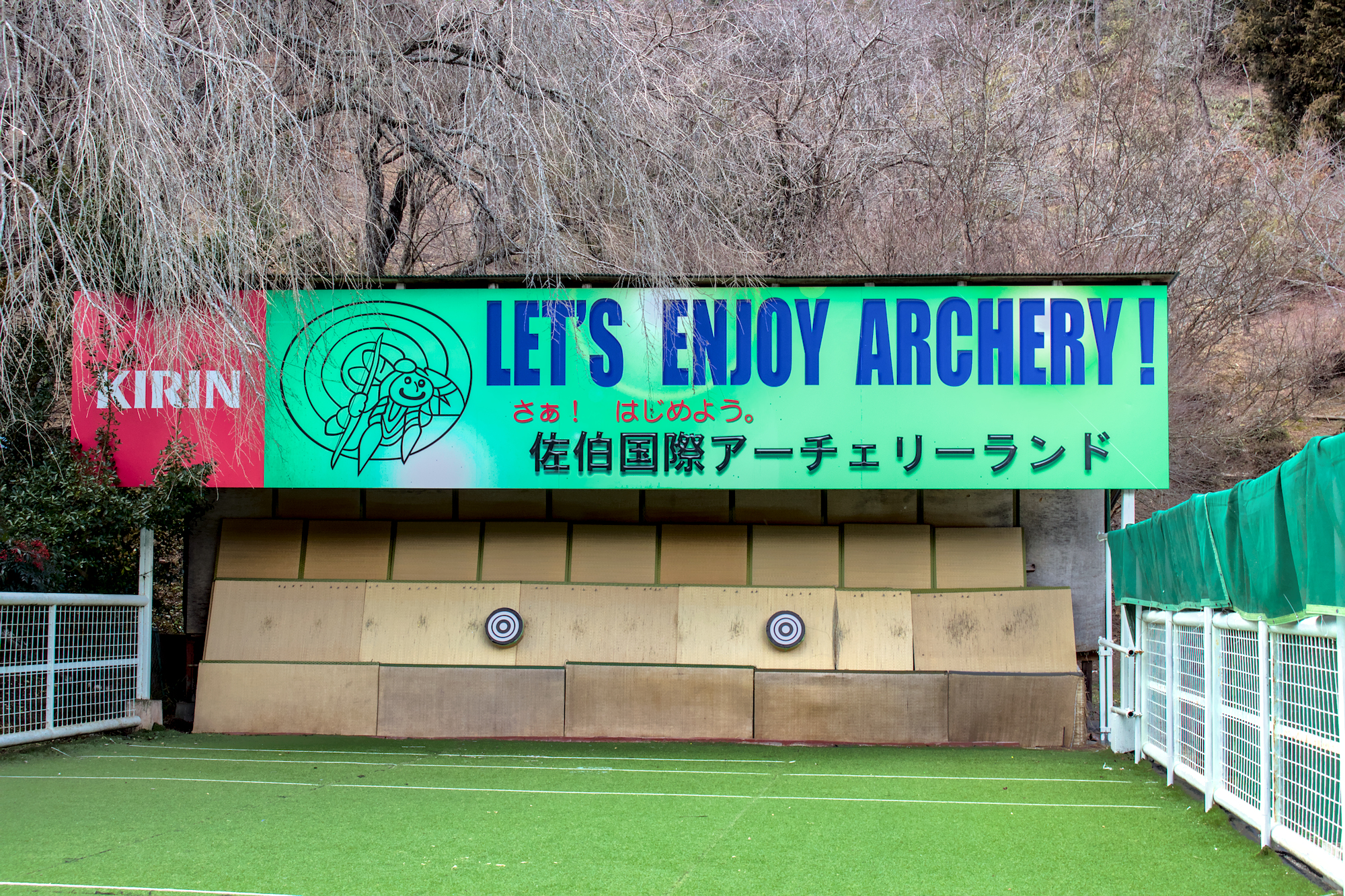
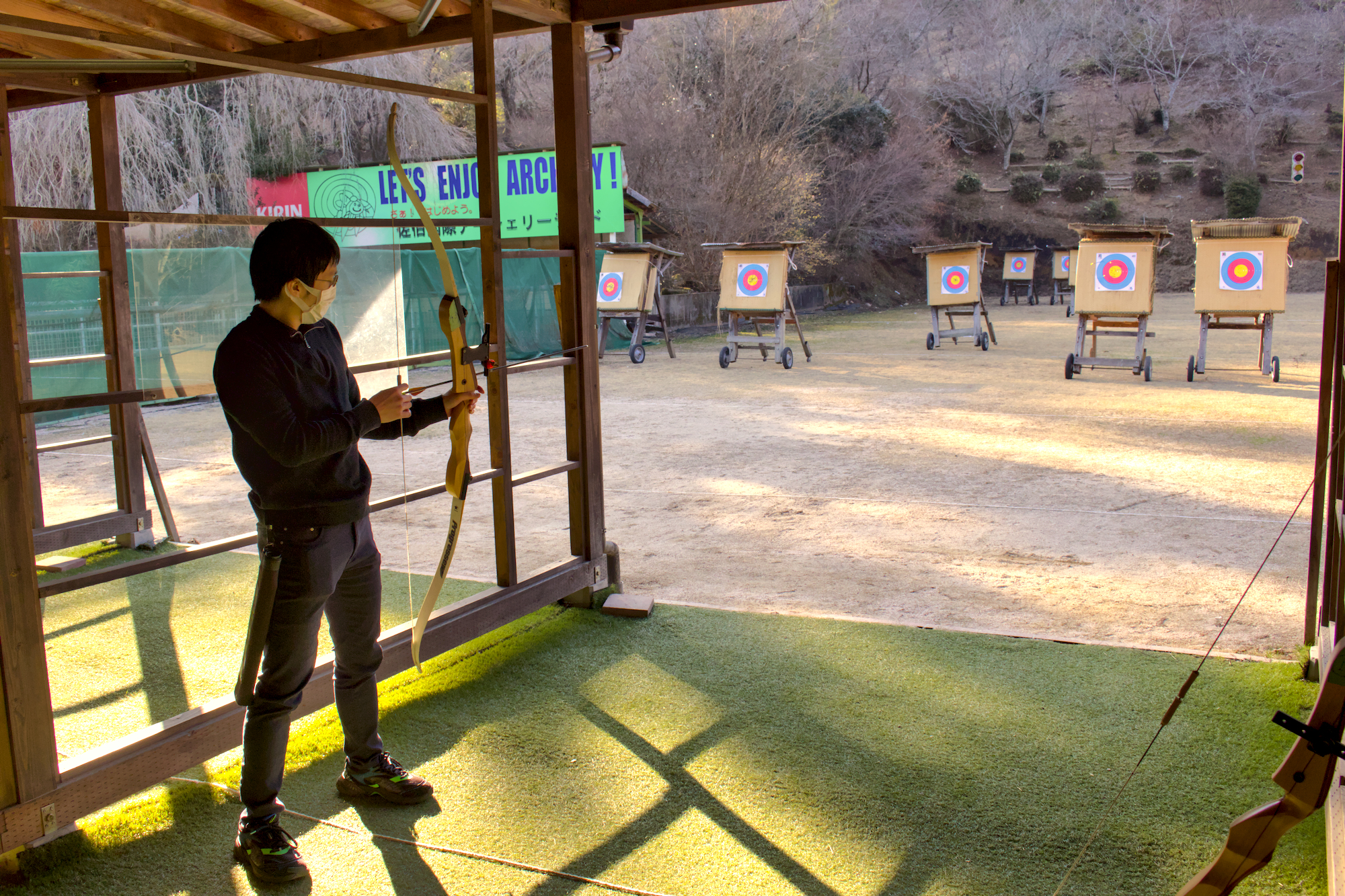
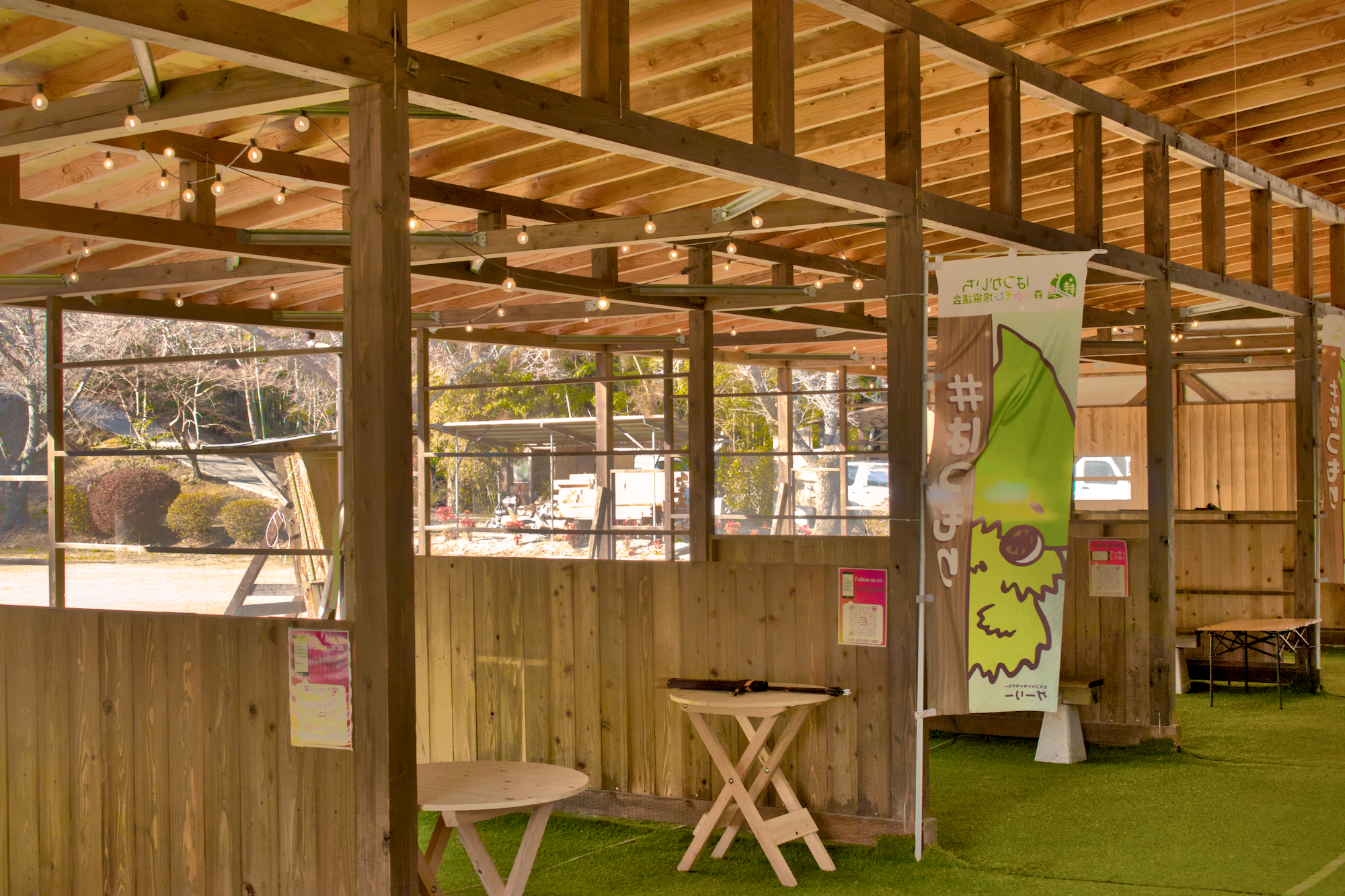
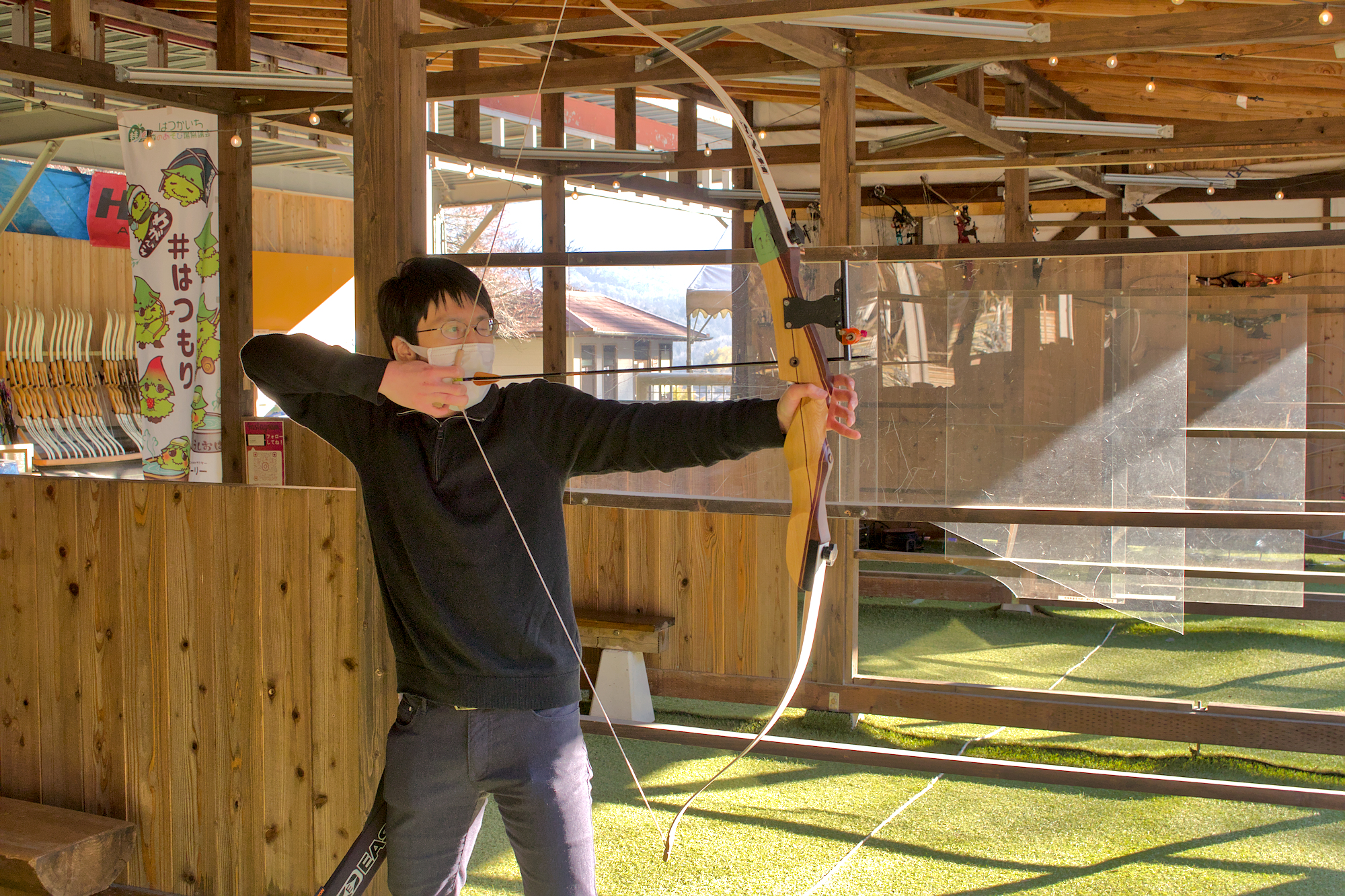
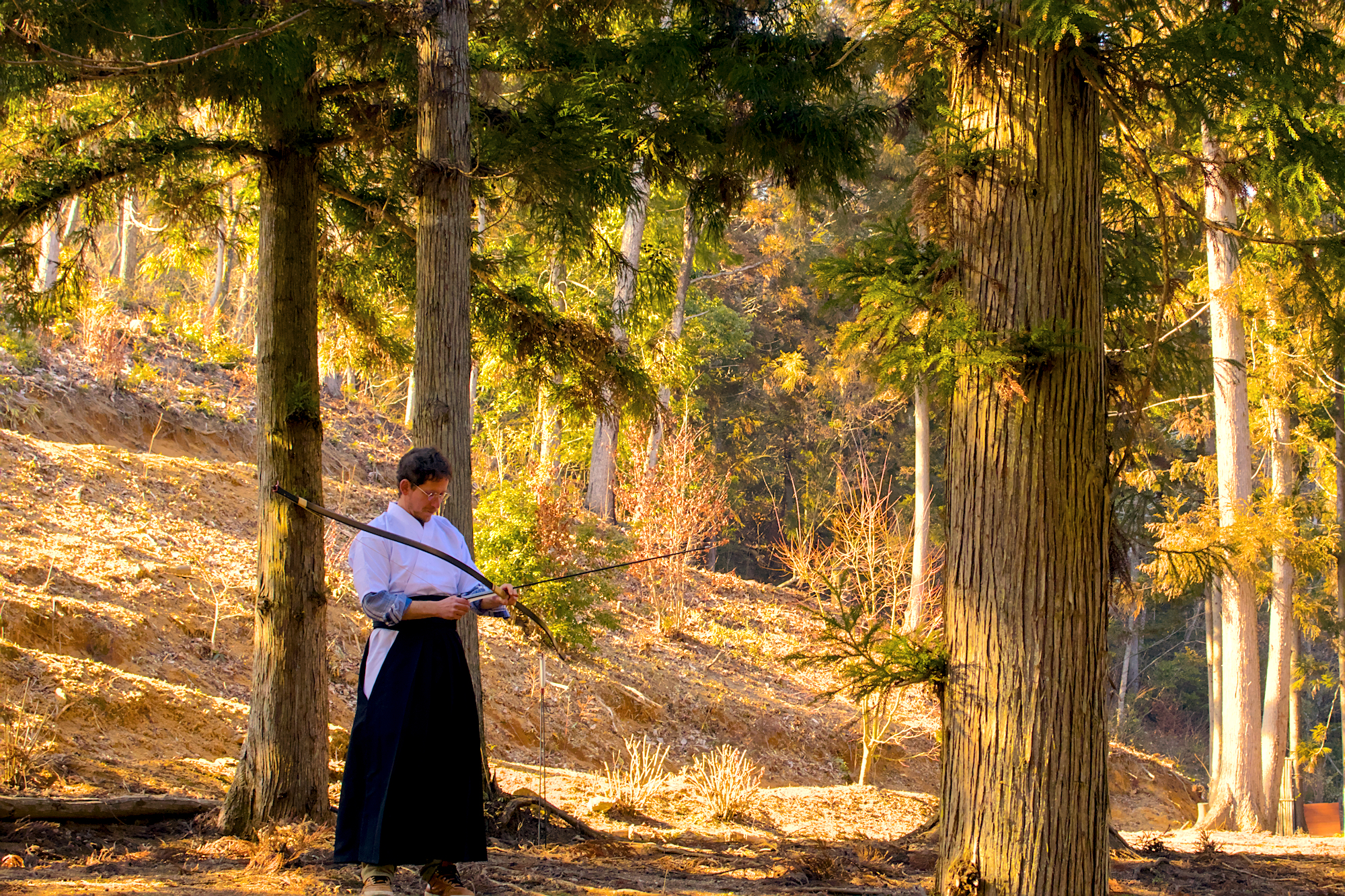
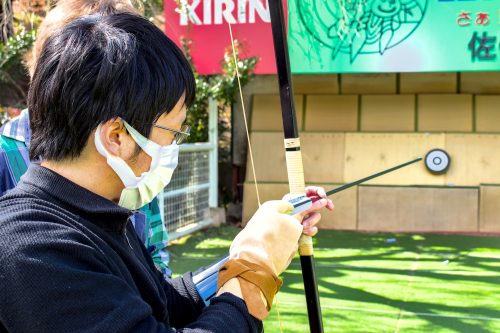
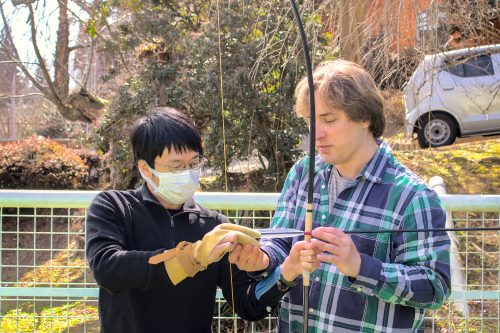
Practicing Kyudo in a forest is almost unheard of in Japan, but at Hiroshima’s Saiki International Archery Land (SIAL), this is exactly what you can do.
Located in the Chugoku Mountains above Hatsukaichi in Hiroshima Prefecture, Archery Land is one of a handful of outdoor archery facilities in Japan where you can practice both Kyudo and Western archery. However, since Kyudo is a highly controlled ritual sport, it is typically done on a flat, open range with a single target.
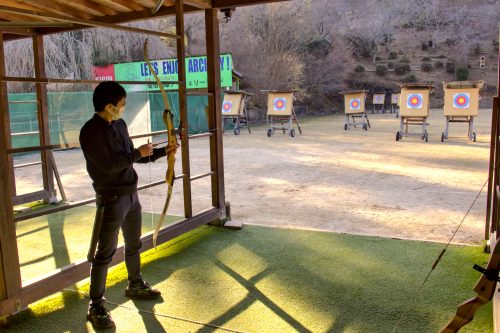
Archery Land offers a distinctive twist. They let you practice Kyudo in a more practical setting: a 5.2-acre wooded range with a dozen targets at mixed distances in variable terrain. The experience is reminiscent of disc golf but with bows and arrows. The difference makes Archery Land’s experience a crossover with Kyujutsu, the historic and practical military discipline that evolved into the art of Kyudo during the Edo period. So while the technique at Archery Land is grounded in Kyudo, the environment evokes Kyujutsu—creating a hybrid experience.
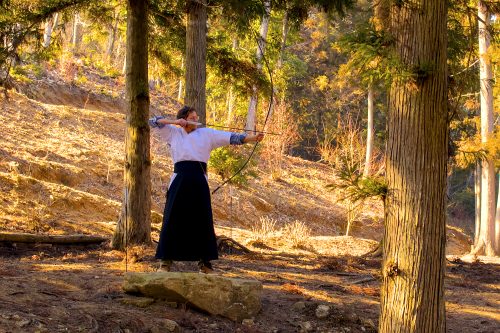
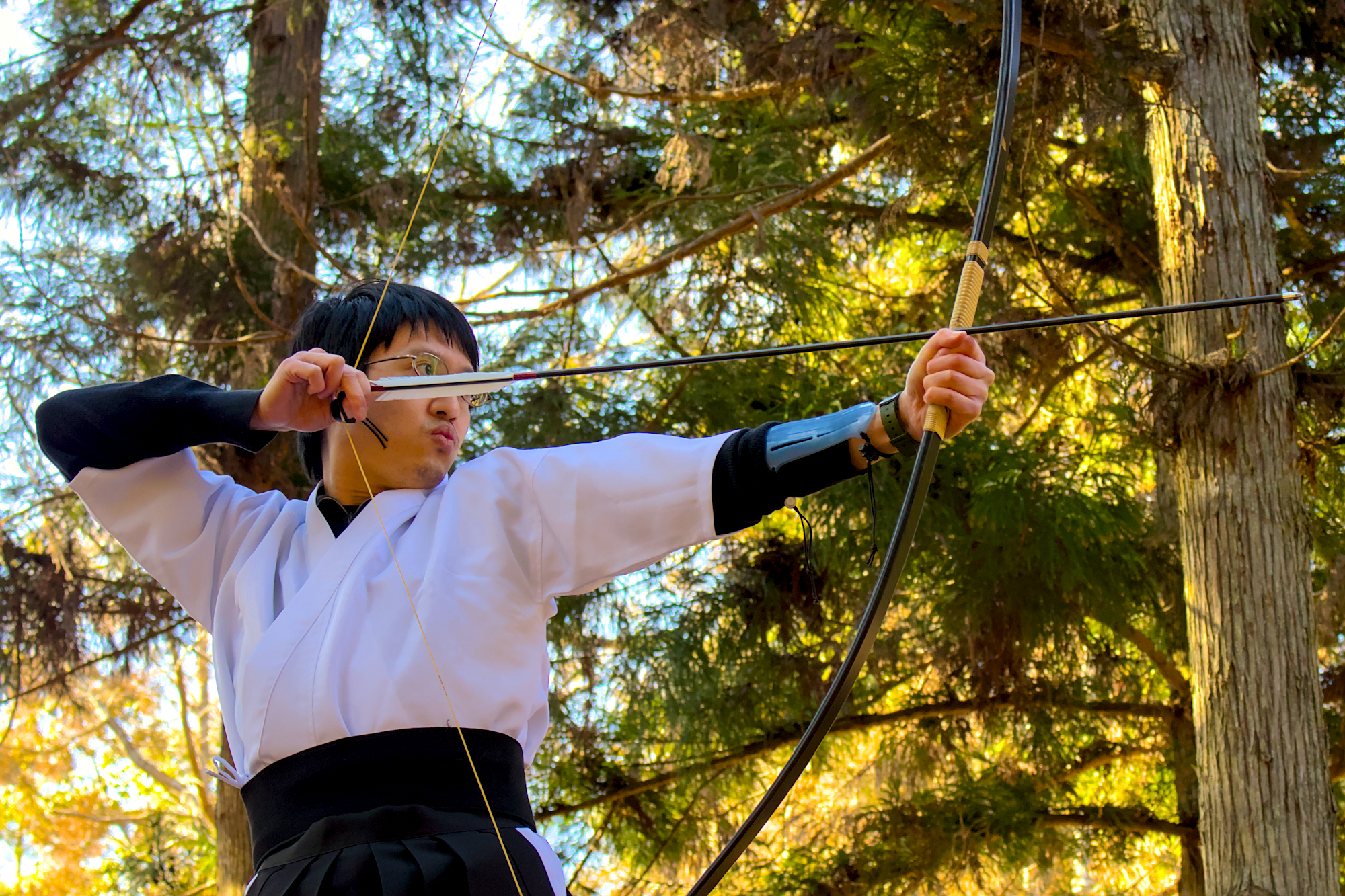
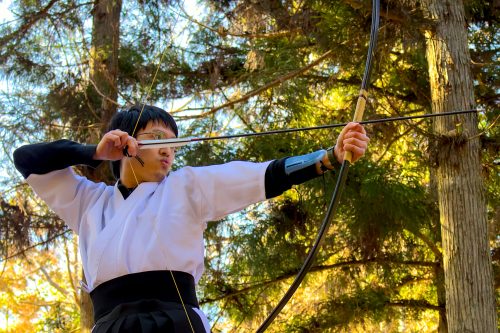
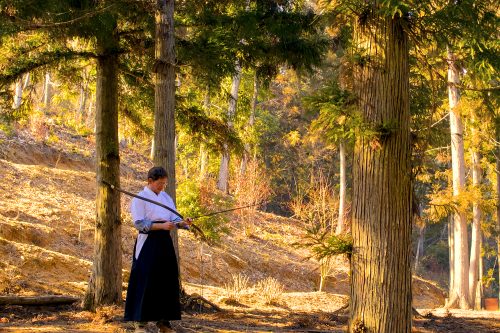
Dressed in full Kyūdo gear, editor Michael Farrell takes aim at a target in a gully at Saiki International Archery Land. (Joy Photo / Kevin Peng)
Shoot like a Samurai in Hiroshima with Kyūdo
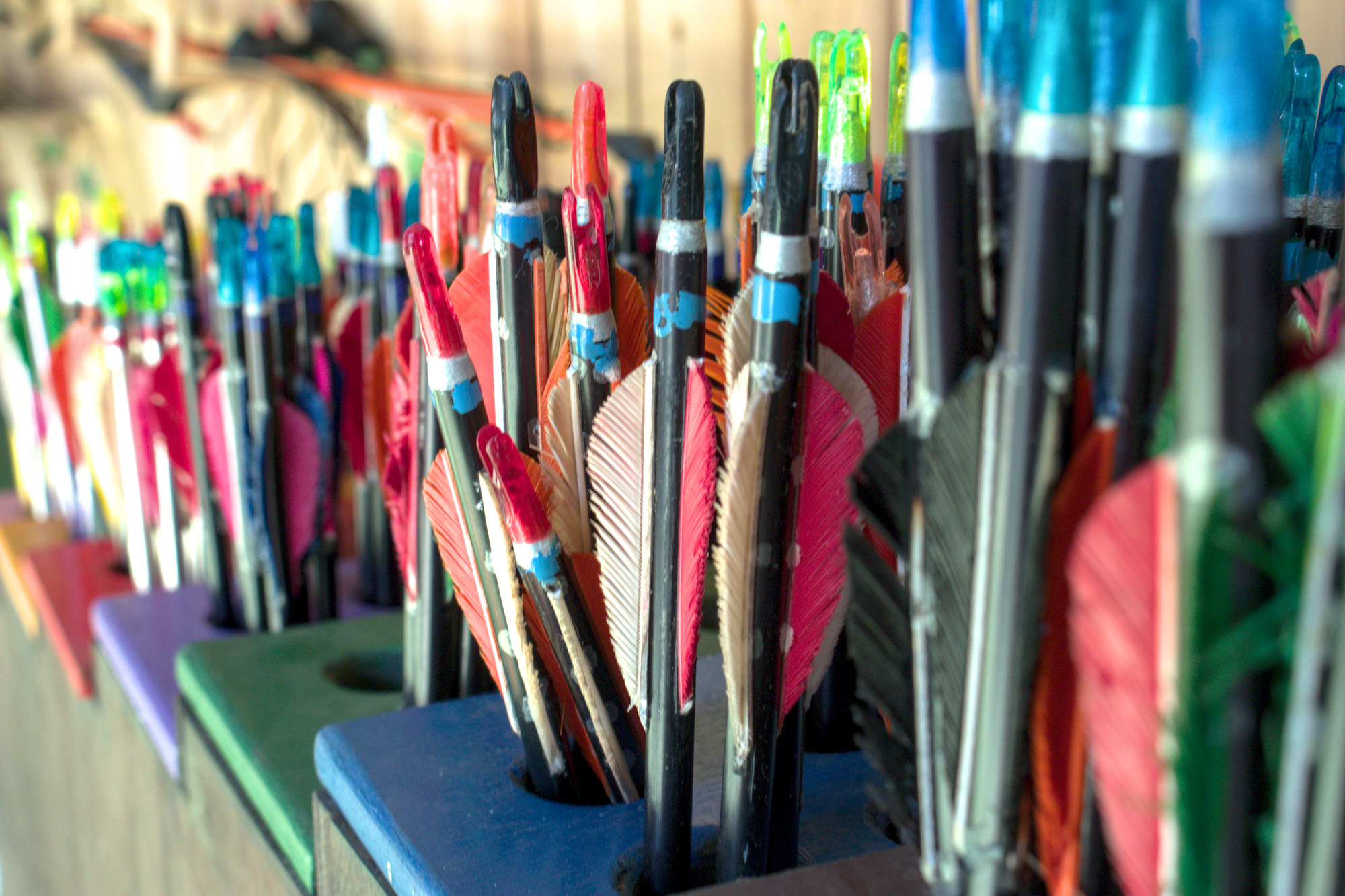
Archery Land has a variety of ranges and packaged experiences for visitors to try. However, the most popular experience with international travelers is the Kyudo Experience. ¥8,800 covers 90 minutes of time, a guide, and basic equipment including a yumi (bow) and Japanese-style arrows.
An experienced instructor, such as American archer Nick Oen, guides visitors, helping them select the right equipment for their height and arm length. He then explains the history, equipment, techniques and meditative concepts of the art. Those without any archery experience also get enough basic training to start hitting targets. The experience touches on such topics as the differences between Kyudo and Western archery plus how to use specialized equipment like yugake, deerskin gloves with a hardened thumb used for drawing the bowstring.
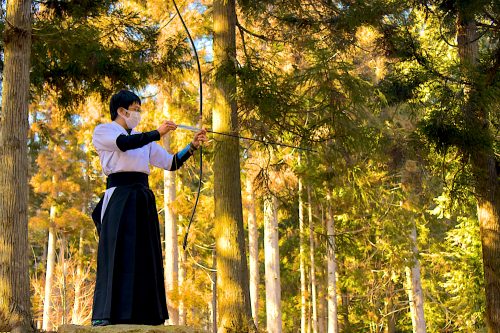
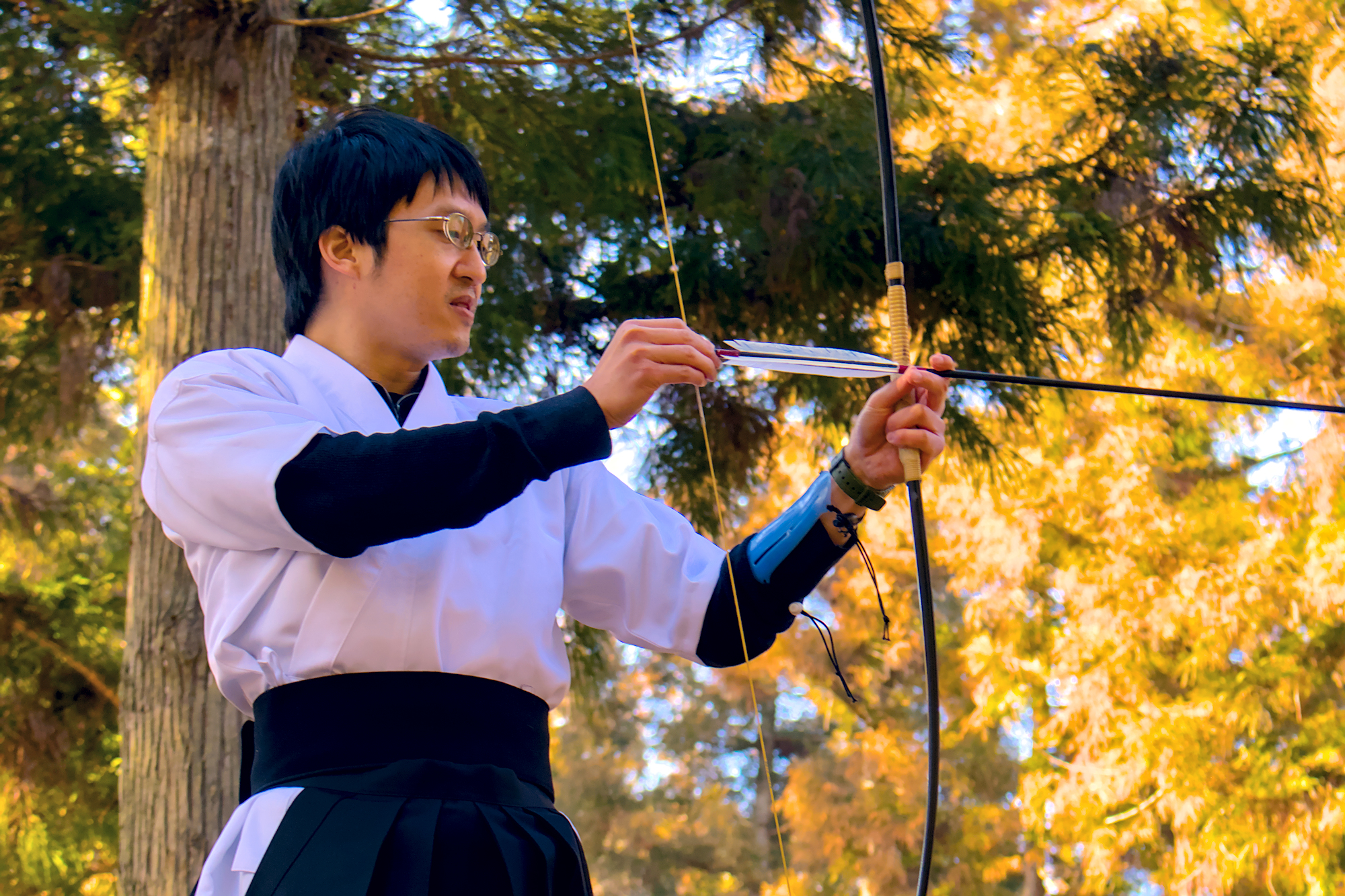
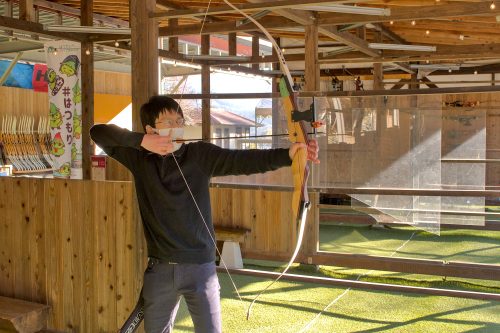
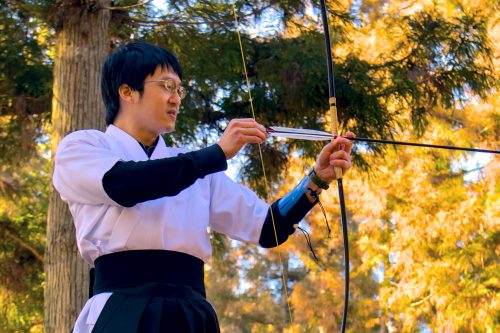
Editor Kevin Peng prepares his Kyūdo bow in a golden wood. (Joy Photo / Michael Farrell)
After you have the basics down on the Kyudo range, you can practice your new skills at Archery Land’s 5.2-acre Natural Field Range in the forest. You can shoot as much as you like with your remaining time while your instructor guides you to the best photo spots among the trees and takes pictures and video of you.
For an extra ¥1,000, visitors can fully immerse themselves with a rental Kyudo uniform. The uniform includes hakama, obi, and kyudogi so you can get the complete experience and look the part in your photos.
Helping customers take photos is a complimentary service. Guests typically lend their instructor a phone or camera. However, Oen says that some prefer that the instructors use their own camera and send the data later. Either situation is fine at Archery Land.
Doing archery can work up an appetite. Prospective guests can add a barbecue lunch in the woods to the experience for ¥3,500.
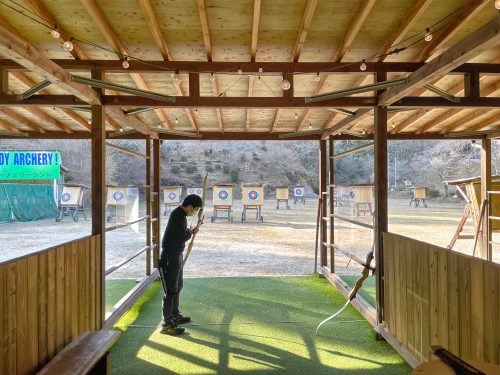
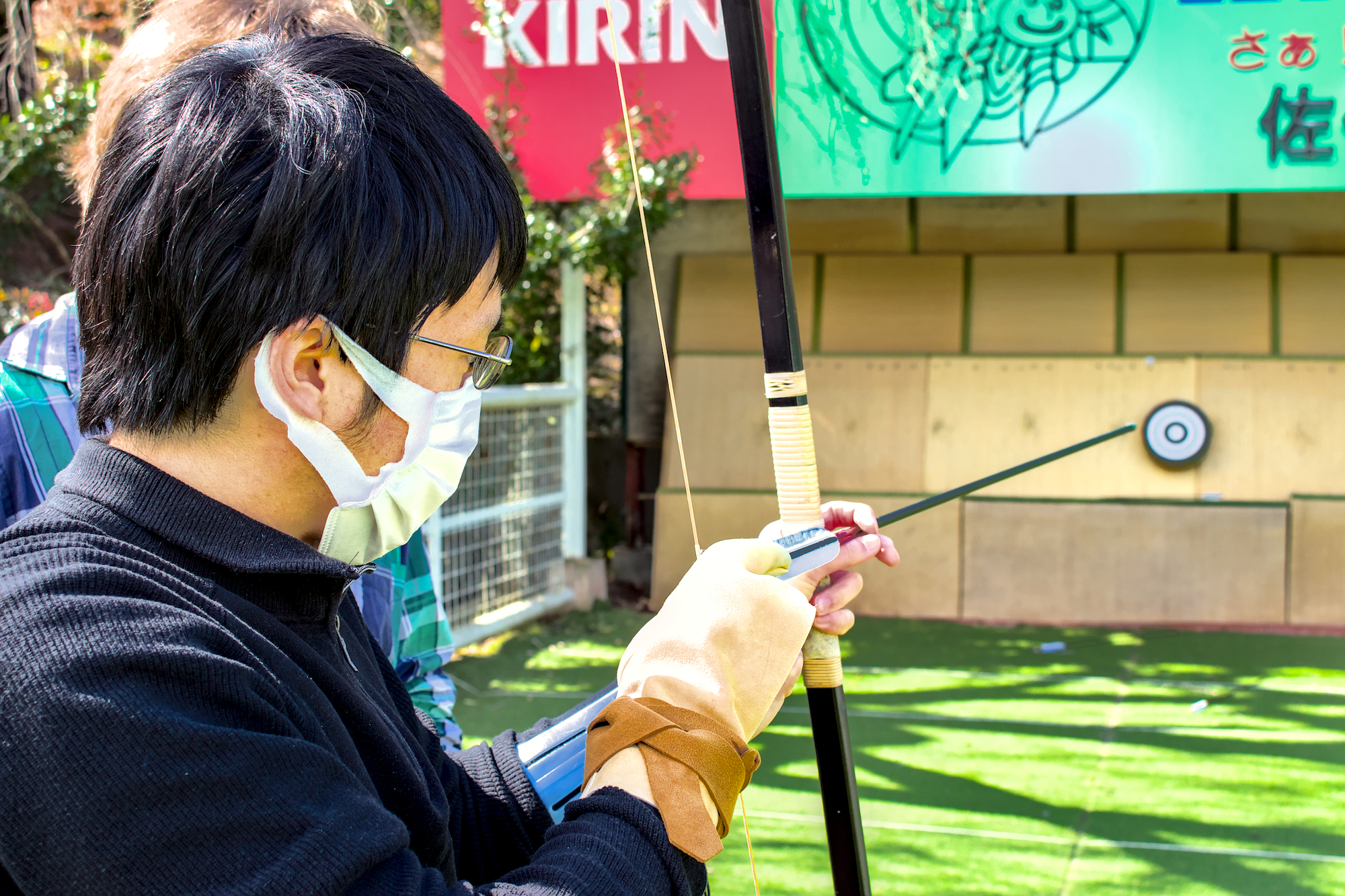
Kevin Peng gets some shots in on the practice range. (Joy Photo / Michael Farrell)
Spend the Day at Archery Land
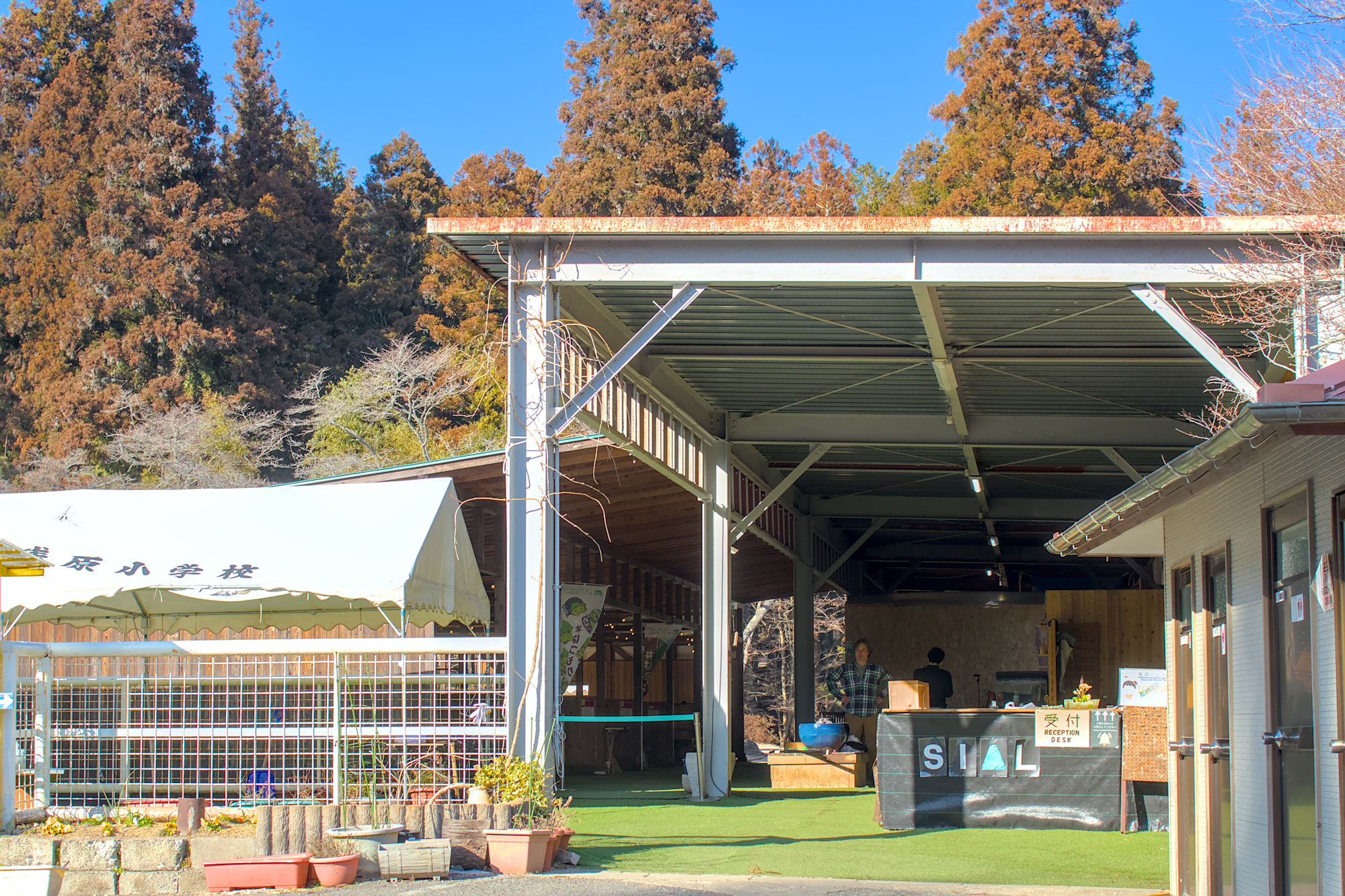
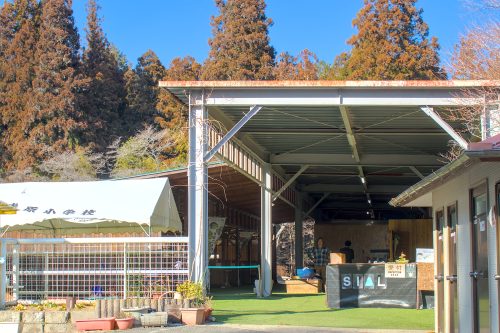
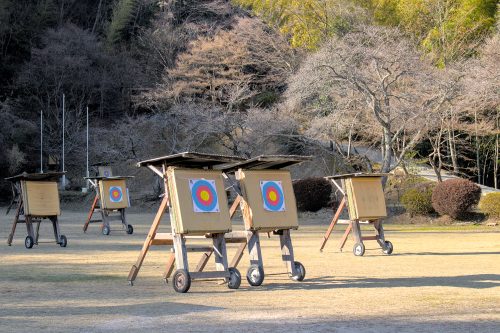
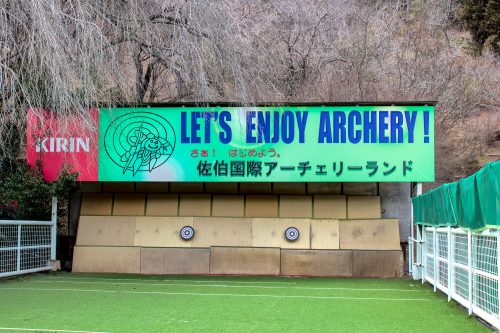
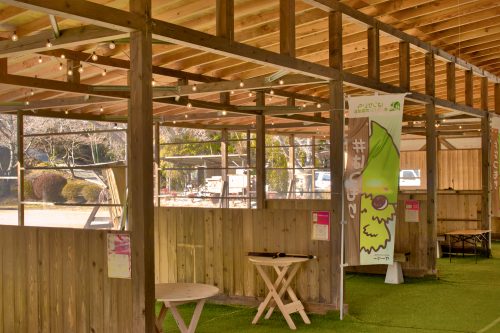
Archery Land has over 18 acres of facilities. They have two field courses, one 5.2 acres course and a second one of 6.5 acres. Visible from the entrance is the practice range and the Kyudo range. And deeper in the mountains is an Olympic range.
Visitors have the option to stay and shoot as long as they want. ¥4,500 buys Free Time to enjoy unlimited Western archery. Kyudo is a separate experience. Free Time includes equipment rental and 40-60 minutes of training at close distance on the practice range. When you’re ready, you’re free to explore the two natural field ranges in the forest and the Olympic range for the rest of the day.
You don’t have to be actively shooting the whole time either. Explore the pro shop next to the parking lot. Then head down to the main entrance to warm yourself at the irori hearth. When you get hungry, a basic Japanese lunch is served at the range café at noon. However, people with heartier appetites can reserve the barbecue course which includes pork, beef and rice balls plus a mix of vegetables.
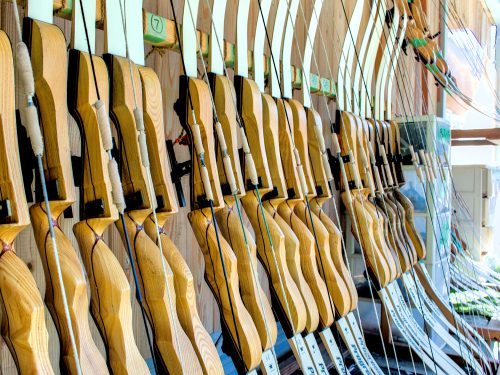
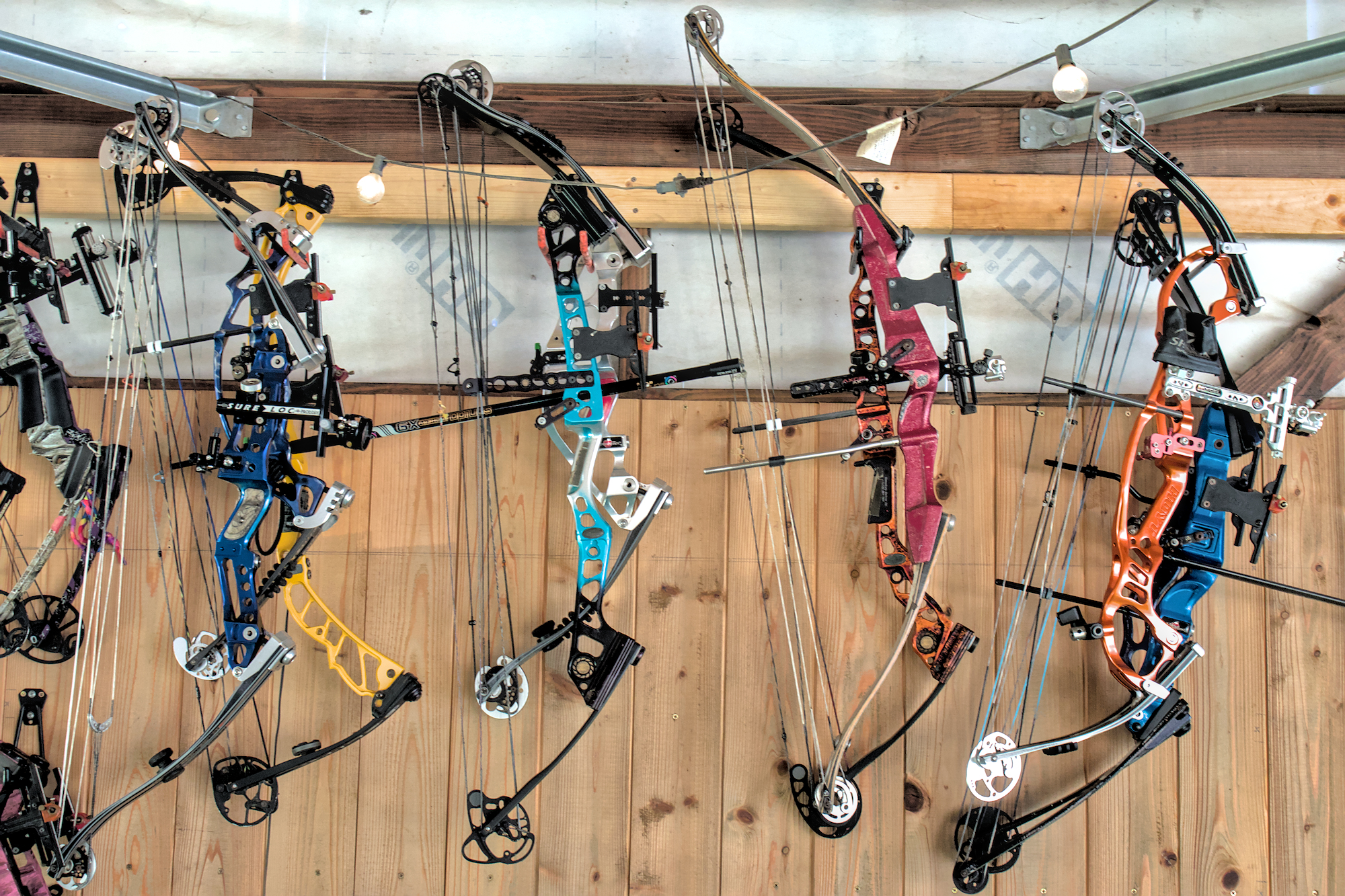
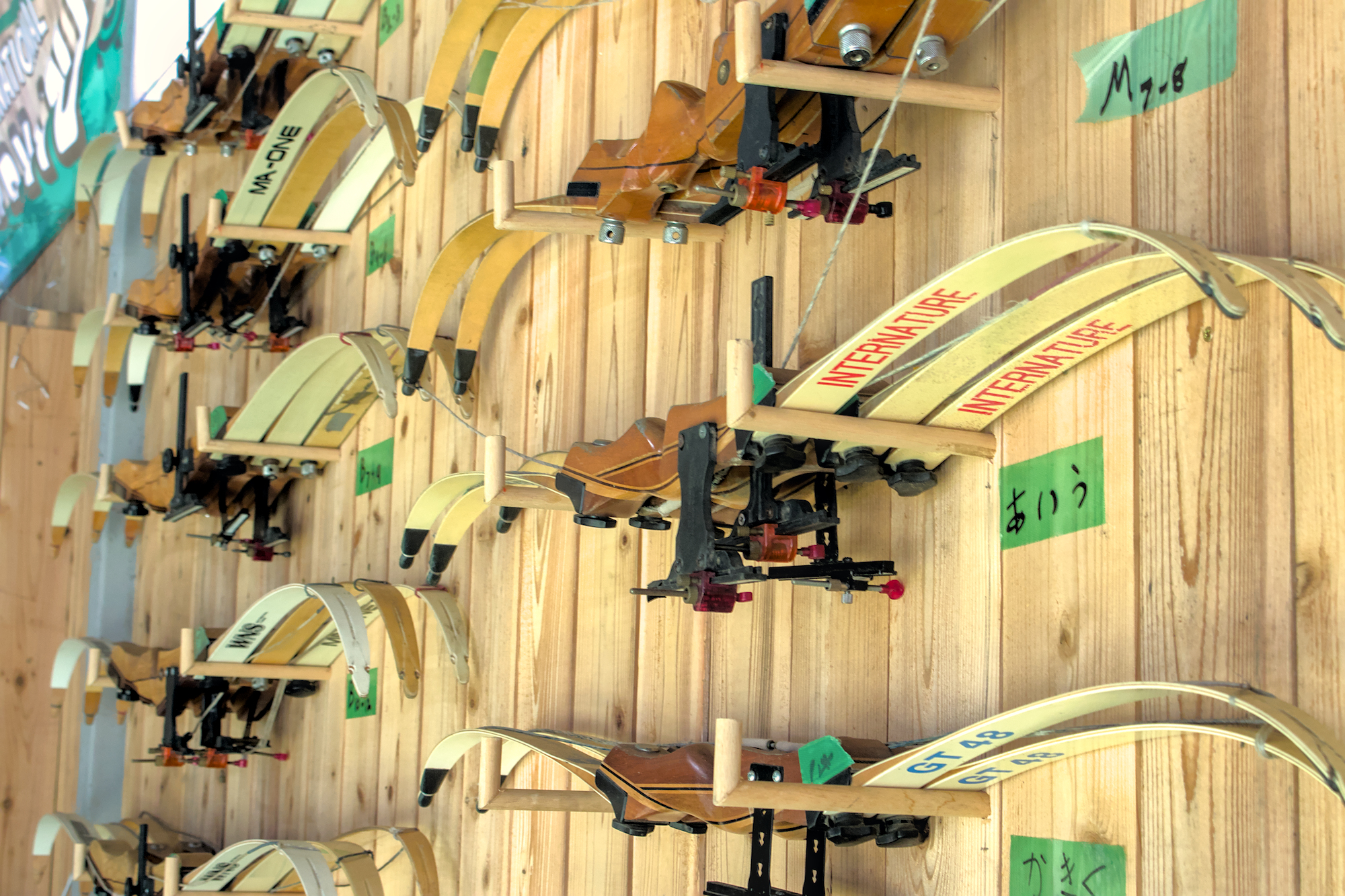
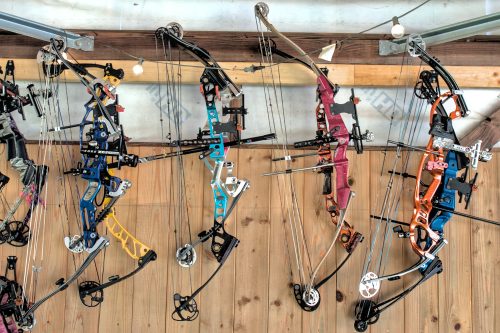
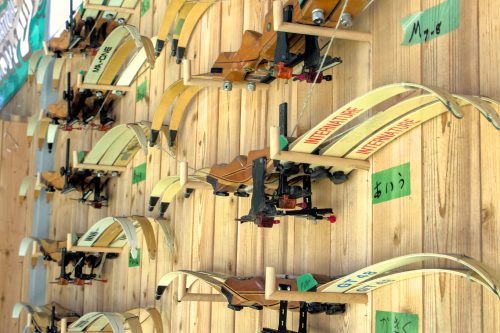
The cost of using equipment at Archery Land is included in the package price. (Joy Photo / Michael Farrell)
Anyone Can Use a Bow
Archery can seem intimidating to those who have never tried it before. However, Oen, an archer for 15 years, says that anyone can use a bow.
It does not matter if you have never held a bow in your life or if you are 4-years-old or 100. Archery Land’s instructors like Ashley J. Connor, who is training for the 2028 summer Olympics, will set you up with equipment and targets suited to your age, strength and skill level.
Archery Land’s owner, Shinji Tono, who is on the Japan National Paralympic Archery Committee, is passionate about archery for everyone. He was also the head coach for the Japan archery team in the 2024 Paris Paralympics, so he knows without a doubt that both physically and mentally disabled people can use a bow. You can witness this first hand at Archery Land.
“We have a variety of disabled archers visiting regularly from all over Japan, all of them with varying conditions,” explained Oen. One regular customer at Archery Land cannot use his left arm, so he holds the bow in his right hand and draws the string with his teeth.
However, while Archery Land will give 4-year-olds Western bows under close supervision, the Kyudo Experience is limited to people aged 12 and older. The reasons are both practical and a matter of predictable maturity. Kyūdo bows are over six feet long. They are complex to use, and they require care in handling them.
Training and Safety: “Yatori!”
Archery Land’s instructors use their deep experience in archery to give personalized attention and guidance to help you start shooting bullseyes. An important part of that is safety training.
New archers are introduced to the skill with recurve bows in hand and tatami mat targets set at 3 meters. As they build confidence, the wheeled targets can be adjusted farther and farther away.
But before the arrows fly, new archers start with safety training. Essential rules are taught like, straddling the shooting line before shooting; shouting “yatori” to alert the other archers you are going to retrieve your arrows; and “never dry fire” because shooting a bow without an arrow sends the unused energy into the bow, potentially damaging or breaking it.
If you forget, you’ll get a kind reminder of the rules before you accidentally do something potentially dangerous.
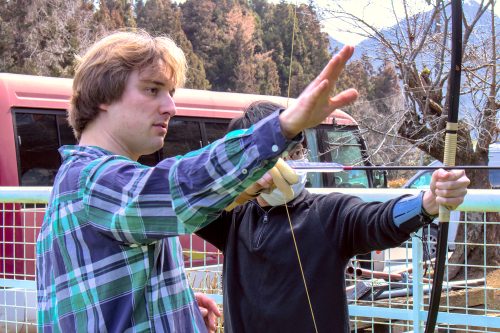
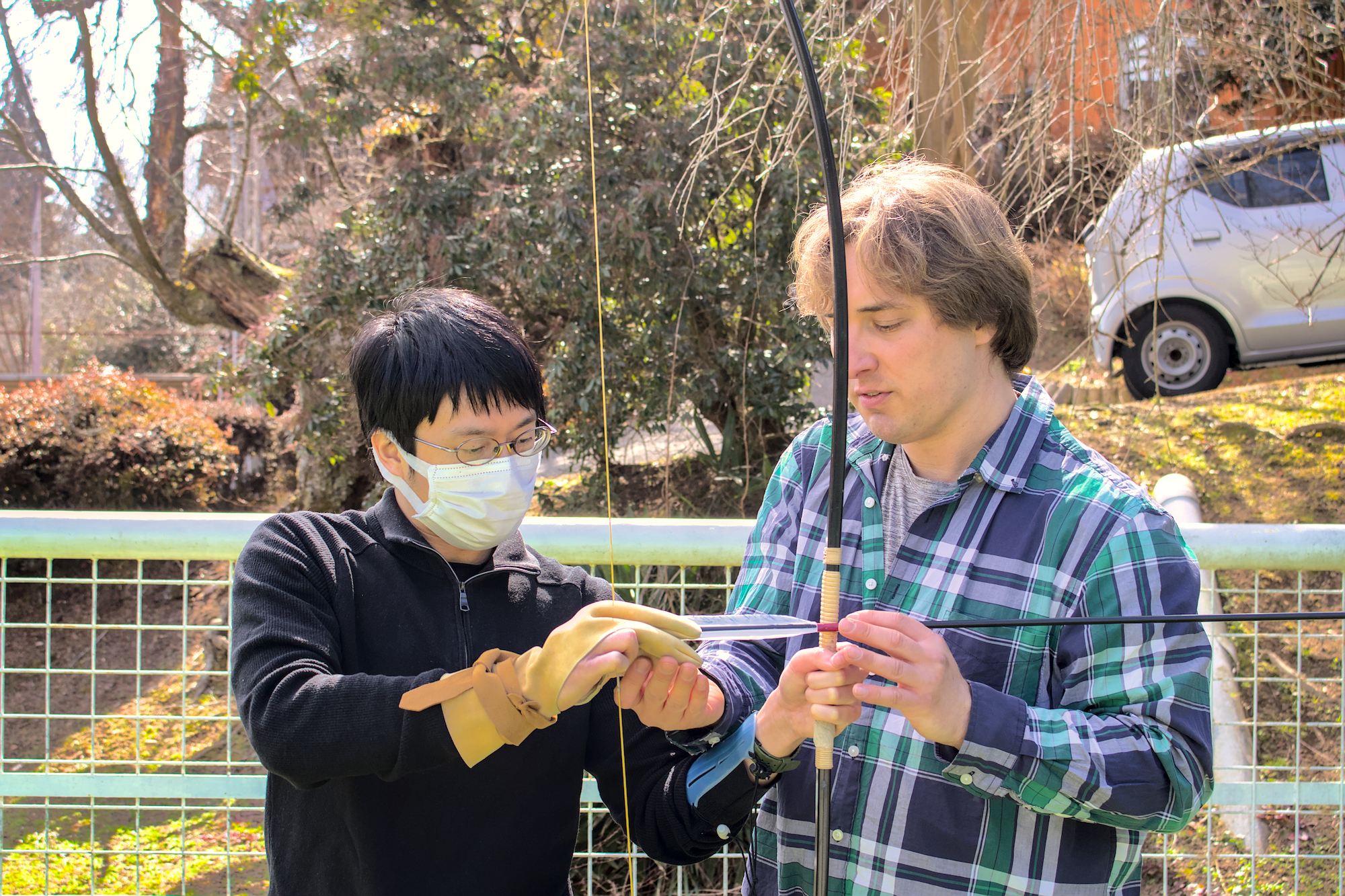
Archery Land staff Nick Oen gives advice to Joy in Hiroshima editor Kevin Peng. (Joy Photo / Michael Farrell)
Reserve English-Speaking Staff
Archery Land has only two English-speaking staff, and they are very much in demand. Reservations are not required for all the experiences (Free Time for example). However, reservations are strongly encouraged for all their programs if you need English support. To make sure you can get their help, Archery Land’s staff asks that you reserve at least 48 hours in advance.
Outdoor Sports Dreams Come True
Saiki International Archery Land was started in 1972 by Kenji and Masako Tono, the parents of Shinji Tono. According to Oen, “Kenji had a passion for the outdoors and wanted to offer a way for everyone to experience it in an active and fun way.”
Thus inspired, Kenji and Masako organized their relatives, neighbors and even some customers to build the first Archery Land facility. Bit by bit, it was expanded over the decades and in time evolved into a popular archery spot. They hosted archery clubs and training camps. Archers came from all over Japan to practice there. Archery Land even helped produce Olympic archers.
Today, they are a hub for archery activities in Hiroshima Prefecture, with most of their customers being locals and school archery clubs.
Western Archery—Meet Kyudo
The addition of Kyudo came from Toshio Kamei, a Kyudo master who was interested in both Kyudo and western archery. He became close with both Kenji and Masako in the 1970s, teaching them and their customers. Seeing the benefit of studying both styles of archery, Kamei even encouraged the students at his own Kyudo college to train at Archery Land.
Over time, “Archery Land became a place where both Kyudo and archery practitioners could learn from each other, a tradition we still encourage to this day,” added Oen.
Getting There: The Archery Land Transportation Guide
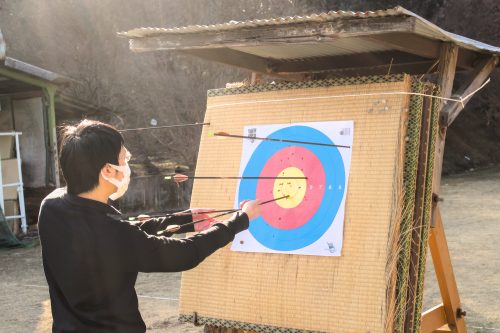
Japanese archers shout “Yatorimasu!” to alert the other archers on the range that they are ready to retrieve their arrows. (Joy Photo / Michael Farrell)
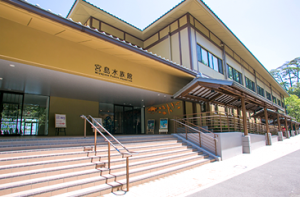
Archery Land is nestled in the mountains of Hatsukaichi in the town of Tsuta. Getting there takes an hour-and-a-half journey on public transportation if you start at Hiroshima Station. If you begin at JR Miyajimaguchi Station, the trip takes 50 minutes.
From Hiroshima Station, take the JR Sanyo Line towards Miyajima and get off at Miyauchi-kushido Station. The ride takes about 20 minutes. From the station take the number 13 city bus and get off at Saiki Bunka Center bus stop.
If you are starting at Miyajimaguchi Station, take the JR Sanyo Line towards Hiroshima Station and get off at Miyauchi-kushido Station. From there, continue on the number 13 bus to Saiki Bunka Center.
Small groups can get picked up at Saiki Bunka Center if they reserve 48 hours in advance.
Large groups who reserve in advance can skip the 40-minute bus ride and get picked up at JR Miyauchikushido Station.
If a group of any size books through one of Archery Land’s partners, like Attractive Japan, they can skip a lot of the independent travel and get picked up and dropped off at Hiroshima Station, Miyajimaguchi Station, or any hotel in the Hatsukaichi or Hiroshima City area. Visitors can even change their drop off location. For example, travelers can get picked up at their hotel, enjoy a morning of Kyudo at Archery Land and then get dropped off at Miyajimaguchi Station to explore Miyajima.
According to Oen, reservations for Archery Land through Attractive Japan currently need to be made over email at attractive.japan@chibra.co.jp.
For disabled customers, Archery Land has wheelchair accessible transportation for those who request it.
Great Stops in Tsuta on Your Way Out
When you are done at Archery Land and have time to explore the town of Tsuta a bit, stop in at Nagasuta for eclectic gifts, antiques and souvenirs. Nearby is Tsubomido, a local Japanese confectionary shop known for Niju-yaki, a Hiroshima style of imagawayaki. These fist-sized, wheel-like buns are filled with sweetened red bean paste. Find 25 Beccan around the corner, a cafe with the atmosphere of a traditional Japanese house. Noted for their cheesecake, this cafe’s antique aesthetic includes tatami dining rooms and an irori table warmed by a central pit of coals that heat an iron kettle.
More Great Ways to Get Outdoors in Hiroshima
If you don’t have time in your schedule to make it to Archery Land, consider HART Adventure Center. Located on Miyajima, they take people out on the water around the island in sea kayaks. Or if you expect to be around Hiroshima Station and have a few hours to kill, take a light hike up Futabayama just north of the station to see Hiroshima Peace Pagoda. This stupa is said to contain remains of Siddhartha Gautama, the founder of Buddhism.
Moment of Joy
BBQ, Fishing, Tea and the Seasons
Depending on the time of year, there is even more to see and do at Archery Land than shoot arrows. In springtime the main target range and BBQ area are surrounded by sakura blossoms. In summer, Archery Land stocks one of the forest ponds with Japanese rainbow trout. Guests can fish them out and cook them right on the spot. In autumn, enjoy the brilliant colors of ginkgo leaves and Japanese maples. The owner’s 82-year-old mother, Masako Tono, also runs a rustic, outdoor tea ceremony. The tea ceremony is not listed on the website, but it can be added to any of the archery courses upon request through Archery Land’s English-language email address: archeryland.english@gmail.com.
Written by

Michael Farrell is a reporter and editor who began traveling the world in 2010. His publishing career started in New England, first at the Gloucester Daily Times and later as a copy editor with boutiq…More


- Open
- 9:00~18:00