Experience
Sokoiko! Hiroshima – Guided, Cycling Peace Tours

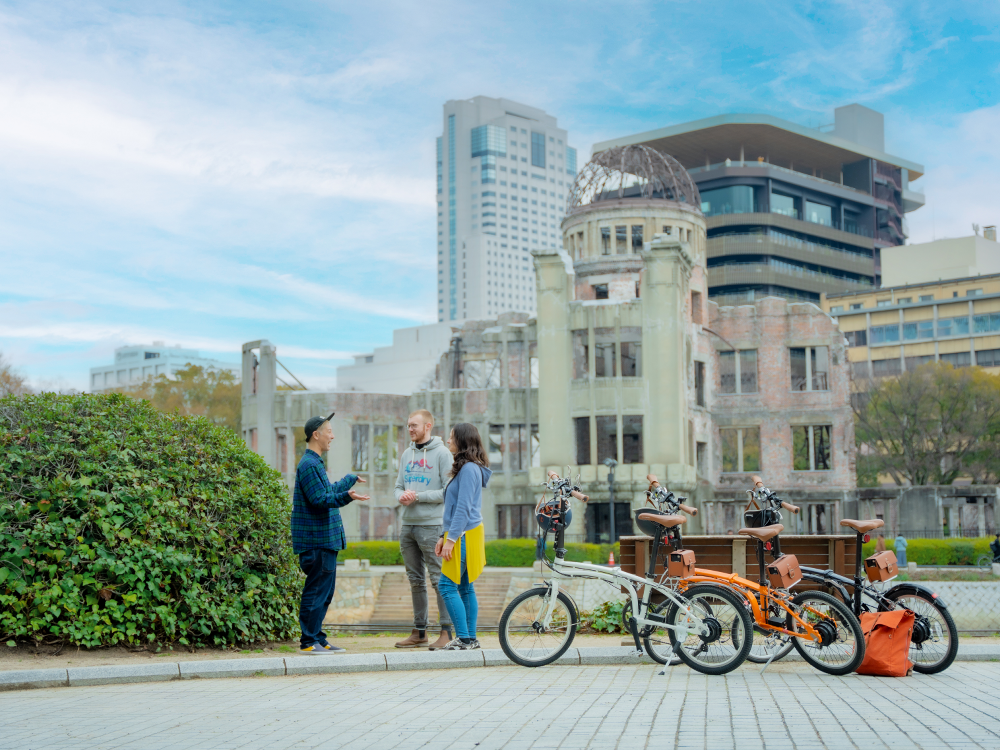
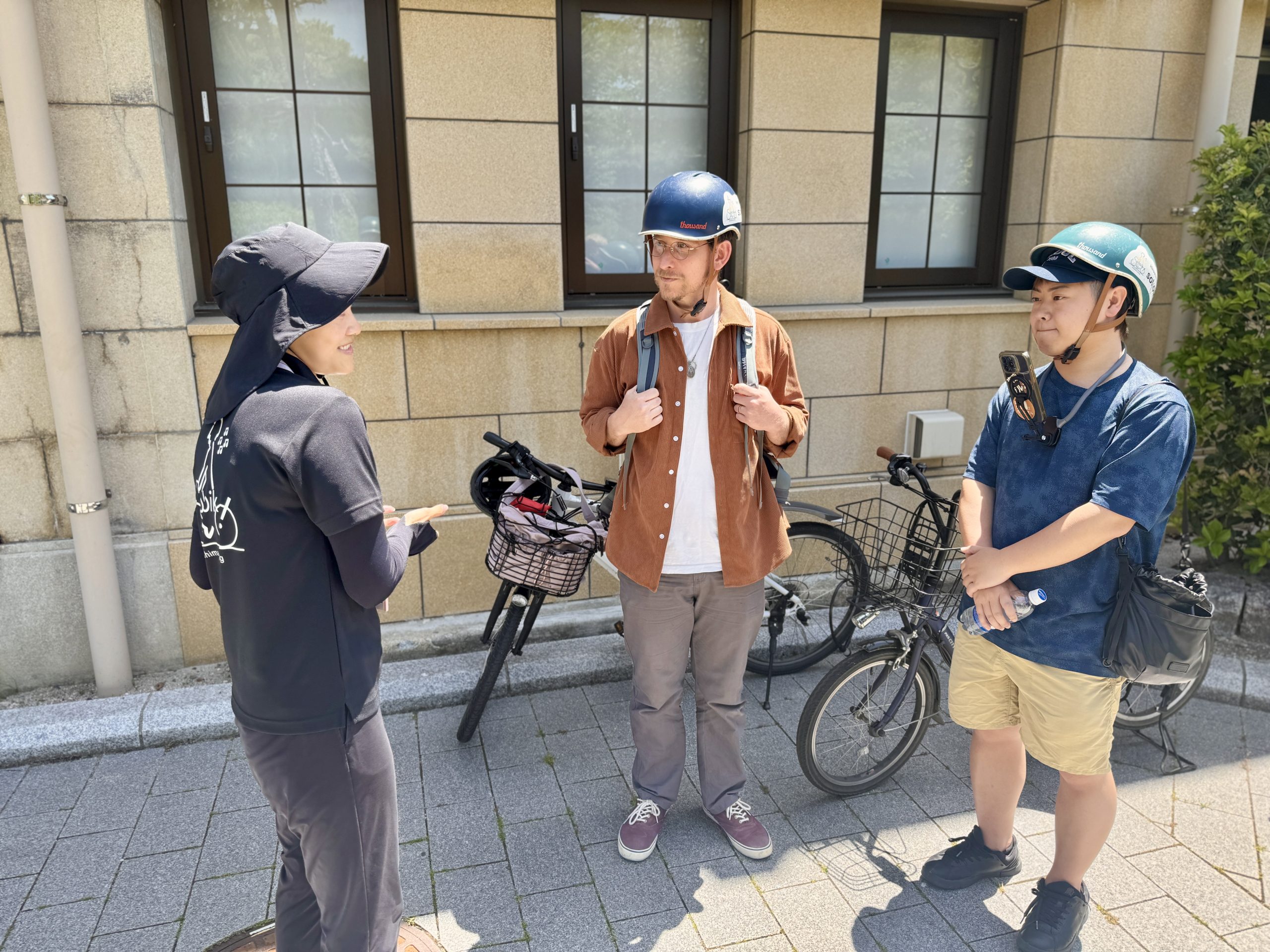
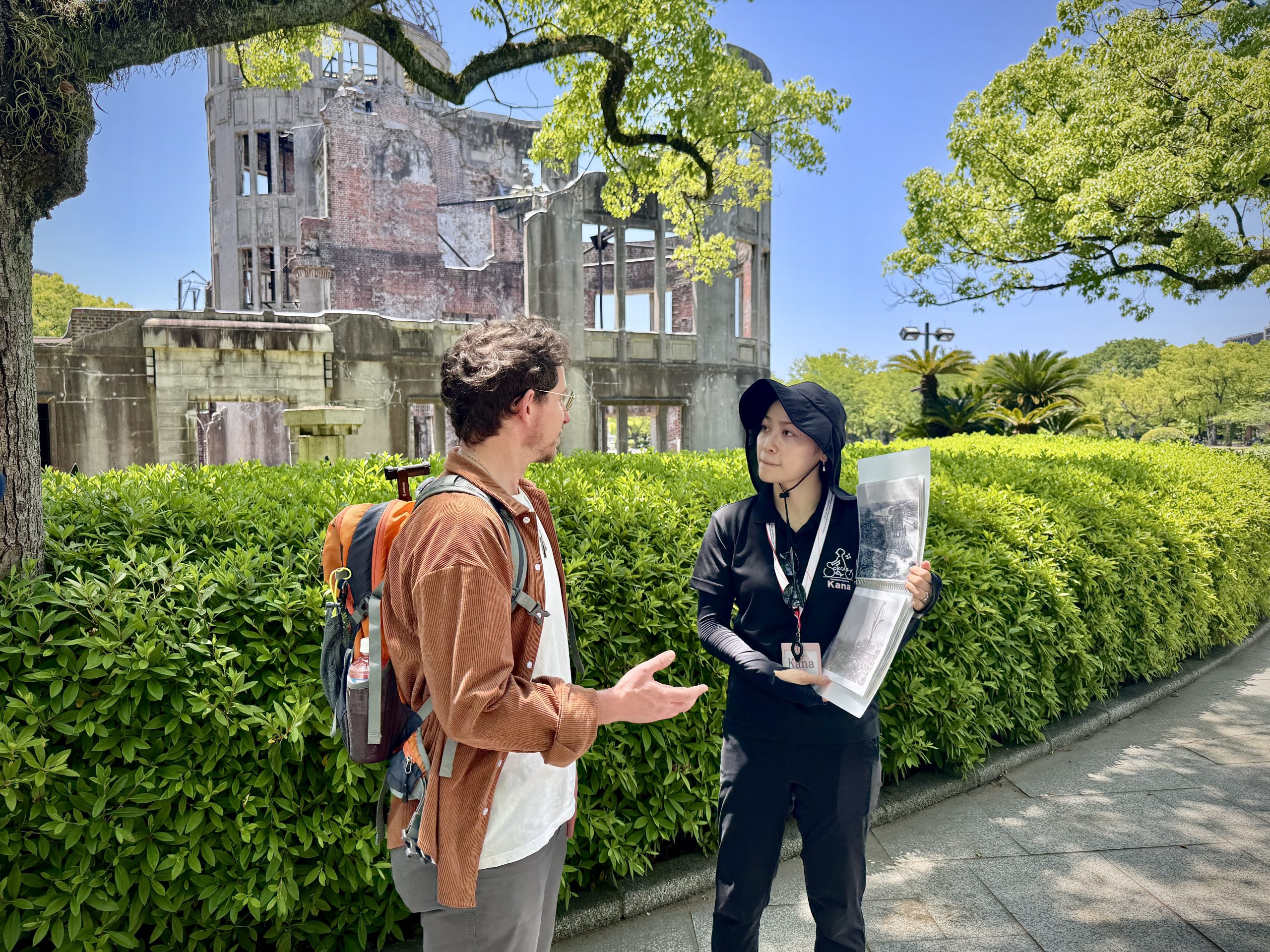
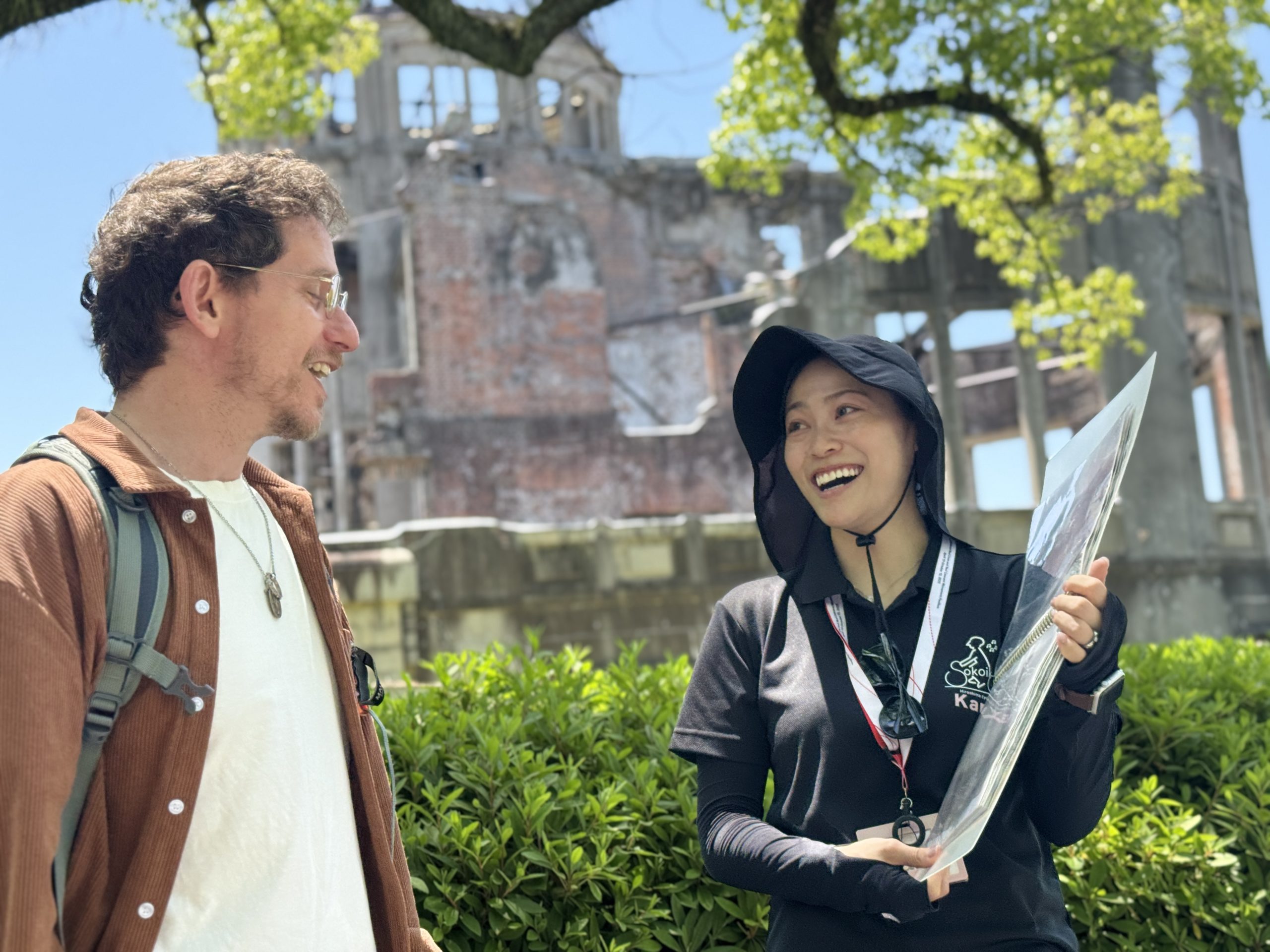
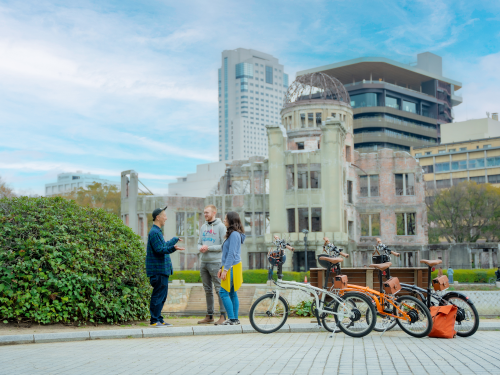
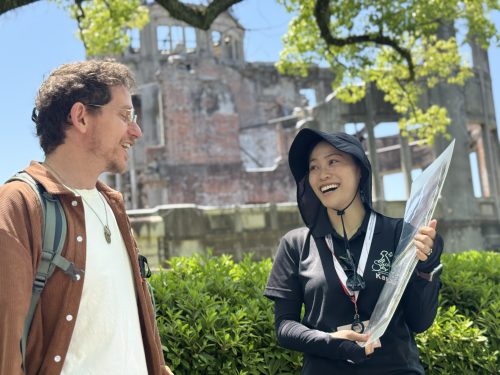
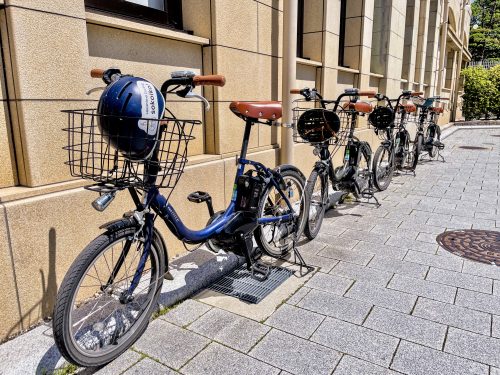
Sokoiko! is a guided cycling tour of Hiroshima Peace Memorial Park and key atomic bombing sites around the city. Experience the story of the atomic bombing of Hiroshima and the city’s recovery through key sites like the Hypocenter, the Atomic Bomb Dome, Hiroshima Castle and Hiroshima Red Cross Hospital Memorial Park. The two to three hour tours are conducted in English by local residents, some of whom come from families who endured the atomic bomb.
Updated July 6, 2026
Sokoiko! Quick Facts
- ▪️ Location: Hiroshima Peace Memorial Park Rest House
- ▪️ Duration: The basic tour takes two hours. The extended tour takes three.
- ▪️ Cost: Basic tour: ¥9,000 per person / Extended tour: ¥13,000
- ▪️ Cycling distance: Basic tour: 7 kilometers (~4.3 miles) / Extended tour: 10.5 kilometers (~6.5 miles)
- ▪️ Terrain: Mostly flat and paved
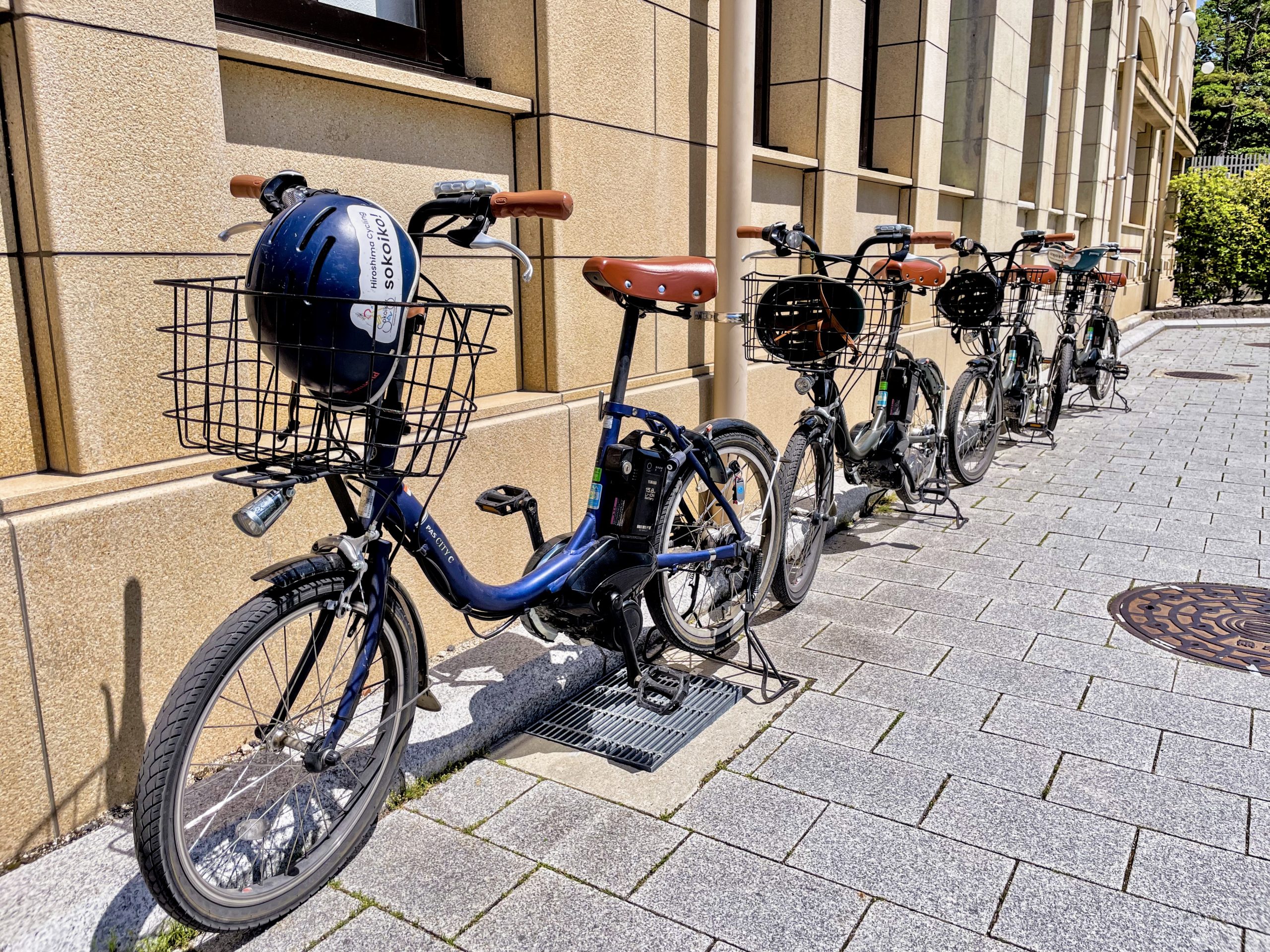
- ▪️ Equipment: E-bikes provided
- ▪️ Safety: Helmets and insurance provided
- ▪️ Language: English, French and Japanese
If you are planning to tour Hiroshima, the Sokoiko! website has the latest updates, pricing and information.
➣ View official information for this experience.
Sokoiko: The A-Bomb Story is Bigger than Peace Park
Most people walk through Peace Memorial Park, Hiroshima’s monument to peace in the wake of the first nuclear bombing. However, Peace Park is just part of the picture. The whole city is dotted with monuments to that event. Getting to all the key spots in one day is not easy on foot, and even if you get there, you’re limited to what is written on the plaques.
Sokoiko, a Tripadvisor Travelers’ Choice winning company, has the solution: bike there with a local guide.
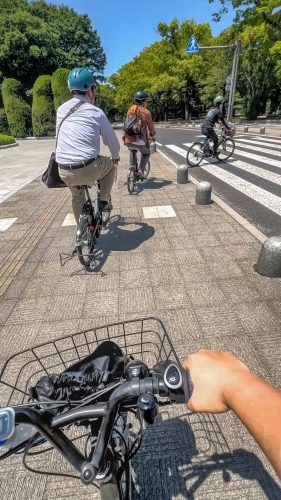
(Joy Photo / Hiroshima Lunch-san)
Explore Peace by Pedal Power
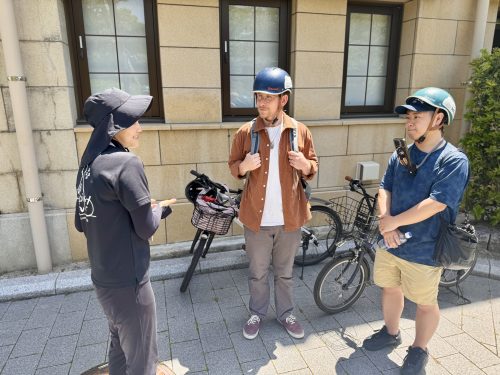
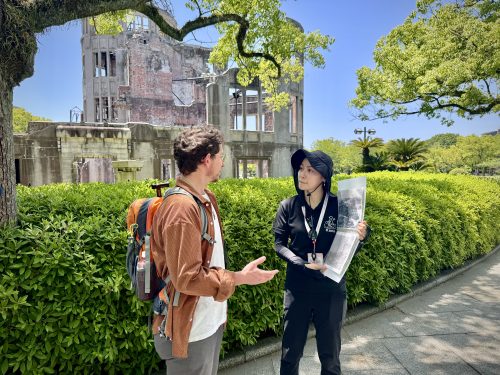
With a name that translates to “There! Let’s go!” Sokoiko’s Peace Cycling Tour hops from landmark to landmark. The tours are led by trained local residents, some of whom are family members of survivors with inherited stories to tell. Stop by stop, visitors gain a comprehensive appreciation for the history and scale of the nuclear bombing.
Sokoiko’s guides present you with an interactive documentary story of what Hiroshima was like before the atomic bomb fell, during the bombing and after.
The tour office is conveniently located in Peace Park, just across the Motoyasu Bridge, inside Peace Memorial Park Rest House—a restored building that survived the bomb.
Walk to the western side of the building to find your Sokoiko guide and a compact, electric city bike. The seat is cushy, the bike is responsive, and the pedaling requires little effort as you follow your guide over mostly level ground to Peace Park’s most important monuments and solemn landmarks woven into the cityscape.
Two Routes (Plus Detours)
There are two different tours. The main one covers about 7 kilometers (~4.3 miles) and takes two hours to complete. The other covers around 10.5 kilometers (~6.5 miles) and takes three hours. Both leave from the rest house and follow the site-hopping structure implied by their name. Both tours are limited to ten participants. Plus, unless you book the more expensive private tour, other visitors may share the tour with you.
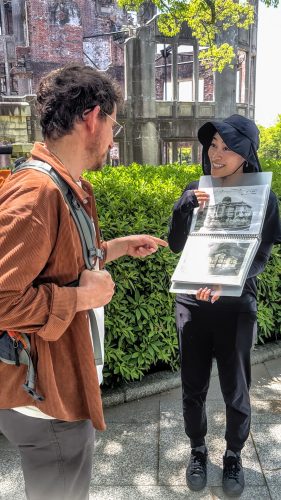
(Joy Photo / Hiroki Tsuchiya)
The Main Peace Cycling Tour
From the rest house, both tours take you outside the park to the Hiroshima Atomic Bomb Hypocenter Monument, the exact point above which the atomic bomb exploded. The next stop is the Atomic Bomb Dome, the city’s iconic and ghostly reminder of the power of the atomic bomb. After you cycle over the Aioi Bridge, the bomber’s intended target, you are guided to Children’s Peace Monument and the Cenotaph for the Atomic Bomb Victims.
Outside Peace Park, your guide leads you south, further away from the hypocenter, to expand on the story that began at Peace Park. This part of the story includes more examples of the bomb’s raw destructive power as seen at Hiroshima Red Cross Hospital Memorial Monument. It then culminates in a tale of hope at Hiroshima Electric Railway (Hiroden) Senda Depot observation deck. You might even get a glimpse of one of the streetcars that survived the bomb and still carry passengers today.
The Long Course
If you take the three-hour tour, you’ll also head north of the hypocenter to Hiroshima Castle. There you’ll be introduced to the only eucalyptus tree to survive the bomb. It lives to this day despite being hollow. Before heading back, you’ll visit the peaceful north end of the castle grounds, where you can enjoy the most photogenic side of the main castle building.
Bonus Stops
Whichever tour you take, depending on how much time is available, your guide may add additional stops like the a-bombed aogiri tree that grew back; Miyuki Bridge, over which many wounded and burned victims fled the destruction; and Higashi Senda Park, the home of Science Faculty Building One, the only surviving building of the original Hiroshima University campus.
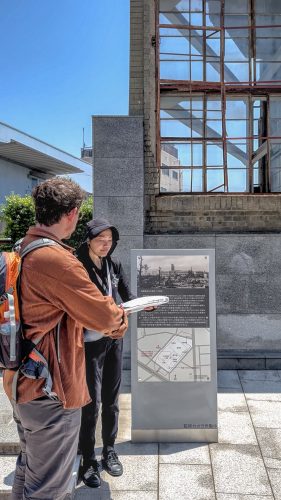
A tour stops in front of Hiroshima Red Cross Hospital Memorial Monument. (Joy Photo / Hiroki Tsuchiya)
Tearing Up in the Saddle
Sokoiko guide Kana Hamamoto, brings tissues just in case people in her group start crying. The story of Hiroshima’s tragic losses and radical human suffering is a lot to take in. Consequently, she intentionally says nothing between stops to give people time to process. The Children’s Peace Monument in particular tends to move mothers to tears, she says. Others, Americans burdened by the thought that the locals hate them, cry tears of joy at discovering the message of forgiveness and non-violence preached by the survivors. The tour can be so emotional, sometimes Hamamoto cries with her group.
Make a Reservation
Booking can be done through the Sokoiko website, which is available in both Japanese and English. You can also find prices, cancellation fees and Sokoiko’s late policy there.
➣ Book Now
Common Questions:
- ⚫️ What happens if it rains? According to Hamamoto, if it rains, customers are given two options. They can do the Peace Park section of the tour on foot or they can cancel and get a full refund. On the topic of rain, the typhoon season runs between June and October. If a typhoon makes landfall on the day of the tour, the tour will be canceled and the fee refunded.
- ⚫️ What about the summer heat? This is an increasingly serious concern as the summers in Hiroshima are getting hotter and longer. Sokoiko takes measures to make sure you are comfortable in the heat. Before the tour starts, they encourage customers to buy a bottle of water inside the rest house. Whenever possible, they try to stand in the shade at each stop. Plus, on especially hot days, they provide cooling towels and neck-mounted fans. If needed, they will stop at a convenience store for relief, water and ice cream.
- ⚫️ What if I need the toilet? Before tours start, your guide will ask everyone if they need to go. The bathrooms inside the facility are clean and well provisioned. However, this cannot be guaranteed once the tour gets started. If someone has an emergency, however, the tour will stop at a convenience store with publicly accessible bathrooms.
- ⚫️ Are the bikes maintained? Sokoiko uses a mix of e-bikes. Some are their own. These are professionally serviced once a month. The other bikes are from Hiroshima’s public Peacecle rental bike system which is actively maintained by Docomo Bike Share, a bike rental service available throughout Japan.
- ⚫️ What if I get in an accident? For safety, everyone is required to wear a helmet while riding, even if it messes up your hair. Though rare, accidents can and do happen. Part of the tour is on the city streets, and while they get formal training to make sure their clients are safe, city traffic always carries some unpredictability. For financial protection, you will need to fill out a bike insurance form before the tour. Bike insurance is included in the overall price. In the event something happens, you will be reimbursed the price of your tour. To date, nobody has been seriously injured.
- ⚫️ What should I wear? Tour guests are advised to wear comfortable shoes and clothing like sneakers and pants. Flip-flops and high heels make pedaling difficult. Moreover, long dresses and baggy pants can get stuck or torn in gears and wheels. Especially on hot days, light, breathable fabrics are encouraged.
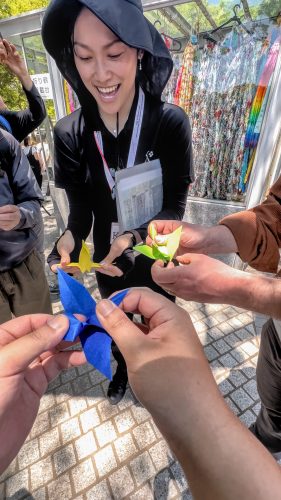
(Joy Photo / Hiroshima Lunch-san)
Getting There
Sokoiko is roughly 15 minutes from Hiroshima Station on public transportation. Take Hiroden tram Line 2 or 6 to Genbaku Dome-Mae Station. You’ll immediately see the Atomic Bomb Dome. Cross the street to the Atomic Bomb Dome and follow the river until you come to a cafe surrounded by fresh oranges with a bridge to the right. Cross the bridge. Sokoiko’s Hiroshima tours are based out of the first building on your left. If you made a reservation, they will likely already have bikes and a guide ready for you on the far side of the building.
More Ways to Explore Peace
Bike tours are just one of the ways visitors can dive deep into the story of the first atomic bombing. Peace Park Tour VR, also located in Peace Memorial Park Rest House, immerses visitors in 1945 Hiroshima through VR technology. Walk through Peace Memorial Park and see what it looked like when it was the bustling Nakajima District, witness the destruction after the bomb and the reconstruction of the city afterwards. For a more grounded experience, visit Hiroshima Peace Memorial Museum to read in-depth about what happened and encounter first-hand the painful realities of nuclear destruction through photos, artifacts and reconstructions.
Moment of Joy
Insider Recommendations
After the tour, what do you do next? Each guide has personal recommendations about where to eat and what to see while exploring Hiroshima. On the Sokoiko website, Hamamoto officially recommends Mabui, an oyster shop near Hondori. However, if you pass one of her favorite shops on the tour, she might point it out. For example, during the tour she gave the Joy in Hiroshima staff, we were stopped at a light near Higashi Senda Park. This gave her an opportunity to point out a little neighborhood okonomiyaki shop on the corner. It was Irodori, a highly rated okonomiyaki shop on the way to Hiroshima Electric Railway Headquarters.
Videography by Hiroki Tsuchiya and
Hiroshima Lunchsan (Japanese IG / English IG)
Written by
Michael Farrell is a reporter and editor who began traveling the world in 2010. His publishing career started in New England, first at the Gloucester Daily Times and later as a copy editor with boutiq…More


- Open
- 10:00~13:00 , 14:00~17:00 PM