Experience
Daisho-in Temple: Understanding What You See
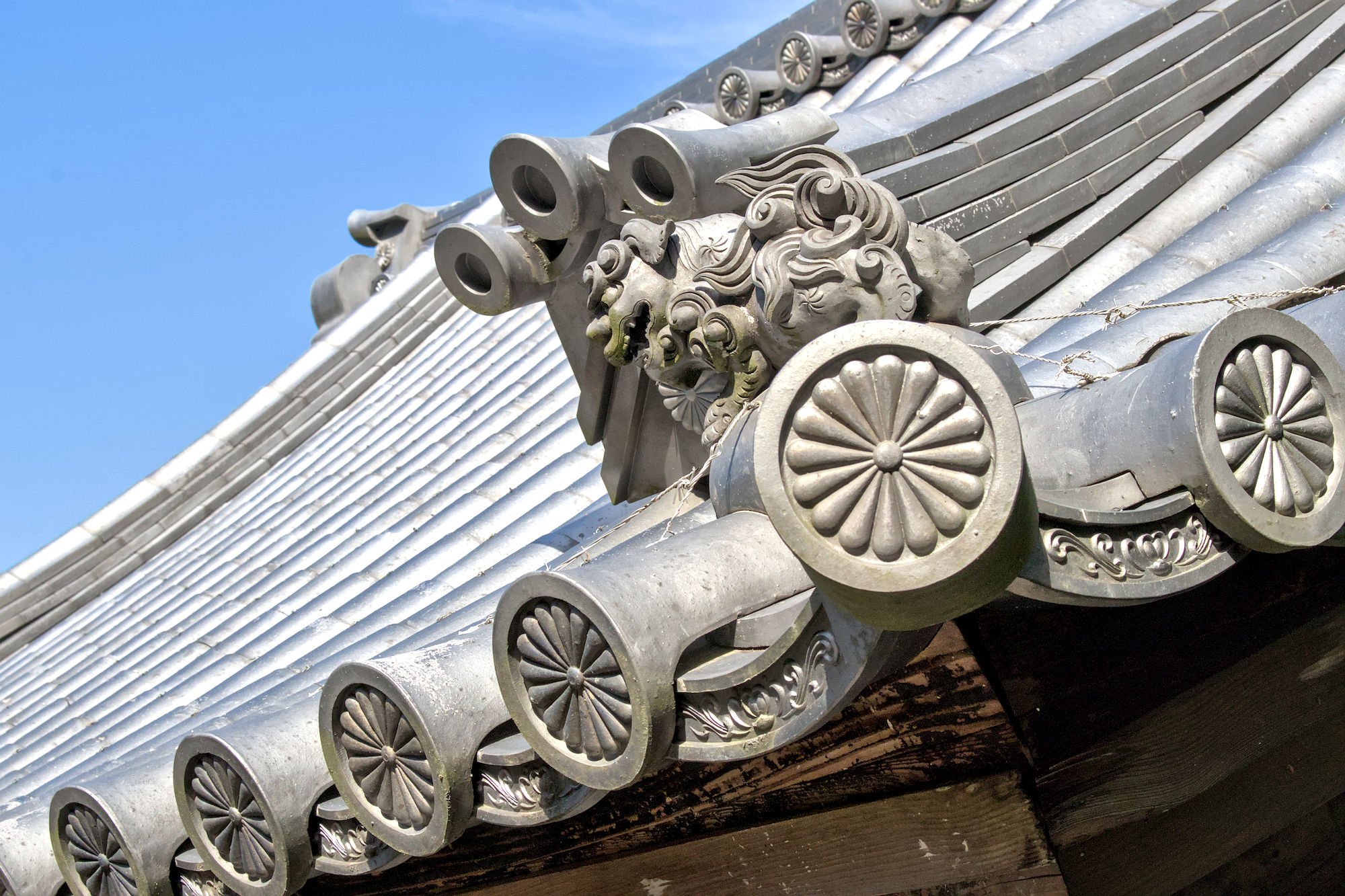
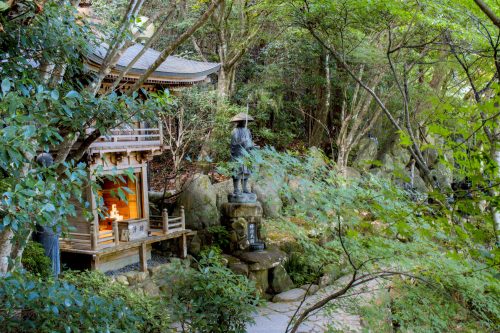
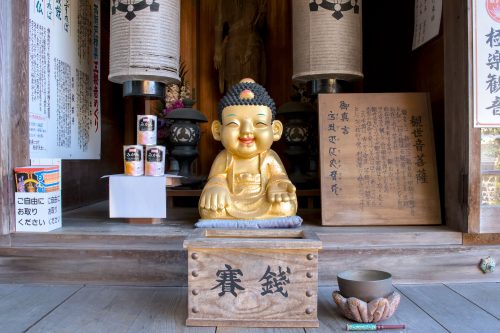
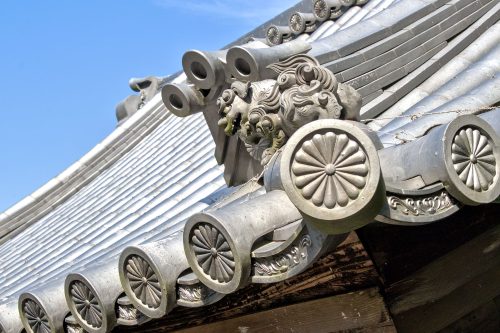
Established in the year 806, Daisho-in (大聖院) on Miyajima is one of the oldest Buddhist temples in Hiroshima Prefecture and the oldest on the island. This ornate temple complex rising up the side of Mount Misen has seen 1,200 years of Japanese history while political and cultural forces transformed the practice of Japanese Buddhism. Consequently, Daisho-in is a culturally and symbolically rich destination — far more than a collection of beautiful buildings at a serene location.
The Origins of Daisho-in
Toward the end of the 8th century, a young man from Ehime’s Kagwaya Prefecture — then called Sanuki Province — was a disillusioned student at the nation’s capital in Nara. This man was Saeki no Mao (佐伯 眞魚) (774-835), the son of a local aristocratic family. Dissatisfied with his studies, he became an independent Buddhist monk under the name Kukai (空海) — posthumously called Kobo Daishi (弘法 大師), “the grand master of Buddhist teaching.” He later went on a government-sponsored mission to China where he was converted to the Chinese Esoteric Buddhist tradition. An amazing student, two years later he returned to Japan to convert the nation as the Eighth Patriarch of Esoteric Buddhism. He went on to become one of the most influential figures in Japanese Buddhism. In addition to founding the Shingon sect of Buddhism — one of the major Buddhist denominations in Japan — he founded many temples including Daisho-in.
According to legend, after returning from China, he set up residence on Miyajima’s Mount Misen, built a hondo (本堂), the main Buddhist hall, and started training himself in an ascetic practice called Gumonji-ho (求聞持法) — a ritual to the Bodhisattva of Wisdom and Memory for gaining a flawless memory. Another ritual, called the Goma Fire Ritual (護摩), included the lighting of a fire at the summit of Mount Misen. The temple claims the fire has been kept continually burning at the summit at Reikado Hall (霊火堂) since it was lit in 806.
(Note: Reikado has been destroyed by fire multiple times in its history. Most recently, it burned down in 2005 and again in May 2026. After the last fire, temple officials said Kukai’s “eternal flame” was preserved. Currently, the hall is scheduled to be rebuilt by the autumn of 2027.)
Over the centuries, the temple grew and became more and more prestigious. It hosted such famous historical figures as the warlord Toyotomi Hideyoshi (1537–1598), Emperor Meiji (1867–1912), and the 14th Dalai Lama.
Most of the complex was destroyed in an 1887 fire, so most of the buildings are relatively new. The newest is Maniden hall which was built in 1976 in the gongen-zukuri style. Nevertheless, it retains a long and prestigious history, and today it is considered one of the top three temples in Japan for obtaining good luck.
The Frightening Gate Guardians
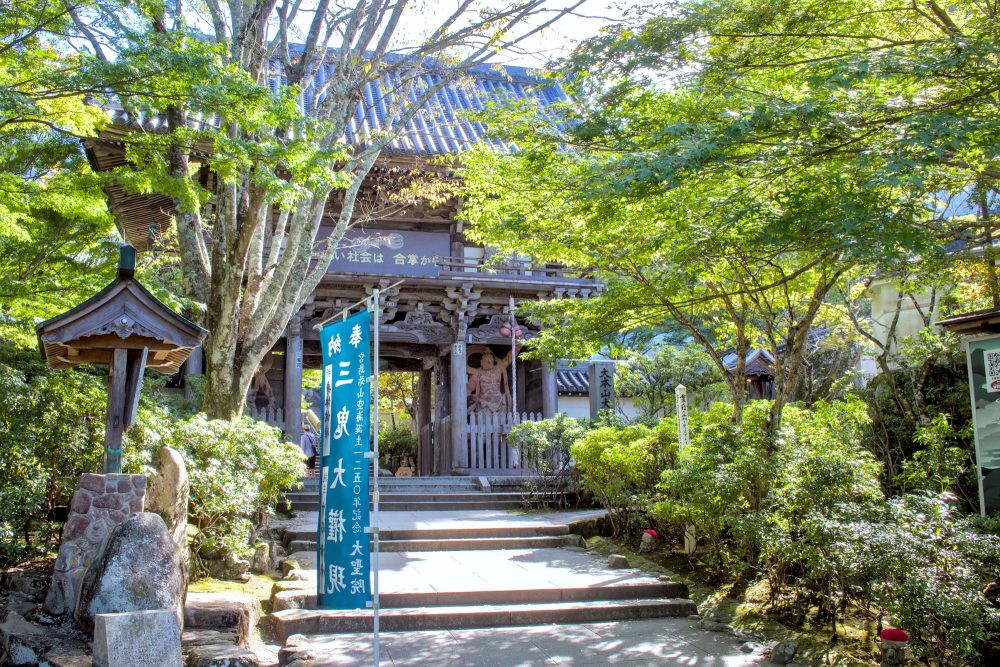
(Joy Photo / Michael Farrell)
When you arrive at Daisho-in, you are confronted by two intimidating guardian statues housed in the main gate, called the Niomon (仁王門). These statues are called Nio (仁王), meaning “Benevolent Kings,” and you can find them at the entrance to almost every Buddhist temple in Japan. Looking something like bald Dragon Ball Z characters going super saiyan, these muscled statues in dramatic poses are meant to ward off evil spirits. The one on the left with an open mouth is called Agyo (阿形). He is saying, “ah.” The one of the right with a closed mouth is called Ungyo (吽形). He is saying, “un.” These two sounds are the first and last syllables in the Sanskrit writing system. Together they symbolize the starting and ending of things, particularly birth and death — the whole of life — but also the entirety of reality.
There is an offering box and a rope attached to bells in front of each Nio at Daisho-in. Practitioners believe that the statues are more than carved wooden figures. They are seen as a means to directly access the spiritual being they represent and pray for protection. The box is for the practice of saisen (賽銭), ritual financial offerings. ¥5 coins are a common choice because the word for five yen, “go-en”(五円), sounds like the word for good luck — “ko-un” (幸運). You’ll find similar setups throughout the temple grounds with coins being offered to statues to petition the various Buddhist spiritual entities for help.
The 500 Rakan Statues
(Joy Photo / Michael Farrell)
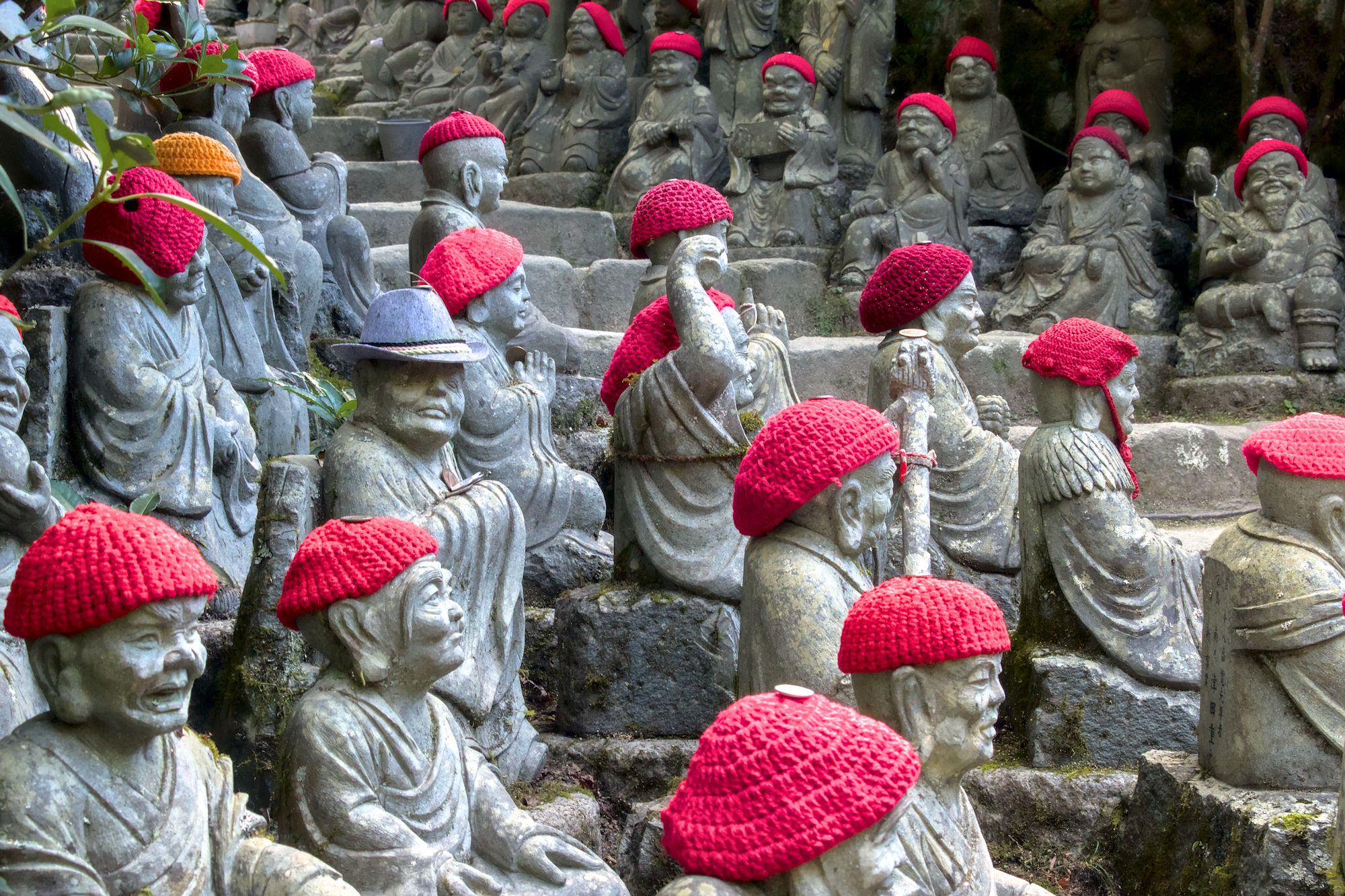
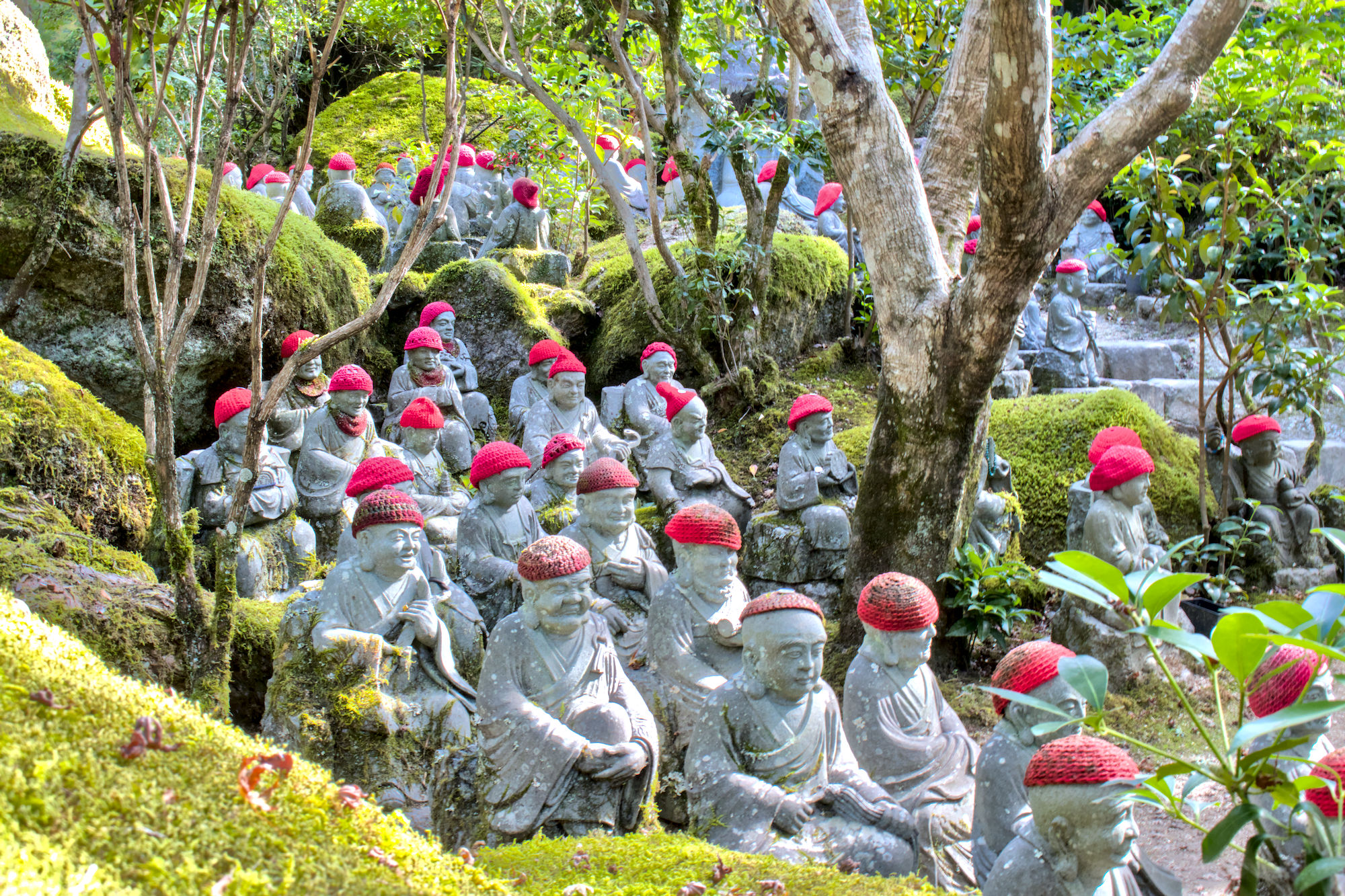
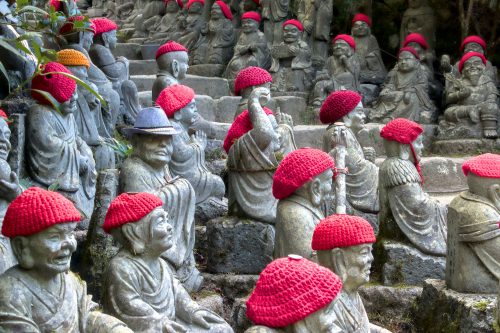
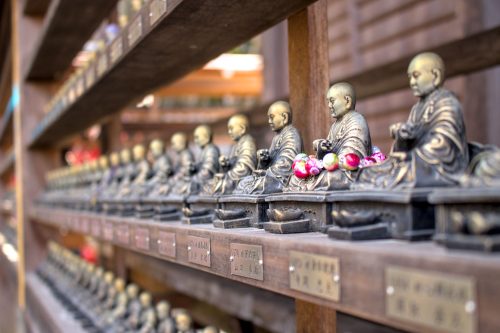
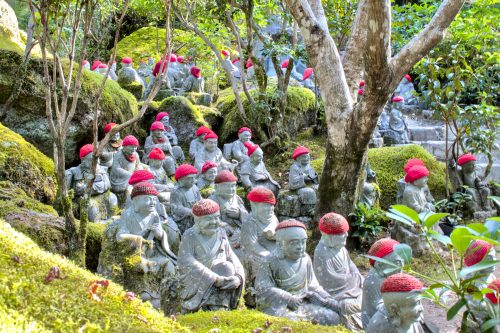
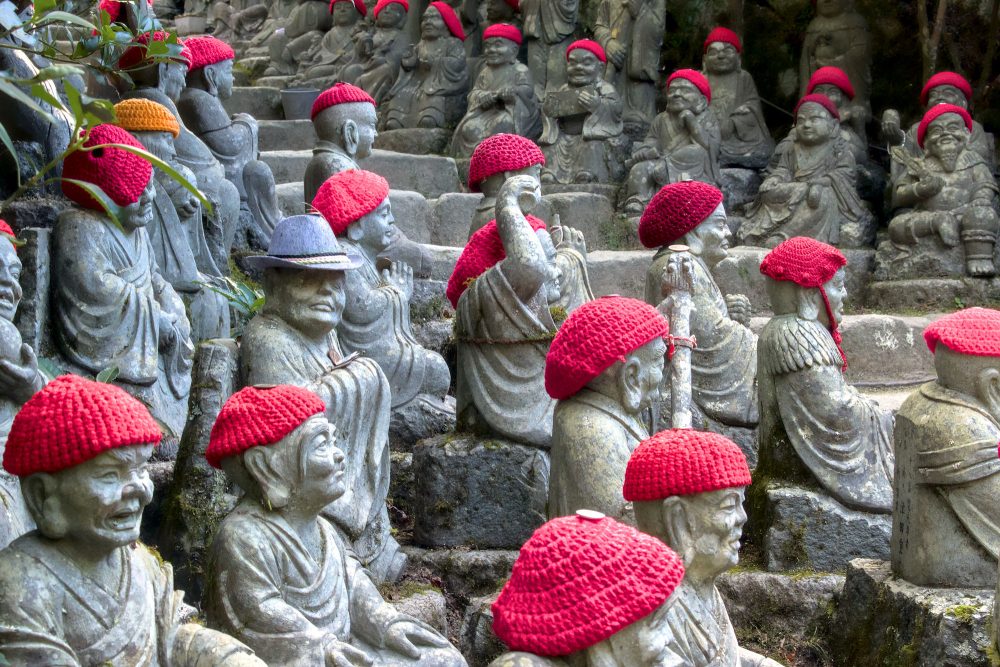
From the Niomon, visitors can ascend the steps to the main temple area or they can take a detour through the Garden of The 500 Rakan (五百蘿漢庭園). To the left of the steps winds a narrow path through a garden filled with 500 stone statues. Each statue is unique with a visible personality of its own. They depict the enlightened disciples of Buddhism’s founder, the Buddha Siddhartha Gautama — known in Japan as Shakyamuni (釈迦牟尼). One of their most charming features is that they are all decorated with tiny hats, usually knit caps. In wintertime, many wear knit scarves as well. According to the locals, all of the temple’s tiny knit caps are hand-knitted by a local woman devotee.
The Jizo Statues
(Joy Photo / Michael Farrell)
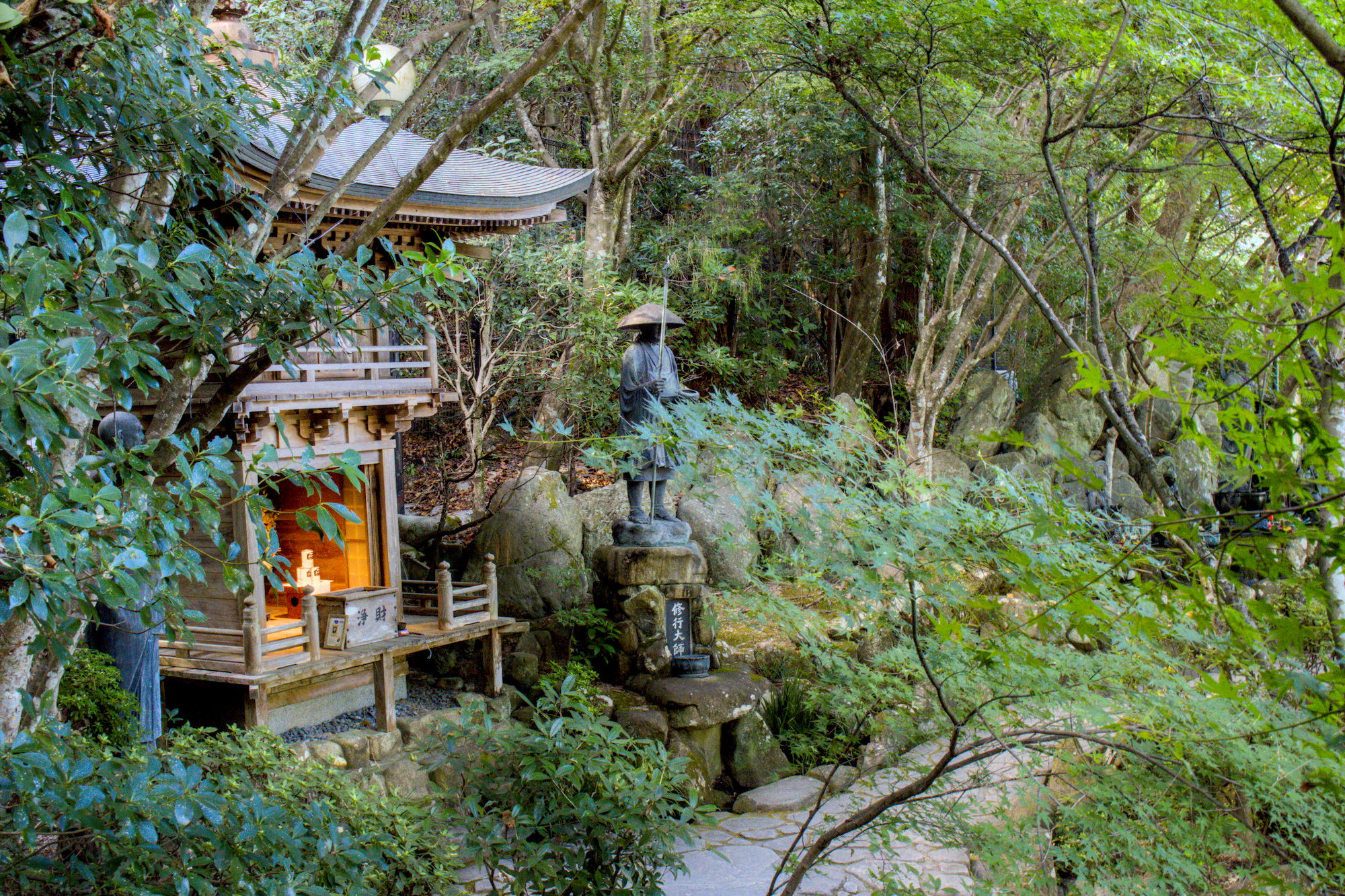
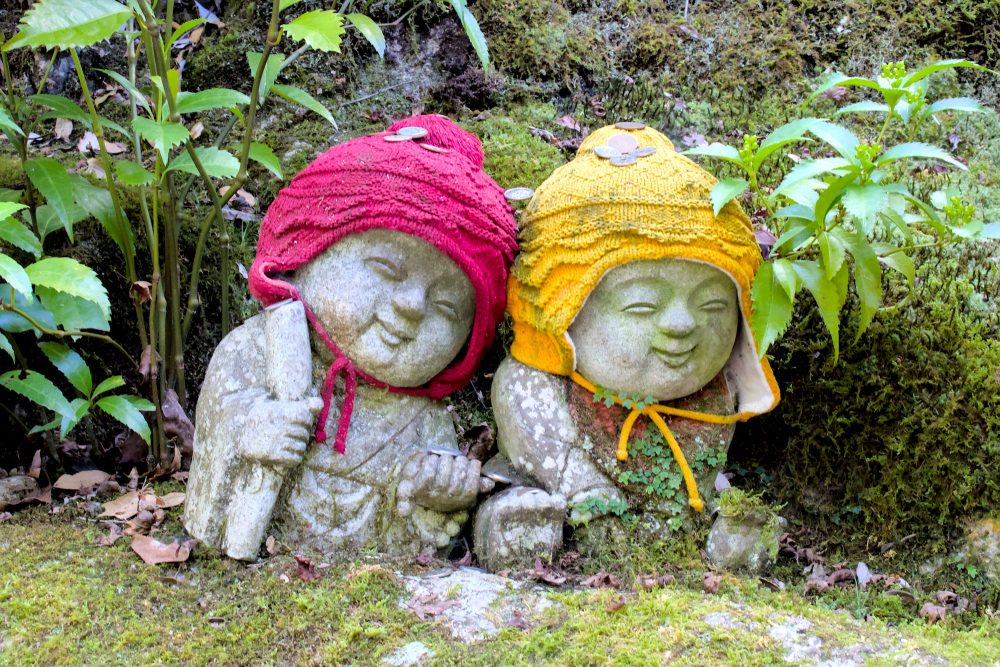
There is another kind of cute statue on the grounds decorated with little knit caps. These are the Jizo-san (地蔵さん). These cherubic guardian statues come in all shapes and sizes throughout the temple grounds.
Jizo are bosatsu (菩薩), also called bodhisattvas — beings in pursuit of enlightenment who are committed to helping others get there. The Jizo, in particular, are said to be protectors of children. Perhaps this is why some of the Jizo statues resemble Japanese children’s TV characters like Anpanman and Ultraman.
In modern Japanese practice, they are an important part of mizuko kuyo (水子供養), memorial practices for children lost to miscarriage, abortion or stillbirth. Typically, the statue is decorated with a red bib and knit cap in memory of the lost child. However, families also decorate Jizo out of gratitude for children who recover from illnesses. That said, not every decorated Jizo represents a family struggle. Many are decorated simply out of devotion.
Stairs of Prayer Wheels
(Joy Photo / Michael Farrell)
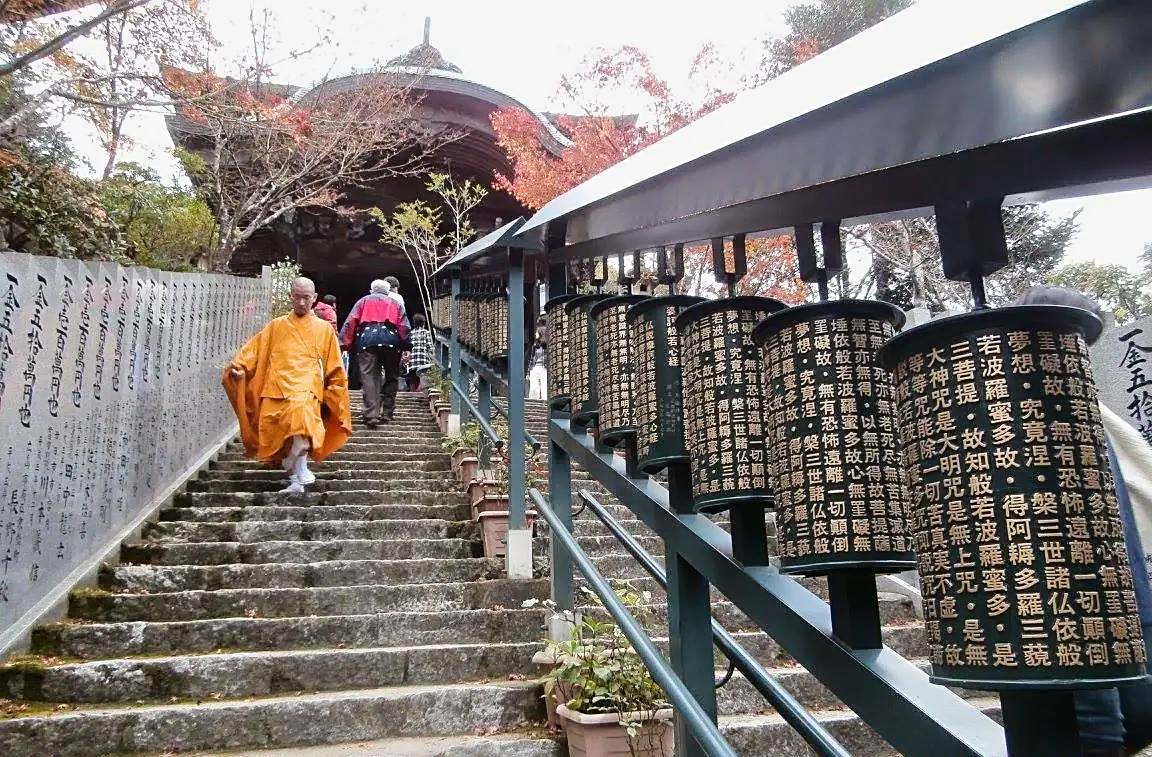
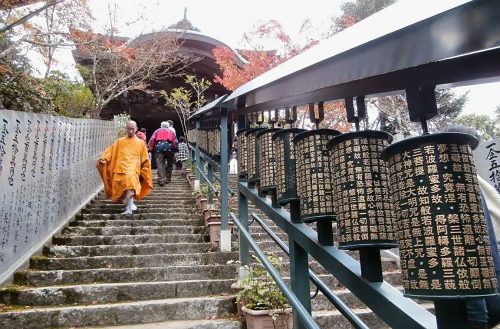
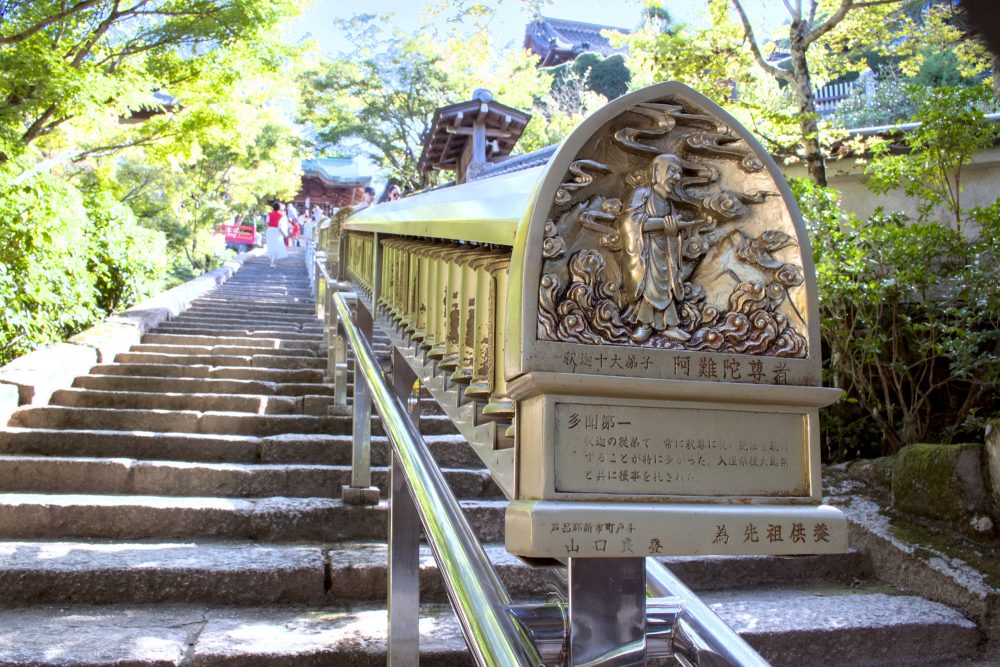
Beyond the Niomon Gate, stone steps ascend to the main temple grounds. In the center of the path runs a long, brass-colored railing lined with metal cylinders inscribed with Buddhist scriptures. As people go up and down the stairs, they rotate the cylinders as they go. It is said that rotating these prayer wheels has the same spiritual effect as reading them.
There are two sets of prayer wheels at Daisho-in. The one leading up from Niomon Gate is called Dai-hannya-kyo-zutsu (大般若経値) — The Great Hannya-kyo Cylinder. The cylinders are inscribed with all 600 volumes of the Great Hannya-kyo Sutra, the longest scripture in the Buddhist canon. The sutra discusses the perfection of wisdom in Buddhist thought.
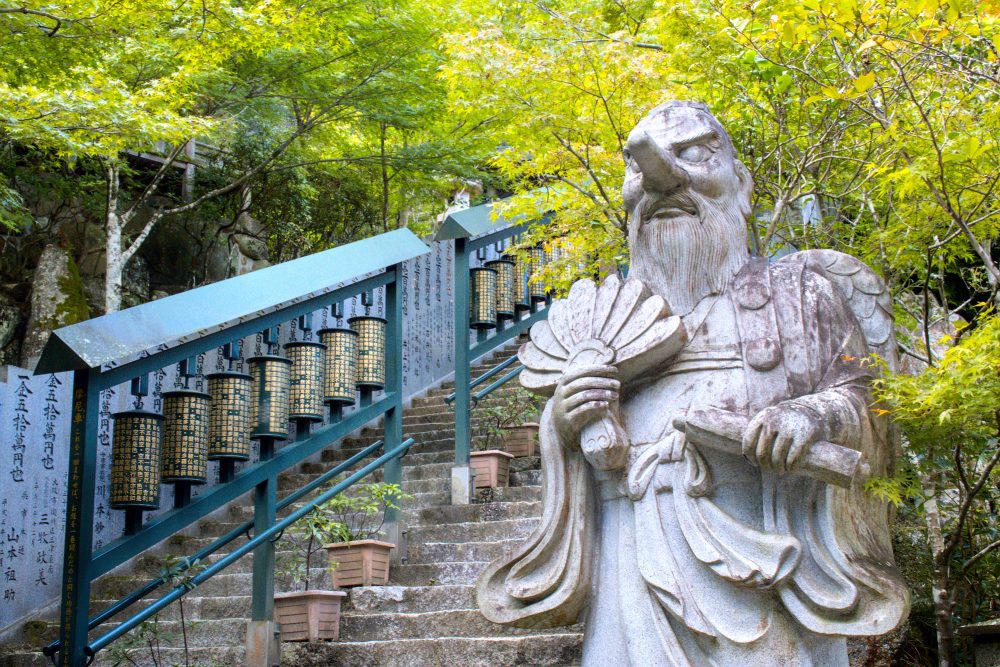
The other set of prayer wheels is beyond the main courtyard, on the stairs leading up to Maniden Hall. It is guarded by the statue of a large Tengu (天狗), a legendary yokai that Buddhism originally considered a dangerous demon but was syncretized over time to become mountain protector spirits. Tengu are considered skilled martial artists and their unmistakable long noses have come to symbolize pride and conceit in Japanese culture. In contrast to this character, the dark-green prayer wheels here are inscribed with the Heart Sutra (心経), a popular scripture in all sects of Mahayana Buddhism. It teaches the perfection of wisdom in emptiness, famously saying, “Form is emptiness. Emptiness is form.”
This collection of prayer wheels is called Maniguruma (魔尼車) — the formal word for Buddhist prayer wheels in Japanese. Curiously, Daisho-in uses an alternate spelling for the wheels. Typically, the kanji — Chinese characters — translate directly as “jeweled wheel” (摩尼車). However, on Daisho-in’s official website, instead of the usual “ma” (摩), meaning polish, the “ma” (魔) for a demon or evil spirit is used. The answer to why is related to the hall at the top of the hill.
Maniden Hall
(Joy Photo / Michael Farrell)
The name of Daisho-in’s Maniden Hall (“魔尼殿) literally translates to “Demon Hall.” This building, which is the prayer hall of the main temple complex, enshrines three oni — traditional Japanese ogre-like demons — the Mount Misen Sanki Daigongen (弥山三鬼大権現) or the Three Great Oni Gongen of Mount Misen. A gongen is a syncretized Shinto deity that is considered to actually be an emanation of a buddha or a bodhisattva.
According to the Japan Tourism Agency, “belief in Sanki Daigongen is unique to Miyajima and is a reminder of how ancient folk beliefs, Shinto, and Buddhism, now thought of as separate, were indivisibly linked in Japan for more than a thousand years.” This syncretism of Shinto and Buddhism changed across Japan in 1896 when the Meiji government forcibly separated the two religions. Their goal was to cultivate Shinto as a vehicle for modern nationalism. The nationalist project worked too well, but the split between Buddhism and Shinto was not always so clean. And you can see this in the original Japanese “oni” character of these imported Buddhist spirits.
These three oni were originally revered at Itsukushima Shrine, and today, instead of being prayed to in the Buddhist fashion, they are venerated in the Shinto style. Perhaps the most famous devotee of the Sanki Daigongen in recent history is Japan’s first prime minister, Ito Hirobumi (伊藤博文).
If honoring demons sounds startling, it is not so strange in Buddhism. Unlike spirits in Western religions like Christianity, spiritual beings in Buddhism are more like humans in their knowledge and wills. They can be reformed, become protectors of Buddhism and even aspire to buddhahood.
Kannon Hall
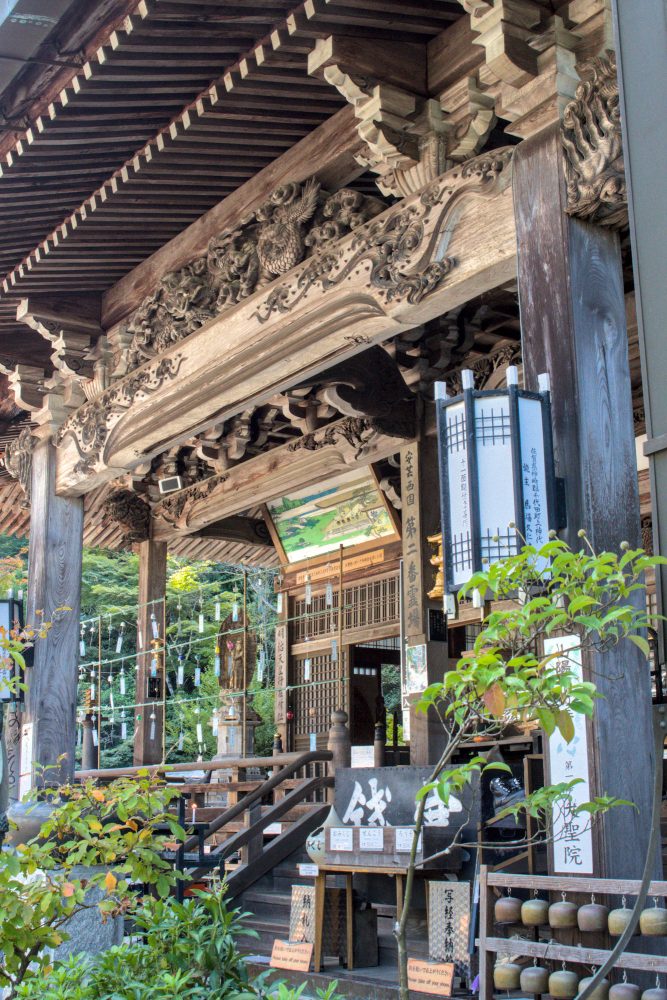
The front of Kannon Hall at Daisho-in Temple. (Joy Photo / Michael Farrell)
Kannon Hall (観音堂) is where memorial services for ancestors are carried out. It is called Kannon Hall because it enshrines the statue of Juichimen Kannon (十一面観音). The centuries-old statue is another Buddhist icon that was revered at Itsukushima Shrine before the Meiji split.
Kannon, the bodhisattva of compassion, was intricately intertwined with worship on Miyajima for centuries. When Buddhism first came to Japan, it was said that the Shinto Munakatta deities at Itsukushima were actually emanations of Kannon. Though some Buddhists thought the Munakatta were emanations of other buddhas, the idea stuck. For centuries afterwards, Kannon was Itsukushima’s primary Buddhist deity. In fact, the redesign and expansion of the shrine, whose design you can see today, is from the Heian period leader, Taira-no-Kiyomori (1118–1181), a man who claimed to be deeply devoted to Miyajima’s Kannon. Even today, Kannon is not far from people’s thoughts when they see the island. Sometimes people will tell you that from certain directions the island looks like the profile of Kannon.
According to tradition, the statue was made by the famed priest Gyoki in the Nara period (710–794). While documents from the Heian period record the statue’s presence at Itsukushima Shrine, it is not known for sure if the modern statue is Gyoki’s original or a replica. It was moved to Daisho-in after all the Buddhist images were removed from the shrine in 1868.
Tibetan Buddhist Mandalas
Besides the statue of Kannon, some of the most impressive works of art on display in the hall are two brilliantly colored sand mandalas. They were created by Tibetan monks for the temple’s 1,200th-anniversary celebration in 2006, which was attended by the 14th Dalai Lama, Tenzin Gyatso. His monks took three weeks to complete the mandalas. A mandala is a representation of the cosmos. Typically it is ritually destroyed; however, the ones at Daisho-in were preserved for visitors to see.
Manpuku-do Hall
(Joy Photo / Michael Farrell)
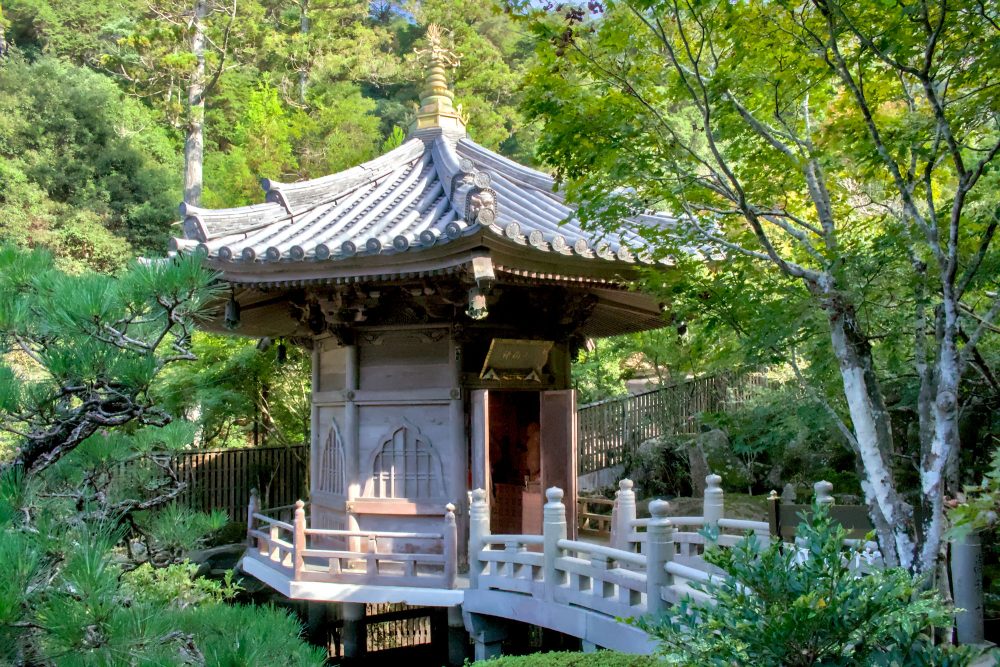
One of the most inviting sacred buildings at Daisho-in is Manpuku-do (万福堂). The small, octagonal building circled by a small veranda rises out of a pond of clear water. To get there you have to cross a little bridge. If you peek inside, you’ll find the statues of seven deities known as the Shichi Fukojin or “Seven Lucky Gods.”
While the deities originate from various religions, namely Buddhism, Hinduism and Shinto, their cult has become distinctly Japanese. They entered Japan during the Muromachi period (1336–1573), but their modern identities solidified during the Edo period (1603–1867) under the direction of the priest Tenkai. Tenkai was an advisor to shogun Tokugawa Ieyasu, the third person to unify Japan and founder of Japan’s last shogunate. It is said that Tenkai praised his master for having all the traits needed to bring order to Japan before laying out how the Shichi Fukojin were associated with those blessings.
Ebisu (恵比須) is the only native Japanese deity in the group. Often depicted as a fisherman, he represents honest labor.
Daikokuten (大黒天) hails from India. He is associated with wealth and prosperity. He is often shown carrying a mallet and a bag of treasure.
Bishamonten (毘沙門天) also originates from India where he developed out of Yakya, pre-Buddhist nature spirits from the local animist faiths. In Japan he is depicted as a warrior and represents dignity and authority.
Benzaiten (弁財天) is another Indian. In India, she is known as Saraswati. In Japan she is associated with a wide variety of blessings notably charm, amiability and the arts.
Fukurokuju (福禄寿) comes from China. He is shown as an old man with a very high forehead. He’s the deity of being popular and the size of his head represents the great esteem that others have for him. Because of his big head, he is also associated with wisdom.
Jurojin (寿老人) is the personification of the Southern Pole Star along with Fukurokuji. They both come from Chinese Taoism. According to Chinese astrology, the Southern Pole Star was connected to a person’s lifespan, so Jurojin represents longevity. He is depicted as an old man with white hair.
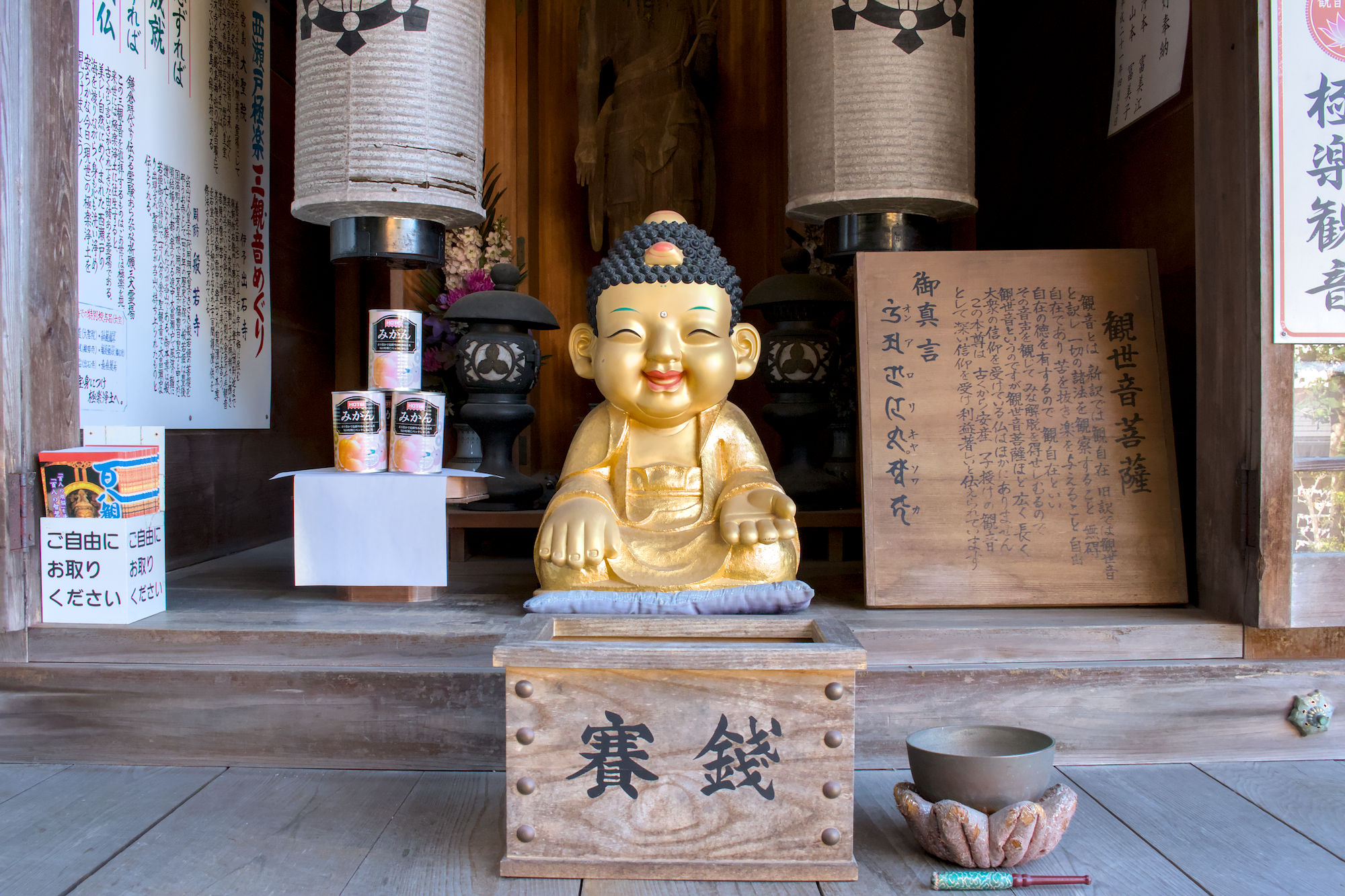
Hoteison (布袋) was once a real person. Sometimes called the “Laughing Buddha” in China or “Fat Buddha” in the West, he is based on the historical Chinese monk Qieci (契此), better known as Budai (布袋). Jolly Hoteison represents magnanimity — the power to be nobly tolerant, forgiving and generous. Because of his large belly and big smile he is also associated with joy, abundance and contentment.
Each virtue or characteristic that Tenkai connected to the Shichi Fukojin was considered a trait of a good statesman — like Tokugawa Ieyasu. Today, the combined blessings of the Shichi Fukojin are said to bring luck, prosperity and happiness.
Henjokutsu Cave
(Joy Photo / Michael Farrell)
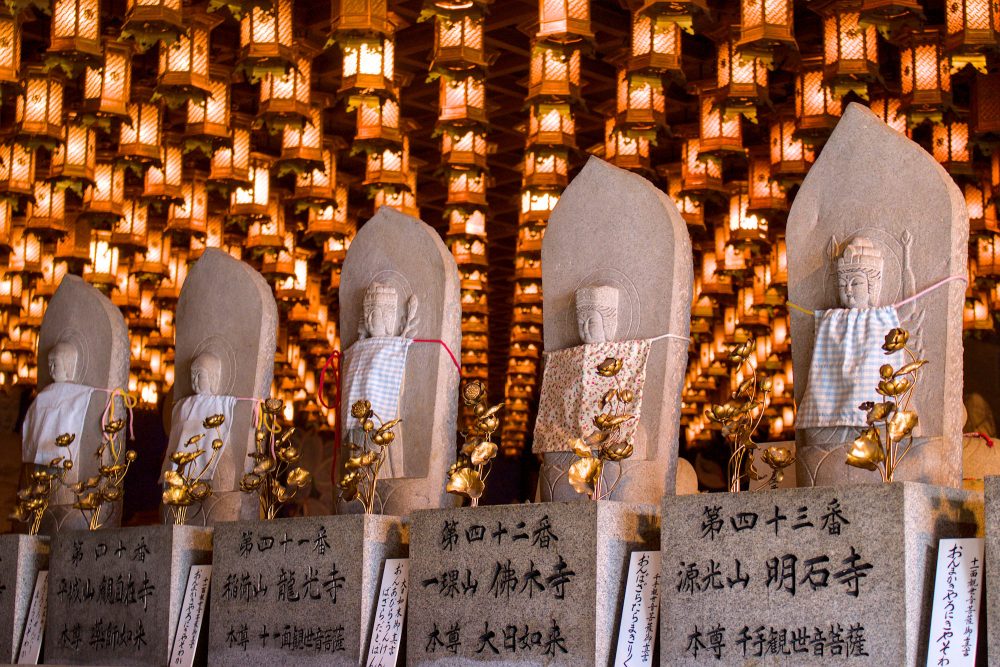
Perhaps the most visually impactful site at Daisho-in is Henjokutsu Cave. This cave is an underground chamber beneath Daishido Hall at the highest point of the complex. Inside are 88 statues representing each of the 88 temples of the Shikoku Pilgrimage route. On the floor are 88 tiles covering 88 bags of sand collected from each of those Shikoku temples. Meanwhile, above you shine hundreds of copper lanterns that completely cover the ceiling.
The cave lets people make the Shikoku pilgrimage in one visit instead of the 40 to 60 days it takes to walk to every location on the 1,200 kilometer (~745.5 mile) route.
The pilgrimage route and the cave are significant because of the man Daishido Hall is dedicated: Kukai. Not only did Kukai found Daisho-in, he spent much of his life in Shikoku where he founded or visited even more temples. These are the 88 temples on the pilgrimage.
To walk the Shikoku Pilgrimage is thought to literally walk side by side with the spirit of Kobo Daishi as he guides you into deeper states of spiritual transformation on the road to enlightenment.
Moment of Joy
An Encounter with Universals and Opportunities for Understanding
You don’t have to be Buddhist to appreciate Daisho-in Temple. Whatever your religious or philosophical position, there is something to admire there. The temple complex itself is a beautiful example of Japanese Buddhist architecture, art and design — expressions of the human spirit’s orientation toward the transcendent. Its seamless incorporation into the natural environment also makes it a tranquil spot that speaks to the human heart. While the teachings of Shingon Buddhism are not universally shared, unlike the appreciation of beauty and the natural world, the encounter with its practices, rituals, beliefs and teachings creates an opportunity to understand the local religion and build bridges with the locals.
Written by

Michael Farrell is a reporter and editor who began traveling the world in 2010. His publishing career started in New England, first at the Gloucester Daily Times and later as a copy editor with boutiq…More


- Open
- 8:00 - 17:00
- Closed
- Never closes