Eat
Where to Eat Hiroshima’s Signature Foods: A Guide to Local Specialties
“What should I eat in Hiroshima?”
Japanese culinary culture is deeply shaped by seasonal ingredients and local produce. This creates microcuisines across Japan’s varied landscape. Consequently, every prefecture in Japan has its own culinary specialties, and Hiroshima Prefecture is no different.
What’s cooking on Hiroshima’s menus comes from a number of influences. A range of climates and landscapes ranging from temperate mountain forests to Mediterranean-like islands in the Seto Inland Sea provide the base ingredients. These micro-climates create fertile grounds for signature local produce like matsutake mushrooms, Jigozen oysters and Setouchi lemons.
Layered on top of this natural abundance, Hiroshima’s unique history and culture further shape the local cuisine with dishes like Hiroshima-style Okonomiyaki and momiji-manju, making it truly distinct in Japan.
Hiroshima’s independent and indomitable spirit further creates space for modern culinary innovations like shirunashi tantan noodles and tsukemen dipping ramen.
To further complete the recipe of Hiroshima cuisine, mix in nationally famous Hiroshima brands like Otafuku okonomiyaki sauce, Ryoko no Tomo furikake and Calbee snacks.
Finish off with generous splashes of sake from Saijo, one of Japan’s three great sake producing towns, plus a range of craft spirits and beers, and you have a recipe for culinary distinctiveness that draws Japanese visitors from around the country just to eat and drink.
What places are good to visit to experience this food lover’s haven that the Japanese have largely kept to themselves?
As international expats and Hiroshima locals who have lived here for years, we’ve put together this list of Hiroshima specialties. It includes places we love and the places Japanese domestic travelers keep returning to trip after trip. This list is far from exhaustive, so check back later for more as it expands.
Table of Contents
Hiroshima-style Okonomiyaki — Food to Revive an A-Bombed City
Hiroshima Oysters — Japan’s Industry Leader
Anago — Hiroshima’s Tender Alternative to Unagi
Shirunashi Tantanmen — Sichuan Noodles with a Hiroshima Twist>
Momiji Manju — Sweets From the Sacred Island>
Hassaku Daifuku — Temple Citrus Meets Sweet Mochi
Hiroshima-Style Okonomiyaki
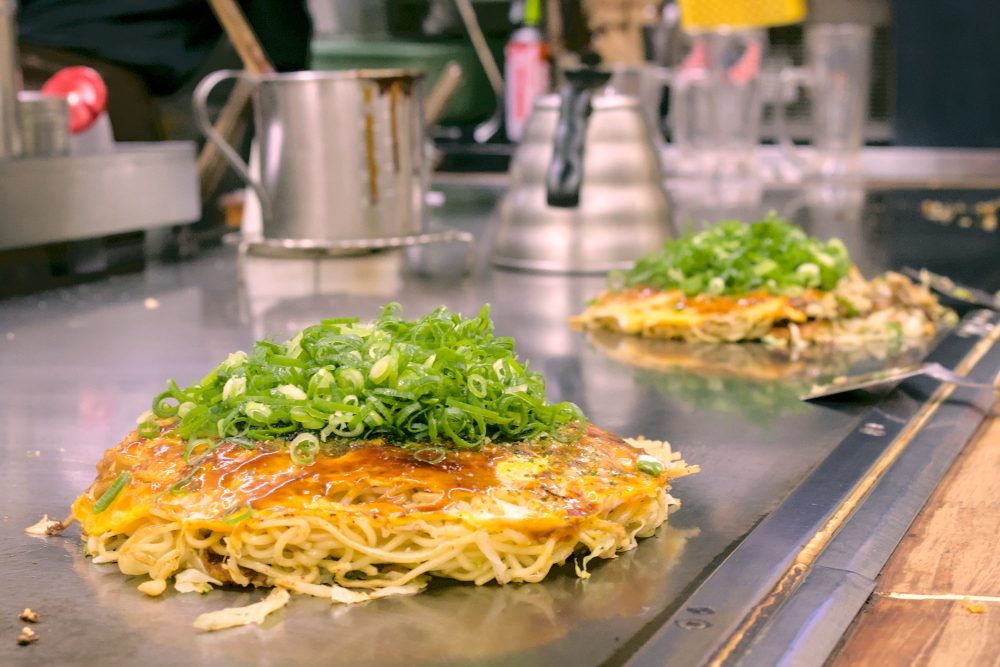
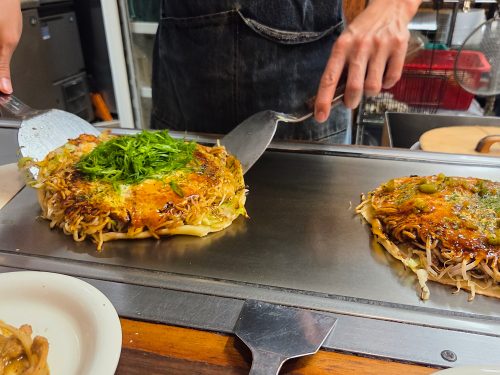
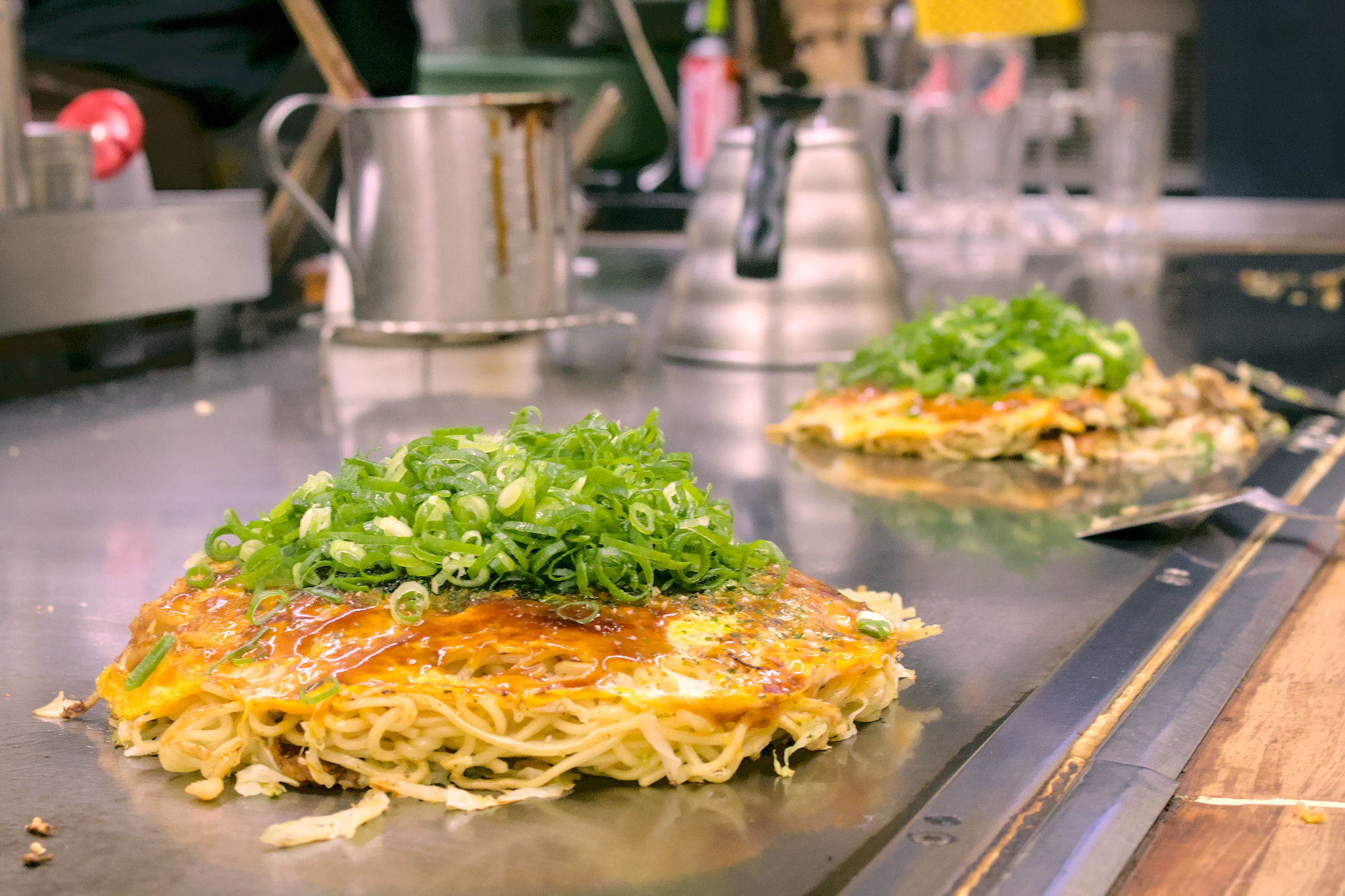
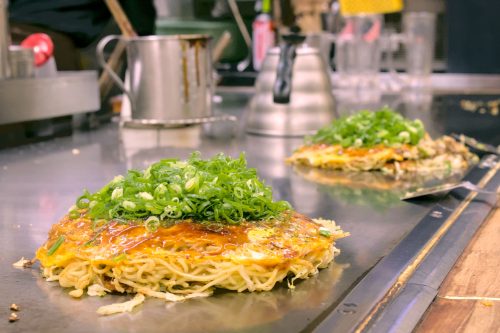
Green onions are a popular okonomiyaki topping. These green onions top okonomiyaki from Sarashina in Okonomimura. (Joy Photo / Michael Farrell)
There is no Japanese dish that says “Hiroshima” more than okonomiyaki (お好み焼き). The beloved dish was one of the staples that helped Hiroshima’s people survive and rebuild after the atomic bombing. For this reason, it is popularly known as Hiroshima’s “soul food.” Today, with over 1,360 shops, Hiroshima Prefecture has more okonomiyaki shops per capita than any other prefecture in Japan.
The dish is distinct from its cousins Kansai-style okonomiyaki (関西お好み焼き), modanyaki (モダン焼き) and monjayaki (もんじゃ焼き). Kansai-style okonomiyaki grills a batter filled with vegetables and seafood on slices of pork belly before adding sauce and other toppings. Modanyaki takes it a step further by adding fried soba or udon noodles. Monjayaki, from Tokyo, puts everything together in a loose slurry that you scramble yourself on a hot plate at your table. Hiroshima-style okonomiyaki, on the other hand, is the most technical dish of them all. Stages of meat, seafood, noodles and vegetables are grilled or steamed in layers that build on top of a thin, savory crepe. Like Kansai-style, it is then covered with sauce and toppings according to your tastes.
There are an overwhelming number of spots to enjoy okonomiyaki in Hiroshima, but for first-time visitors, we recommend the following essential places.
Okonomimura
Eat Hiroshima-style okonomiyaki within view of where the dish was born. Okonomimura, which means “Okonomi Village,” is the spiritual heir to the okonomiyaki street food stalls that lined the nearby main street and plazas in the 1950s and early 1960s. When the city closed the area to food stalls in 1965, many moved into the new Okonomimura building, which carries on the legacy of the food stalls that created the movement.
Currently, 25 shops cram onto four floors. Each shop has its own history and approach to the dish. Some of the shops are continuations of the original food stalls that lined the square in the 1950s — passed down through the family to today.
➣ Read more about Okonomimura’s History.
➣ Check out our recommended shops inside.
Okonomi Story Ekimae Hiroba
Okonomi Story Ekimae Hiroba builds on the legacy of a different historical okonomiyaki stronghold: Hiroshima Station. One of the places okonomiyaki shops took refuge after they were kicked off the streets in 1965 was inside Hiroshima Station. You can still find okonomiyaki shops in Hiroshima Station’s Ekie shopping area today; however, the renovated station’s polished atmosphere is markedly different.
Ekimae Hiroba, across from the station’s South Exit, provides a more historical experience while still serving great okonomiyaki. Located on the sixth floor of the Full Focus Building, Ekimae Hiroba recreates the city’s retro-okonomiyaki vibe. 15 different okonomiyaki shops, each with its own delicious innovations on the dish, peek out from behind custom noren screens and paper lanterns.
The number of options at Ekimae Hiroba along with its proximity to Hiroshima Station, make it a convenient stop for travelers heading into or back from the city.
➣ Read more about Ekimae Hiroba.
➣ Turn an Ekimae Hiroba visit into a fun evening.
Hiroshima Oysters: Japan’s Industry Leader
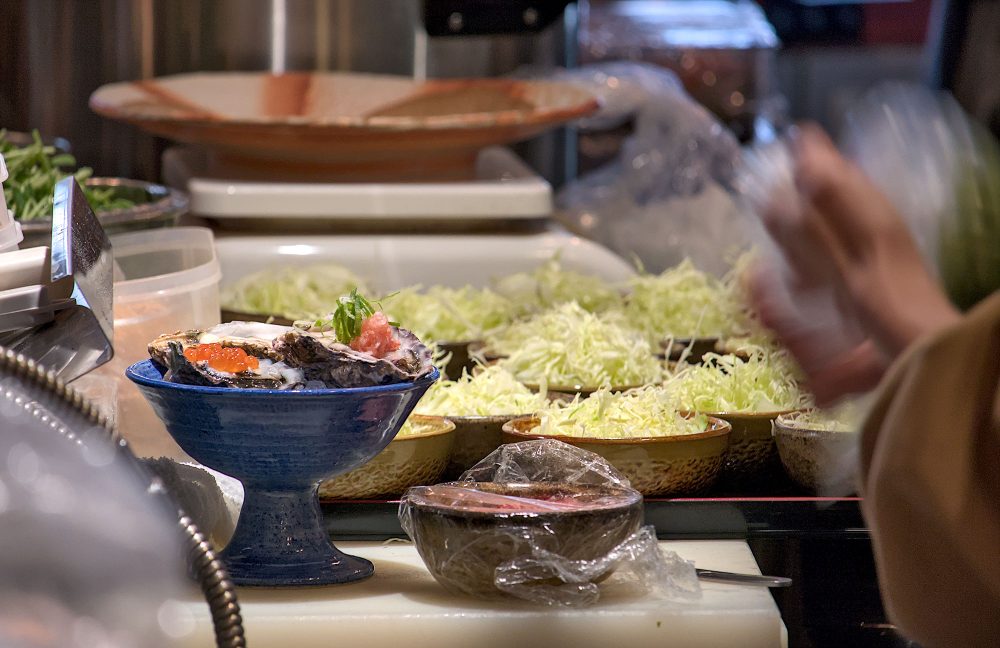
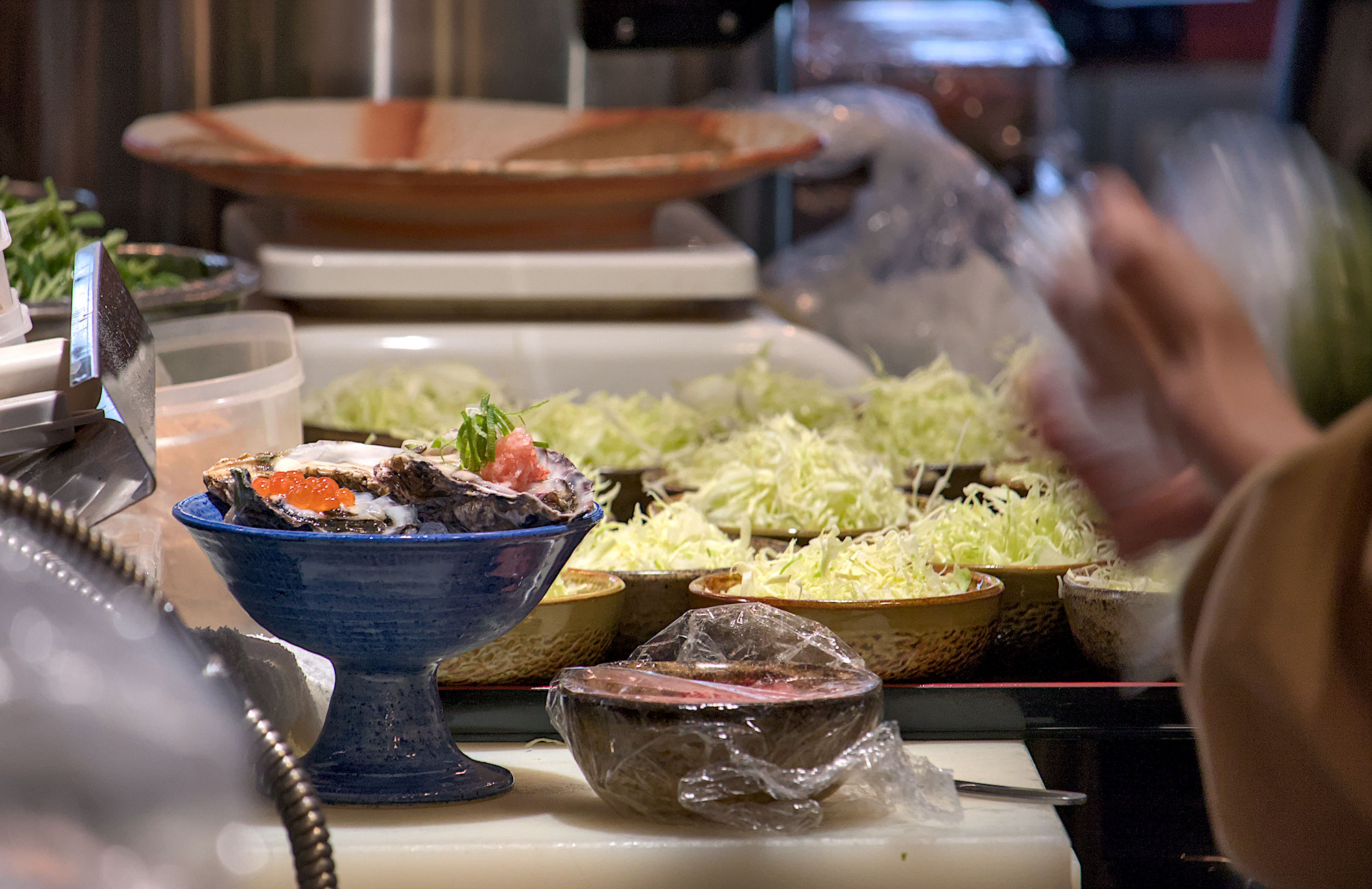
Clair Oysters from Osakikamijima being prepared at Holiday Shokudo in downtown Hiroshima. (Joy Photo / Michael Farrell)
In the Edo period (1603-1868), a Hiroshima fisherman asked a groundbreaking question: Can oysters be farmed? He started experimenting with the idea and eventually laid the foundations for what became one of Hiroshima’s defining specialties. Today, Hiroshima Prefecture is Japan’s leading oyster fishery, producing over 94,000 tons of oysters a year. In comparison, the second-largest oyster-producing region, Miyagi Prefecture, does not even come close. In 2024, it only produced 15,190 tons of oysters.
Hiroshima’s oysters are prized for being especially meaty, tender and plump while being rich in umami.
The prefecture also boasts specialty farming operations like Farm Suzuki (ファームスズキ) on Osaki-kamijima (大崎上島). This farm adapted French oyster farming techniques to grow organic Claire Oysters in natural salt ponds. The resulting oysters are fresh, clean-tasting and surprisingly complex in flavor. Other well-known oyster fisheries, like Shimada Suisan (島田水産), give tours of their farms right off the shores of Miyajima. Others will let you grill your own right off the dock.
Where can you eat Hiroshima oysters on your trip? Keep reading.
Yakigaki no Hayashi: The Origin of Japanese Grilled Oysters
Eat at the shop where Japanese grilled oysters began. Yakigaki no Hayashi (焼がきのはやし) is an oyster restaurant located on Omotesando shopping street on Miyajima. Founded in 1948, it is famous for being the very first restaurant in Japan to serve grilled oysters, one of Miyajima’s most famous delicacies. In addition to its signature grilled oysters, Yakigaki no Hayashi offers a variety of other menu items such as raw oysters, conger eel dishes and tempura.
At Yakigaki no Hayashi, they serve a specific type of oyster called “Jigozen oysters” (地御前牡蠣). These nationally award-winning oysters are caught in the Jigozen area near Miyajima. Jigozen oysters are characterized by their large size and rich flavor compared to ordinary oysters. They are said to be among the most delicious types of oysters that can be caught in Japan. And Yakigaki no Hayashi exclusively serves the most prized Jigozen oysters — the ones grown for three years before harvesting. They are big and meaty with a restrained umami. Moreover, Yakigaki no Hayashi’s grilling technique has been handed down from generation to generation. The oysters are carefully steamed in their shells over an open flame to ensure that the flavor and aroma of the oysters are preserved.
➣ See hours, map & visitor information.
Oyster House Teraiwa: Right off the Boat
Oyster House Teraiwa (かきの館 てらいわ) is an oyster restaurant directly owned and operated by an oyster farm. It is located in Hatsukaichi, the city opposite Miyajima from Itsukushima Shrine as you look past the floating Otorii Gate. There, in the Ono district, you can find an oyster shack where you can grill oysters and seafood by yourself at your table. They also serve a variety of dishes that you don’t have to cook yourself like deep-fried oysters and massive oyster onigiri. In addition to oysters, you can enjoy fresh seafood such as fish, scallops, and clams.
At Oyster House Teraiwa, the large, fresh oysters are harvested fresh every morning by the workers of Teraiwa Kaisen, the farm that owns the oyster shack. The oyster house only serves high-quality oysters caught in the Seto Inland Sea off the coast of Ono not far from the restaurant. The waters are famous for rich nutrients that produce large, firm oysters. The vegetables and other seafood eaten with the oysters are also carefully selected from only the freshest local ingredients.
➣ See hours, map & visitor information.
Oyster Ship Kanawa: Enjoy Fresh Oysters at Peace Memorial Park
If you don’t have time to make it to Miyajima, you don’t have to miss out on the oysters. Oyster Ship Kanawa (かき船 かなわ) lets you enjoy Hiroshima Oysters at Peace Memorial Park.
Permanently docked on the banks of the Motoyasu River on the eastern side of Peace Park, Oyster Ship Kanawa is one of Hiroshima’s most iconic oyster restaurants and one of the few places in the city where you can dine on a boat.
The boat has two floors, each featuring a different oyster-themed restaurant. On the first floor, Kanawa Seto offers simple oyster dishes served raw, fried, grilled and in a hot pot stew. Meanwhile on the second floor, Kanawa Wakyu offers custom-made oyster course meals to suit your budget and tastes. Please note that both Seto and Wakyu require reservations up to one week in advance for some courses.
The oysters aboard the Kanawa are sourced from Kanawa’s own oyster farm to ensure that they are the cleanest and freshest oysters possible. It only uses select oysters cultivated in the clean waters of Fukaura, the coastal waters between Ōkurokami Island and Etajima Island in Hiroshima Prefecture. Fukaura is known for having some of the cleanest waters in the Seto Inland Sea. The seawater is not contaminated by domestic wastewater and it has a high salt concentration. This results in plump and firm oysters that can be eaten raw with confidence.
➣ See hours, map & visitor information.
Anago: Japan’s Milder Eel
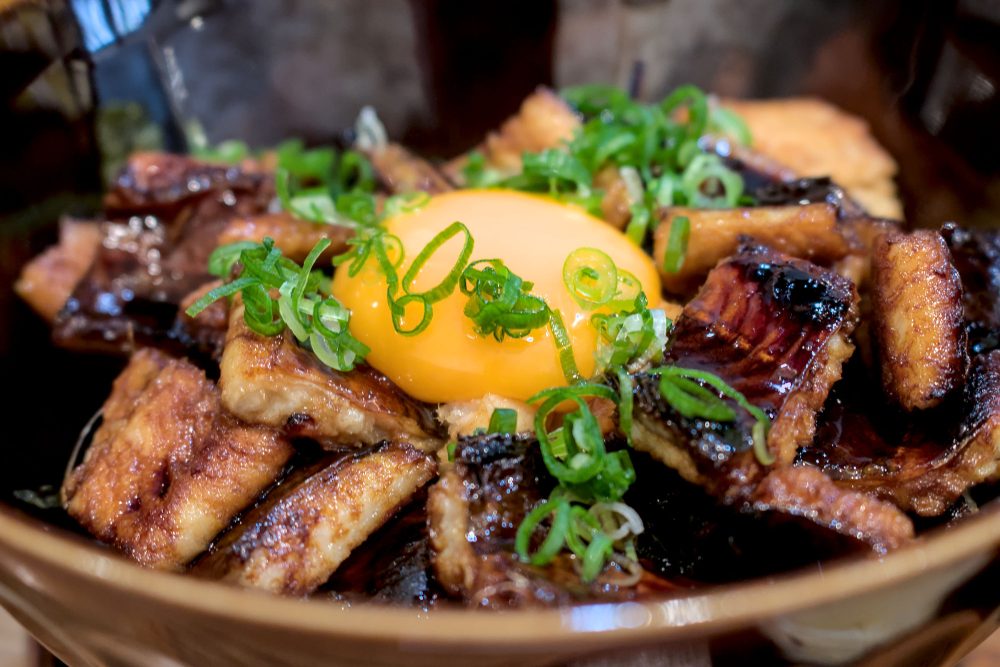
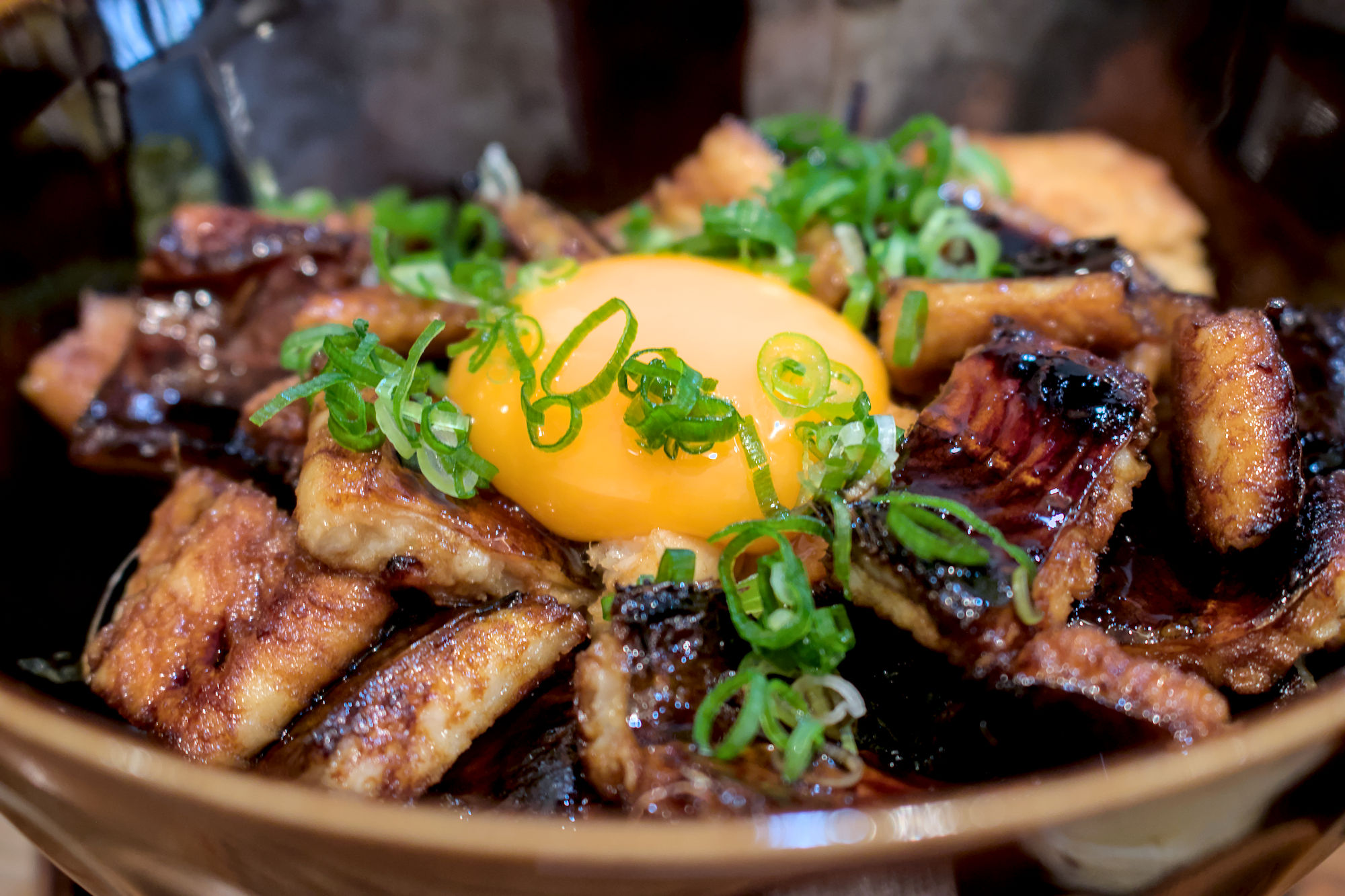
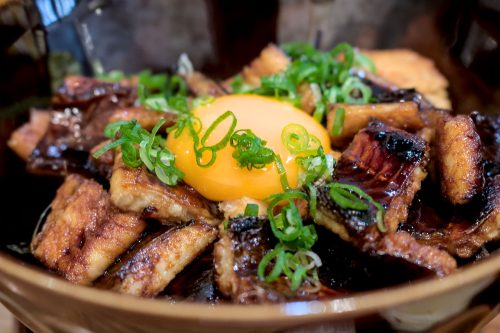
Anago-don from Mikoto-ya on Miyajima. (Joy Photo / Michael Farrell)
Another famous local seafood is the humble conger eel. Called anago (穴子) in Japanese, these saltwater cousins to unagi are traditionally caught off Hiroshima’s shores in the Seto Inland Sea during the summer months.
Milder and sweeter than unagi, anago, though less well known internationally, has a more broadly appealing flavor and softer texture.
It is commonly found in Hiroshima sushi restaurants when in season. However, it is most famously prepared in a dish called anago meishi (穴子飯). The local fisherman’s dish became nationally famous about a century ago when it was introduced to Japan Rail passengers as an ekiben (駅弁) — a portable bento lunch made to be eaten on the train.
Discover the shop that popularized the dish and more below.
Anago Meshi Ueno Miyajima-guchi Honten: The Original Anago Meishi
Four generations ago, in 1901, Tanokichi Ueno started selling a new kind of bento to railroad travelers at JR Miyajimaguchi Station. He enhanced white rice with a rich, umami sauce made with the bones and trimmings from filleted anago. On top of this he layered grilled anago from one end of the take-out box to the other. Anago meishi, one of Hiroshima’s defining dishes, was born.
Today, Tanokichi’s descendant Junichi Ueno continues the family legacy at Anago Meshi Ueno Miyajima-guchi Honten (あなごめしうえの 広島三越店) which is located a short walk from the aforementioned train station.
These days, Local anago populations are not strong enough to support the shrinking industry. As a result, Ueno carefully selects anago sourced from across Japan and Korea. To ensure quality, they use a four-stage screening process with the final selection ultimately being made by the head chef. The fresh anago are then carefully grilled, making sure not to burn them, and then layered over the flavor-infused rice. The dish can be eaten fresh at the restaurant or taken to go in the dish’s traditional bento box.
➣ See hours, map & visitor information.
Mikoto-ya: Anago Meishi with Refinement
While bento boxes are expected to be eaten cold, anago meishi is just as delicious as a hot sit-down meal. One of the best places to enjoy anago this way is at Mikoto-ya (みこと屋) on a quiet street in Miyajima Island.
There the chef takes his anago to the next level by braising and grilling the eels before serving them over rice as part of a traditional teishoku-style set meal. The resulting anago meat is so tender that Japanese customers call it “fluffy” — high praise from a culture that prizes soft, delicate textures in its food. Despite being “fluffy,” however, the meat is not at all dry, and the flavor is sweet and umami. The side dishes further complement the main dish, adding an unexpected range of textures and flavors created with fresh, seasonal ingredients.
Call ahead to reserve a table to come towards the end of its open hours. This shop only seats 12 people.
➣ Read more about Mikoto-ya’s teishoku-syle anago meishi.
Shirunashi Tantanmen
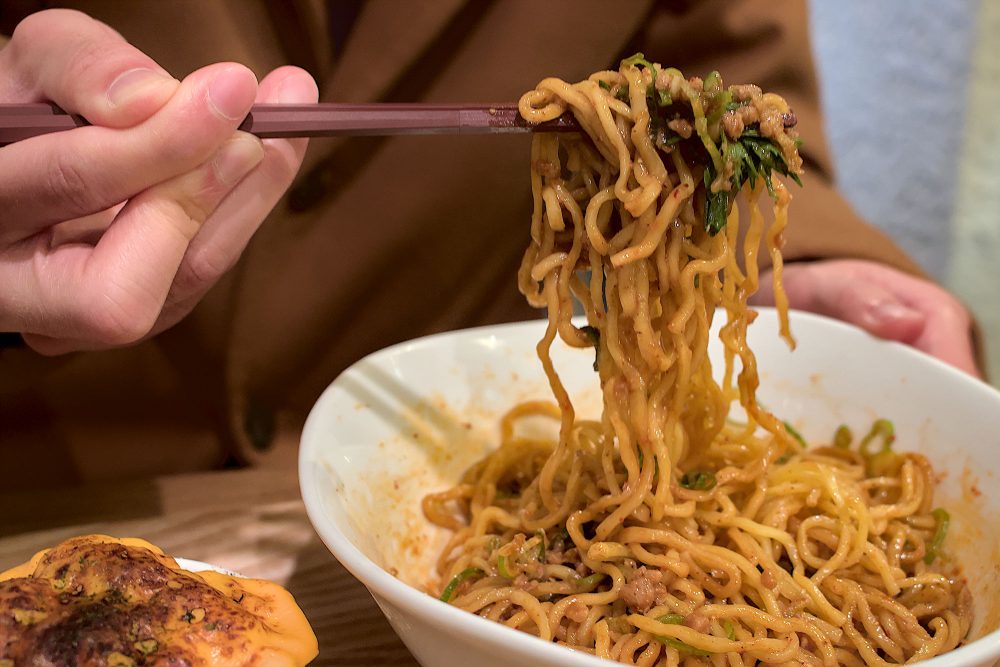
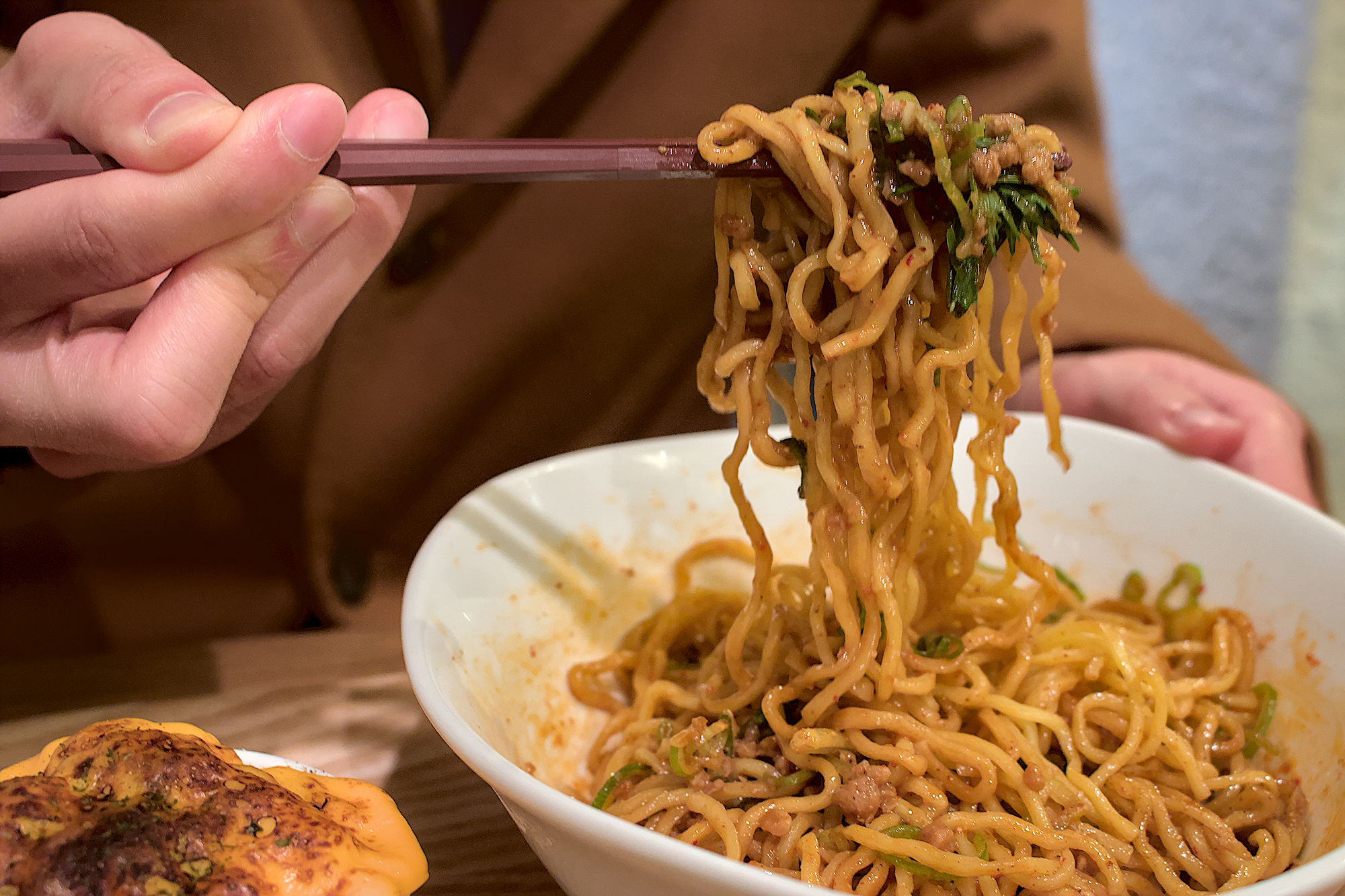
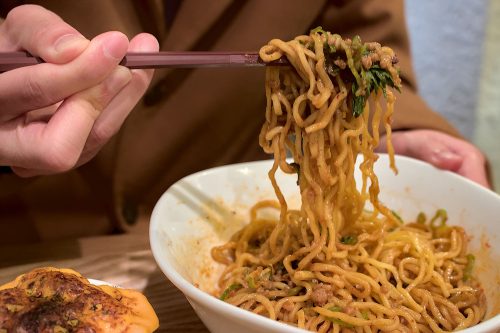
A bowl of shirunashi tantanmen at Shirunashi Dandan Noodle Masara. (Joy Photo / Michael Farrell)
Traditional Sichuan cuisine meets Japanese innovation in this popular modern adaptation that has become synonymous with Hiroshima’s ramen scene.
In 2001, the owner of Kisaku (きさく), a local ramen shop, encountered dan dan mian (担担面) in China’s Sichuan Province. Inspired by the dish, he experimented with the recipe and created what became shirunashi tantanmen (汁なし担担麺) which means “brothless tantan noodles.” Wowed by the new dish, other Hiroshima ramen shop owners made their own trips to Sichuan and today Hiroshima is known as the heart of Japanese tantan noodle culture.
Japanese cuisine is not usually known for intense flavors, and imported dishes are often mellowed, sweetened and umami-boosted to meet local tastes. However, shirunashi tantanmen is an exception. Chewy ramenesque noodles are topped with a thick sauce which you have to vigorously stir into the dish yourself before eating. The dish has a consistency similar to an Italian bolognese but with a South Asian flavor punch. With red chillies and Sichuan or sansho pepper as the central spices, the meat sauce is neither mellow nor sweet. While one spice burns the other one numbs in a one-two flavor punch that pleases many palates accustomed to the heat of cuisines from countries like Mexico, South Korea, Thailand and India.
While visiting tantan noodle restaurants, you are bound to see an English translation of the dish on the menu which may raise some eyebrows among English-speaking visitors: “soupless dandan noodles.” However, this popular mistranslation of shirunashi tantanmen does not mean that your noodles do not come with a side of soup. It just means that the dish, which is traditionally served in an oily broth, has no broth at all. It’s “soupless.”
Shirunashi Dan Dan Noodle Masara
One of the more popular locations for this uniquely Hiroshima take on the Sichuan dish is at Shirunashi Dan Dan Noodle Masara (汁なし担々麺 麻沙羅). Many customers gather to have a taste of Masara’s original spice blend. Pretty much every item on the menu can have its spiciness (the amount of chili pepper) and numbingness (the amount of Sichuan pepper) adjusted from zero (none at all) to four (the maximum amount), so you can customize your dish to your level of courage.
What makes Shirunashi Dan Dan Noodle Masara unique is not just the spice blend but its noodles. Masara uses thick and chewy hand-worked noodles made with Japanese domestic flour. The flat, irregular shape of these noodles helps capture the rich, spicy sauce. On top of that, the uniquely piquant sauce used in the shirunashi tantanmen not only contains chili pepper for its spiciness but also employs warming spices like cumin and cinnamon to achieve a distinctive flavor not available at other restaurants.
➣ See hours, map & visitor information.
Momiji Manju: Sacred Island Sweets
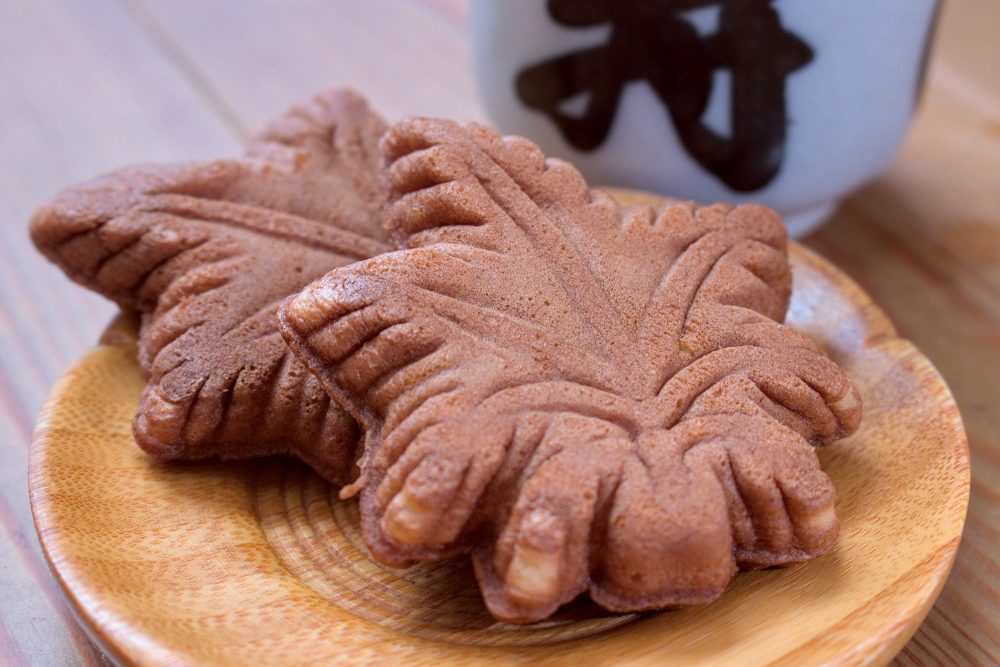
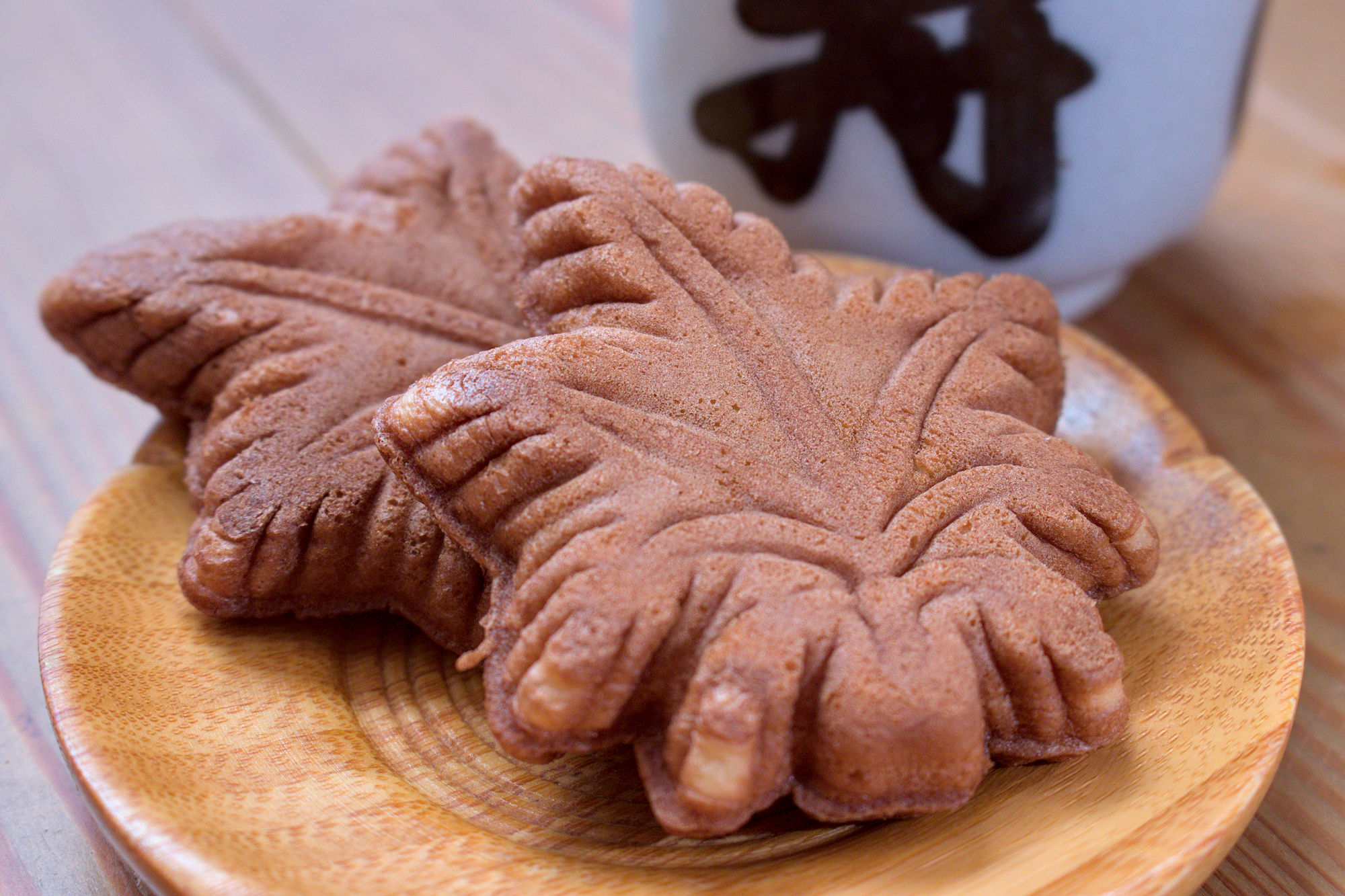
The “Original Momiji Manju” from Takatsudo, the treat’s inventor. (Joy Photo / Michael Farrell)
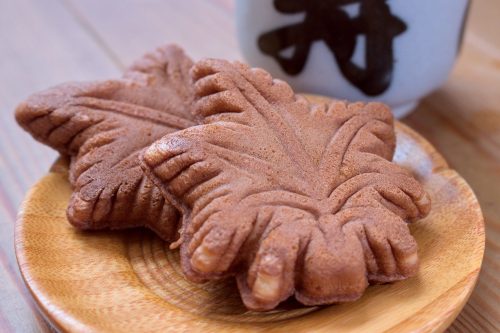
Few treats are as emblematic of Hiroshima — and Miyajima especially — as momiji manju. This bean-paste-filled castella cake shaped like a maple leaf was invented in 1906 by Tsunesuke Takatsu as a teatime sweet for the guests staying at Iwaso ryokan in Momijidani Park on Miyajima. The cake was so well received that Takatsu went on to found the first momiji manju shop.
The pastry quickly took off with various local confectionery shops creating their own versions for the many visitors to one of Shinto’s most celebrated islands. Today, there are dozens of momiji manju makers throughout the prefecture with the most famous concentrated around Miyajima and Hatsukaichi City.
While the original fillings were limited, most shops today offer a wide variety of fillings that range from chestnut to chocolate to cherry blossoms.
Read about some of our favorite momiji-manju shops below.
Takatsudo Honten: The Original Momiji Manju
There are many momiji-manju shops around Miyajima that are older than most people’s grandparents, but Takatsudo (高津堂) makes the original. Its main store, however, is not found on Miyajima. Takatsudo Flagship Store is located across the water from Miyajima on the mainland in the town of Hatsukaichi. The shop is one of the few momiji manju shops that still bakes them by hand. They use a reproduction of the founder’s original mold, which creates a realistic maple leaf complete with veins and teeth around the edges.
Like the original a century ago, Takatsudo’s momiji manju are known for their distinctive texture which is soft, moist and uniquely chewy. It offers a wide variety of fillings, flavors and seasonal specials too. We recommend the “Original Momiji Manju” and “Sake Kaoru Momiji.” The original is a reproduction of the momij manju that were first made by Takatsudo a century ago. Sake Kaoru Momiji, “Sake Fragrance Momiji” in English, meanwhile contains an aromatic white bean paste flavored with sake lees from nearby Saijo, one of Japan’s three major sake producing regions.
The flagship store is a three-minute walk from JR Miyajima-guchi Station. If that is too far out of your way, Takatsudo momiji manju are also sold at Hatsukoi Market just inside the ferry terminal to Miyajima. You can also find them in Hiroshima City at the ekie shopping mall located on the north side of Hiroshima Station.
➣ See hours, map & visitor information.
Momijido Honten
Momijido (紅葉堂) may not be the original, but it is nearly as old, just as delicious, and the creator of the treat’s most popular innovation. Located on the eastern end of Miyajima’s Omotesando shopping street, Momijido has been making momiji manju since 1912.
Momiji manju are normally baked in an iron mold. However, in addition to their usual baked manju, Momijido sells them deep-fried (あげもみじ · a-ge-momiji). Americans in particular understand the value that a deep fryer brings to almost everything. Fluffy castella cakes are battered, dropped in the fryer, and impaled on a stick — transforming the ordinary manju experience.
The reborn treat is hot and crunchy on the outside with a soft and tender inside. There are a total of five flavors to choose from, including the standard anko (sweet red bean paste), cheese, Setouchi lemon, and others.
Momijido takes the treat to a whole new level of flavor — and health concern — with their fried momiji ice cream (揚げもみソフト · agemomiji sofuto), which pairs fried momiji manju with vanilla soft-serve ice cream in a crispy waffle cone.
It should come as no surprise that these deep fried treats are very popular and have become iconic of a modern-day Miyajima trip.
➣ See hours, map & visitor information.
Hassaku Daifuku: Mochi and Citrus in Harmony
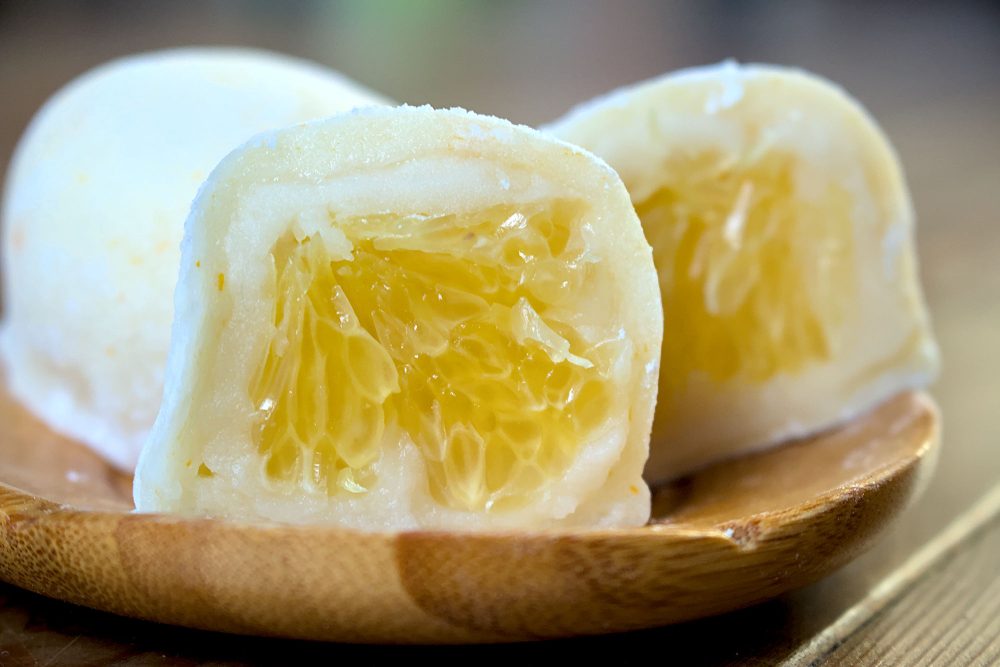
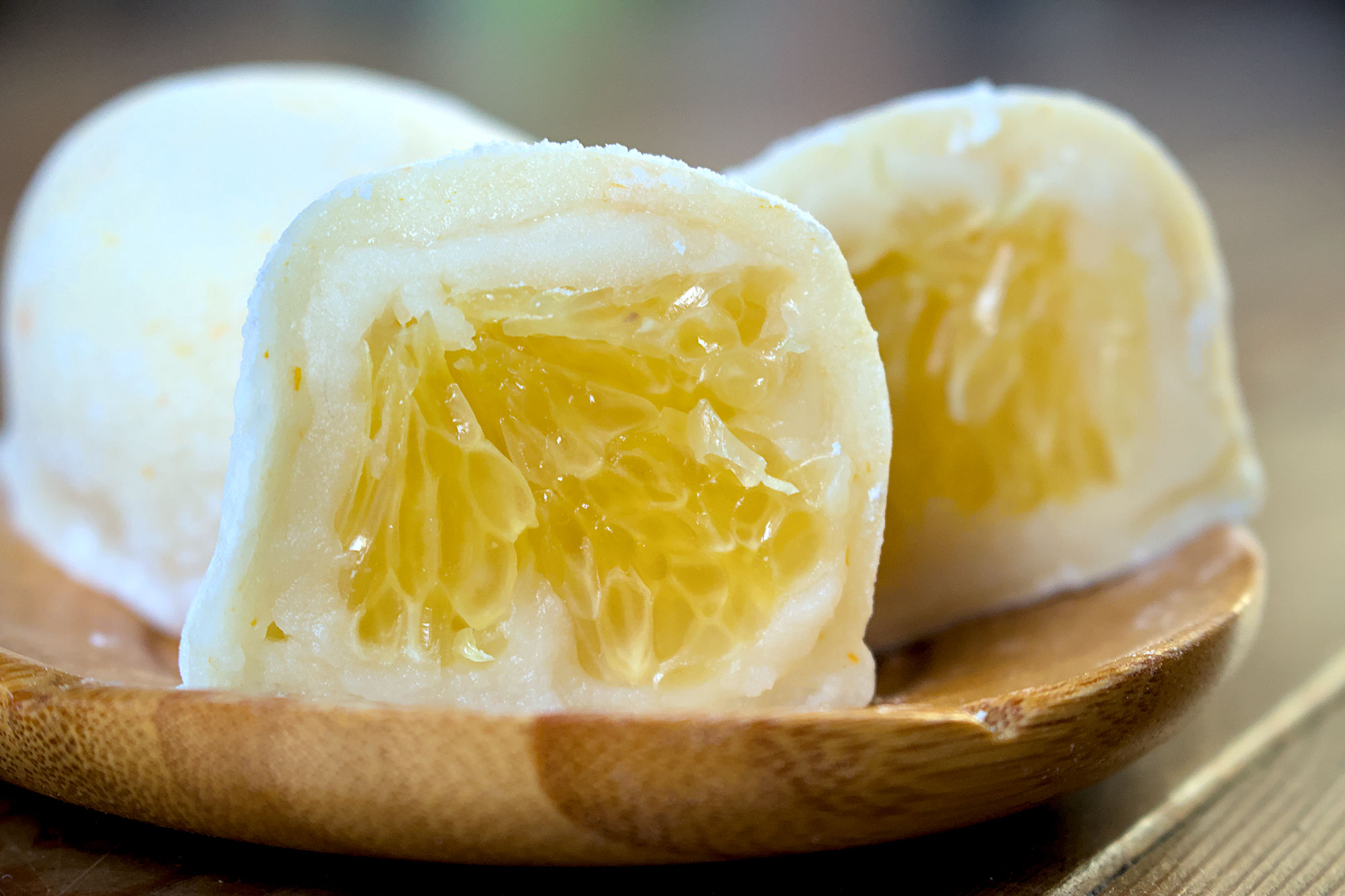
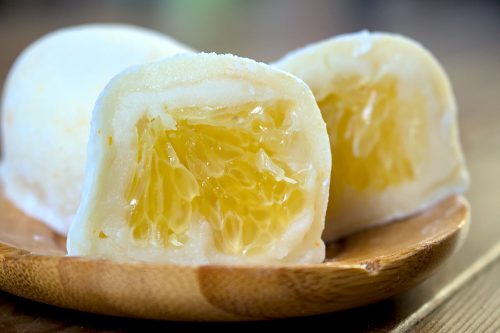
This is the original hassaku daifuku from the Kashihara Daifuku Company, which moved to Hiroshima City from Innoshima in 2013. Their sweets can sometimes be found in local supermarkets. (Joy Photo / Michael Farrell)
Japan has a delicious tradition of wrapping anko paste in soft mochi. This treat is called daifuku (大福), and often there is more inside than just anko paste. Many daifuku are stuffed with fresh fruits like strawberries — the most famous of the fillings. Hiroshima has its own unique contribution to this tradition, though. It is called hassaku daifuku (八朔大福). Instead of a strawberry or a muscat grape, under the layers of mochi and white anko is a local citrus fruit called hassaku. Hassaku look like large, shiny oranges. It is a fruit unique to Innoshima where it was discovered growing at a local temple. The taste, however, while orange-like, is less sweet, more sour and has bitterness to rival a grapefruit. Depending on your preferences, that may not sound very appealing on its own. However, hassaku’s flavor profile makes it an ideal balance to the sweetness of mochi and white anko. It is a popular and refreshing pairing, ideal for a summer treat or a seaside break from cycling on the Shimanami Kaido.
Hassakuya: Seto Island Sweets
The Shimanami Kaido is an island-hopping cycling route between Hiroshima Prefecture and Ehime Prefecture, and it cuts across hassaku’s home island of Innoshima. It is on this island, right after you cross the Innoshima bridge from Mukaishima, that you can find Hassakuya (はっさく屋), a shop that specializes in making hassaku daifuku.
There, you can enjoy a range of handmade Japanese sweets and coffee while looking over the calm waters of the Seto Inland Sea and the passing ships. In addition to hassaku daifuku, they make a variety of daifuku themed around big fruits, like their “jumbo strawberry daifuku” (ジャンボいちご大福) and “whole satsuma mandarin daifuku” (丸ごとみかん大福).
➣ See hours, map & visitor information.