Experience
Hiroshima Peace Memorial Museum: What to Know Before You Visit

Hiroshima Peace Memorial Museum is more than a collection of artifacts related to the first atomic bombing. It is a tightly controlled narrative with a rhetorical end.
Quick Facts
- ▪️Admission: ¥200 (Adults), ¥180 (High Schoolers), Free (Junior High and below).
- ▪️Time Needed: One to three hours or more depending on how deep you want to go.
- ▪️Reservations: Needed for expanded museum hours at the start and end of the day. Needed all day between August 8 and 16.
- ▪️Best Times to Visit: 7:30 to 9 a.m. / ~4:30 p.m. to half an hour before closing / 11 a.m. to 3 p.m. is the most crowded.
- ▪️Emotional Impact: High
- ▪️Suitability for Children: Contains graphic and disturbing content.
- ▪️Location: Hiroshima Peace Memorial Park / Downtown Hiroshima
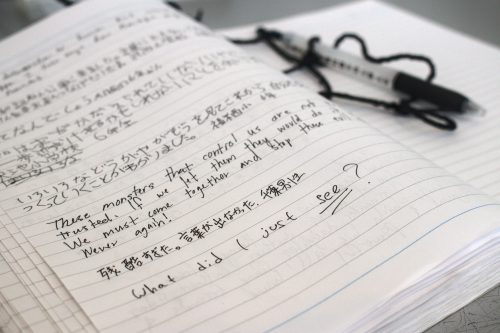
Visitors leave messages about their feelings in Peace Memorial Museum’s guest book. (Joy Photo / Michael Farrell)
A Museum with a Narrative Structure
Depending on the season, hundreds to thousands of people move pensively through the dark halls of Hiroshima Peace Memorial Museum. Some wipe away tears. Others hold their hands to their mouths in shock. Most walk through in silent reflection as they discover in graphic and sobering detail what happened in Hiroshima when the atomic bomb exploded on August 6, 1945.
While visitors can casually wander between classical works of art at Hiroshima’s Museum of Art or Five Days Children’s Cultural Science Museum, that is not how people move through Peace Memorial Museum. This museum immediately grabs you and takes you on an emotionally wrenching journey one exhibit room at a time. The layout along with the crowds direct your movement forward. Backtracking can feel like swimming upstream. Moreover, each exhibition room builds on the content of the last, forming a coherent picture of what the city and its people endured. Structured more like a novel than an encyclopedia, the organization is designed to facilitate the core message of the museum: “No more Hiroshimas.”
Peace Memorial Museum: Revised Edition
Following a major renovation and redesign completed in April 2019, the museum places the impact of the bomb on the city and its people front and center. While the former exhibit was known for graphic recreations of mutilated bodies, the current exhibit relies on a narrative structure told through historical images, A-bombed artifacts, the belongings of victims and the testimonies of survivors.
The exhibit is crafted for maximum emotional impact as it leads visitors from what the city was like before the bomb to the explosion at 8:15 a.m., then on through the aftermath and the consequences for the survivors. It concludes with the science of nuclear weapons, the historical events leading up to the bomb, the history of Hiroshima’s recovery, and the nuclear abolition movement today.
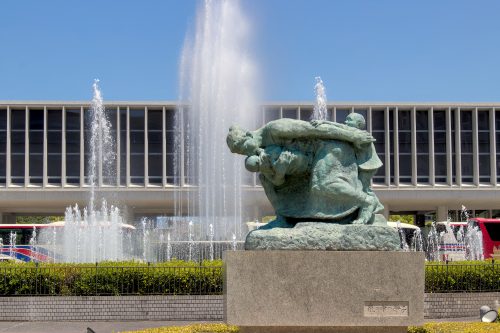
Peace Memorial Museum’s Main Building rises behind The Statue of Mother and Child in the Storm at the main entrance to Hiroshima Peace Memorial Park. (Joy Photo / Michael Farrell)
Entering the Museum
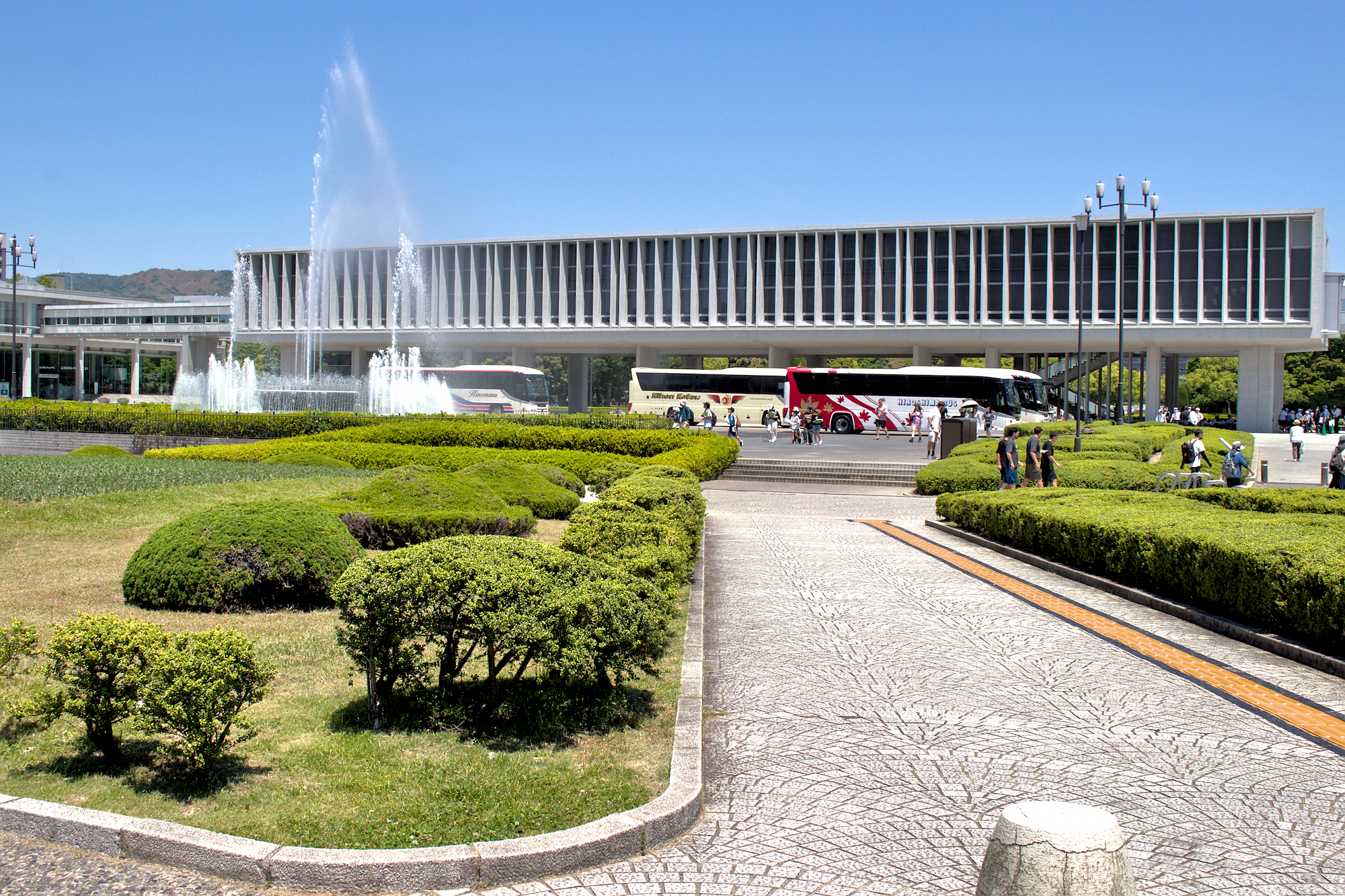
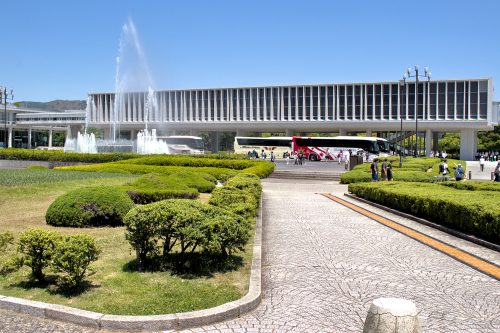
Approaching from the outside, one can’t help noticing the distinctive architecture of the museum designed by famed architect Kenzo Tange in 1949. Le Corbusier-inspired pillars (called pilotis) hold the ribbed Main Building roughly six meters (~19.5 feet) over the park. It rises above nearby tour buses and shades neat groups of school children seated on the pavement while they wait for directions from their teachers.
Upon walking in, visitors are directed to reserved or unreserved ticket lines. Those who did not make a reservation (which can be done through the museum website) arrive at automated ticket machines. Adults drop in ¥200 or use an e-payment and a ticket is printed on receipt paper.
At 11 a.m. in mid June, the floor is busy but not crowded. Natural light pours in from the wall-sized windows of the East Building.
A look to the left shows a group at the main desk renting audio guides for ¥500. The guides, resembling old music players with wired headphones and a shoulder strap, explain the exhibit as you walk through. Available in 15 languages, they hold 70 minutes of content activated by QR codes found throughout the museum.
A security guard invites visitors to scan ticket barcodes at a terminal before ascending a long escalator to the main exhibit. The lighting instantly darkens and becomes creamy as the exhibit begins.
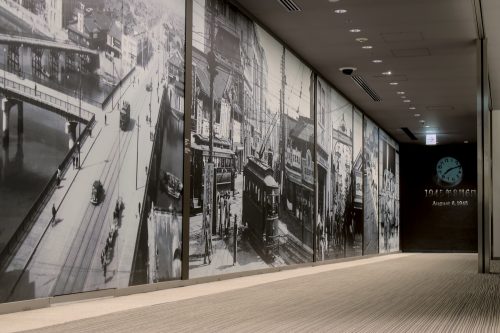
Scenes from 1930s Hiroshima cover the walls of the hall leading to the August 6, 1945 exhibition room. (Joy Photo / Michael Farrell)
Hiroshima Before the Bomb
At the top of the escalator, visitors come to a long hall with five ceiling-to-floor-sized photos of Hiroshima in the 1930s. The old city stands as big as if you had traveled back in time and witnessed it through a shop’s large windows.
Upon arrival, visitors are immediately drawn to the first image. “Is that the dome?” asks a boy to his father after their family glides up. The photo, apparently taken from the top of a tall building, shows Hiroshima’s former Nakajima District, the area now known as Peace Memorial Park. A trolley rolls over the bridge that a couple of decades later will be the Enola Gay’s target for the atomic bomb. And on the left along the Motoyasu River, standing intact, is Hiroshima Prefectural Industrial Promotion Hall, today’s Atomic Bomb Dome.
Most skim through the rest of the photos while on their way to the next exhibition room. A few are stopped by a photo of a young teacher posing with his elementary school class at the end of the display.
The size of the photos naturally encourages people to walk closer to the opposite wall so they can take it all in. However, in doing so they miss out on the captions. They are written in small text in the narrow space between the pictures. The captions describe historic scenes from well-known parts of the city that many tourists pass on their way to the museum like the intersection at Kamiyacho and Hondori Shopping Street.
In 15 minutes approximately 100 visitors passed through. Nobody stopped to read the captions.
Several walked through wearing audio guides. However, the first entry in the audio guide does not start until the next exhibit.
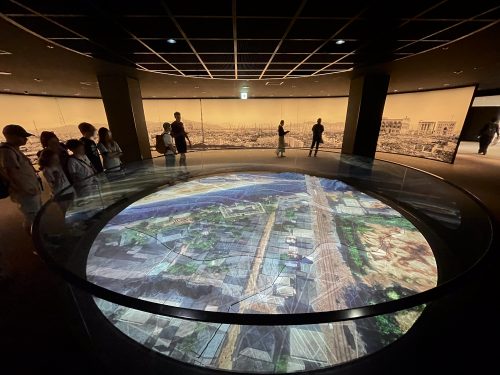
Visitors watch a recreation of the atomic bomb fall on Hiroshima. (Joy Photo / Michael Farrell)
August 6, 1945
The already dim lights get darker in the next exhibition room. Most people head for the center of the room where a circular, digital display on the floor simulates the dropping and explosion of the atomic bomb. People stand transfixed. The audible conversation of the last section is reduced to silence and whispers. Many stay and watch the tragedy unfold multiple times. Others leave for the next exhibit.
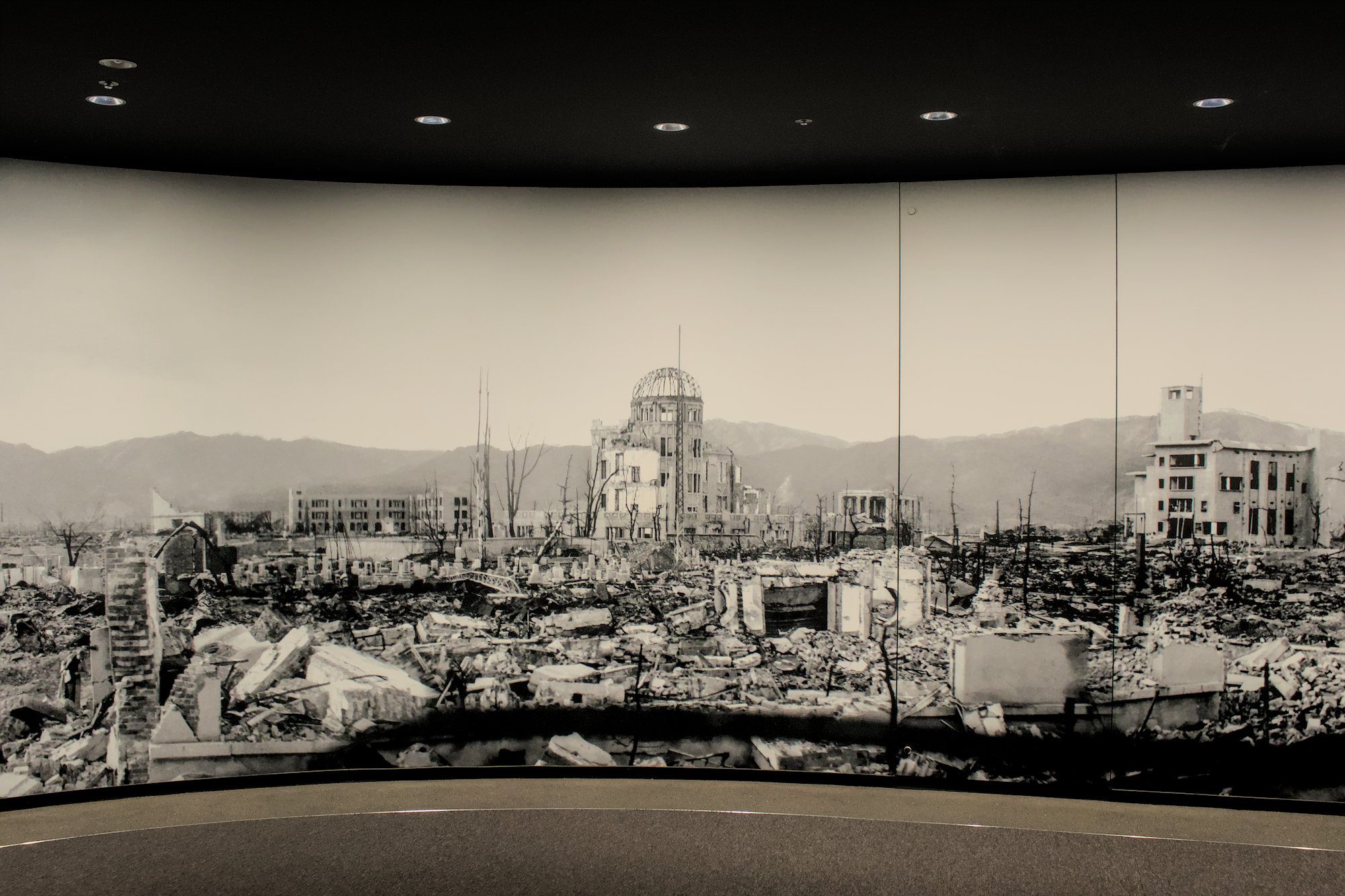
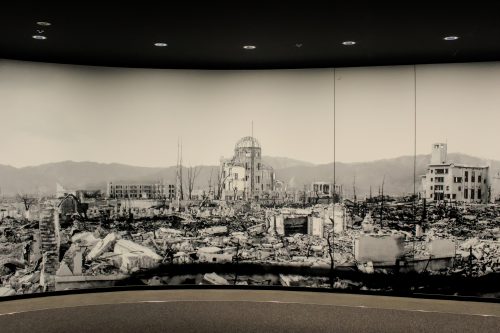
Meanwhile, the wall-sized image that wraps around the display is the least deeply examined. It is another ceiling-to-floor photo. This one is a panoramic photo of the destroyed city as taken from the hypocenter by the U.S. Army in 1945. It is the same image memorialized inside Hiroshima National Peace Memorial Hall for the Atomic Bomb Victims, a museum deeper in the park. The image covers much of the Nakajima District seen in the last exhibit. A thoughtful comparison of the two images reinforces the dramatic effects of the atomic bomb on the city.
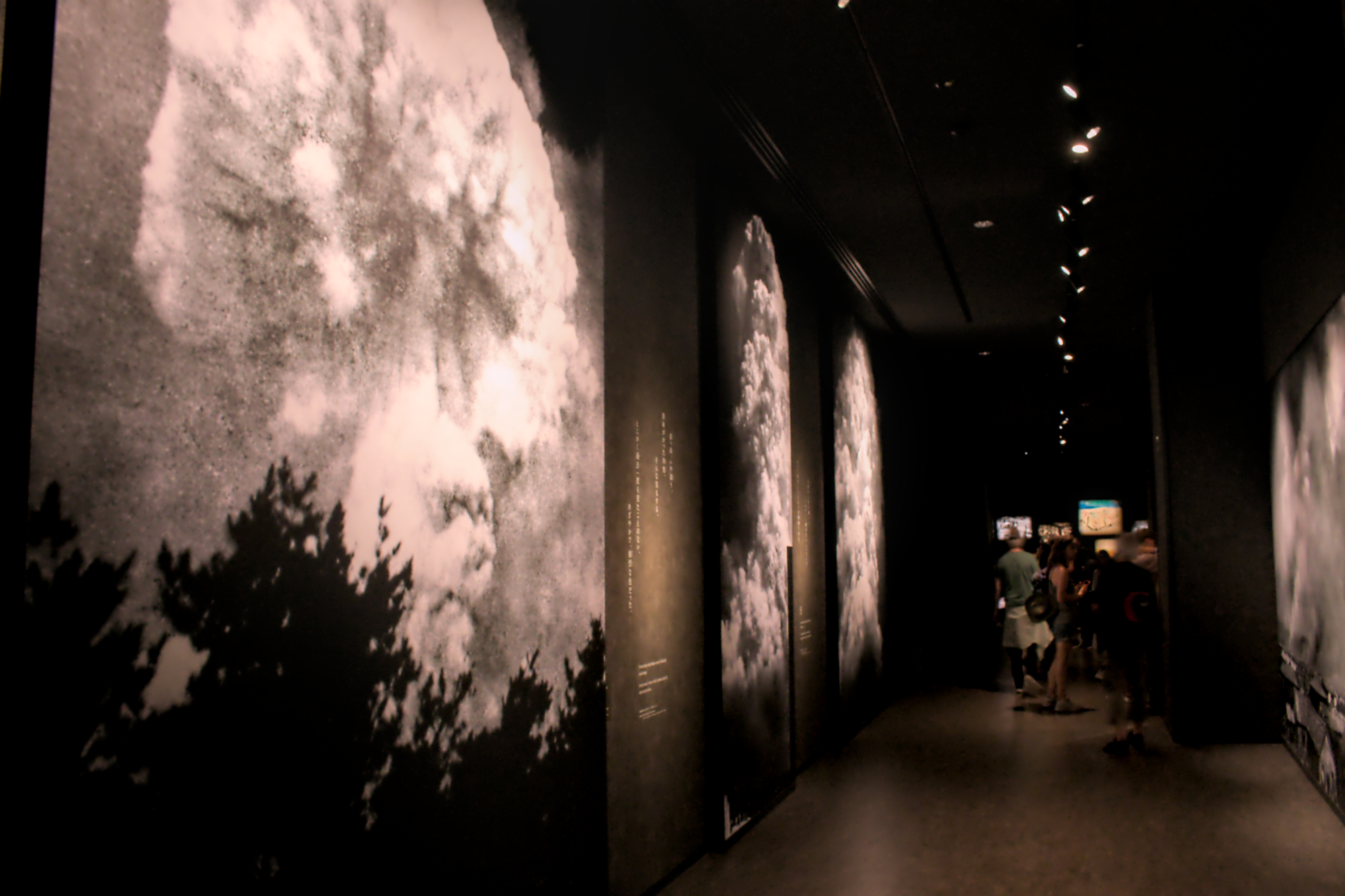
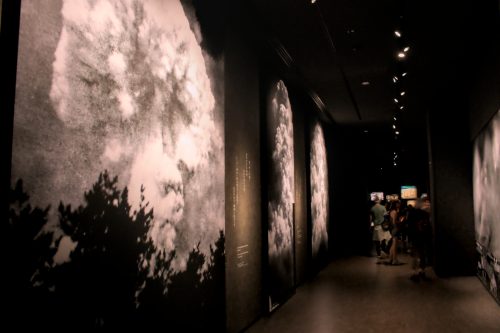
From here, one passes down a long, dark corridor into the Main Building.
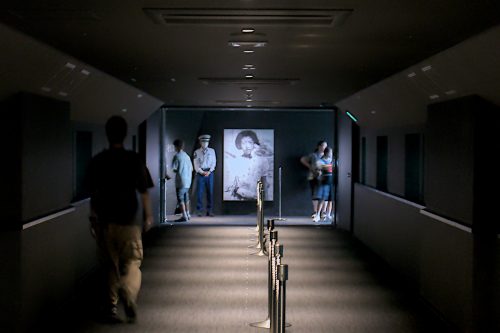
Visitors pass through a long dark hall to get to the permanent exhibits in the Main Building. (Joy Photo / Michael Farrell)
Reality of the Bombing
The Main Building is where visitors really slow down. It contains the museum’s core exhibits divided into four sections: “Devastation on August 6,” “Damage from Radiation,” “Cries of the Soul,” and “To Live.”
The arrested movement begins right away as visitors are stopped in their tracks by the photos of Yoshito Matsushige, a photojournalist for Hiroshima’s Chugoku Shimbun (which is still in publication). Matsushige miraculously survived the bomb and immediately went outside to take pictures. Matsushige was the only person to capture the situation on film immediately after the bombing. Other photographers were present, but the scenes were so horrific they couldn’t bring themselves to press the shutter.
In the museum, people start pausing in front of pictures and captions. After looking deeply, an older man shakes his head.
The photos themselves only reveal half the story. The emotional depth comes from the quotations.
One set of quotes injects sounds into the scene the photos create. People shouting, “Help me!” and “Water please!” A “half-crazed” mother holds her small child, calls its name repeatedly and cries, “Open your eyes! Open your eyes!”
Another quote shows you what the photographer decided not to. Matsushige wrote this about a group of victims he photographed:
“Their hair was scorched and frizzy. Their faces, arms, backs, legs — their whole bodies were badly burnt. Blisters had burst and sheets of burnt skin hung from them like rags.”
From here until the end of the exhibit, visitors are confronted with about 500 artifacts that cannot be understood on their own. Some visitors have audio guides, but most do not. These visitors have to read. Most do.
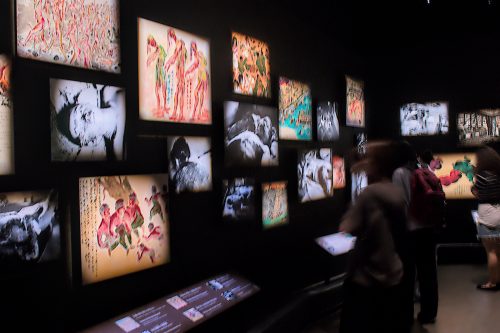
Photos and paintings from survivors shine from the wall in one of the most graphic displays at the museum. (Joy Photo / Michael Farrell)
Graphic Content
Few go through the next set of exhibits quickly. More than previous sections, the Main Building’s graphic content warning to parents and educators becomes relevant. They advise “parents and teachers prep children well and pay close attention to their response.”
A large crowd of visitors stares at a wall of photographs and artwork from survivors. The naked, burned and mutilated forms of human beings in the most dire situations glow from those images illuminated in the dark room from behind. The vividly colored paintings give context for the lack of color in the black-and-white photographs.
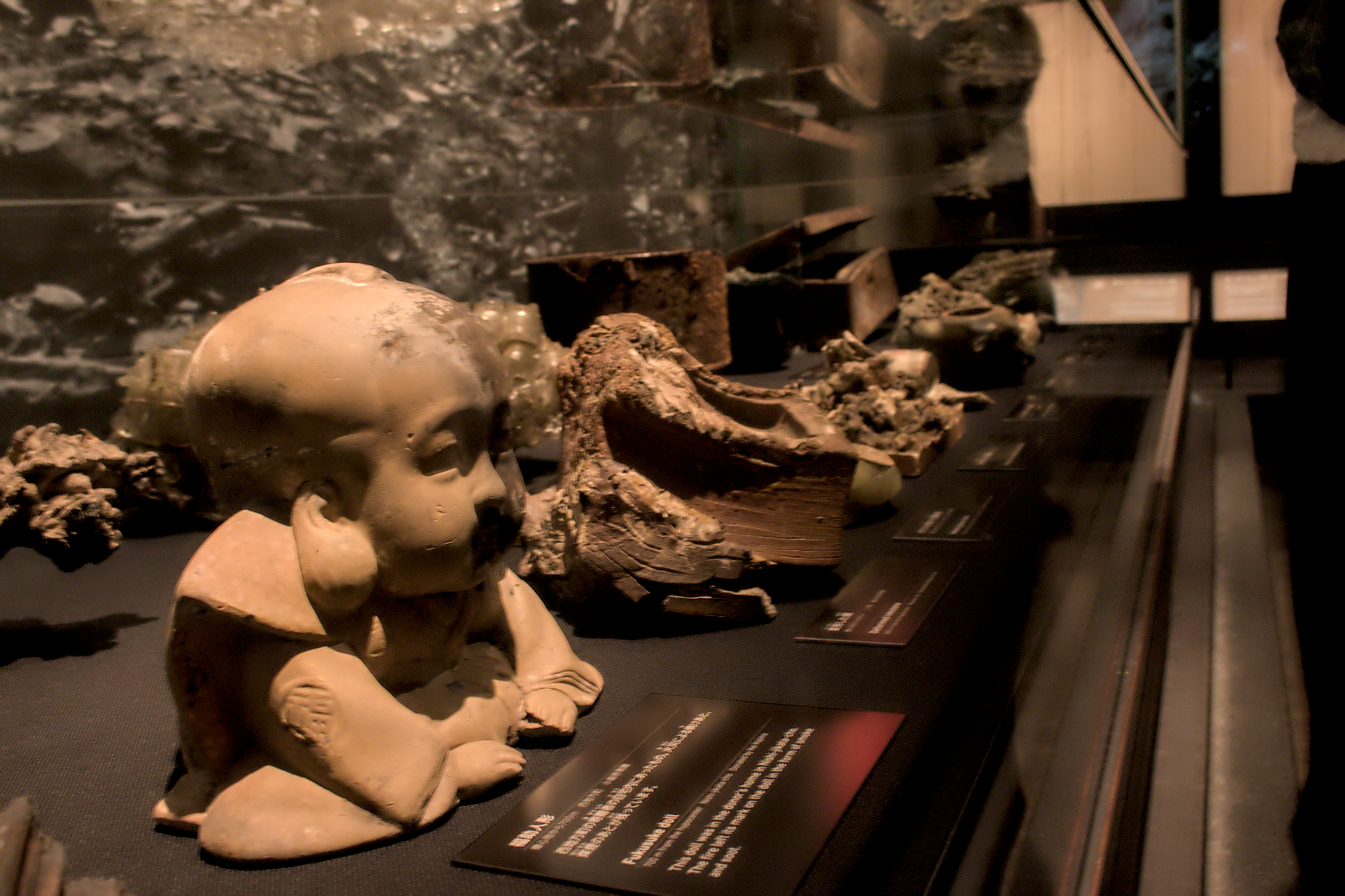
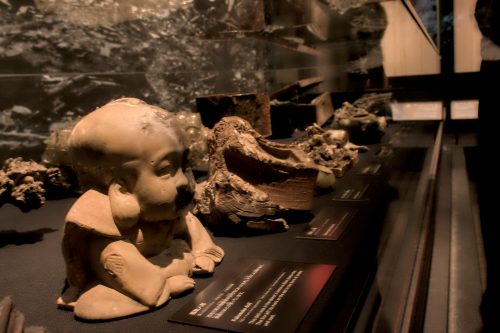
Across the hall lie collections of twisted, sheared, fused and melted architectural materials.
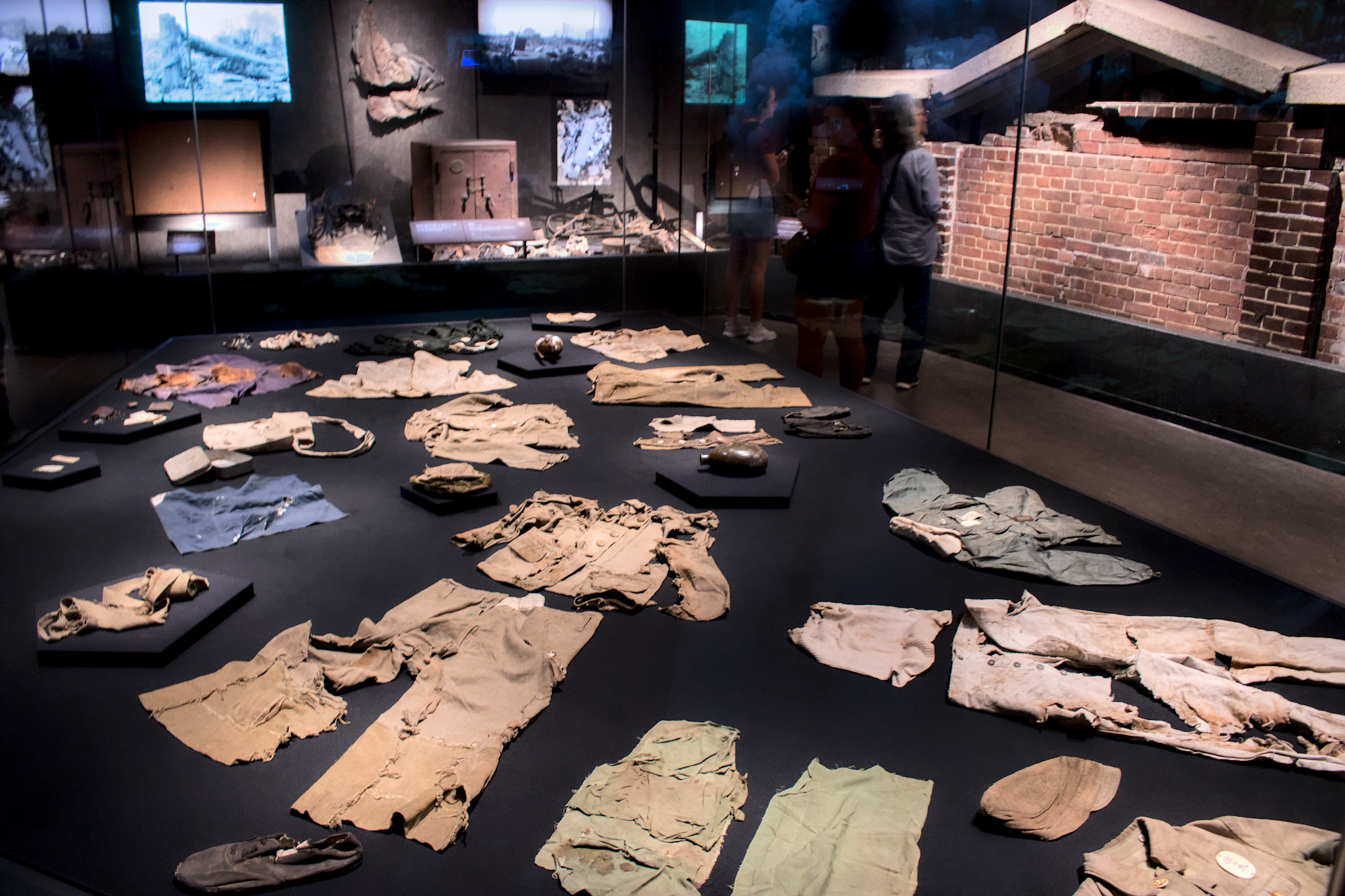
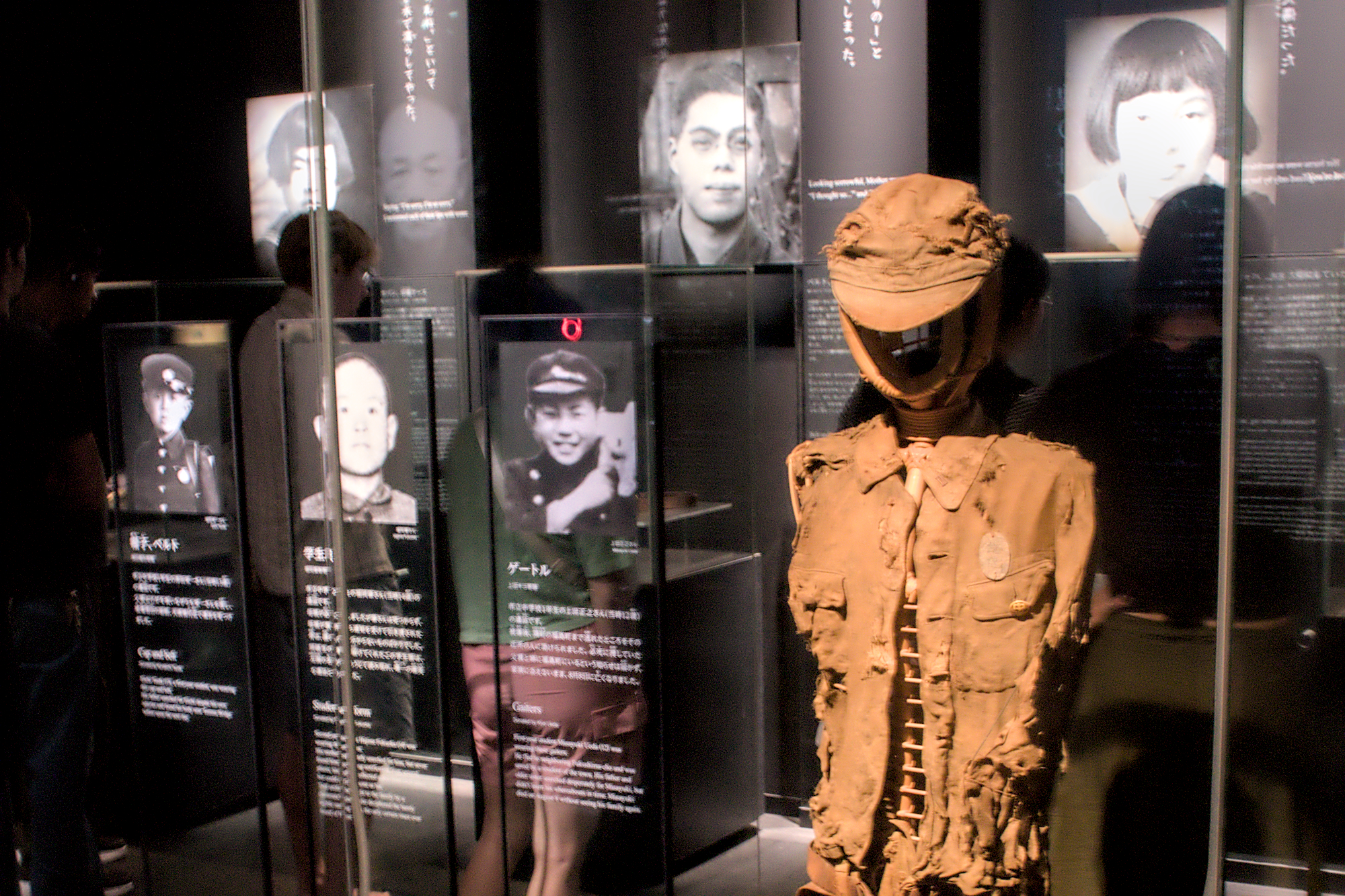
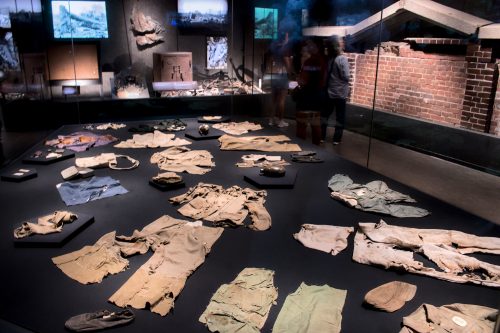
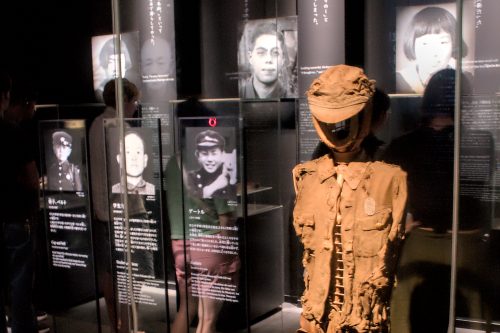
Less people stand and linger around the center exhibit. There lie the shredded school uniforms of 22 children aged 12 and 13 who died in agony from severe burns. The children’s names and 18 of their photos are displayed next to the case.
A tall man stifles tears while looking at the list.
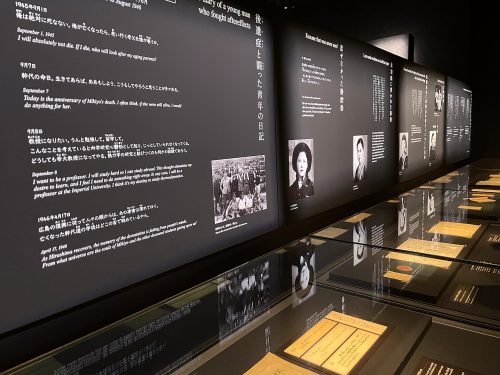
Written materials are on display such as diary entries of survivors of the atomic bombing in Hiroshima. (Joy Photo / Michael Farrell)
Dense Reading
The amount of reading needed to understand what you see increases, further slowing down lines of visitors.
“Cries of the Soul” gets deeper into the stories of the victims. The line of visitors curves to the left past portraits of victims and display cases of their abandoned belongings.
It is 2 p.m. The crowd is getting thicker as people start arriving from lunch.
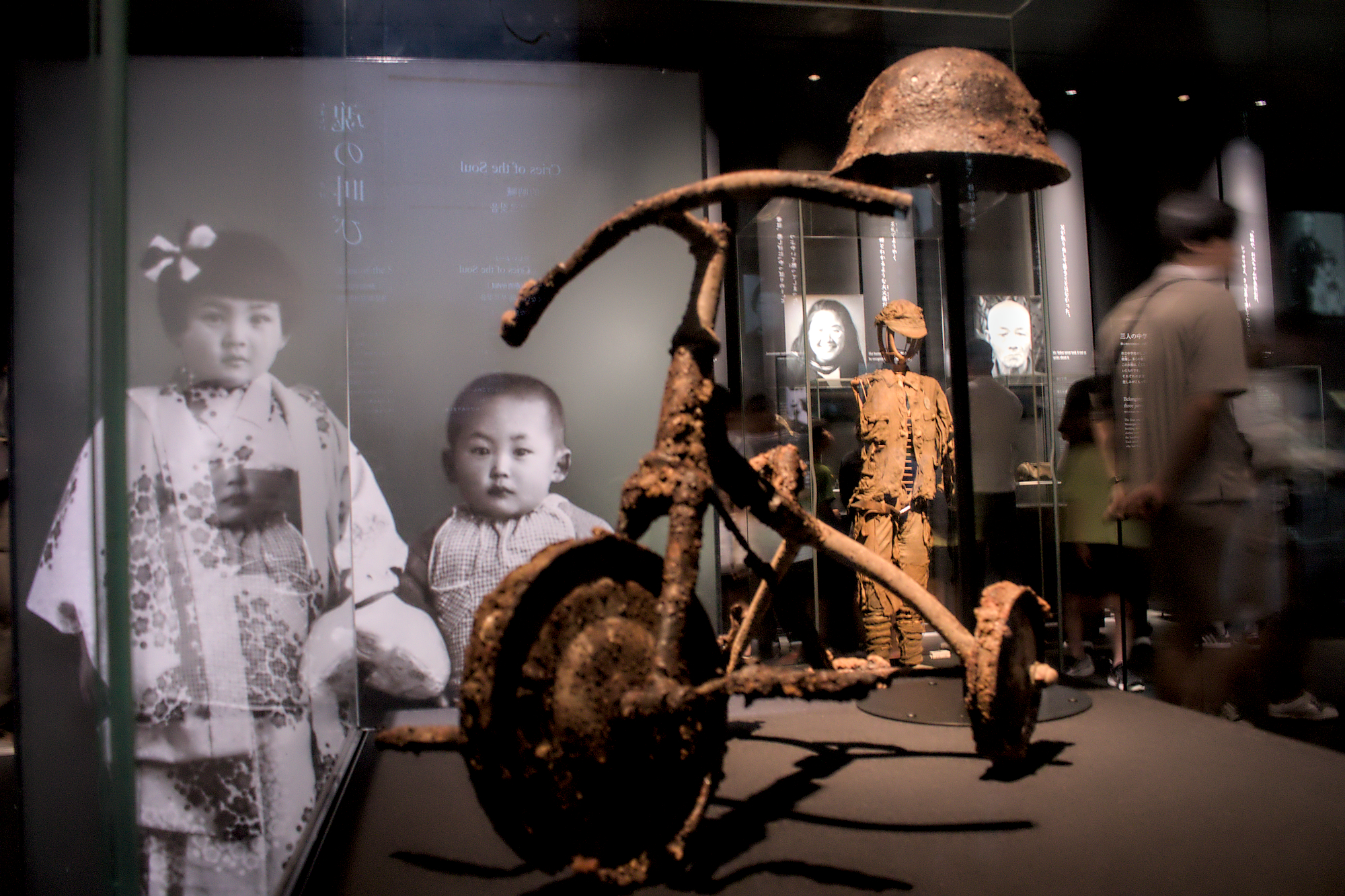
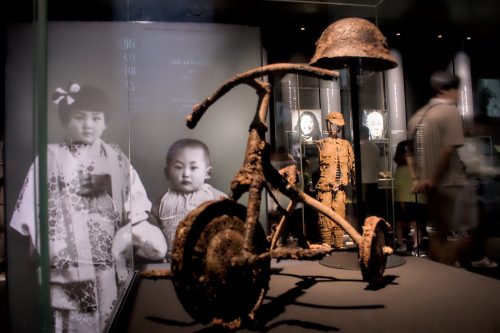
Fewer visitors take a deep look at the glass display case in the center. It holds a corroded tricycle and a helmet that belonged to 3-year-old Shinichi Tetsutani who, though 1,500 meters from the hypocenter, died from severe injuries and burns. The photo behind the case shows Shinichi with his older sister Michiko, who was trapped in their burning house.
In the next room, people pause over diary entries of victims, people who survived but suffered from crushing loss, severe health issues, and struggles for basic day-to-day survival.
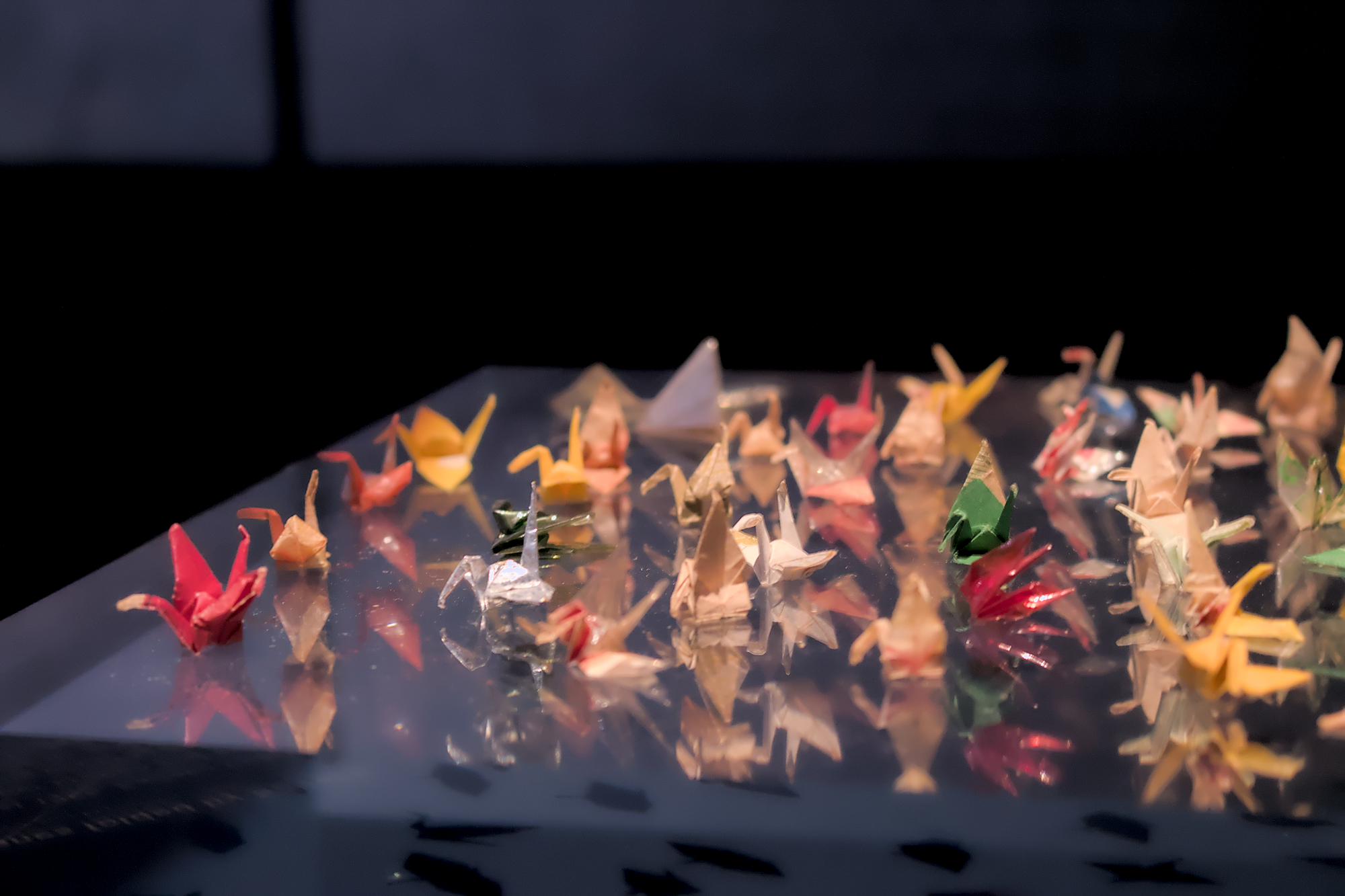
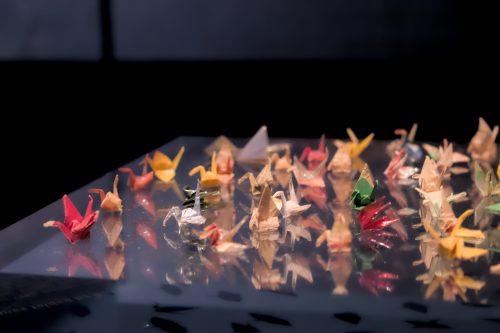
Among these is the story of Sadako Sasaki, who was a toddler when the bomb detonated yet developed leukemia two months before her 12th birthday. Hoping that her prayer for healing would be granted, she folded over 1,000 paper cranes. She died 11 months later in 1955. Her classmates erected the park’s Children’s Peace Monument in her memory. Some of Sasaki’s paper cranes are on display at the museum.
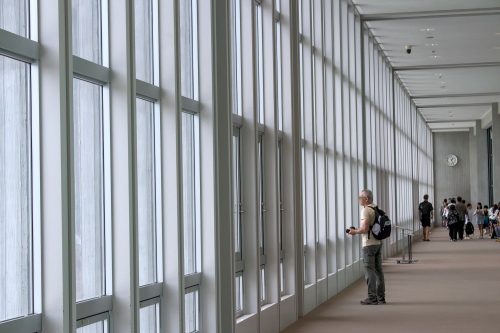
A man looks out at Peace Memorial Park in the north-facing gallery at Peace Memorial Museum. (Joy Photo / Michael Farrell)
In the Light of Peace Park
When visitors emerge from the main exhibit, they come to a long gallery with tall windows. The room stretches the length of the main building on the side facing Peace Park. After emerging from the visually and emotionally dark exhibit, the open space and natural light provide needed relief.
Some walk straight through to the other side. Others sit on the padded benches checking their phones. A handful notice the expansive view over Peace Park and take out their cameras. In the distance, school groups take turns getting their photo taken in front of the Cenotaph for the Atomic Bomb Victims. Behind it lies the Pond of Peace and the Flame of Peace. Beyond them rises the Atomic Bomb Dome. In the original design of the park, this is where people were expected to explore after visiting the museum. After learning about what happened, visitors can better understand the rest of the park.
There is much more to this space than a place to rest and watch the park, though. Along the back wall, some unobtrusive posters illustrate the construction history of the museum. Halfway down the hall directly opposite the Cenotaph is a map of the park, and opposite the map rises a roughly 3.5 meter (12 ft) high bronze map of Nakajima District.
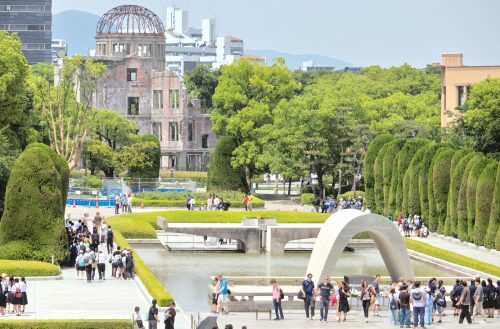
The view of Peace Park from the north-facing gallery windows of the Main Building of Peace Memorial Museum. (Joy Photo / Michael Farrell)
Not Finished Yet
The Main Hall of Peace Memorial Museum can take anywhere from 30 minutes to three hours to complete, depending on how deep you want to go, how fast you can read, and how crowded it is.
Emerging from the dimly lit exhibit feels like coming out of the cinema after an emotional film. However, the story is not over yet. Down the hall, back in the museum’s East Building, are even more exhibits, enough to fill another hour or two.
In total, one should reserve two to five hours to explore the entire museum.
For those who start exploring between 10 and 11 in the morning, the gallery is where many start facing logistical hurdles and basic human needs like lunch. However, there are no cafés or restaurants inside the exhibit area. Many rush through the rest of the museum on their way to their next meal, their next train, or to see the rest of Peace Park before they run out of time.
This is intentional on the part of the museum. The exhibits that follow, while important, are not as impactful as the main exhibit. Before the 2019 renovation, people passed through these sections first. However, this meant that people often ran out of time in the main exhibit and rushed through the most important part.
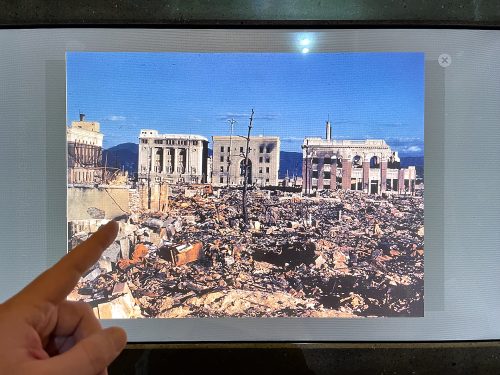
A color photo of Hiroshima’s condition after the atomic bombing as seen from an interactive screen in the Dangers of Nuclear Weapons exhibit on the third floor of the East Building. (Joy Photo / Michael Farrell)
Rushing Through: What You Miss
Just as you arrive back in the East Building, there is a lounging area on the left with a large TV screen. This is the A-bomb Survivor Video Testimonies section. In contrast to the crowded main exhibit, no more than a dozen people are lounging. Only seven of them actively watch the testimony playing on the screen. Invisible from the main walkway, at the far end of the lounge, a hallway cuts right along the outside wall. It is just after the restrooms. Along that corridor are individual booths for watching video testimonies.
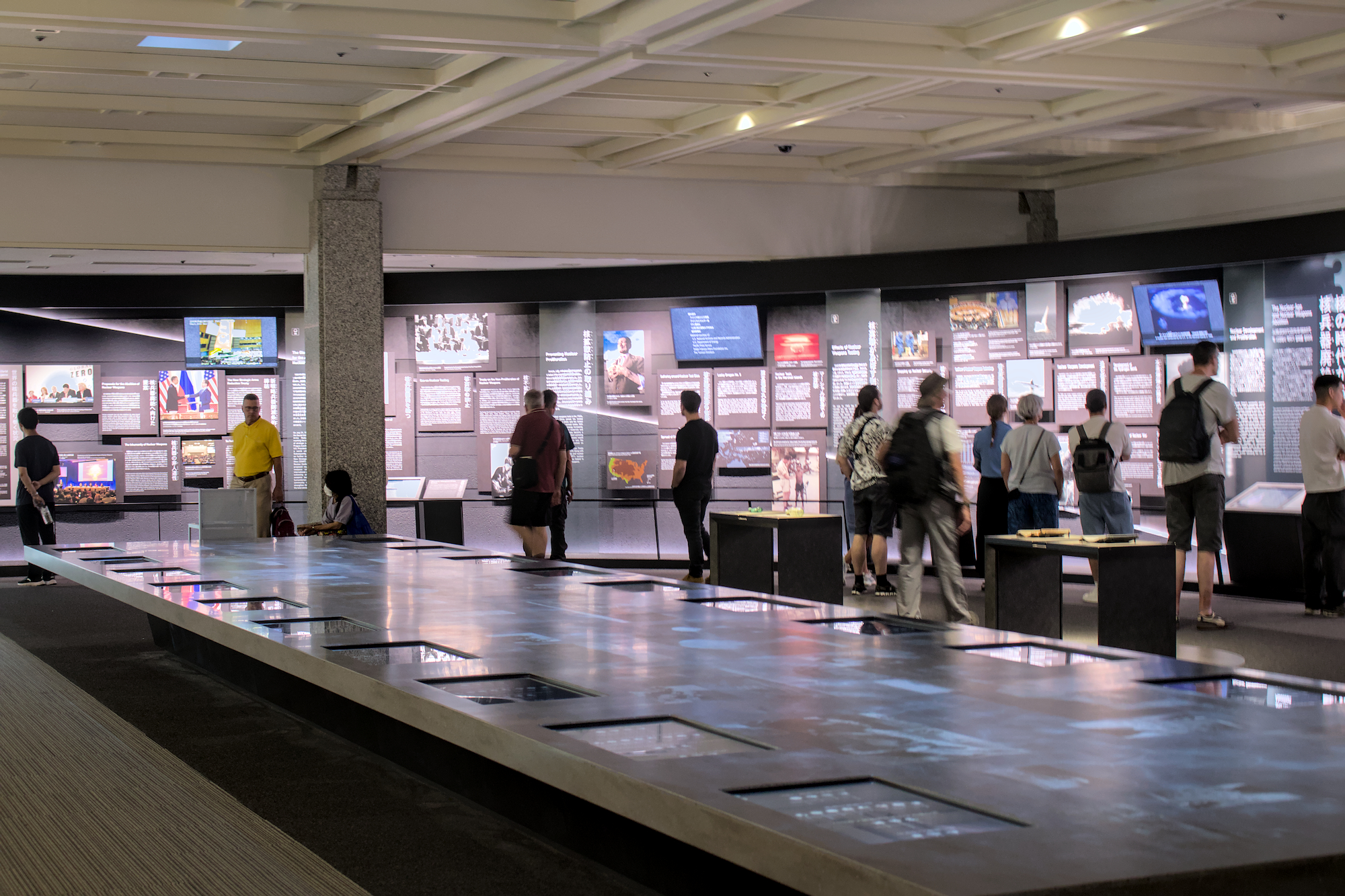
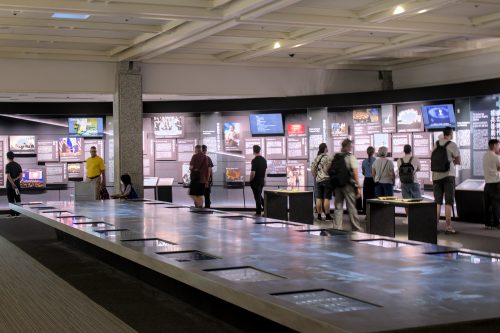
Continuing straight, you end up in a wide hall dedicated to explaining the dangers of nuclear weapons and the nuclear abolition movement. Most visitors are making their way along the wall reading the many exhibit plaques. Fewer are taking advantage of the interactive media table in the center of the room where visitors can find unique media like color images of the city after the destruction.
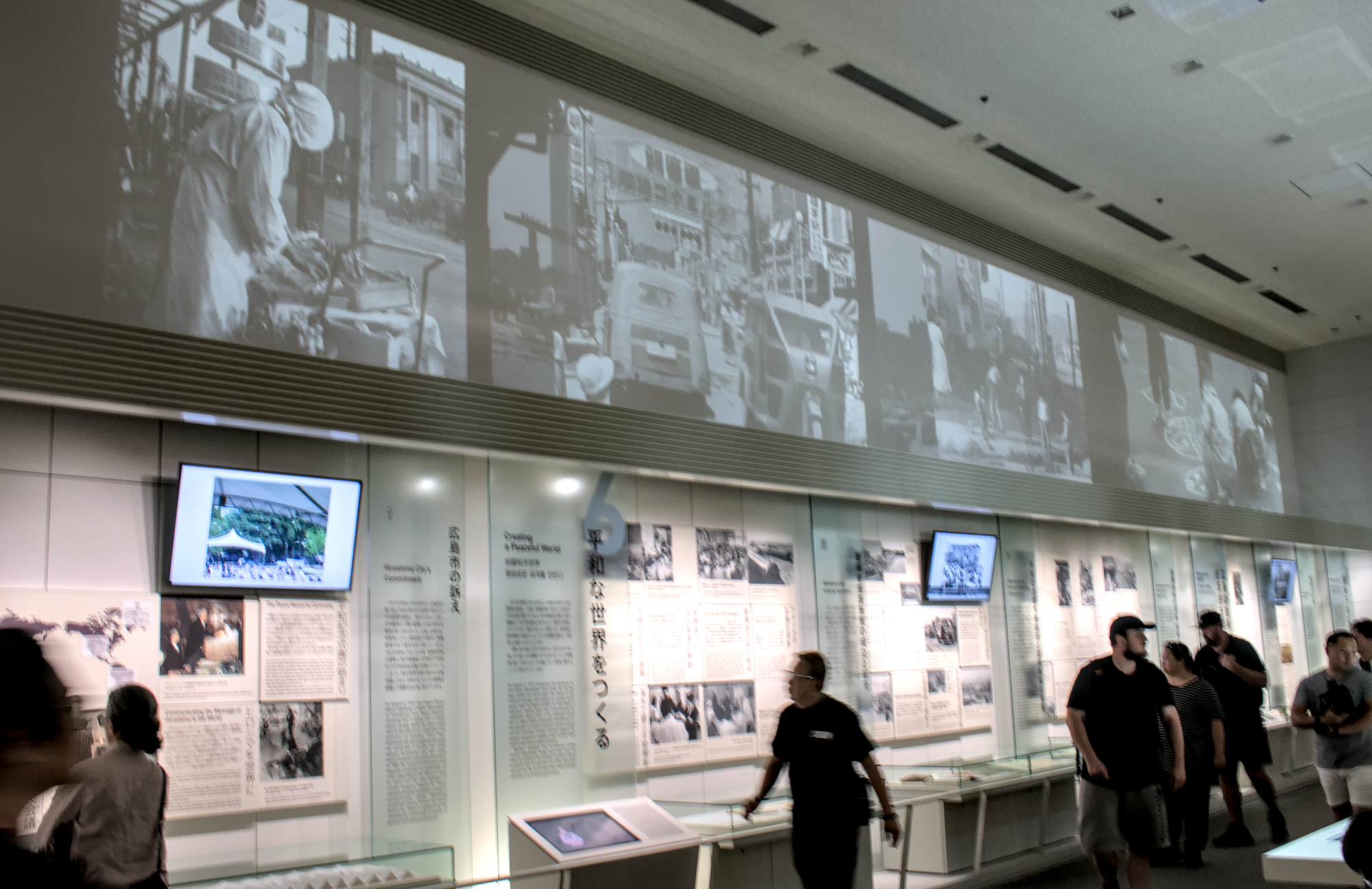
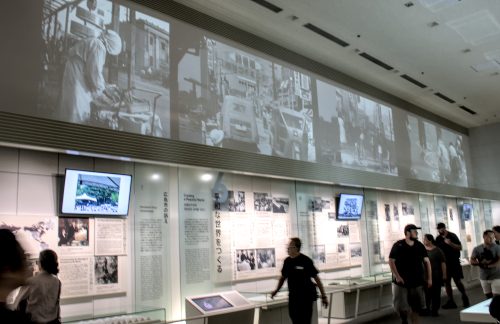
The final permanent exhibition area explores Hiroshima’s history from the start of the war through its recovery and its mission to build a peaceful world. The layout is identical to the previous exhibit with most of the content on the walls and a touch-screen media table in the center. However, a frequently overlooked feature is a slide-show projected high on the wall over the main displays. Scenes from Hiroshima’s growth and return to life flicker across the wall, revealing scenes of the old Hiroshima Station, a survivor running a street stall, and more.
Back on the ground floor, you can find a special exhibition hall. There is also a gift shop and a café. The café sells ¥500 ice cream flavors such as matcha, black sesame and banana chocolate milk. One wall is lined with a variety of drink vending machines. Hiroshima souvenirs like paper crane magnets can also be bought. At 3 p.m., all the café tables are taken and people are sitting outside along the wall on benches.
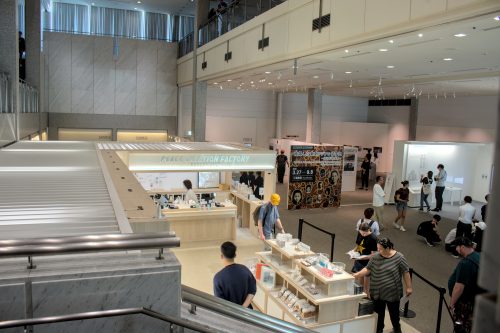
Peace Memorial Museum’s gift shop (Joy Photo / Michael Farrell
Getting There
Depending on the experience you are aiming for, there are multiple ways to get to Peace Memorial Park from Hiroshima Station.
The most direct way is to take the Maple Loop bus. This is the best choice for people on a tight schedule or who want to experience Peace Memorial Park the way the architect designed it to be experienced. From 9 a.m. to 6 p.m., a bus leaves about every 15 minutes. The routes are different, but they all lead to the Peace Memorial Park (Hiroshima Peace Memorial Museum) bus stop in about 15 minutes.
If you want to explore Peace Park and save the museum for last, take Hiroden Tram Line 2 or 6 to Genbaku Dome-mae Station. The northern end of Peace Park is on your left as you pull into the station. The museum is on the southernmost end of the park.
If you intend to go shopping in Hondori before visiting the museum, take Hiroden Tram Line 2, 6 or 1 to Hatchobori Station. Hondori is one block south. If you explore walking west along Hondori, you’ll eventually end up at Peace Park. Bear in mind that the 850-meter walk to the Peace Park from the eastern end of Hondori takes 12 minutes without distractions and crowds.
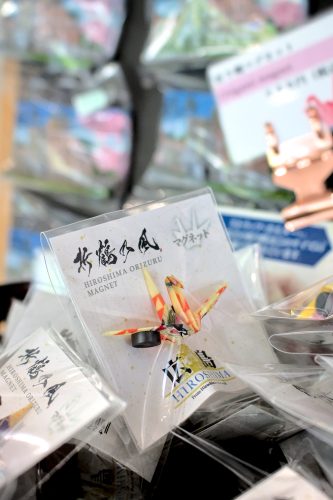
Souvenirs on sale at the first floor café at Peace Memorial Museum. (Joy Photo / Michael Farrell)
Quick Lunch Nearby
If you get lost in the story of the museum and skip lunch, here are some nearby stops to refuel before continuing your exploration of the park.
Most eateries near Peace Memorial Museum close between lunch and dinner. However, a few have more flexible hours while also having great food.
Five minutes to the south is Hiroshima Tsukemen & Abura Soba Karapokkuru. Open from 11 a.m. to 10 p.m., this second story shop specializes in tsukemen, a local style of brothless ramen served with a spicy noodle dipping sauce. The menu is in English and the prices are reasonable by local standards.
For a lighter meal, around the corner is Wildman Bagel — one of Hiroshima’s highest rated bagel shops. With over 15 flavors of bagels like Zunda Pepper Cheese, Matcha and Black Bean, and Iyokan with Lemon Cream Cheese, the selection here breaks North American expectations of what a bagel is. There is no seating, but nearby Peace Park has many shaded benches and trash bins. Wildman is open from 9 a.m. to 5 p.m.
Open Hours
Peace Memorial Museum’s Hours change seasonally. It is closed from Dec. 30 to 31 and in the middle of February. Admission ends 30 minutes before closing.
▪️Dec. to Feb.: 7:30 a.m. to 6:00 p.m.
▪️March to July: 7:30 a.m. to 7:00 p.m.
▪️Aug.: 7:30 a.m. to 8:00 p.m.(to 9:00 p.m. on Aug. 5 and 6)
▪️Sept. to Nov.: 7:30 a.m. to 7:00 p.m.
Written by
Michael Farrell is a reporter and editor who began traveling the world in 2010. His publishing career started in New England, first at the Gloucester Daily Times and later as a copy editor with boutiq…More