Buy
Eight Products to Beat the Heat in Hiroshima

[Updated 7.21.2026]
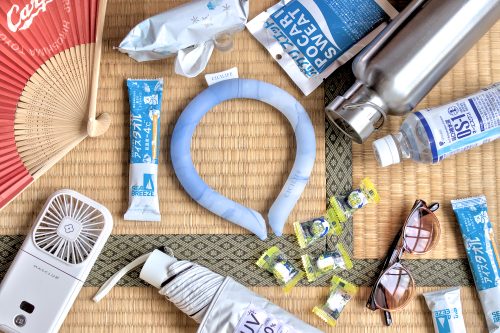
Beat the heat while traveling in Hiroshima during summer. The city’s most popular sites, Peace Memorial Park and Miyajima, are largely outdoor experiences. However, between July and September, Hiroshima is hot and muggy with highs up to 35°C (95°F). This is compounded by average summer humidity around 84 percent.
That’s not just uncomfortable, if you are not careful it’s a risk for heatstroke. The Japanese are very aware of this. As a result, every summer the drugstores are filled with products to beat the heat. So whether you’re exploring Peace Park or Miyajima, here are eight products to help you stay cool, hydrated, refreshed and smelling your best.
(Joy Photo / Michael Farrell)
Cool Rings
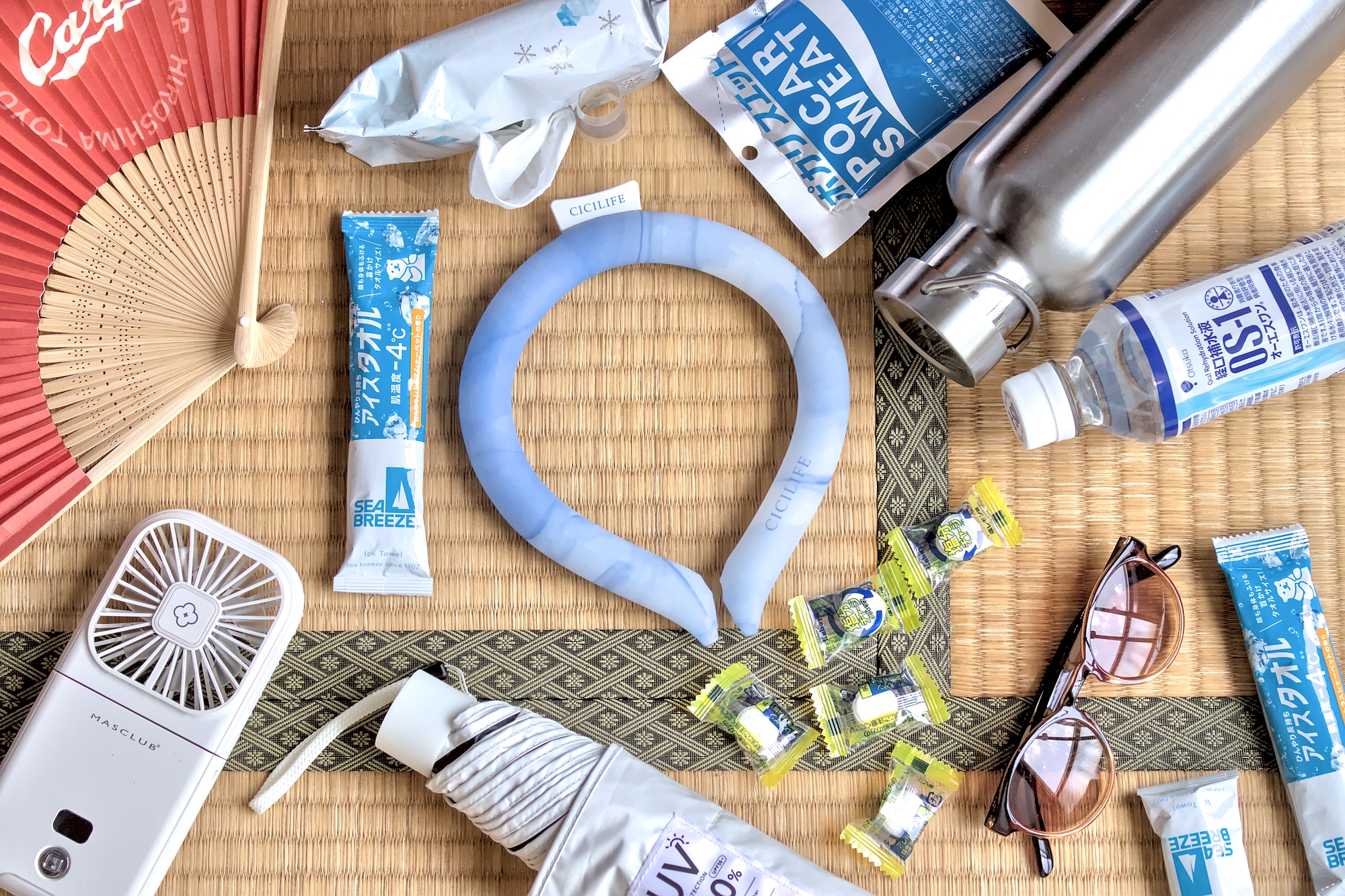
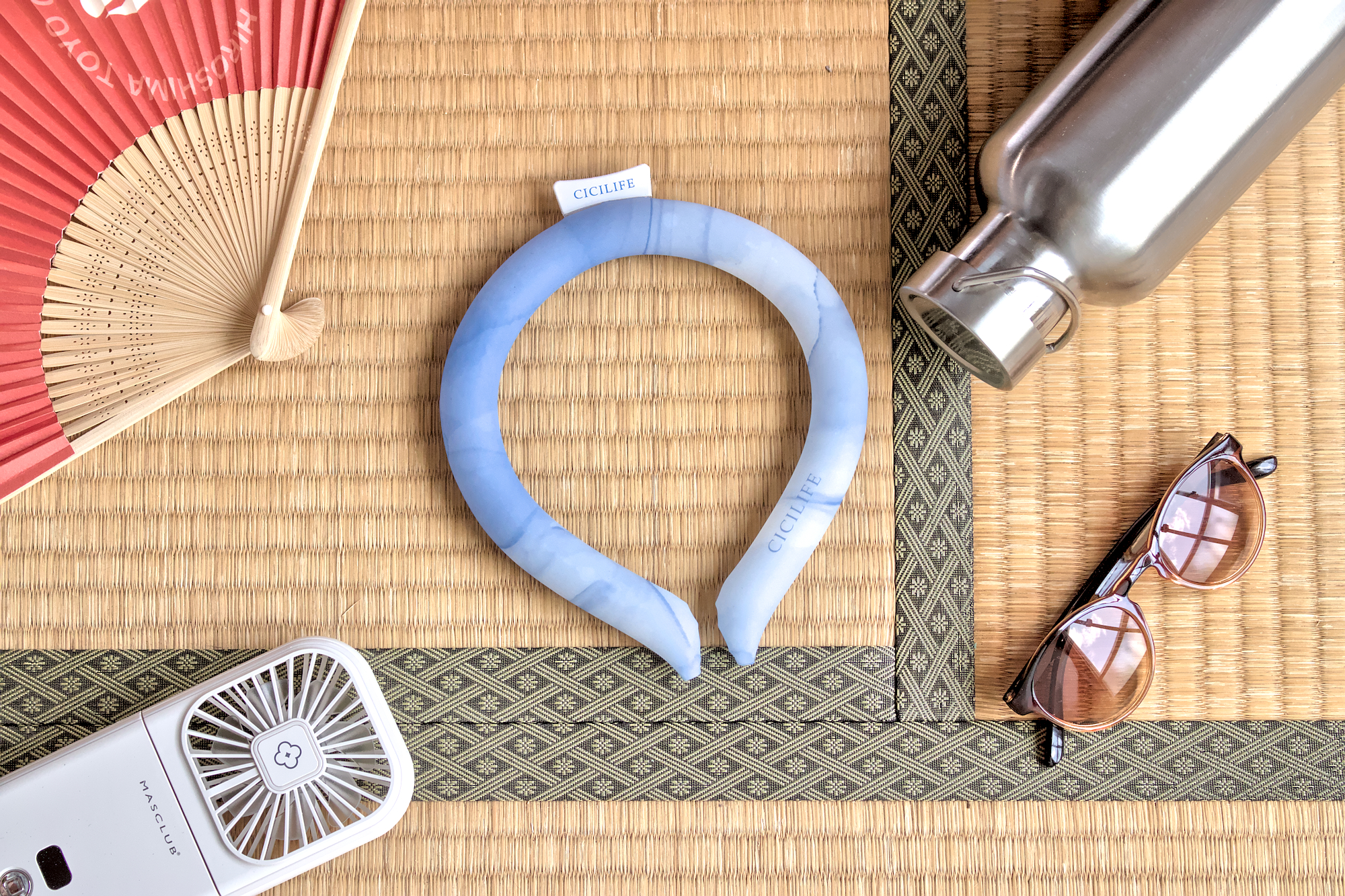
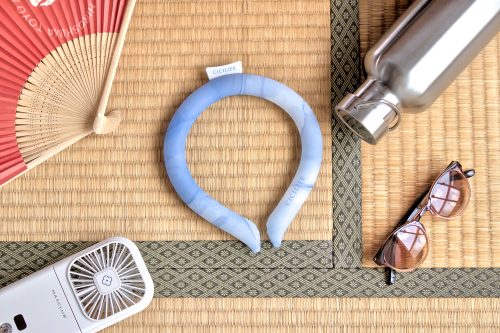
Ever take an ice-cold water bottle and put it against your neck to cool down? Japan’s kuru ringu (クールリング) — cool rings — do the same thing, except the effect lasts longer, they get cold again more easily, and you don’t have to hold them.
Cooling neck rings, like this one from CICILIFE, stay cool for up to an hour even at 36°C (98.6°F). And after they have melted inside, it doesn’t take much to cool them down again. The CICILIFE ring starts cooling again below 28°C (82.4°F).
The night before, stick it in the fridge or the freezer before wearing it. This is the fastest way to get it cold. When it melts, get the chill back by running cold water over it or even just taking it off in a well air-conditioned room. When you go outside again, it will have cooled down.
The cooling properties of these chunky, futuristic necklaces are due to the use of phase change materials (PCM) inside a flexible thermoplastic urethane (TPU) case. The materials change from liquid to solid and back again at a higher temperature than water. In Japan, the PCM material is typically made of saturated hydrocarbons known as “normal alkanes.” While they are non-toxic, they can cause rashes if the ring leaks.
To prevent leaks, the CICILIFE rings are vigorously tested. They are placed under 700 Newtons of pressure for an hour, opened and closed 500 times at the base, and placed in a 70°C environment for an hour.
Though popular and effective, the ring does have one practical drawback. When it cools down, it gets sweaty. Fortunately, the surface is easy to clean.
The CICILIFE cool ring currently sets you back around ¥1,000 (~$6.15). Other brands, like Ice Non’s even colder ring, can sell for around ¥2,000 (~$12.00).
(Joy Photo / Michael Farrell)
Cooler with Evaporation, Cleaner with Wipes
Random bodies of water can become very inviting during Hiroshima’s summers. Rivers, ponds, and fountains become more tempting than usual. However, Japan has a dignified solution: cooling body wipes and moist neck towels.
Cooling body wipes and moist neck towels get you wet without ruining your clothes, offending the locals, or ending up on someone else’s social media. At the same time, these products clean away dirt and sweat. Menthol refreshes the skin. Fresh scents hold back body odors. Some brands, like CICA (シカ), have additional ingredients like Centella asiatica leaf extract to heal, smooth and strengthen the skin.
(Joy Photo / Michael Farrell)
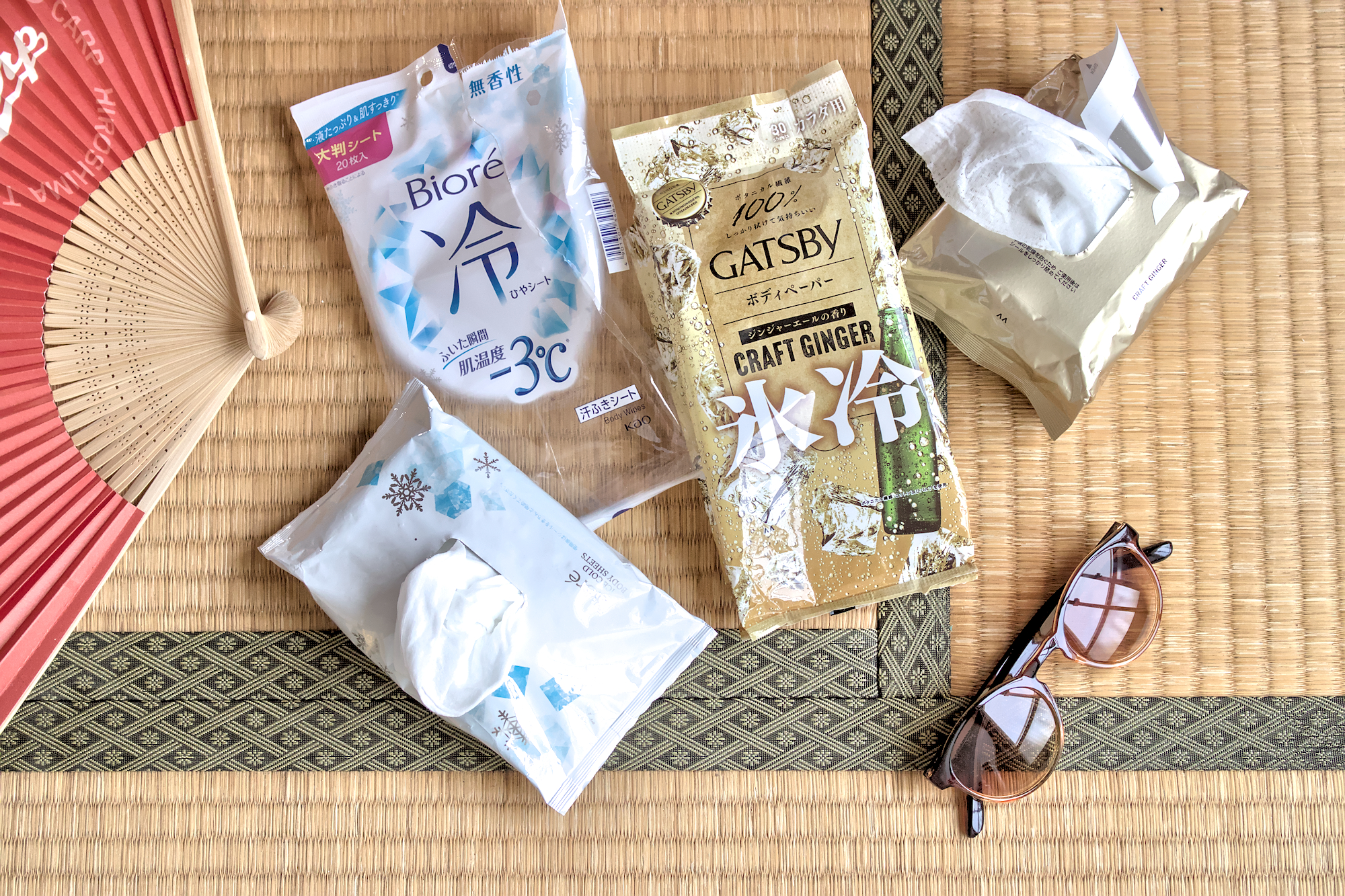
Cooling Body Wipes
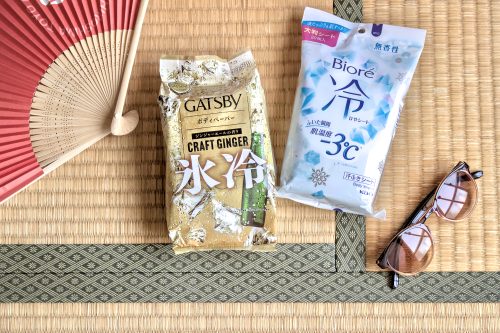
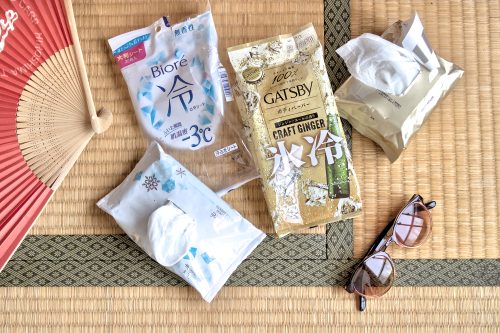
Wipes come in a tissue-like dispenser with a resealable top so they do not dry out. Simply remove a wipe and go to town on your hands, face, neck and arms. As for the rest of your body, like your feet and torso, Japanese cultural discretion about where personal grooming should happen would require you to find a restroom. Don’t take your top off or wipe sweat and dirt from between your toes on the street in Japan.
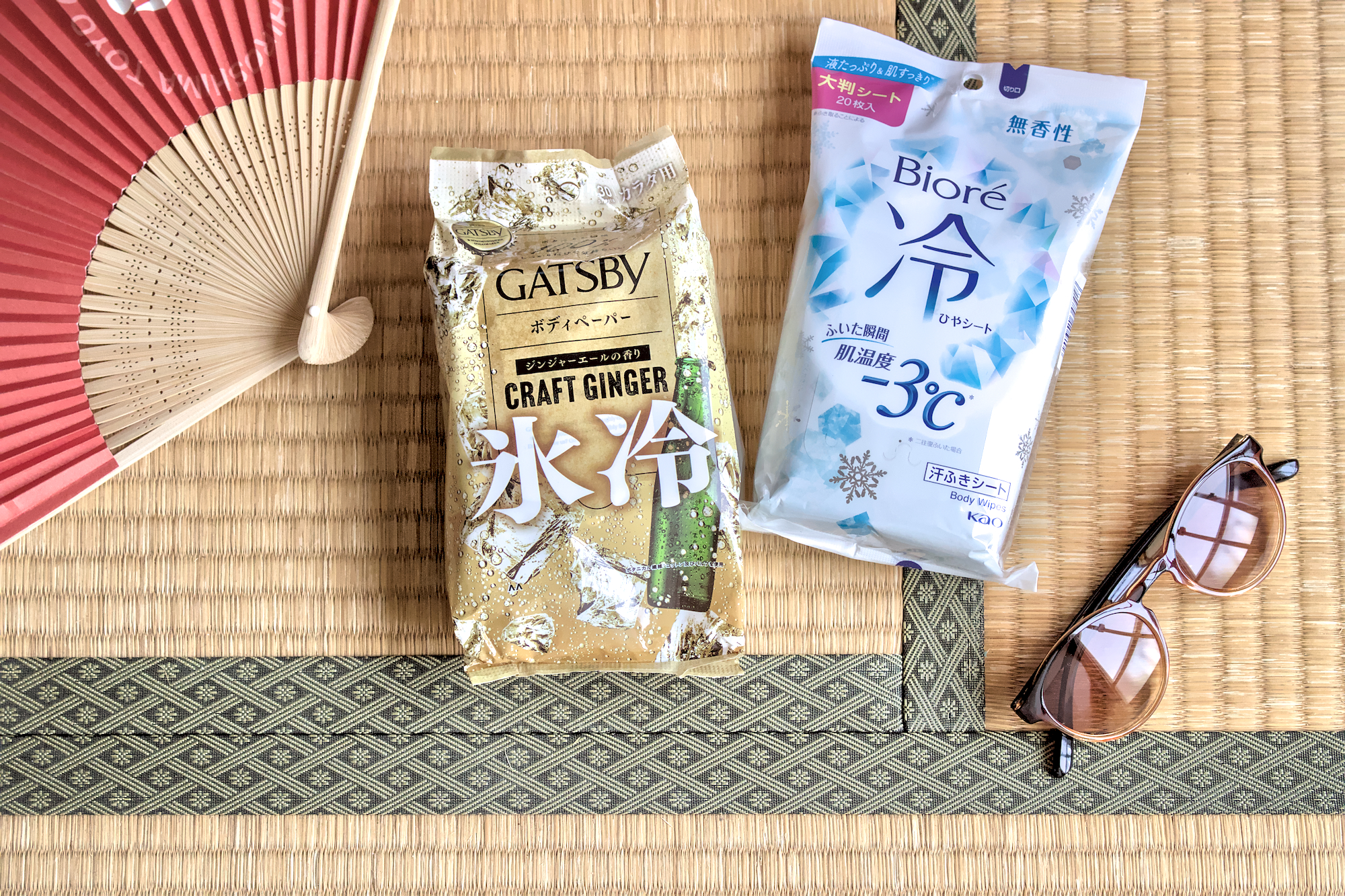
Popular brands are Bioré and Gatsby. Bioré, a skincare company, tends to be directed at the female market, while Gatsby, a men’s grooming brand, has a more masculine appeal with scents like Craft Ginger — which genuinely smells like Wilkinson’s Ginger Ale. People who are sensitive to smells can also find unscented wipes. Look for the phrase mukousei (無香性). It means “unscented.” It’s usually on the front of the package like our version from Bioré.
A pouch of wipes costs between ¥300 and ¥500 (~$1.85-3.00) and can hold 20 to 30 wipes.
(Joy Photo / Michael Farrell)
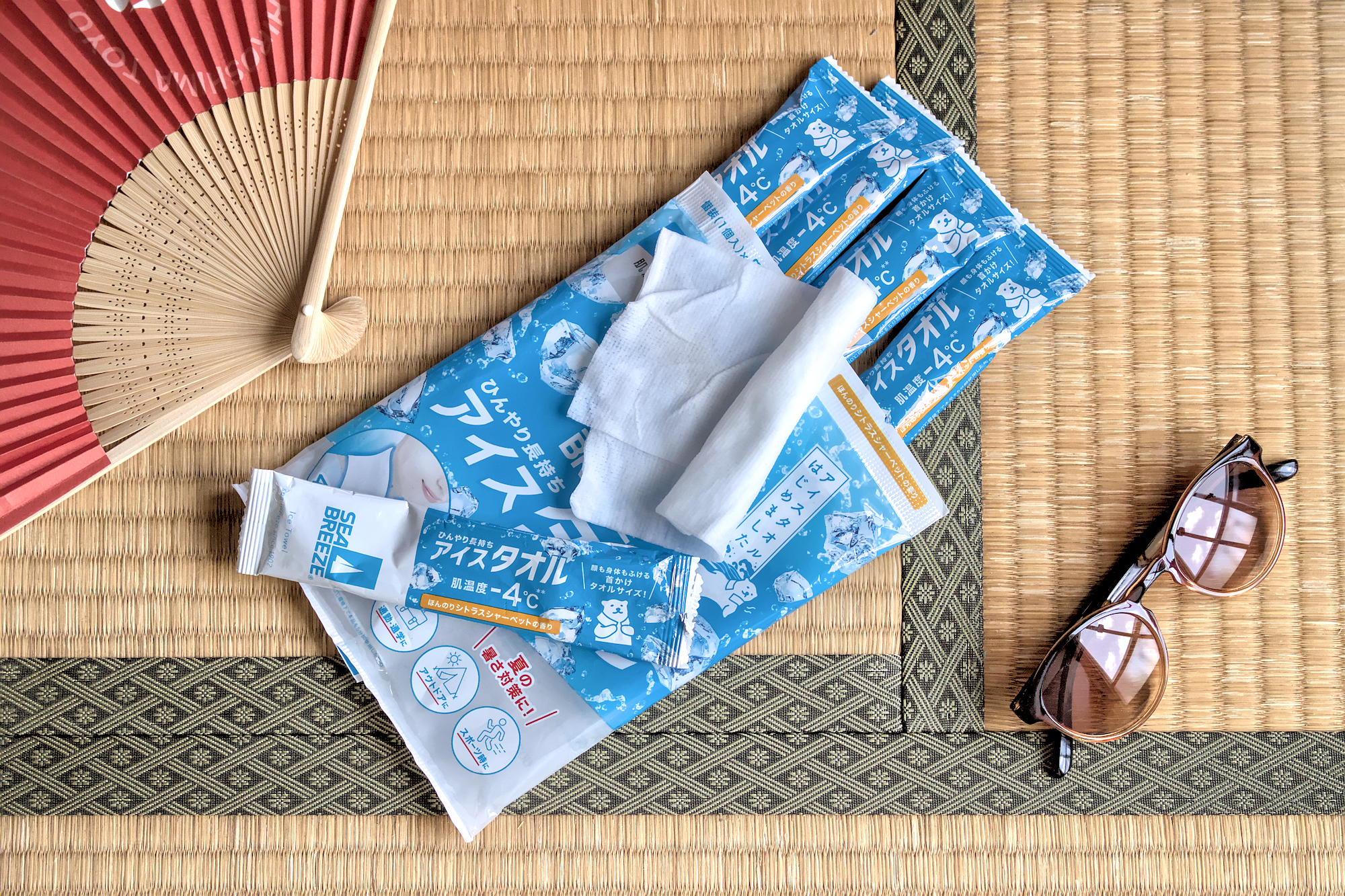
Cooling Neck Towels
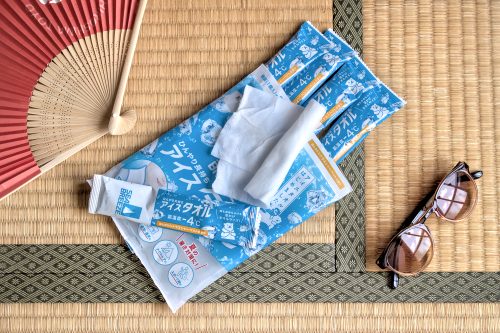
Cooling neck towels come in two varieties when you buy them: dry and wet. Draped around your neck, they work just like your clothes would after jumping in a fountain. The wet ones you have to moisten yourself. The most convenient ones are the disposable wet towels such as Sea Breeze’s Hinyari Nagamochi Ice Towels (ひんやり長持ちアイスタオル). A pack of five costs around ¥550 (~$3.30). They are individually packaged, so you can put them in your day bag and pull out a fresh one whenever you need it.
Depending on the environment, these towels can help you feel cooler for about an hour. However, both the dry and wet styles can be refreshed just by putting them in water again. It should be noted that the effect of the disposable towel is less intense the second time around because the initial cool zing is enhanced with the evaporative power of alcohol and the freshness of Menthoxypropanediol (an artificial but less irritating alternative to menthol).
(Joy Photo / Michael Farrell)
UV Umbrellas
This isn’t your great-grandmother’s parasol. This is a portable shade. And it was only around ¥2,000 (~$12).
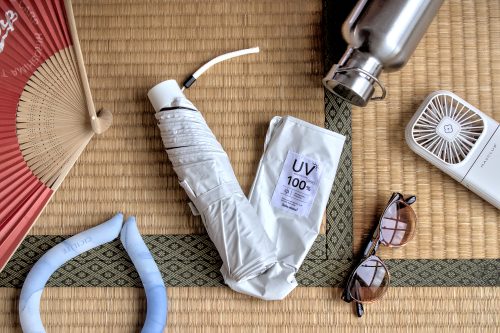
Japanese women often use parasols to guard against skin damage. However, on a hot day, parasols — higasa (日傘) in Japanese — can also reduce the temperature you feel.
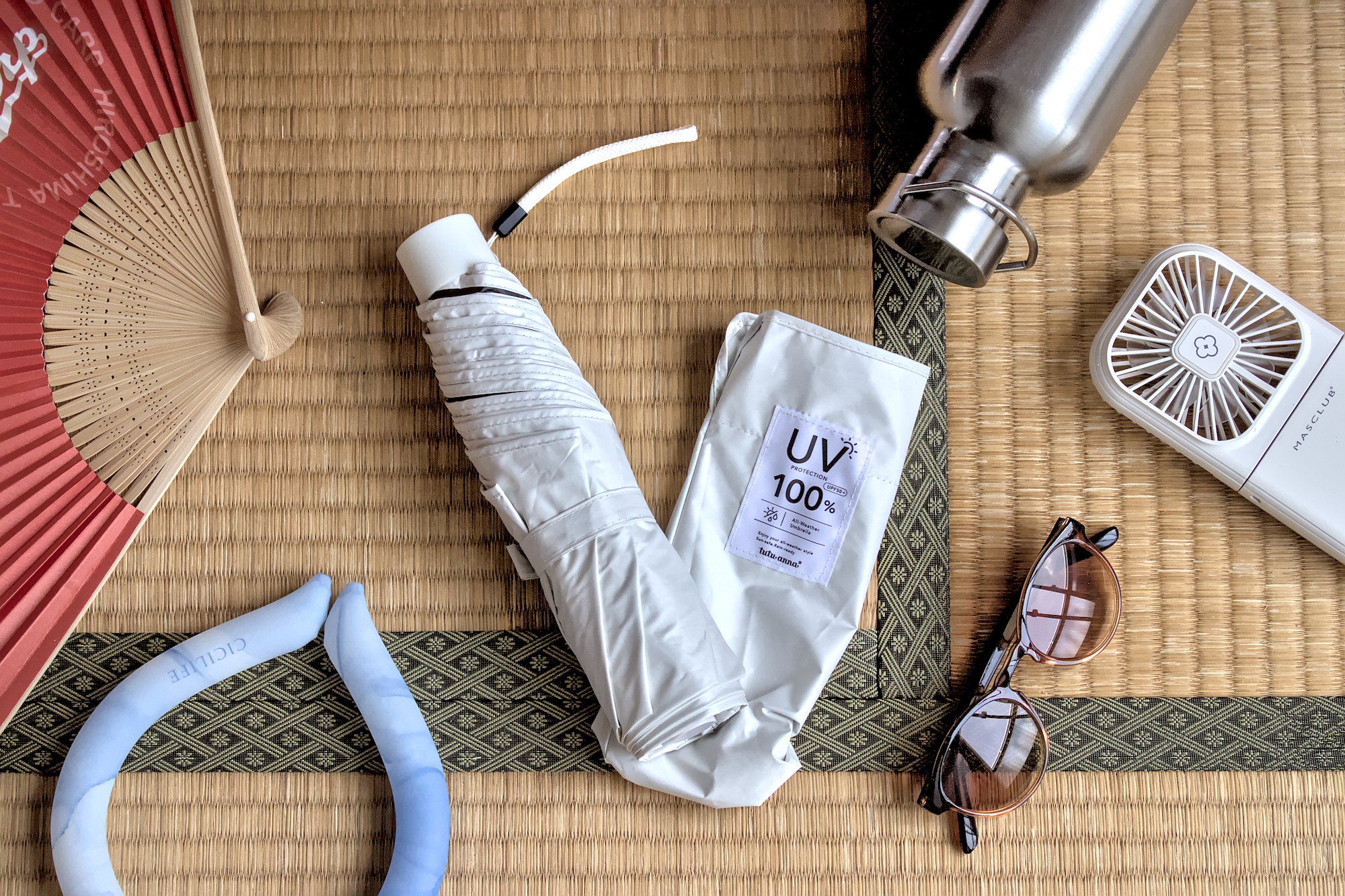
This higasa from tutuanna, a women’s underwear company, is noticeably cooler under it than under the sun.
Many Japanese parasols are black all over and mainly block UV, but this one is white on the top and black underneath. While black parasols absorb the sun’s light, turning into heat sources themselves, the white fabric reflects the light away instead of absorbing it. Meanwhile, the black underside absorbs reflected light from the sidewalk instead of bouncing it back at you.
On top of this, the tutuanna parasol has a UPF rating of 50+. Plus the tag claims a UV cut of 100%. In Japan this means that it blocked all measurable UV light under lab testing.
All combined, these features make this parasol an effective heat shield, ideal for touring Peace Park in the middle of Hiroshima’s summer.
(Joy Photo / Michael Farrell)
USB Hand Fans
Japan is popularly associated with ornately decorated folding paper fans. However, the average Japanese person today does not use traditional paper fans — sensu (扇子) in Japanese. They use USB charged hand fans commonly called “handi fan” (ハンディファン).
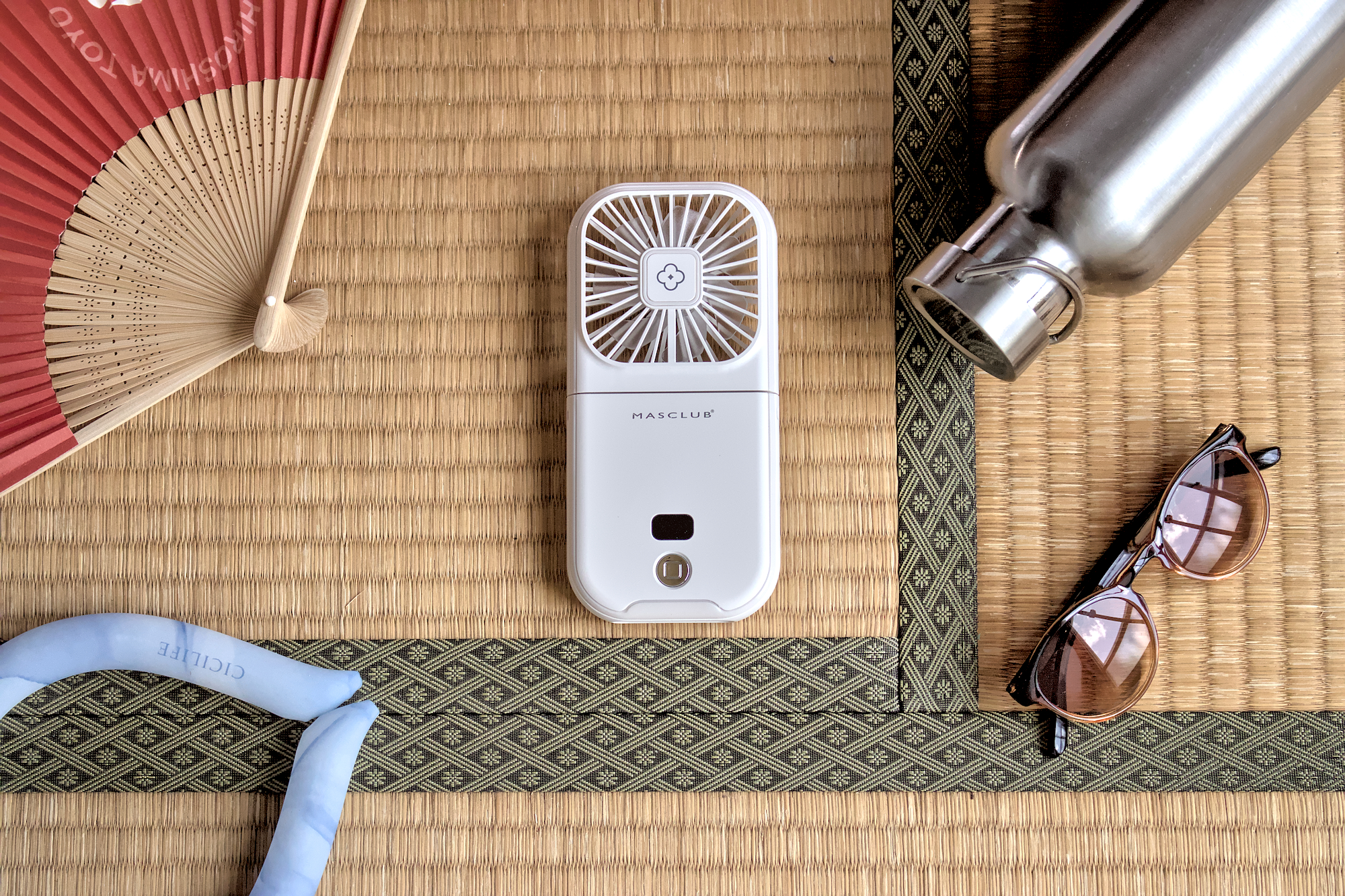
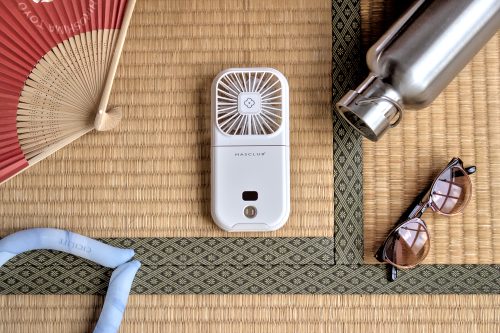
When you need it, a paper fan is better than nothing, but it does take persistence. Handi fans, on the other hand, require only the effort of holding them. And some handi fans, like the “MASCLUB 5WAY handy fan” pictured here, can be worn around your neck and pointed at your face with no hands needed.
The 5WAY has three fan speeds plus USB Type-A and Type-C ports for charging. Plus the device lasts 10 hours on a single charge. Its name refers to its five features. In addition to being wearable around the neck and held in the hand, it transforms into a phone stand that blows at you. It also can be adjusted to sit on a table — a convenient option for people still recovering from the heat when sitting at restaurants. And the fifth feature is that it can be charged from your smartphone.
For over ¥3,000 ($18.50), the CICILIFE Kousoku Reikyaku Handi Fan (高速冷却ハンディファン) looks like a tiny hair dryer. It has 100 fan speeds, and the rechargeable battery lasts for 13 hours. It can also be configured to sit on a table, but if you’re walking around you still have to hold it.
The 5WAY may not be as powerful, but it’s very effective when blowing at your neck while paired with a cooling neck towel. That is not a bad setup for a ¥1,650 (~$10) fan.
Restore Your Electrolytes
Drinking water is the best way to avoid dehydration on a hot day. But if you sweat enough, you’ll need to rebuild your electrolytes too. Japan has two go-to solutions: sports drinks and salt candies.
(Joy Photo / Michael Farrell)
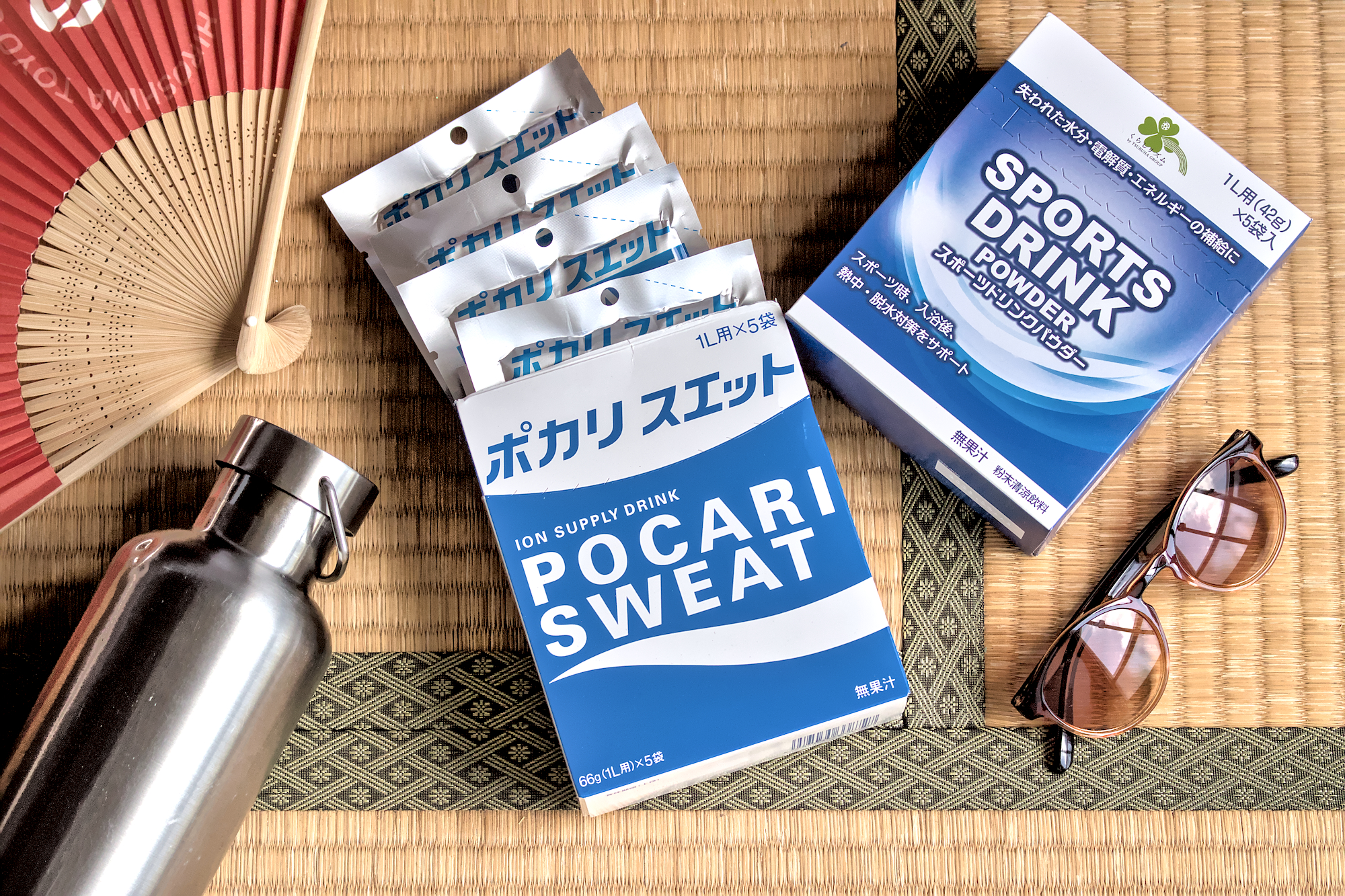
Sports Drinks
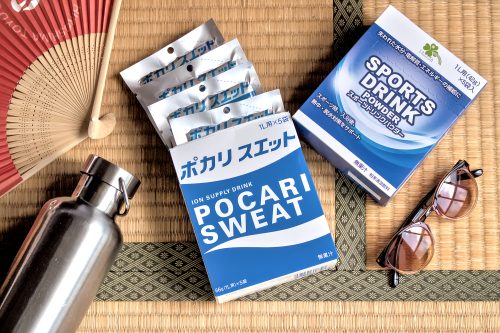
You can find sports drinks like Aquarius, Pocari Sweat, and Body Mainté in most convenience stores and in many vending machines. They’re formulated with a balance of salt ions like sodium and potassium, mineral ions like calcium and magnesium, and carbohydrates for energy. This helps stave off dehydration and exhaustion while keeping electrolytes balanced.
However, while they are commonly available, at around ¥180 (~$1.10) a 500 mL bottle in most vending machines, the cost and the amount of plastic waste adds up. Yet, like Gatorade in the United States, many sports drinks sell more economical powdered versions in large drug stores and many supermarkets.
For example, at Wants, around ¥500 (~$3.00) buys enough Pocari Sweat powder to make 5 L of the drink. Aquarius also has a powdered version, though, if it isn’t on sale it tends to be more expensive. There are cheaper off-brand versions as well, like the one pictured from Tsuruha Group.
(Joy Photo / Michael Farrell)
Salt Candies
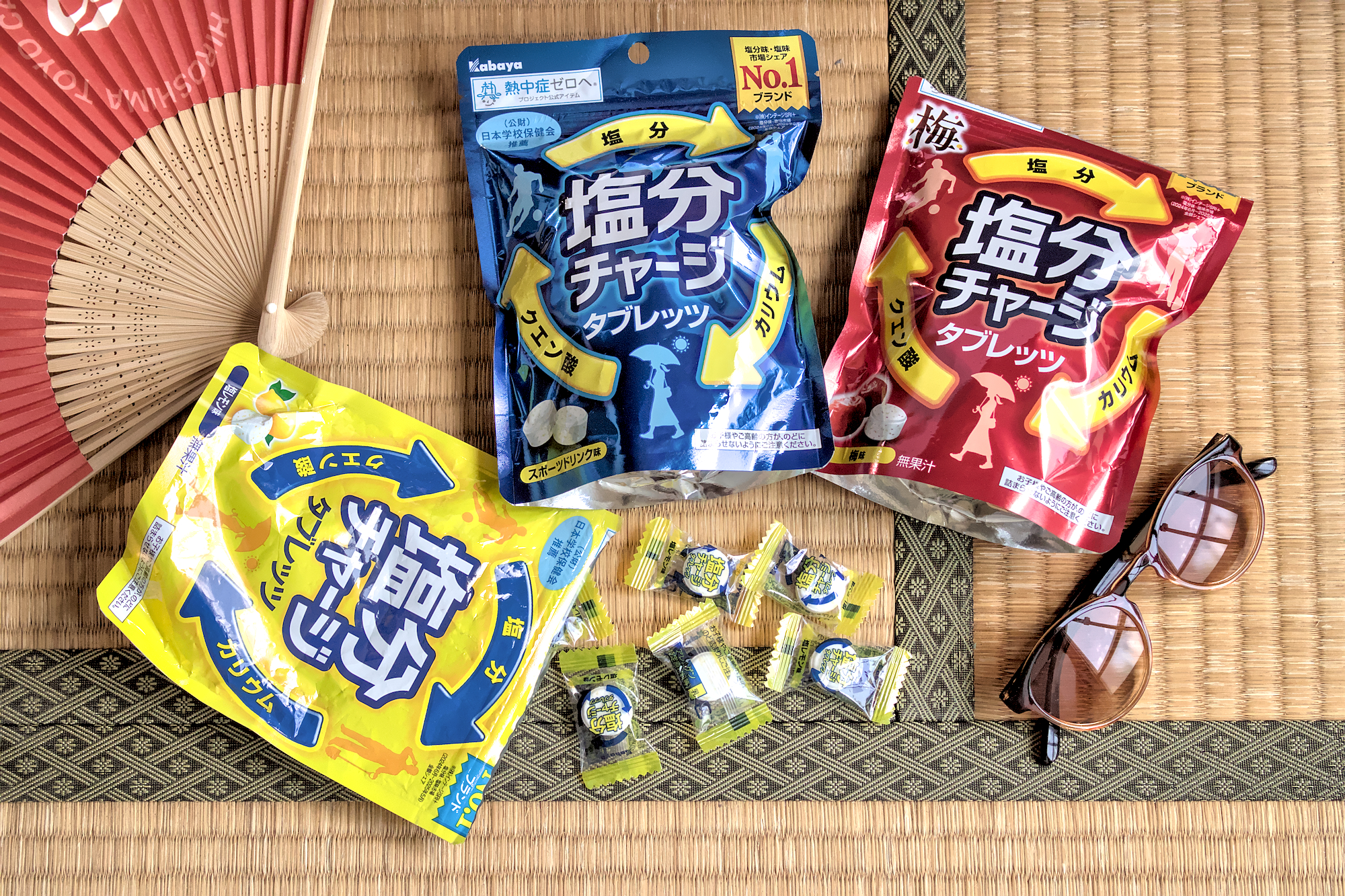
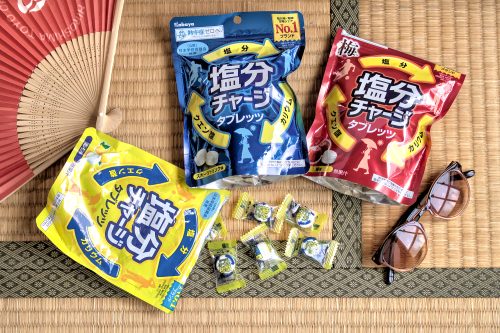
Another way to restore your electrolytes in Japan is with salt candies. One of the most common brands is Enbun Chaaji (塩分チャージ). It comes in three flavors: ume, lemon and sports drink, and has a chalky consistency similar to Smarties or PEZ.
These candies are often confused with salt tablets. However, true salt tablets have considerably more salt. For example, Vitamatic and Nutricost salt tablets on iHerb have 1g of salt per tablet. In comparison, one Enbun Chaaji candy has 0.119 g of salt. For reference, the World Health Organization (WHO) recommends that adults consume less than 5 g of salt a day. So one of these candies has 2.4 percent of that — not much. Furthermore, one candy has 15.7 mg of potassium. That’s almost 4 percent of a medium banana. Again, it’s not much, but when you’re feeling a little off after being in the sun, one of these candies can make a difference.
(Joy Photo / Michael Farrell)
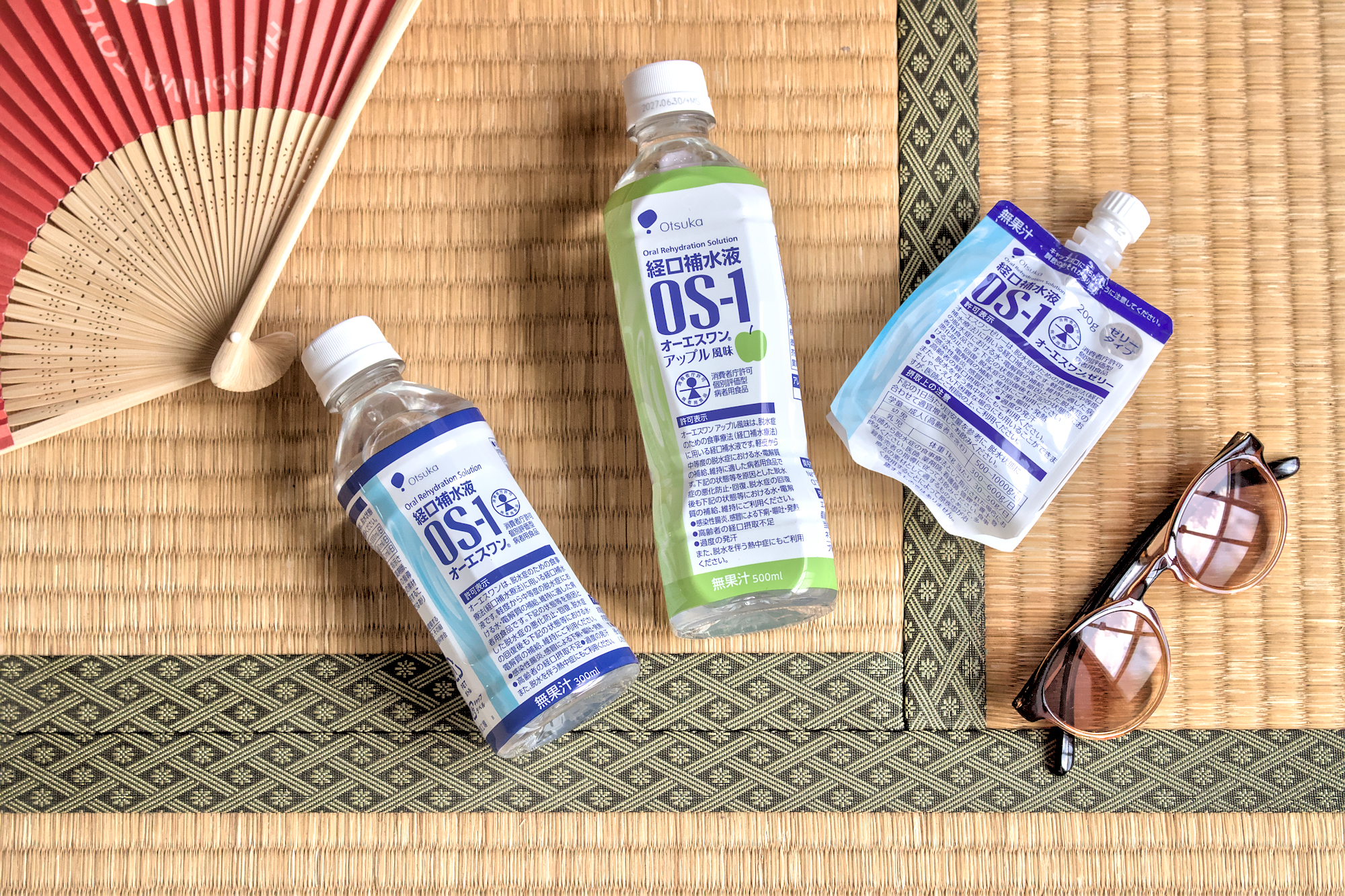
Oral Rehydration Solution
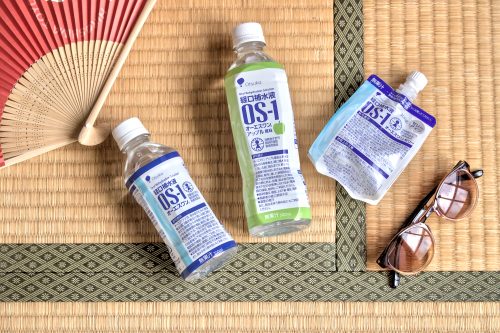
Last on the list is OS-1 Oral Rehydration Solution. With daily highs hitting 32.3°C (90°F) and higher, this drink is prominently placed in drug stores during summer. However, OS-1 is not a sports drink. It’s a medical-grade dehydration treatment like Pedialyte is in the West. It’s not normal to buy OS-1 just to enjoy it on a hot day or to replenish electrolytes during a run or a day under the sun. According to the label, it is designed to replenish water and electrolytes if you’re already mildly to moderately dehydrated. So it is not just useful for people who get stuck in the sun too long on a hot day. It is also used to treat dehydration in people with vomiting or diarrhea.
It comes in two flavors, the plain original flavor and apple. It’s not cheap either. A 500 mL bottle typically costs around ¥200 (~$1.20), though a 300 mL bottle can be purchased for around ¥160 (~$1.00). They also sell a 200 g drinkable gelatin version.
While OS-1 can help you when you’re dehydrated, it is not a treatment for more serious things like heat stroke. If you suspect that you or someone in your group has heat stroke, call Japan’s emergency number: 119.
Though hospitals are not free, ambulance services in Japan are. There is little to lose by calling 119 if you need it.
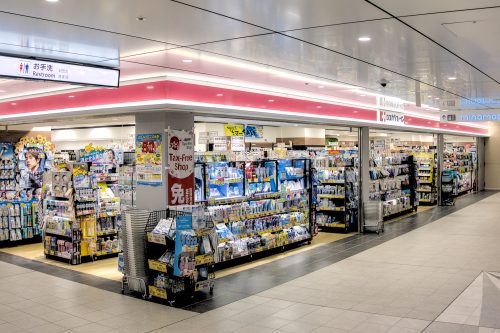
Kokokara Fine is one of the drugstores in Hiroshima Station. (Joy Photo / Michael Farrell)
Where to Buy?
All the products in this article were purchased at or near Hiroshima Station.
The OS-1 jelly and the CICI Cool Ring came from Kokokara Fine. To get there, descend the stairs to the first floor at Hiroshima Station’s South Exit. There is a door after the coin lockers on your right. It looks like it leads somewhere restricted to employees, but it’s not. It descends to the basement. Kokokara Fine is directly across from the door at the bottom.
The Seabreeze brand disposable, cooling neck towels and the Bioré cooling body wipes were bought at Matsumoto Kiyoshi. Hiroshima Station’s Matsumoto is not as well provisioned as Kokokara Fine, but it does have some basic summer heat supplies. To get there, turn left as you exit the Shinkansen ticket gate. Turn left again after passing the coin lockers. You’ll enter a hallway that goes behind Pokémon Center Hiroshima. In the hall is an escalator to the first floor. Get on it. Matsumoto Kiyoshi will be right in front of you when you land on the ground floor.
The tutuanna UV umbrella and the 500ml OS-1 were found at Daikoku Drug. Located across the street from Hiroshima Station’s Exit 5 on the south side of the station, this well-stocked drug store is also one of the best souvenir shops near Hiroshima Station. At the time we visited, about a third of the floor space sold Japanese souvenirs. Among them we saw Pokémon-themed travel neck pillows with hoods to cover your eyes and katana-shaped hair combs complete with sheaths. What is more, the drug store is on the first floor of the Hiroshima Full Focus Building, the same building as Okonomiyaki Ekimae Hiroba, one of the most popular places in the city to try Hiroshima-style Okonomiyaki.
The largest and best-supplied drug store on this list is Wants. It has two floors of products and straddles the line between a drug store and a supermarket. Located on the northern end of the Noboricho neighborhood, it is a ten-minute walk from Hiroshima Station’s South Exit.
Moment of Joy
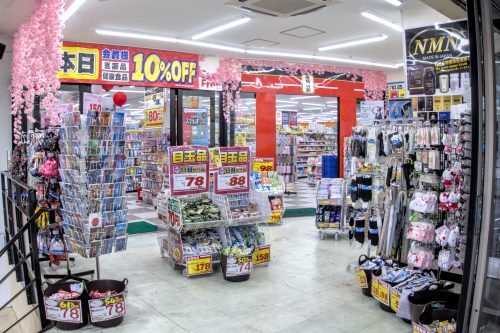
The entrance to Daikoku Drug in the Hiroshima Full Focus Building. (Joy Photo / Michael Farrell)
Tax-Free Purchases
Daikoku Drug, which has almost every product in this article and tons of fun souvenirs besides, is also a tax-free shop. To avoid Japan’s 10 percent consumption tax, buy at least ¥5,000 (~$30) worth of goods. Next, show your passport to the cashier at the checkout. Daikoku Drug further has a special tax-free checkout register you need to go to. Any consumables that you plan to use on your trip, however, can’t be bought tax-free. Consumable items, like body wipes, have to be placed in your luggage and opened in your home country. If you get caught at customs with used consumables, you’ll be forced to pay the consumption tax.
Editorial Note: Joy in Hiroshima purchased all products featured in this article. No brands sponsored this content or reviewed it before publication.
Written by

Michael Farrell is a reporter and editor who began traveling the world in 2010. His publishing career started in New England, first at the Gloucester Daily Times and later as a copy editor with boutiq…More