
Itineraries 2day
Hiroshima’s Traditional Modernity
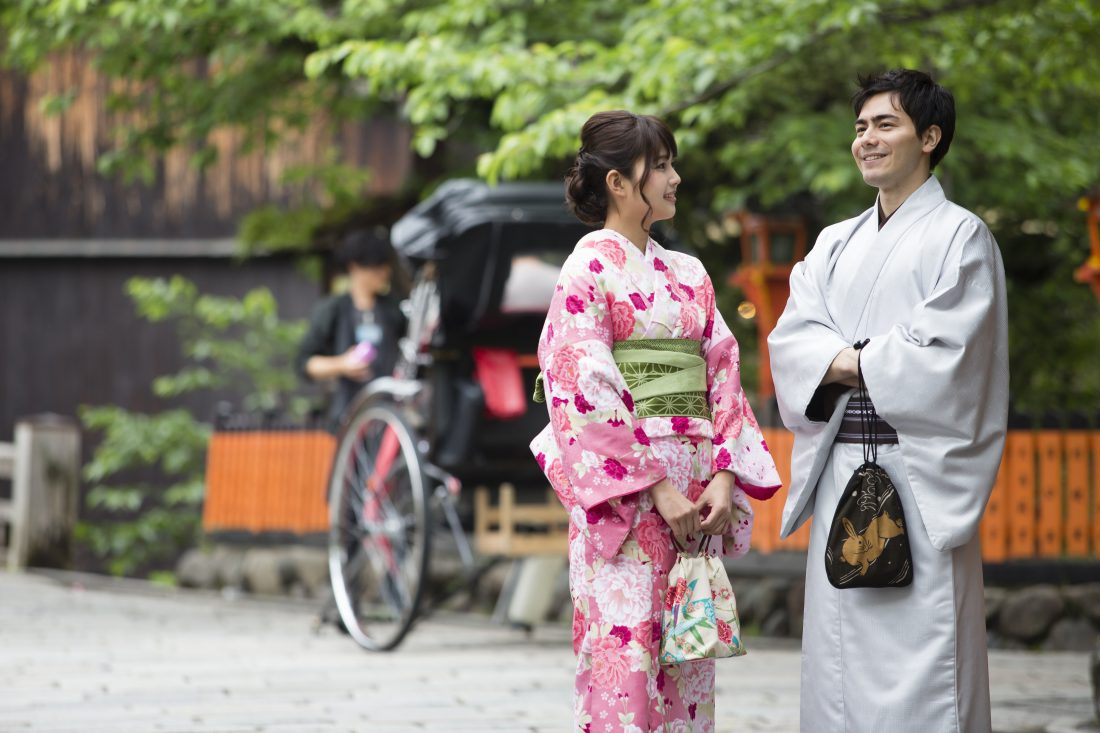
Experience the strong culture of everyday life in Hiroshima of both past and present.
Day 1
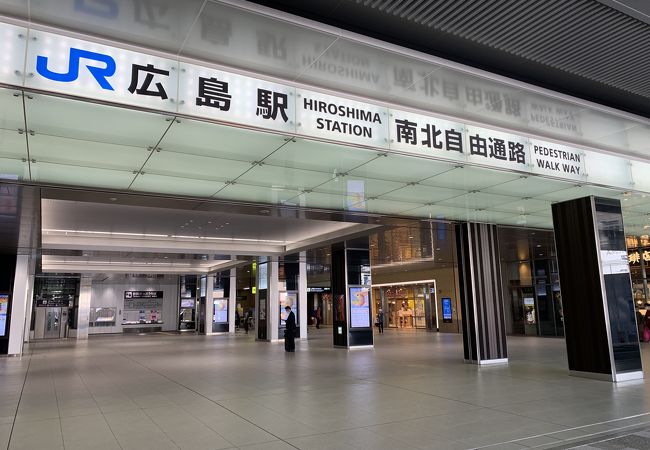
01 Hiroshima Station (広島駅)
Hiroshima Station is the bustling transportation hub of our peaceful city, and one of the principal entertainment hubs as well. All JR lines in the city stop here, and from here, people can take numerous buses and streetcars anywhere in the city, or even out of town. The ekie shopping complex located inside the station building also has no shortage of restaurants and souvenir shops to keep visitors busy for hours.
- Address
- 2-37 Matsubaracho, Minami Ward, Hiroshima City, Hiroshima Prefecture, JAPAN
Transportation: Miyajima Pier [JR Sanyo Line & JR Ferry, ~50 minutes]
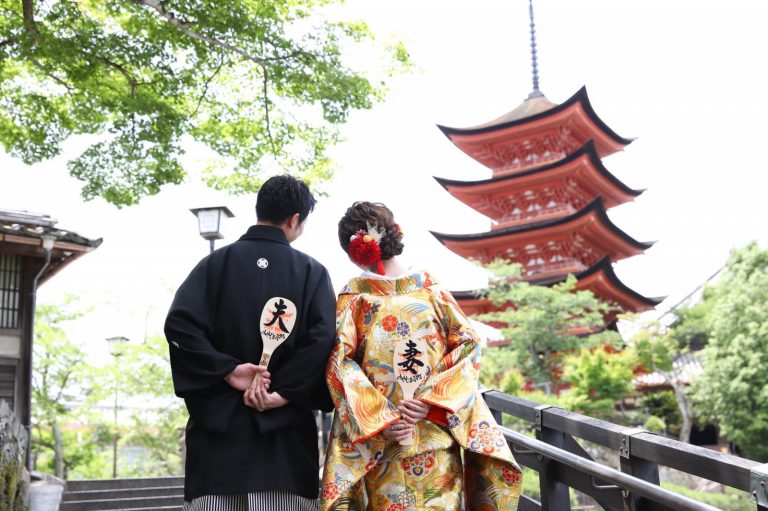
02 Rental Kimono Miyajima Komachi (レンタルきものみやじま小町)
Rental Kimono Miyajima Komachi is a kimono rental store located a 5-minute walk from Miyajima Pier and a 6-minute walk to Itsukushima Shrine. It is located in an alleyway between the stores in Miyajima’s Omotesando Shotengai (the Main Street of Miyajima), so it is recommended to check the location beforehand with your smartphone or guidebook. The store rents out kimonos and yukata (thin summer kimonos), and you can also wear the borrowed kimonos to explore Miyajima.
Rental Fee (per person)
¥4,800~
- Address
- 553-40 Miyajima-cho, Hatsukaichi, Hiroshima Prefecture, JAPAN
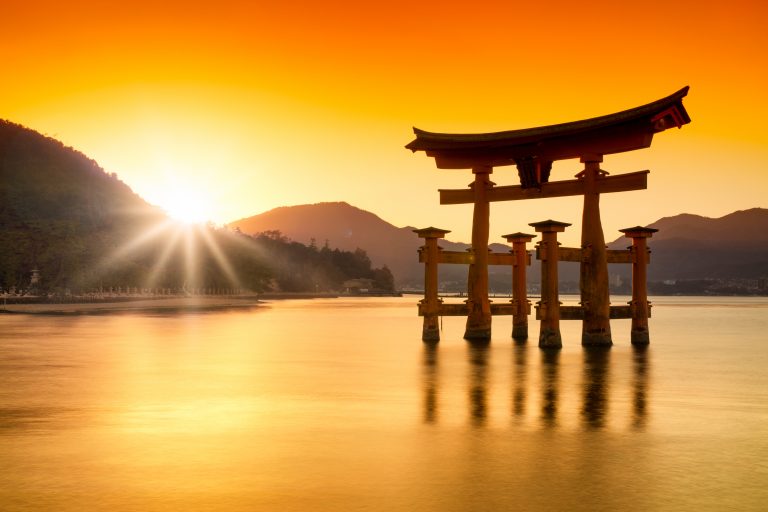
03 Itsukushima Shrine: Walk Through Living History
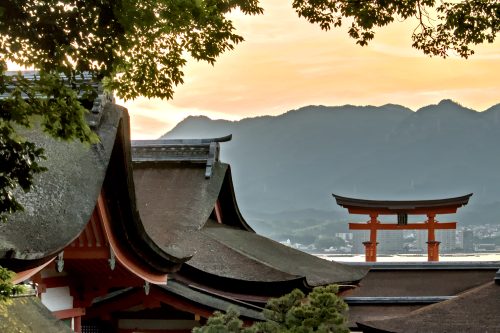
Located a short train ride from Hiroshima City, Itsukushima Shrine is a centuries-old Shinto shrine on the island of Miyajima in the Seto Inland Sea. It is a culturally rich location that is deeply woven into the fabric of Japanese history while remaining an active religious site for the local people.
Quick Facts
▪️Miyajima’s Itsukushima Shrine is an active site of Shinto worship.
▪️It enshrines three mythical Shinto deities: the goddesses Ichikishimahime-no-mikoto, Tagorihime-no-mikoto, and Tagitsuhime-no-mikoto.
▪️The shrine’s traditional founding year is 593, but the island itself was worshiped as a kami separately from the shinto goddesses long before that.
▪️The main shrine’s main buildings were constructed in the Shinden-zukuri style of the Heian period (794 to 1185).
▪️Because of the shrine’s unique history, architecture, and beauty, along with its unique artistic and cultural value, it was registered as an UNESCO World Heritage Site in 1996.
(Joy Photo / Michael Farrell)
Itsukushima Shrine: An Enduring Vision of Beauty
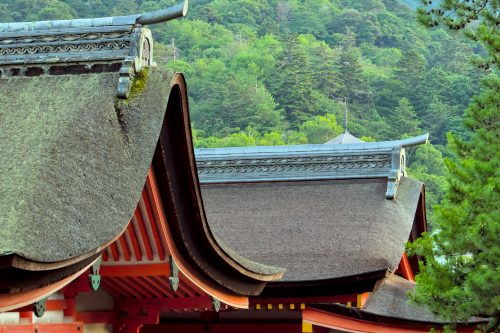
Since the Edo period, Miyajima has been regarded as one of “The Three Most Scenic Views of Japan.” The interplay between sky, island, sea and shrine creates a one-of-a-kind view that has influenced Japanese principles of beauty for centuries. Integral to this view is Itsukushima Shrine. A site of continuous Shinto worship for over 1,500 years, this sacred site appears to float on the waters of the Seto Inland Sea below the primeval forests of Mt. Misen. Over the centuries, it inspired the patronage of some of Japan’s most famous leaders, embedding itself deeply in Japanese culture and history. Today, it stands as a beautiful example of Heian-period aesthetics while continuing to serve the spiritual needs of Shinto practitioners.
(Joy Photo / Michael Farrell)
A Center of Shinto Worship
Shinto belief holds that Itsukushima Shrine is the dwelling place of three goddesses: Ichikishimahime-no-mikoto, Tagorihime-no-mikoto, and Tagitsuhime-no-mikoto. They are known collectively as the Munakata Sanjoshin or the Three Goddesses of Munakata because the tradition of their worship comes from Munakata City near Fukuoka.
The Munakata kami are revered as protectors of the Japanese imperial family, sailors, and warriors. They are deeply tied to water routes because their cult originally grew out of ancient protection rites for merchants sailing to Korea from Munakata.
According to legend, they were brought to Itsukushima Shrine in 593, where they have been revered though their identity changed over the centuries. After the arrival of Buddhism in Japan in the fifth century, the new religion gradually reinterpreted Shinto beliefs along Buddhist lines. As a result, for most of Japanese history, many believed that the Munakata Sanjoshin were manifestations of Kannon — the bodhisattva of mercy — or other Buddhist deities.
It was not until the Meiji separation of the two religions with the Shinto-Buddhist Separation Decree that the kami of Itsukushima were identified solely with Shinto deities again.
Today, Itsukushima Shrine is the head shrine of a system of about 1,425 Itsukushima shrines throughout Japan.
(Joy Photo / Michael Farrell)
A One-of-a-kind Structure Steeped in History
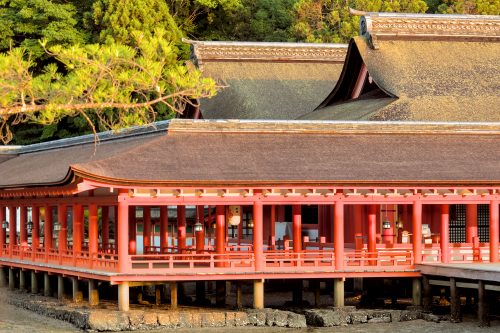
While Shinto tradition holds that Itsukushima Shrine was founded in 593, the buildings themselves are not from the 6th century. The architectural style of the main complex dates to a massive renovation of the shrine around 1168 under the patronage of the warlord Taira no Kiyomori, the first samurai to become Japan’s de-facto ruler.
Kiyomori had the shrine redesigned according to the architectural style of Heian aristocratic homes in Kyoto. The style, called Shinden-zukuri, became popular as a uniquely Japanese architectural style. It incorporated fewer Chinese influences from the time, tailoring itself to the Japanese climate and local aesthetics.
The style emphasized balance and harmony with the environment. Buildings were elevated on wooden stilts to keep living spaces off the damp earth. Open-air construction helped residents stay cool during Japan’s hot and humid summers. Various kinds of screens were used for privacy. Meanwhile, a formal garden provided a central orientation for the overall design.
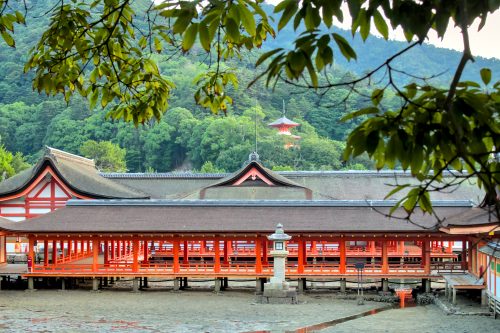
The Shinden movement provided the DNA of many features that are still seen in Japanese homes today. And Itsukushima Shrine — raised on stilts, open to the air, and featuring the sea like a central garden — is a beautiful example of this.
The shrine is also a premier architectural example of Shinbutsu-shugo, the syncretism of Buddhism and Shinto that flourished until the Meiji government forcefully separated the two faiths in 1868. Kiyomori’s redesign elicited layered spiritual interpretations. On the one hand, it resembled Ryugo-jo, the undersea Dragon Palace of Shinto mythology. At the same time, with vermilion pavilions appearing to float on the water, the shrine elicited Pure Land Buddhism’s Gokuraku Jodo — the Western Paradise of Amida Buddha.
(Joy Photo / Michael Farrell)
Development Over the Centuries
(Joy Photo / Michael Farrell)
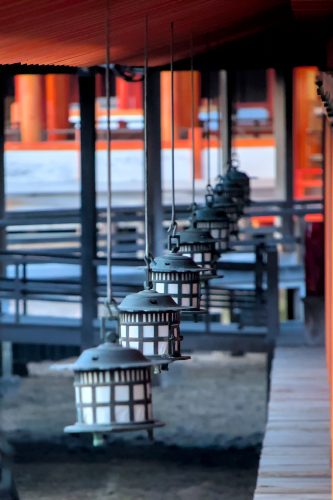
What you see today, however, is not Kiyomori’s shrine. It was destroyed by fire in 1207 and again in 1223, and faithfully rebuilt each time. Today the oldest structure is the Guest Shrine hall, called the Massha Kyakujinja. It dates to 1241 during the shrine’s reconstruction after the second fire. You can find it immediately after you enter the shrine. It is the first big building on your left after you buy your entry ticket and start walking down the open corridor.
While other structures, however, continue the Heian aesthetic, they are not as old. The Main Shrine Building, called Gohonsha Honden, dates to a total reconstruction in 1571 by the Sengoku period warlord Mori Motonari to maintain its sacredness after two brothers were slain there on suspicion of treason. Instead of incorporating contemporary architecture into the new Honden, Motonari had the former building precisely reproduced. Today, it is the largest hall of its kind in Japan.
Additional structures depart from the Shinden style because they were not reconstructions but additions at different periods in history. Nearby Senjokaku, the bare-wood temple that overlooks the main shrine from the east, is enormous yet strikingly austere and weathered in contrast to the main shrine. It was built by the legendary samurai Toyotomi Hideyoshi in 1587. Another famous addition is the sacred Noh Stage built in 1680. Built over the sea, it is the only Noh stage of its kind. It was built in the Ichiju-kiritsuma style and includes unique features like a floor that resonates like a drum, thereby boosting the sounds of the Noh performers.
Even the most iconic structure at the shrine, the Otorii (the large shrine gate) was rebuilt nine times over the centuries. Measuring 16 meters tall and 42 meters wide, this symbol of the transition from the profane to the sacred is one of the largest wooden torii gates in Japan. The current Otorii was built in 1875 after the former gate was destroyed by high winds in 1850. It recently completed a three-year restoration project that finished in 2022.
Overall, the various structures of the shrine range in origin from 1241 to 1850 with the main buildings of the shrine fairly well established by the Edo period.
(Joy Photo / Michael Farrell)
Modern Worship
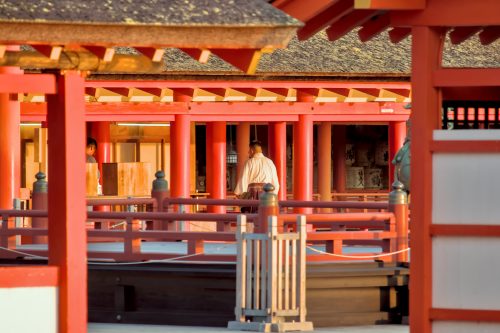
The modern shrine is deeply intertwined in the ritual and ceremonial life of the local communities.
It is a popular pilgrimage for Hatsumode. In this tradition, popularized in the Meiji period by train companies seeking more customers, locals make their first shrine visit of the New Year to give thanks and pray for the coming year. Every year, the shrine draws around 100,000 worshippers.
Over the rest of the year, Itsukushima Shrine hosts a variety of public religious ceremonies and events. Summer is particularly full with important events like the Miyajima Odori, a traditional bon dance festival, and the Tamatori Festival, where men in loincloths battle in the water to grab a lucky ball suspended high above their heads. Summer is also when the shrine holds its grandest ceremony, Kangen-sai. Amid fluttering Heian-era accouterments, this event ceremonially reenacts the arrival of the three goddesses to the shrine by boat in 593.
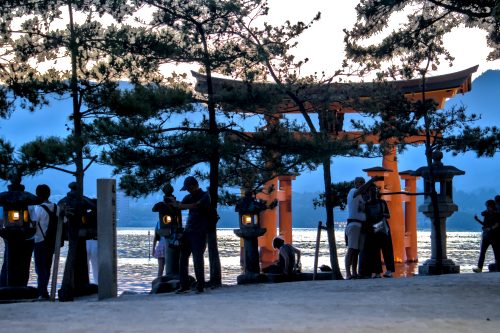
Visitors pose with the Otorii just after sunset. (Joy Photo / Michael Farrell)
Tips for Travelers
▪️ Bring physical money. Admission to the main shrine is ¥300 — less than $2. However, the shrine only accepts cash.
▪️ Check the tides before you go. Depending on the photos you want to take and what you want to do and see, the tides change the experience. High tide is best to experience the shrine appearing to float on the water. Low tide reveals hidden features like ponds and the unique foundations of the building. It also lets you walk right up to the Otorii.
▪️ Bring a plastic bag for your socks and shoes plus a towel for your feet if you plan to walk to the Otorii at low tide. The earth under the retreating sea is more mud than sand.
▪️ Securely pack away any paper goods or bags while visiting. While the island’s tame deer do not typically enter the main shrine, they do walk around the rest of the shrine properties, and they are notoriously brazen thieves.
▪️ It takes 15 to 30 minutes to walk through the main shrine, admire the structure and take photos. To completely explore Itsukushima Shrine, including Senjokaku, the Five Story Pagoda and the shrine’s Treasure Hall takes 60 to 90 minutes. If you practice Shinto and want to pray to the Munaka kami and buy religious items, add 15 to 30 minutes to your time.
▪️ Stay aware of the time if you arrive in the late afternoon and want to enjoy Miyajima’s shops after exploring the shrine. Depending on the time of year, the shrine closes between 5 and 6:30 p.m. However, most of the shops and restaurants on the island also close around the same time. Please check the shrine website for specific closing details.
(Joy Photo / Michael Farrell)
How to Get There
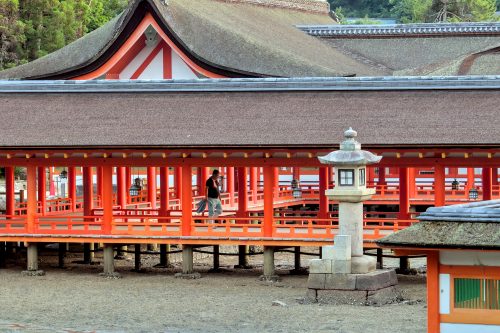
There are many ways to get to Itsukushima Shrine. First, you need to get to Hatsukaichi, the city that Miyajima belongs to. From Hiroshima Station, take the JR Sanyo Line towards Iwakuni. It leaves from platform 1. That is the last platform on your left after you go through the JR ticket gate. Get off at JR Miyajima-guchi Station — a five minute walk from the ferry terminal. The trip takes about half an hour and costs ¥420. You can also take the Hiroden streetcar from Hiroshima Station. It stops at Hiroden Miyajima-guchi Station and costs ¥240. The Hiroden station is right next to the ferry terminal to Miyajima. However, the Hiroden journey takes about 80 minutes.
Next, you need to get to Miyajima. The ferry terminal is inside a small shopping plaza called Etto. It is a popular place to use the restroom, grab a snack and buy local souvenirs. Two different ferry companies operate out of the terminal: JR West Miyajima Ferry and Miyajima Matsudai Kisen. Visitors with a Japan Rail Pass or JR-WEST Rail Pass can use their passes to board the JR ferry but not the Matsudai ferry. Besides that, the experience and fare is identical for each operator. Locals usually take whichever ferry leaves next.
Optionally, visitors at Peace Memorial Park can take advantage of direct ferry service to and from Miyajima. AQUANET operates high speed ferries from their berth on the Motoyasu River in Peace Park. It takes visitors to the island in about 45 minutes — ¥2,400 for a one-way adult ticket. The round-trip fare is double that. Plus, the ferry operates at the mercy of the tides, so if the water is not high enough, there is no ride. If you plan to use the AQUANET ferry to Miyajima from Peace Park, please check AQUANET’s schedule in advance to confirm the ferry times fit your trip.
Once you are on the island, leave the ferry terminal and turn right. Keep on following the coast westward. You’ll arrive at Itsukushima Shrine in around 12 minutes if you do not stop along the way, and there are many things to distract you.
(Joy Photo / Michael Farrell)
Nearby Distractions We Love
While on Miyajima, either before or after visiting the shrine, consider these fun diversions.
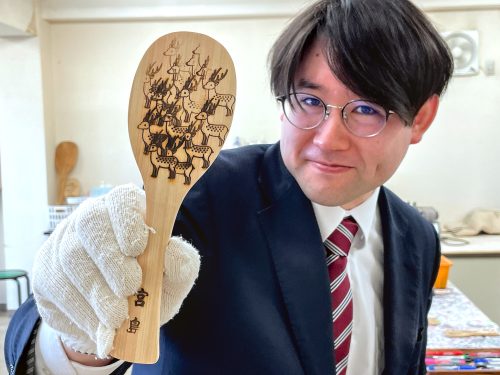
Just to the left of the ferry terminal, you can make all of the traditional crafts that the island has to offer visitors. At Miyajima Traditional Crafts Center you can cook momiji manju, decorate wooden shakushi rice scoops with hot irons, and carve a wooden plate with techniques inherited from the craftsmen who built Itsukushima Shrine.
For even more fun things to do on the island, check out our article, The Top 10 Things to Do in Miyajima.
- Address
- 1-1 Miyajima-cho, Hatsukaichi, Hiroshima Prefecture, JAPAN
04 EBISUYA Miyajima (えびす屋宮島)
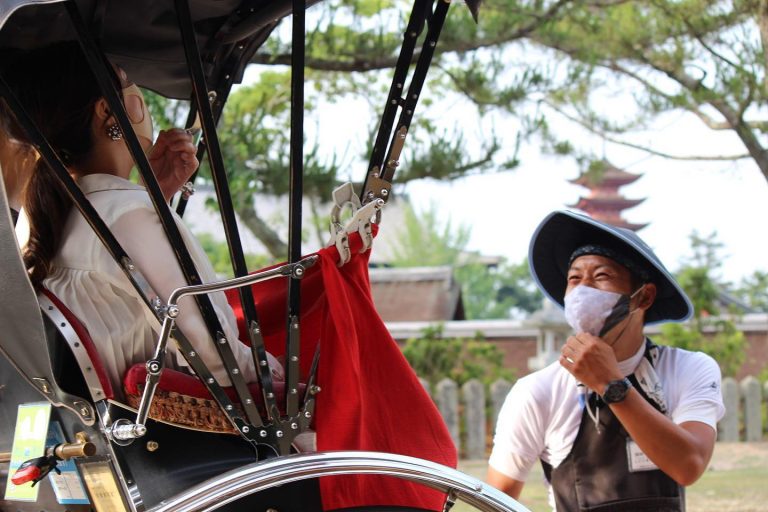
EBISUYA Miyajima offers a service that allows visitors to tour Miyajima on a rickshaw (a traditional Japanese transportation method). The Ebisuya rickshaw not only takes you to your destination but also provides you with a tour guide who can tell you more about Miyajima and its attractions. There are four different courses to choose from, and each course has a maximum capacity of two people per rickshaw (multiple rickshaws will be used to guide three or more people).
Service Fee (per person)
¥3,000~
- Address
- 556-3 Miyajima-cho, Hatsukaichi, Hiroshima Prefecture, JAPAN
05 Kinsuikan (錦水館)
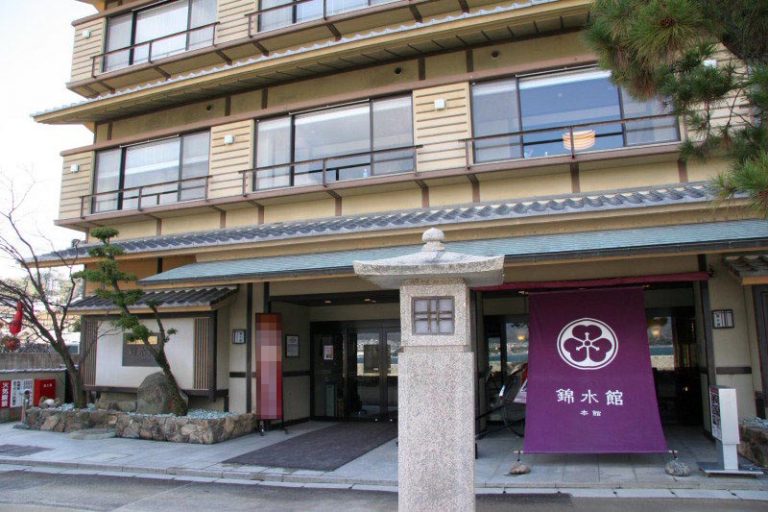
Kinsuikan is a fancy, traditional ryokan located minutes away from Miyajima’s famed Itsukushima Shrine and bustling Omotesando shopping arcade. As one would expect from any ryokan, Kinsuikan offers exquisite meals in lavish dining rooms as well as hot springs with healing properties, and even day trippers can bathe in the afternoon or evening. The rooms also feature views of either the Seto Inland Sea or the town, and guests can even order room service so they can enjoy the high life in solitude.
- Address
- 1133 Miyajimacho, Hatsukaichi, Hiroshima Prefecture, JAPAN
Transportation: Hiroshima Station [JR Ferry & JR Sanyo Line, ~50 minutes]
Transportation: Hiroshima Port [Hiroden Streetcar #5, ~35 minutes]
06 Flex Gallery (フレックスギャラリー)
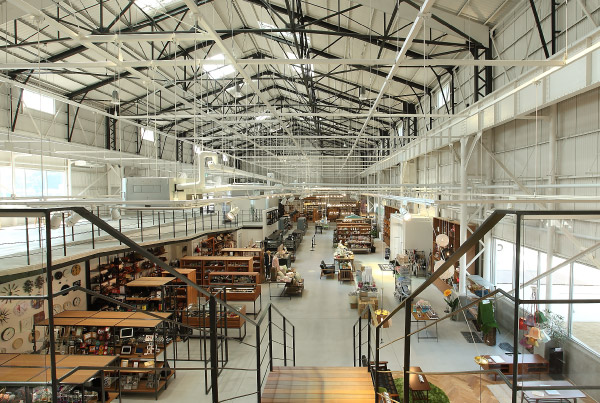
Flex Gallery is an interior goods store located in Ujina, a neighborhood in the south of Hiroshima. On the first floor of the large warehouse-turned-store, you will find antique and stylish interior goods. On the second floor, “24/7 coffee&roaster” offers lunch from a café with a beautiful view of the ocean. It is located a short distance from Ujina Port, making it easy to access from Miyajima and other places.
- Address
- 3-12-38 Ujinakaigan, Minami Ward, Hiroshima City, Hiroshima Prefecture, JAPAN
07 ACTUS Hiroshima Store (アクタス・広島店)
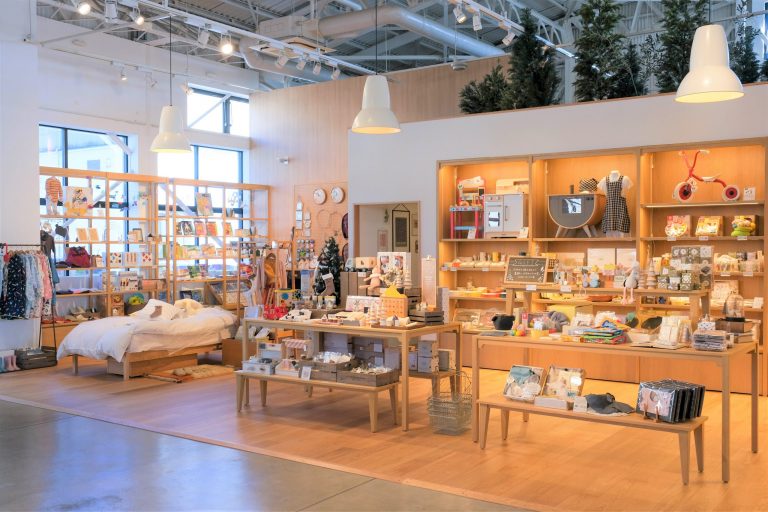
ACTUS Hiroshima is a furniture and interior goods store located in Ujina, Hiroshima. The chic brick exterior is a landmark of the store, where you can find stylish furniture and interior goods from both Japan and abroad. The store also has a café, “CAFE PLACE”, where you can enjoy lunch while taking in a view of the Seto Inland Sea. The store is located close to Ujina Port, making it easy to access from Miyajima and central Hiroshima via ferry or streetcar.
- Address
- 3-12-17 Ujinakaigan, Minami Ward, Hiroshima City, Hiroshima Prefecture, JAPAN
Lodging: Grand Prince Hotel Hiroshima
Day 2

01 Grand Prince Hotel Hiroshima (グランドプリンスホテル広島)
The Grand Prince Hotel Hiroshima is indisputably one of the most famous and esteemed hotels in all of Hiroshima City, situated near Ujina Port. The Grand Prince Hotel is equipped with a spa, a fitness center, an outdoor pool, a private outdoor workspace, and more! In addition, ferries take guests to Ujina Port, Miyajima, and Koyo Port on Etajima straight from the hotel, and the Maple Loop bus Blue Line can also shuttle visitors to key sights downtown.
- Address
- 23-1 Motoujina-cho, Minami Ward, Hiroshima City, Hiroshima Prefecture, JAPAN
Transportation: Kamiya-cho [Meipuru~pu Bus Blue Route, ~27 minutes]
02 Pokémon Center HIROSHIMA – The Video Game Comes to Life
If Pokémon Were Real
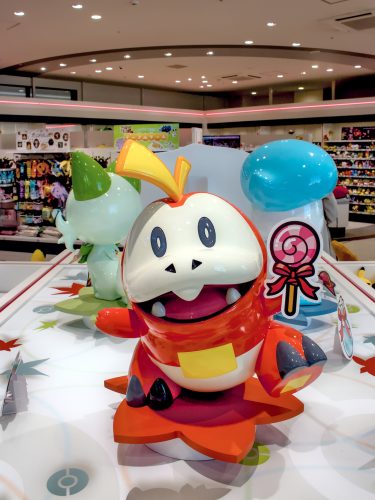
Fuecoco, Sprigatito and Quaxly are just a few of the Pokémon statues that you can find throughout Hiroshima Station and not just the Pokémon Center. (Joy Photo / Michael Farrell)
Step into the Pokémon media franchise at Pokémon Center HIROSHIMA, a real-life representation of the Pokémon Centers found in the video game series. Players of the games know that almost every town on the map has a Pokémon Center where you can heal your Pokémon, buy goods and connect with other players. The Pokémon Centers in Japan and abroad transport that experience to the real world, helping visitors step into the world of Pokémon as if it were real.
Pokémon Goods Central
Located on the second floor of Hiroshima Station’s Ekimae shopping area, Pokémon Center HIROSHIMA has a wide range of Pokémon goods. Explore aisles of plushies and apparel, video and card games, stationery and books, jewelry and more.
Seasonal and Cultural Pokémon Goods
Depending on the time of year, you’ll also find various products themed around the seasons, Hiroshima culture and the latest Pokémon games. For example, Halloween-themed plushies are common in autumn and Christmas-themed items can be found in December. Moreover, since regions of Hiroshima Prefecture are notable for okonomiyaki, lemons, rice scoops and maple leaves, you can find Pokémon goods with these and other Hiroshima themes. At the time of this writing, you could buy Pikachu plushies holding lemon slices; shamoji (rice scoops) emblazoned with Pikachu and maple leaves; and okonomiyaki hera (tiny spatulas) with the same design. Also when this was written, Pokémon Legends: Z-A was the newest series in the game franchise. As a result, you could find Pokémon Legends goods in stock along with fun promotional posters and displays around the store.
Pokémon with Hiroshima Pride
Hiroshima’s unique culture is everywhere to see. A hanging display of pint-sized Pikachu plushies hug Hiroshima’s signature sweet, the momiji manju — a maple-leaf-shaped pastry traditionally stuffed with anko paste.
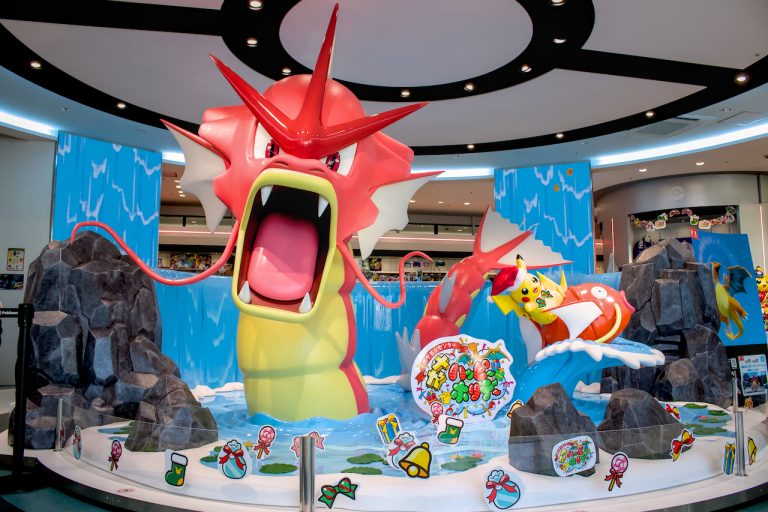
One Pikachu statue in the store sports a red hoodie emblazoned with maple leaves, a nod to Miyajima’s association with autumn. It holds a small Koi-no-bori pole with Shiny Gyarados and Magikarp windsocks flying instead of the usual family of Japanese koi. Shiny Gyarados is Pokémon Center HIROSHIMA’s mascot, a nod to the city’s red-jerseyed pro-baseball team, the Hiroshima Toyo Carp.
Nearby, Pokémon goods also support Hiroshima’s professional soccer team, Sanfrecce, as part of a licensed crossover that started in August 2025. Sanfrecce’s purple towel-scarves, jerseys, mugs and more are emblazoned with their coat of arms as seen through the Pokémon Universe. An Ursaring and an Urasaluna support the emblem on either side while Pikachu and Teddiursa pop out of the corners of the shield.
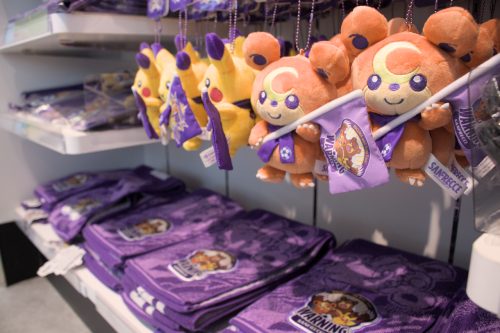
Pokémon and Sanfrecce Hiroshima licensed crossover goods feature Teddiursa, Ursaring and Pikachu with the phrase: “Warning. Ringuma used scary face.” (Joy Photo / Michael Farrell)
Connecting Players
In keeping with the classic, in-game Pokémon Centers’ role of connecting players to battle and trade, Pokémon Center HIROSHIMA also has an area reserved for Pokémon Trading Card Game matches. And they host promotional events throughout the year in the store and on the station grounds.
Pokémon Inside and Out
The immersive theme continues outside the Pokémon Center too. Just around the corner from the Shinkansen gate, while on your way to the Pokémon Center, a life-sized Munchlax sits on a bench eating momiji manju. On the first floor, near the bus stop, there is an astroturf play area for very small children to enjoy while their parents take a break. Nearby a Bulbasaur sits between seats made of giant leaves. On the roof, kids of all ages can slide down a plexiglass “Hydro Pump” water jet out of Gyarados’ mouth. A few hops away, kids climb up leaves with Bulbasaur and go down another slide with Mantine, Luvdisk, and Psyduck.
Check Your Pokénav, Where is Pokémon Center HIROSHIMA?
Pokémon Center HIROSHIMA is easy to find in Hiroshima Station. Turn left as you leave the Shinkansen exit and walk towards the end of the second floor’s covered gallery. The Pokémon Center’s main entrance is on the left, overlooking the bus stops and taxi stands below.
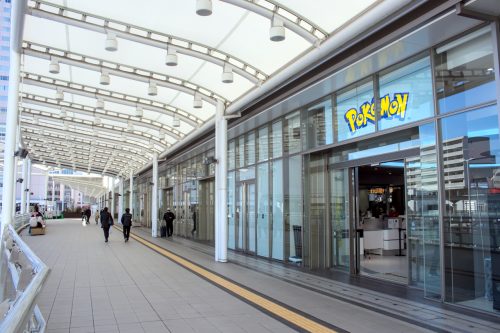
Pokémon Center Hiroshima is easily accessible from Hiroshima Station’s Shinkansen Exit on the north side of the station. (Joy Photo / Michael Farrell)
Grab More Anime Merch in Hiroshima
Hit these three stops on your way to Peace Memorial Park, to complete your anime and pop-culture shopping. Before leaving Hiroshima Station, stop at JUMP SHOP Hiroshima in the Minamoa shopping mall on the south side of the station. JUMP SHOP is the official goods store for Shonen Jump, the publisher of titles like One Piece and Dragon Ball. Next, get on the Hiroden tram and get off at Hatchobori Station to explore thousands of stickers at B-SIDE LABEL Hiroshima. The Hondori shop has the largest collection of the brand’s designs out of any branch in Japan. In addition to 7,000 original designs, they have hundreds more depicting characters from popular anime franchises like Demon Hunter and My Hero Academia. Walk west down Hondori towards Peace Park and try your luck at Gatcha Kingdom Hiroshima Store. It has over 150 different gatchapon vending machines with zany and fun themes from the spectrum of Japanese culture.
- Address
- 〒732-0822 Hiroshima, Minami Ward, Matsubaracho, 1−2 ekie2F
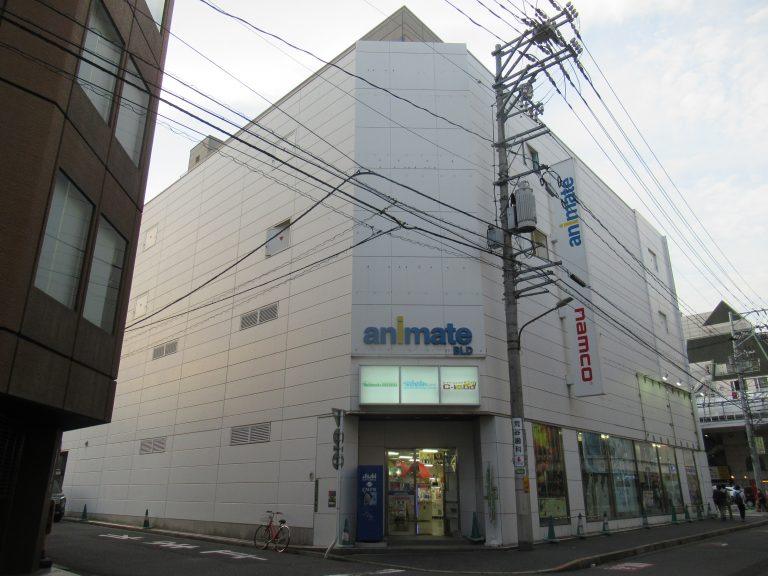
03 Animate Hiroshima (アニメイト広島)
Animate Hiroshima is the largest anime and manga specialty store in Hiroshima. The first floor of the store is a video arcade with prizes such as popular anime goods. The second and third floors sell manga related to anime (some foreign versions are available), CDs, and many official goods that can only be bought in Japan. The fourth and fifth floors are dedicated to figurines and coterie magazines. The store is incredibly popular with otaku (extreme anime lovers), many of whom visit the store every day.
- Address
- 2-3-1 Otemachi, Naka Ward, Hiroshima City, Hiroshima Prefecture, JAPAN
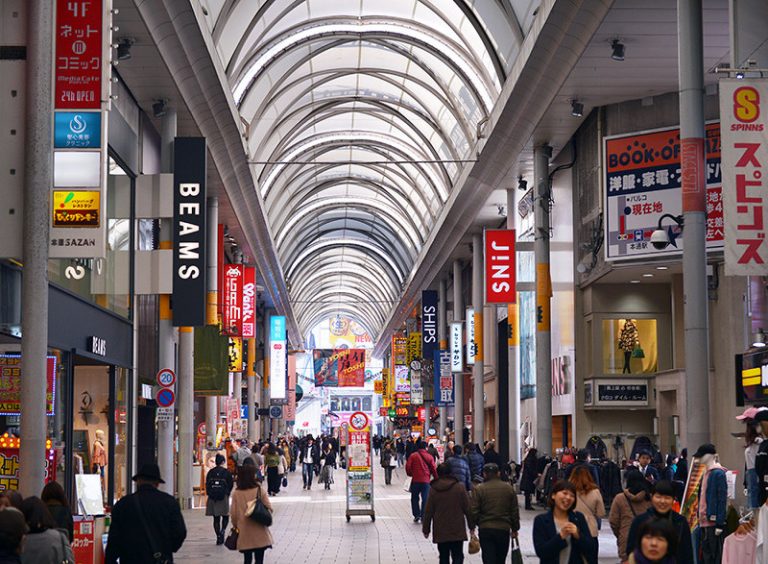
04 Hondori Shopping Street (本通商店街)
The bustling downtown area called Hondori is named after the pedestrian-only arcade shopping street that symbolizes the city. This shopping street is lined with clothing stores representing Japan and countries around the world. At night, the neon lights of izakaya (Japanese pubs) and pubs come on all at once. Ramen specialty stores and sushi restaurants with counter seating are open until midnight. Nearby, Okonomimura is a collection of restaurants specializing in Hiroshima’s special okonomiyaki.
- Address
- Hondori, Naka Ward, Hiroshima City, Hiroshima Prefecture, JAPAN
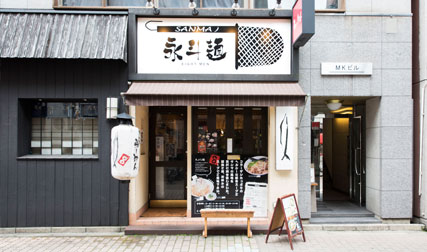
05 Eito Men (永斗麺)
Eito Men is a ramen restaurant located about a three-minute walk from the Kamiya-cho Higashi stop on the Hiroden streetcar. It features an original seafood-based soup that is different from the common ramen flavors that are popular around the world. Eito Men offers ramen with a light and refreshing taste. The most popular item on the menu is the “Sanma Ramen,” which is also the signature dish of the restaurant. The strongly flavored broth soup made with fishmeal from the sanma (mackerel pike) has won over many fans.
- Address
- 1-5-22 Kamiya-cho, Naka Ward, Hiroshima City, Hiroshima Prefecture, JAPAN
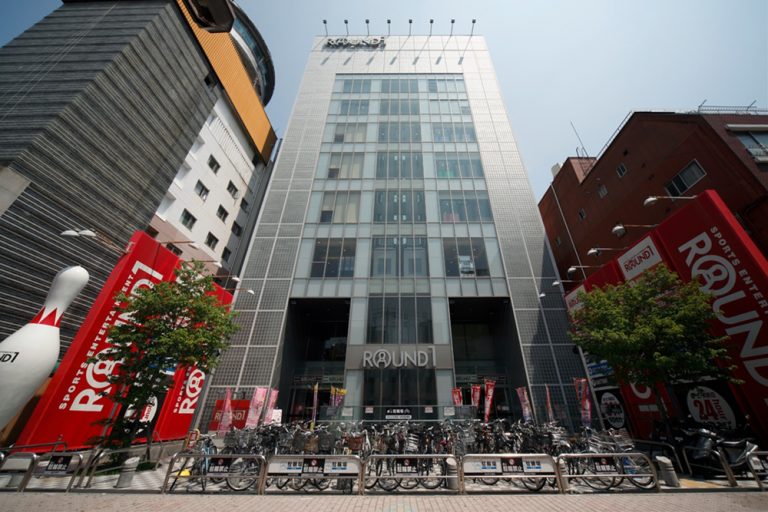
06 Round 1 (ラウンドワン)
Round 1 is an amusement center located just off the Hondori shopping street in the center of Hiroshima City. You can easily recognise it from the giant bowling pin in front of the building. Here, you can enjoy a variety of sports and games such as bowling, table tennis, and batting/pitching cages, as well as karaoke and crane games. Karaoke and bowling can be reserved in advance, so customers can immediately enjoy them without waiting in line.
- Address
- 3-11 Tatemachi, Naka Ward, Hiroshima City, Hiroshima Prefecture, JAPAN
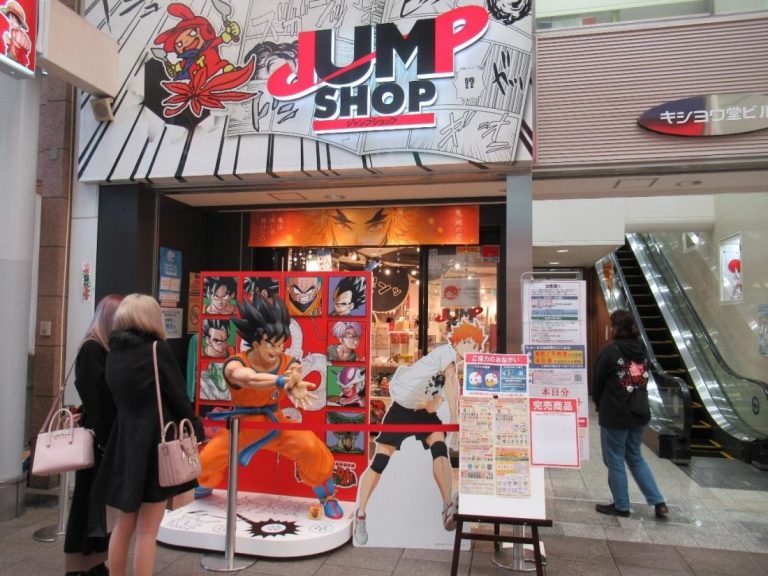
07 JUMP SHOP Hiroshima (ジャンプショップ広島)
The JUMP SHOP Hiroshima is located in Minamoa Hiroshima, a large shopping center attached to the front end of Hiroshima Station. It specializes in Weekly Shonen Jump goods. Outside the store, there is a large statue of Goku from Dragon Ball firing a Kamehameha, which is a popular photo spot. Inside the store, there are many goods from popular manga such as Dragon Ball and One Piece. The store also has goods from the popular anime “Demon Slayer”, so be sure to check it out.
- Address
- Minamoa 5F, 2-37 Matsubaracho, Minami Ward, Hiroshima, 732-8601
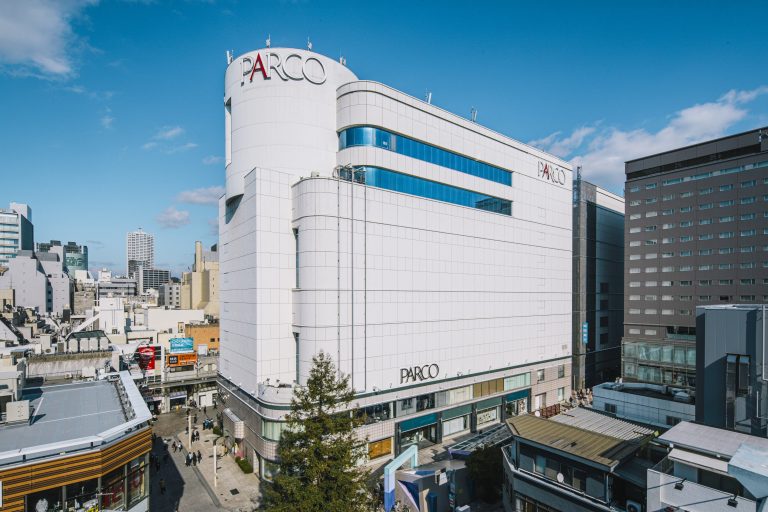
08 Hiroshima PARCO (広島パルコ)
Hiroshima PARCO is a shopping mall located on Hondori in the heart of Hiroshima City. There are two buildings, the main building and the new building, both lined with fashion brands, general stores, and cafés. The stores feature a wide range of genres, from brands that can only be bought in Japan to brands popular in Europe and the United States. It is a place that is loved by people of all ages as somewhere where fashion trends in Hiroshima originate. In addition to fashion brands, cafés, boba tea shops, cookie shops, and matcha sweets shops are also found within the complex.
- Address
- 10-1 Hondori, Naka Ward, Hiroshima City, Hiroshima Prefecture, JAPAN
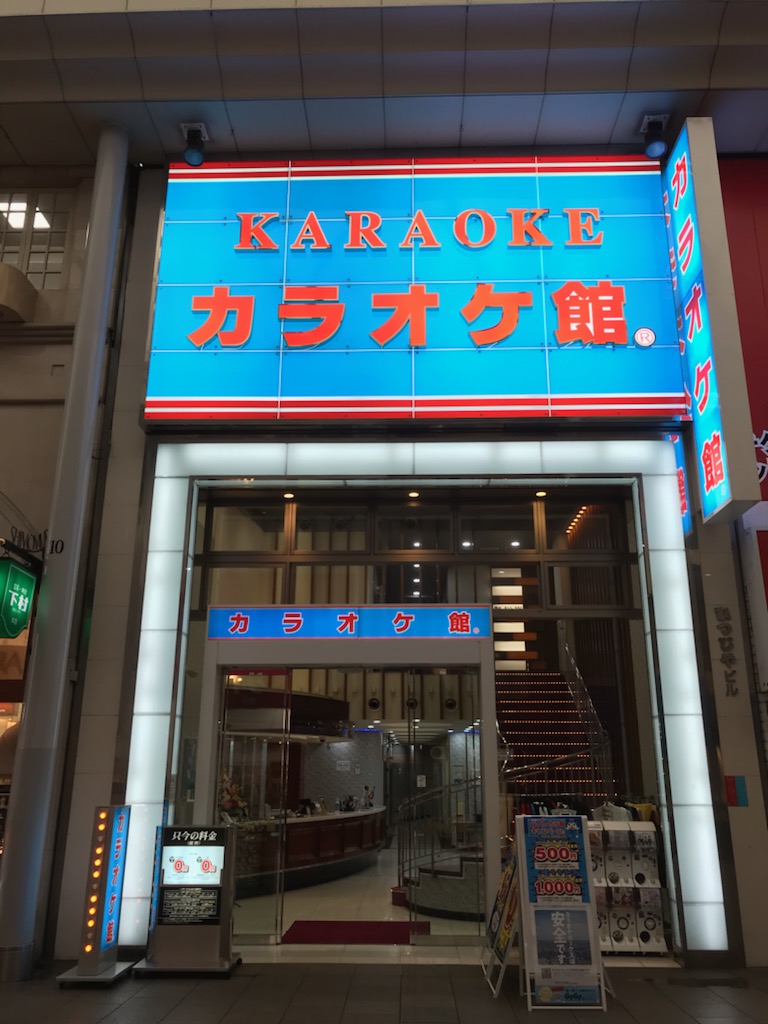
09 Karaoke-kan (カラオケ館)
Karaoke-kan is a karaoke building located on Hondori in the center of Hiroshima City. The latest models of karaoke machines are available, allowing you to sing anything from the latest songs to old favorites. It features private karaoke rooms, which can accommodate any number of groups from 1 to a maximum of 100 people, making it a popular place for everything from dates to large parties.
- Address
- 9-33 Hondori, Naka Ward, Hiroshima City, Hiroshima Prefecture, JAPAN
Transportation: Hiroshima Station [Hiroden Streetcar #1, 2, or 6, ~10 minutes]
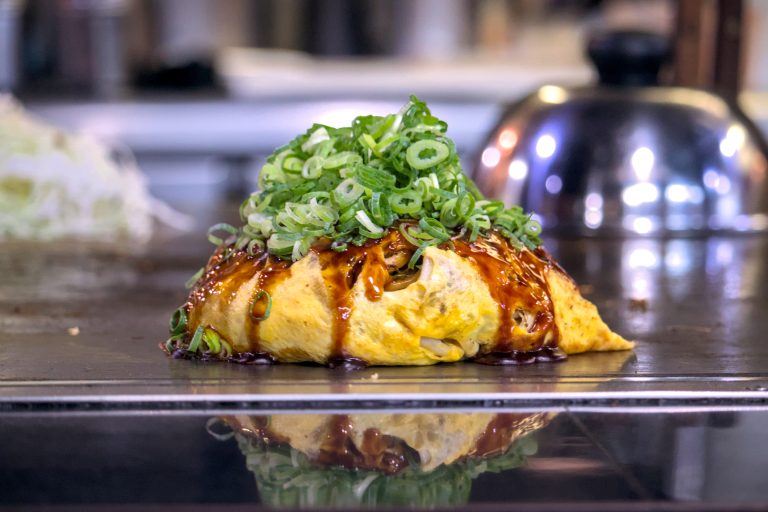
10 Hiroshima Okonomi Story Ekimae Hiroba: That Retro Okonomiyaki Feeling
It’s 1965 and Hiroshima City bans the use of Nishishinteshi Square for food stalls. Many of those stalls sold the city’s most popular dish—okonomiyaki. They had to go somewhere. Many moved to nearby Okonomimura, a building still active today. Others found a place in Hiroshima Station. Hiroshima Station has undergone many renovations and changes over the decades, so the atmosphere today is distinctly modern. However, the retro atmosphere of those displaced okonomiyaki stands continues at nearby Hiroshima Okonomi Story Ekimae Hiroba, just across the street from Exit 5.
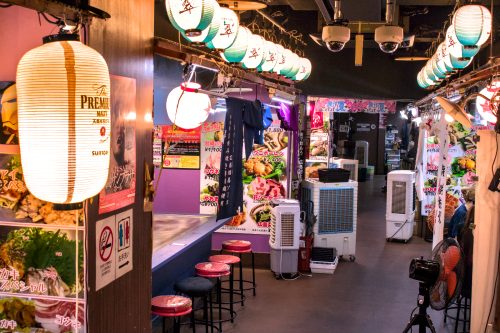
The “Okonomiyaki Theme Park”
Ekimae Hiroba is an “okonomiyaki theme park” located on the 6th floor of the Hiroshima Full Focus Building. 15 shops, each with their own take on Hiroshima’s defining dish, circle around a 1,300-square-meter space evocative of the okonomiyaki shops found in Hiroshima Station during the Showa era. Ekimae Hiroba, despite the vibe, opened in 2006, and has since been a key player in the city’s okonomiyaki and teppanyaki scene. The space itself is open year-round from 10AM to 11PM, but individual shops keep varying hours. Many shops, but not all, offer English menus. If you ask, some can even accommodate unique dietary needs like vegetarianism.
Okonomiyaki Craftsmen
The shop’s owners are considered artisans of their craft. They follow the principle of “Shu-Ha-Ri” (守破離), a concept from martial arts training applied to cooking. “Shu” refers to the stage when a young chef must strictly adhere to and preserve the tradition. “Ha” is the next stage of development where the chef can begin to experiment within the tradition. Lastly, “ri” is the achievement of mastery such that the chef can freely express himself without fear of compromising the art.
Hiroshima Okonomiyaki’s Style
The defining feature of Hiroshima Okonomiyaki vs. similar dishes around Japan is that the ingredients are layered one on top of the other. This is distinct from Kansai’s style which throws everything together in a hearty batter and Tokyo’s monjayaki which is also batter-based but is gooey and has finely chopped ingredients. Typical ingredients in Hiroshima are a thin, crepelike pancake, soba or udon noodles, shredded cabbage, squid tempura, sliced pork belly, egg, a thick oyster sauce and toppings like green onions and oysters. Soba noodles are often preferred by the locals, and the noodles typically used, like Hiroshima’s own Isono Seimen, are specially designed with okonomiyaki in mind so they don’t burn and maintain an ideal texture.
The Shops
Yakunjya & Jyu-ban
While exploring the dim, warmly lit alleys of fluorescent okonomiyaki shops, you can find a range of expressions of the Hiroshima okonomiyaki arts. The first shop on the left is Yakunjya, where the cabbage is cut thick and stir fried in beef fat. Deeper in the alley is Jyu-ban (10番), famous for mounds of fresh, grated daikon radish added as a free topping.
Kyokara, Momi-chan & Shu
Nearby is Kyokara. Even as they support tradition with the use of Hiroshima’s Isono Seimen noodles and Otafuku sauce, they expand on the tradition by the addition of thinly sliced, grilled beef and a nest of slivered nori atop their signature okonomiyaki. Kyokara, moreover, has an English menu that includes a “Vegan Special Okonomiyaki” that includes bean sprouts and shimeji mushrooms. Nearby, Momi-chan and Shu are great stops to savor the simple elegance of pure, traditional Hiroshima-style okonomiyaki. The owner of Momi-chan, moreover, is a real character, and can be found making his customers laugh while he cooks for them.
Gomenya
New on the block is Gomenya, across from Kyokara. The owner-chef, Yuji Sato, humbly says their okonomiyaki is just in the basic style, but his recommended okonomiyaki has a mouth-watering twist. It is topped with a mix of grilled pork and beef tossed in his own miso sauce, a special blend of both red and white varieties, and then topped with a fresh egg.
Sozo & Iron Man
One of the most respected shops is Sozo. They make their okonomiyaki soba noodles from scratch offsite at their own facility, and they don’t use any chemical seasonings to bring out the flavor of their ingredients. Of similar philosophy is Iron Man. This shop emphasizes letting the natural flavor of the ingredients shine on their own. The Iron Man Special is topped with clams, spring onions, and whole shiso leaves.
For Baseball Fans: -Hiko- & Lyttle
To taste the soul of Hiroshima, which is 100% Carp fan, take a seat at -Hiko-, a shop fully devoted to the city’s professional baseball team. You’ll find unique okonomiyaki dishes named after heroes of the team like Takahiro Arai, the manager, and infielder Ryosuke Kikuchi, who holds the Nippon Professional Baseball record for the most assists and the longest error-free streak. Arai’s okonomiyaki boasts a variety of locally produced ingredients like oysters, squid tempura, and green onions. Meanwhile, Kikuchi’s okonomiyaki is advertised as “stamina” food and includes grated yam and natto. And if you’re into Japanese baseball, consider Lyttle in the back. This shop is named in honor of Jim Lyttle, the American professional baseball player who was instrumental in helping the Carp win two league championships and the Japan series in 1980.
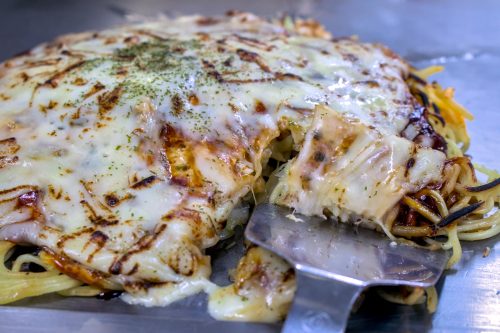
With crispy noodles and a rich, smoke flavor, Okamoto’s Goku Aburi Cheese okonomiyaki oozes with cheese like a pizza.
HOPE and OKAMOTO’S
If you really want to push the limits of Hiroshima style okonomiyaki, visit HOPE and get okonomiyaki with both rice and noodles in the mix, or sit down at OKAMOTO’S. There are many cheesy okonomiyaki varieties in Ekimae Hiroba, but few ooze over with melted cheese like OKAMOTO’S Goku Aburi Cheese, “Extreme Grilled Cheese” in English.
Denko Sekka
Denko Sekka, which means “lightning fast,” is a national chain with their own take on okonomiyaki. They steam their cabbage without pushing it down, resulting in a fluffy interior that many enjoy. Their namesake dish is topped with shiso, a beaten egg and a mound of green onions, making the okonomiyaki look like an omelet hill.
House Special Sauce
Outside Ekimae Hiroba, Otafuku is queen of the okonomiyaki sauce market, but inside, shops like Jyu-ban, Iron Man, Sozo and HOPE use a unique sauce developed exclusively for Ekimae Hiroba: Hiroshima Washira No Kesshō Sauce. It concentrates the umami of Hiroshima oysters and the acidity of Setouchi lemons. Hard to find outside Ekimae Hiroba, it is available there for customers to buy as a souvenir.
If you have the time to cook, Ekimae Hiroba also offers rental kitchens where guests can follow an okonomiyaki cooking instructor to begin their own delicious journey along the path of okonomiyaki “Shu-Ha-Ri.”
- Address
- Hiroshima Full Focus Building 6F, 10-1 Matsubara-cho, Minami Ward, Hiroshima City, Hiroshima Prefecture, JAPAN
Slip into the Showa era for your last supper before departing from Hiroshima Station on a new journey.
Hiroshima Station (広島駅)
2-37 Matsubaracho, Minami Ward, Hiroshima City, Hiroshima Prefecture, JAPAN
Rental Kimono Miyajima Komachi (レンタルきものみやじま小町)
553-40 Miyajima-cho, Hatsukaichi, Hiroshima Prefecture, JAPAN
Itsukushima Shrine: Walk Through Living History
1-1 Miyajima-cho, Hatsukaichi, Hiroshima Prefecture, JAPAN
EBISUYA Miyajima (えびす屋宮島)
556-3 Miyajima-cho, Hatsukaichi, Hiroshima Prefecture, JAPAN
Flex Gallery (フレックスギャラリー)
3-12-38 Ujinakaigan, Minami Ward, Hiroshima City, Hiroshima Prefecture, JAPAN
ACTUS Hiroshima Store (アクタス・広島店)
3-12-17 Ujinakaigan, Minami Ward, Hiroshima City, Hiroshima Prefecture, JAPAN
Grand Prince Hotel Hiroshima (グランドプリンスホテル広島)
23-1 Motoujina-cho, Minami Ward, Hiroshima City, Hiroshima Prefecture, JAPAN
Pokémon Center HIROSHIMA – The Video Game Comes to Life
〒732-0822 Hiroshima, Minami Ward, Matsubaracho, 1−2 ekie2F
Animate Hiroshima (アニメイト広島)
2-3-1 Otemachi, Naka Ward, Hiroshima City, Hiroshima Prefecture, JAPAN
Hondori Shopping Street (本通商店街)
Hondori, Naka Ward, Hiroshima City, Hiroshima Prefecture, JAPAN
Eito Men (永斗麺)
1-5-22 Kamiya-cho, Naka Ward, Hiroshima City, Hiroshima Prefecture, JAPAN
Round 1 (ラウンドワン)
3-11 Tatemachi, Naka Ward, Hiroshima City, Hiroshima Prefecture, JAPAN
JUMP SHOP Hiroshima (ジャンプショップ広島)
Minamoa 5F, 2-37 Matsubaracho, Minami Ward, Hiroshima, 732-8601
Hiroshima PARCO (広島パルコ)
10-1 Hondori, Naka Ward, Hiroshima City, Hiroshima Prefecture, JAPAN
Karaoke-kan (カラオケ館)
9-33 Hondori, Naka Ward, Hiroshima City, Hiroshima Prefecture, JAPAN
Hiroshima Okonomi Story Ekimae Hiroba: That Retro Okonomiyaki Feeling
Hiroshima Full Focus Building 6F, 10-1 Matsubara-cho, Minami Ward, Hiroshima City, Hiroshima Prefecture, JAPAN