
Itineraries 2day
World Heritage and History of Hiroshima
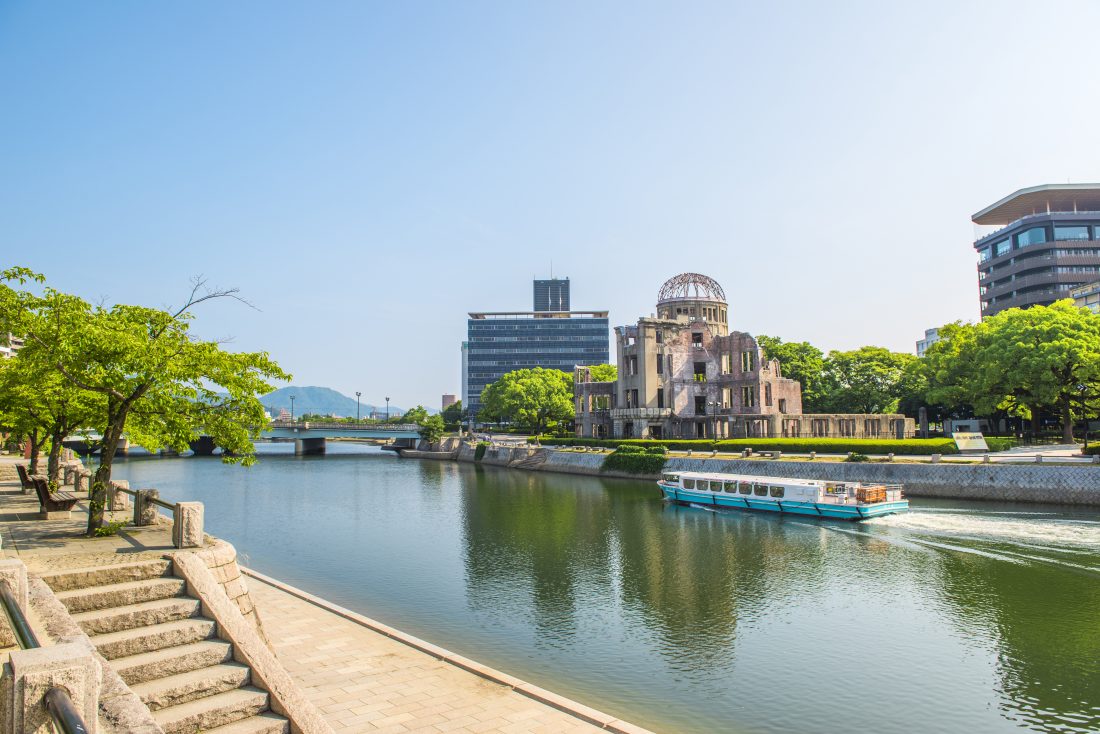
For first-time visitors to Hiroshima, this is a great plan full of must-see attractions. Enjoy two World Heritage Sites and the strong history of Hiroshima in just two days and one night.
Day 1
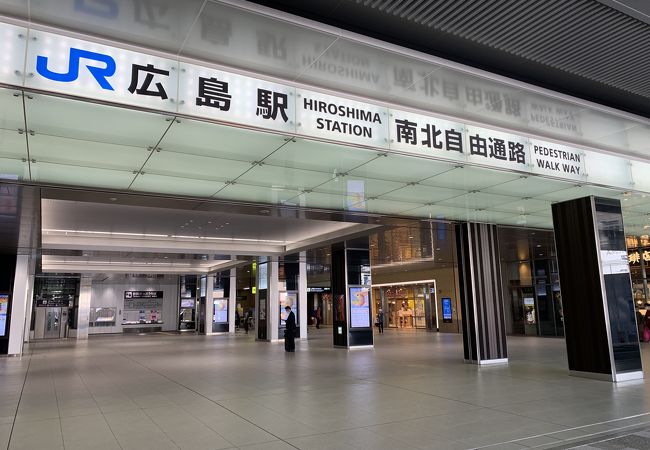
01 Hiroshima Station (広島駅)
Hiroshima Station is the bustling transportation hub of our peaceful city, and one of the principal entertainment hubs as well. All JR lines in the city stop here, and from here, people can take numerous buses and streetcars anywhere in the city, or even out of town. The ekie shopping complex located inside the station building also has no shortage of restaurants and souvenir shops to keep visitors busy for hours.
- Address
- 2-37 Matsubaracho, Minami Ward, Hiroshima City, Hiroshima Prefecture, JAPAN
Transportation: Miyajima Pier [JR Sanyo Line & JR Ferry, ~50 minutes]
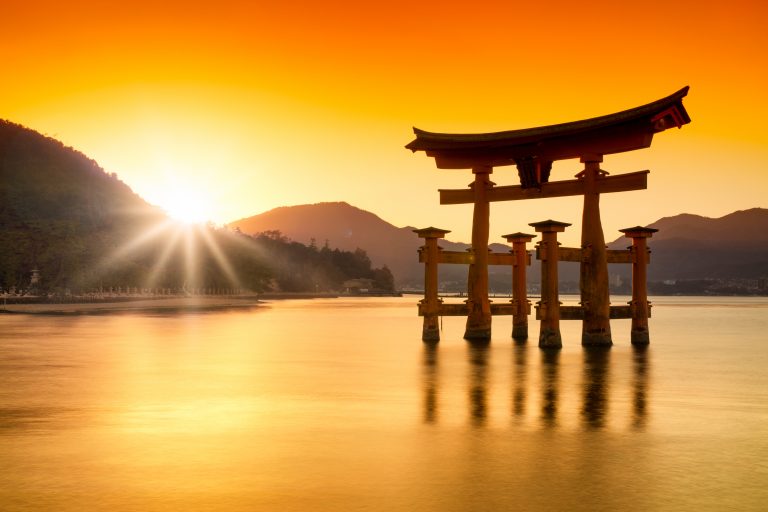
02 Itsukushima Shrine: Walk Through Living History
Located a short train ride from Hiroshima City, Itsukushima Shrine is a centuries-old Shinto shrine on the island of Miyajima in the Seto Inland Sea. It is a culturally rich location that is deeply woven into the fabric of Japanese history while remaining an active religious site for the local people.
Quick Facts
▪️Miyajima’s Itsukushima Shrine is an active site of Shinto worship.
▪️It enshrines three mythical Shinto deities: the goddesses Ichikishimahime-no-mikoto, Tagorihime-no-mikoto, and Tagitsuhime-no-mikoto.
▪️The shrine’s traditional founding year is 593, but the island itself was worshiped as a kami separately from the shinto goddesses long before that.
▪️The main shrine’s main buildings were constructed in the Shinden-zukuri style of the Heian period (794 to 1185).
▪️Because of the shrine’s unique history, architecture, and beauty, along with its unique artistic and cultural value, it was registered as an UNESCO World Heritage Site in 1996.
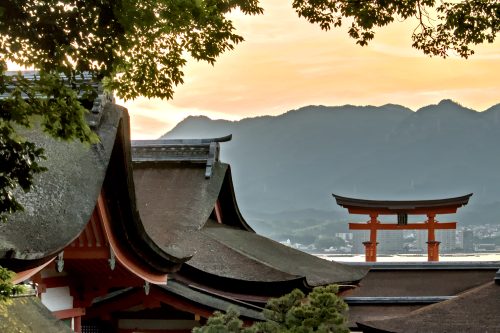
(Joy Photo / Michael Farrell)
Itsukushima Shrine: An Enduring Vision of Beauty
Since the Edo period, Miyajima has been regarded as one of “The Three Most Scenic Views of Japan.” The interplay between sky, island, sea and shrine creates a one-of-a-kind view that has influenced Japanese principles of beauty for centuries. Integral to this view is Itsukushima Shrine. A site of continuous Shinto worship for over 1,500 years, this sacred site appears to float on the waters of the Seto Inland Sea below the primeval forests of Mt. Misen. Over the centuries, it inspired the patronage of some of Japan’s most famous leaders, embedding itself deeply in Japanese culture and history. Today, it stands as a beautiful example of Heian-period aesthetics while continuing to serve the spiritual needs of Shinto practitioners.
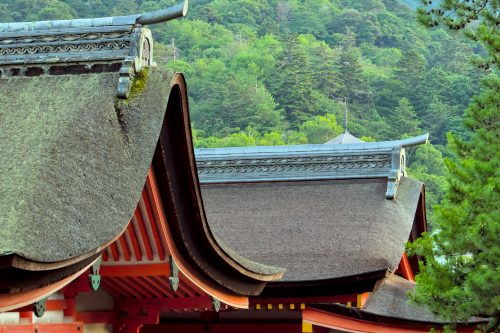
(Joy Photo / Michael Farrell)
A Center of Shinto Worship
Shinto belief holds that Itsukushima Shrine is the dwelling place of three goddesses: Ichikishimahime-no-mikoto, Tagorihime-no-mikoto, and Tagitsuhime-no-mikoto. They are known collectively as the Munakata Sanjoshin or the Three Goddesses of Munakata because the tradition of their worship comes from Munakata City near Fukuoka.
The Munakata kami are revered as protectors of the Japanese imperial family, sailors, and warriors. They are deeply tied to water routes because their cult originally grew out of ancient protection rites for merchants sailing to Korea from Munakata.
According to legend, they were brought to Itsukushima Shrine in 593, where they have been revered though their identity changed over the centuries. After the arrival of Buddhism in Japan in the fifth century, the new religion gradually reinterpreted Shinto beliefs along Buddhist lines. As a result, for most of Japanese history, many believed that the Munakata Sanjoshin were manifestations of Kannon — the bodhisattva of mercy — or other Buddhist deities.
It was not until the Meiji separation of the two religions with the Shinto-Buddhist Separation Decree that the kami of Itsukushima were identified solely with Shinto deities again.
Today, Itsukushima Shrine is the head shrine of a system of about 1,425 Itsukushima shrines throughout Japan.
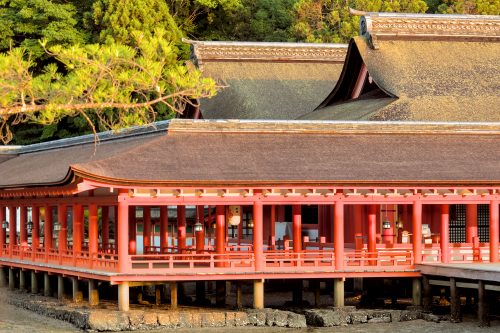
(Joy Photo / Michael Farrell)
A One-of-a-kind Structure Steeped in History
While Shinto tradition holds that Itsukushima Shrine was founded in 593, the buildings themselves are not from the 6th century. The architectural style of the main complex dates to a massive renovation of the shrine around 1168 under the patronage of the warlord Taira no Kiyomori, the first samurai to become Japan’s de-facto ruler.
Kiyomori had the shrine redesigned according to the architectural style of Heian aristocratic homes in Kyoto. The style, called Shinden-zukuri, became popular as a uniquely Japanese architectural style. It incorporated fewer Chinese influences from the time, tailoring itself to the Japanese climate and local aesthetics.
The style emphasized balance and harmony with the environment. Buildings were elevated on wooden stilts to keep living spaces off the damp earth. Open-air construction helped residents stay cool during Japan’s hot and humid summers. Various kinds of screens were used for privacy. Meanwhile, a formal garden provided a central orientation for the overall design.
The Shinden movement provided the DNA of many features that are still seen in Japanese homes today. And Itsukushima Shrine — raised on stilts, open to the air, and featuring the sea like a central garden — is a beautiful example of this.
The shrine is also a premier architectural example of Shinbutsu-shugo, the syncretism of Buddhism and Shinto that flourished until the Meiji government forcefully separated the two faiths in 1868. Kiyomori’s redesign elicited layered spiritual interpretations. On the one hand, it resembled Ryugo-jo, the undersea Dragon Palace of Shinto mythology. At the same time, with vermilion pavilions appearing to float on the water, the shrine elicited Pure Land Buddhism’s Gokuraku Jodo — the Western Paradise of Amida Buddha.
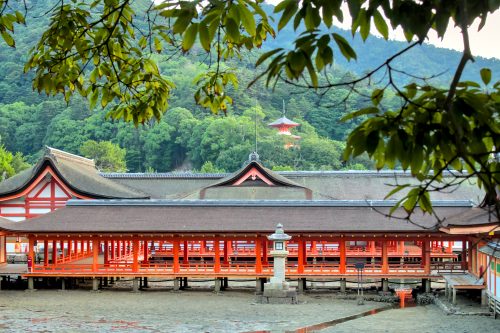
(Joy Photo / Michael Farrell)
Development Over the Centuries
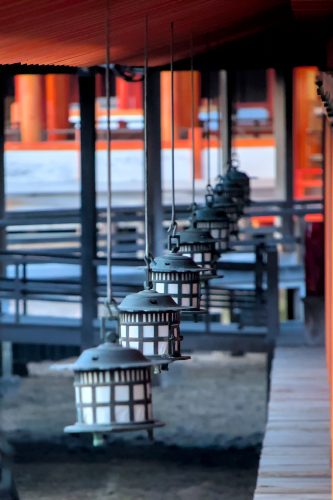
(Joy Photo / Michael Farrell)
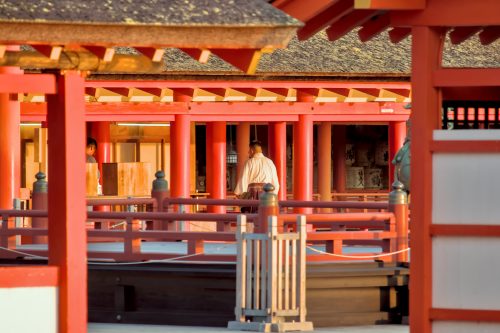
What you see today, however, is not Kiyomori’s shrine. It was destroyed by fire in 1207 and again in 1223, and faithfully rebuilt each time. Today the oldest structure is the Guest Shrine hall, called the Massha Kyakujinja. It dates to 1241 during the shrine’s reconstruction after the second fire. You can find it immediately after you enter the shrine. It is the first big building on your left after you buy your entry ticket and start walking down the open corridor.
While other structures, however, continue the Heian aesthetic, they are not as old. The Main Shrine Building, called Gohonsha Honden, dates to a total reconstruction in 1571 by the Sengoku period warlord Mori Motonari to maintain its sacredness after two brothers were slain there on suspicion of treason. Instead of incorporating contemporary architecture into the new Honden, Motonari had the former building precisely reproduced. Today, it is the largest hall of its kind in Japan.
Additional structures depart from the Shinden style because they were not reconstructions but additions at different periods in history. Nearby Senjokaku, the bare-wood temple that overlooks the main shrine from the east, is enormous yet strikingly austere and weathered in contrast to the main shrine. It was built by the legendary samurai Toyotomi Hideyoshi in 1587. Another famous addition is the sacred Noh Stage built in 1680. Built over the sea, it is the only Noh stage of its kind. It was built in the Ichiju-kiritsuma style and includes unique features like a floor that resonates like a drum, thereby boosting the sounds of the Noh performers.
Even the most iconic structure at the shrine, the Otorii (the large shrine gate) was rebuilt nine times over the centuries. Measuring 16 meters tall and 42 meters wide, this symbol of the transition from the profane to the sacred is one of the largest wooden torii gates in Japan. The current Otorii was built in 1875 after the former gate was destroyed by high winds in 1850. It recently completed a three-year restoration project that finished in 2022.
Overall, the various structures of the shrine range in origin from 1241 to 1850 with the main buildings of the shrine fairly well established by the Edo period.
(Joy Photo / Michael Farrell)
Modern Worship
The modern shrine is deeply intertwined in the ritual and ceremonial life of the local communities.
It is a popular pilgrimage for Hatsumode. In this tradition, popularized in the Meiji period by train companies seeking more customers, locals make their first shrine visit of the New Year to give thanks and pray for the coming year. Every year, the shrine draws around 100,000 worshippers.
Over the rest of the year, Itsukushima Shrine hosts a variety of public religious ceremonies and events. Summer is particularly full with important events like the Miyajima Odori, a traditional bon dance festival, and the Tamatori Festival, where men in loincloths battle in the water to grab a lucky ball suspended high above their heads. Summer is also when the shrine holds its grandest ceremony, Kangen-sai. Amid fluttering Heian-era accouterments, this event ceremonially reenacts the arrival of the three goddesses to the shrine by boat in 593.
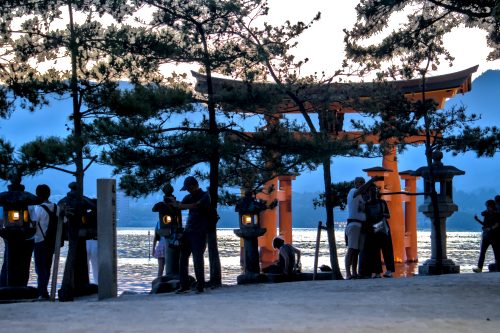
Visitors pose with the Otorii just after sunset. (Joy Photo / Michael Farrell)
Tips for Travelers
▪️ Bring physical money. Admission to the main shrine is ¥300 — less than $2. However, the shrine only accepts cash.
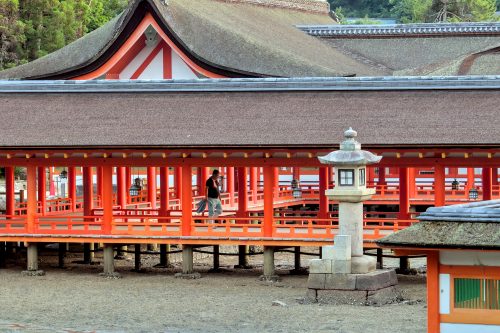
▪️ Check the tides before you go. Depending on the photos you want to take and what you want to do and see, the tides change the experience. High tide is best to experience the shrine appearing to float on the water. Low tide reveals hidden features like ponds and the unique foundations of the building. It also lets you walk right up to the Otorii.
▪️ Bring a plastic bag for your socks and shoes plus a towel for your feet if you plan to walk to the Otorii at low tide. The earth under the retreating sea is more mud than sand.
▪️ Securely pack away any paper goods or bags while visiting. While the island’s tame deer do not typically enter the main shrine, they do walk around the rest of the shrine properties, and they are notoriously brazen thieves.
▪️ It takes 15 to 30 minutes to walk through the main shrine, admire the structure and take photos. To completely explore Itsukushima Shrine, including Senjokaku, the Five Story Pagoda and the shrine’s Treasure Hall takes 60 to 90 minutes. If you practice Shinto and want to pray to the Munaka kami and buy religious items, add 15 to 30 minutes to your time.
▪️ Stay aware of the time if you arrive in the late afternoon and want to enjoy Miyajima’s shops after exploring the shrine. Depending on the time of year, the shrine closes between 5 and 6:30 p.m. However, most of the shops and restaurants on the island also close around the same time. Please check the shrine website for specific closing details.
(Joy Photo / Michael Farrell)
How to Get There
There are many ways to get to Itsukushima Shrine. First, you need to get to Hatsukaichi, the city that Miyajima belongs to. From Hiroshima Station, take the JR Sanyo Line towards Iwakuni. It leaves from platform 1. That is the last platform on your left after you go through the JR ticket gate. Get off at JR Miyajima-guchi Station — a five minute walk from the ferry terminal. The trip takes about half an hour and costs ¥420. You can also take the Hiroden streetcar from Hiroshima Station. It stops at Hiroden Miyajima-guchi Station and costs ¥240. The Hiroden station is right next to the ferry terminal to Miyajima. However, the Hiroden journey takes about 80 minutes.
Next, you need to get to Miyajima. The ferry terminal is inside a small shopping plaza called Etto. It is a popular place to use the restroom, grab a snack and buy local souvenirs. Two different ferry companies operate out of the terminal: JR West Miyajima Ferry and Miyajima Matsudai Kisen. Visitors with a Japan Rail Pass or JR-WEST Rail Pass can use their passes to board the JR ferry but not the Matsudai ferry. Besides that, the experience and fare is identical for each operator. Locals usually take whichever ferry leaves next.
Optionally, visitors at Peace Memorial Park can take advantage of direct ferry service to and from Miyajima. AQUANET operates high speed ferries from their berth on the Motoyasu River in Peace Park. It takes visitors to the island in about 45 minutes — ¥2,400 for a one-way adult ticket. The round-trip fare is double that. Plus, the ferry operates at the mercy of the tides, so if the water is not high enough, there is no ride. If you plan to use the AQUANET ferry to Miyajima from Peace Park, please check AQUANET’s schedule in advance to confirm the ferry times fit your trip.
Once you are on the island, leave the ferry terminal and turn right. Keep on following the coast westward. You’ll arrive at Itsukushima Shrine in around 12 minutes if you do not stop along the way, and there are many things to distract you.
(Joy Photo / Michael Farrell)
Nearby Distractions We Love
While on Miyajima, either before or after visiting the shrine, consider these fun diversions.
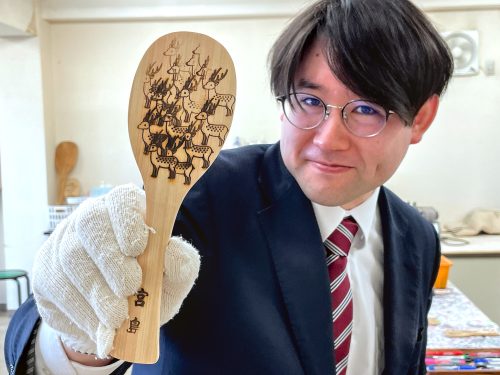
Just to the left of the ferry terminal, you can make all of the traditional crafts that the island has to offer visitors. At Miyajima Traditional Crafts Center you can cook momiji manju, decorate wooden shakushi rice scoops with hot irons, and carve a wooden plate with techniques inherited from the craftsmen who built Itsukushima Shrine.
For even more fun things to do on the island, check out our article, The Top 10 Things to Do in Miyajima.
- Address
- 1-1 Miyajima-cho, Hatsukaichi, Hiroshima Prefecture, JAPAN
03 Miyajima Omotesando Shopping Street (宮島表参道商店街)
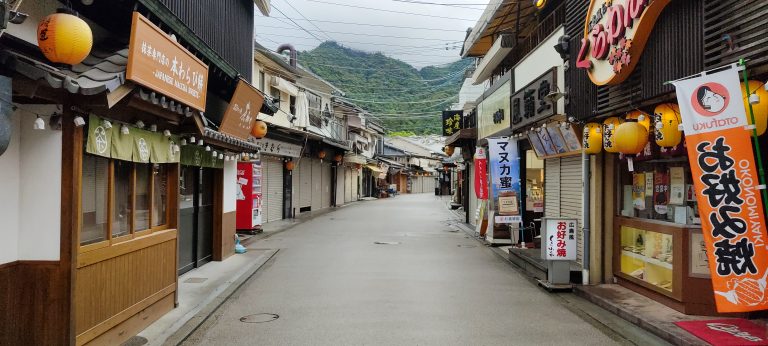
Omotesando shopping street is the main street of Miyajima, with many souvenir stores, cafés, and restaurants. On weekends and holidays the street becomes crowded with tourists, as there are many nearby tourist attractions like Itsukushima Shrine or Senjokaku five-storied pagoda. There are many stores lined along the street where you can and walk around, eat and enjoy many specialties such as “agemomiji,” which are deep-fried momiji manju, and “anago chikuwa,” which is grilled conger eel fish paste on a (traditionally bamboo but now cardboard) tube.
- Address
- 535 Miyajimacho, Hatsukaichi, Hiroshima Prefecture, JAPAN
Transportation: Miyajima-guchi Pier [JR Ferry, ~10 minutes]
04 etto (エット)
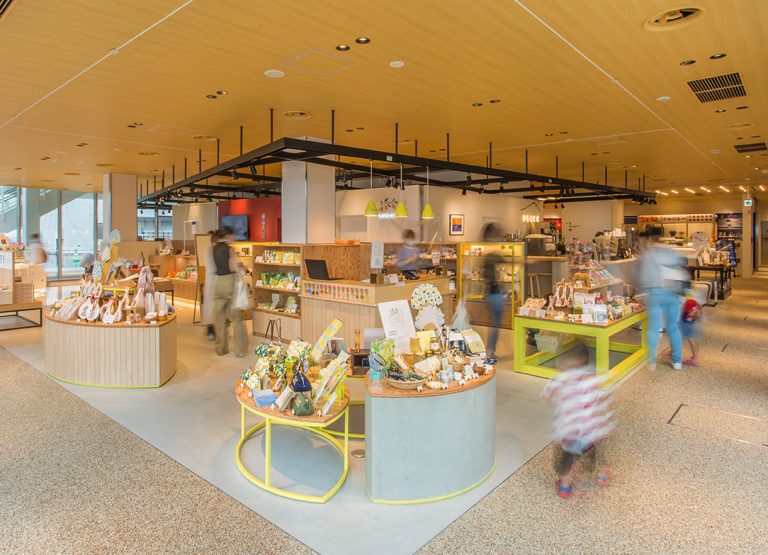
Located just off Miyajimaguchi Pier, etto is a new tourist facility that opened in 2020. Etto derives its name from a Hiroshima dialect word meaning “many,” and as the name suggests, it offers a wide variety of souvenirs and food related to Hiroshima. The facility is divided into two areas: the “Itsukushi Marché” on the first floor, consisting mainly of souvenir stores and eateries, and the “Ogottsuo Dining” restaurant area on the second floor, where you can enjoy Hiroshima’s culinary specialties.
- Address
- 1-11-8 Miyajimaguchi, Hatsukaichi, Hiroshima Prefecture, JAPAN
05 Anago-meshi Ueno Miyajimaguchi Flagship Store (あなごめしうえの宮島口本店)
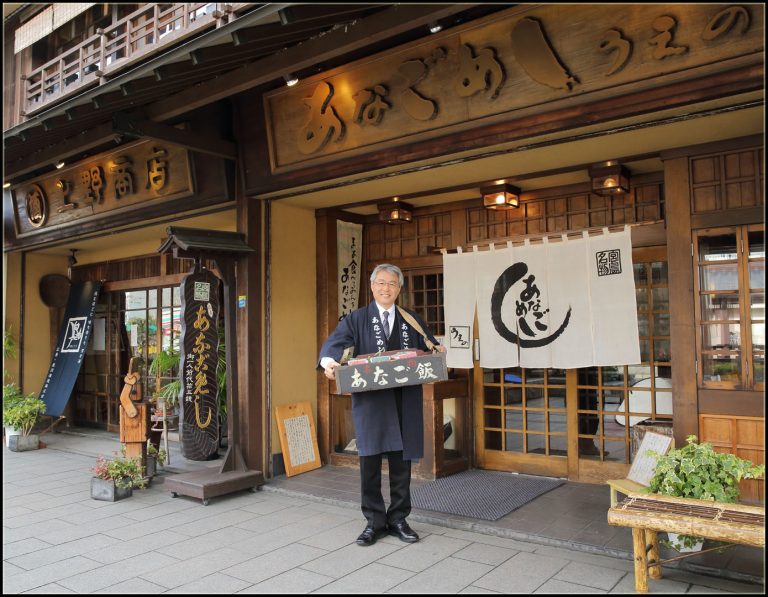
Anago-meshi Ueno Miyajima-guchi Honten is a long-standing Japanese restaurant established in 1901. It specializes in anago (conger eel) dishes and serves Anago-Meshi, a specialty of Miyajima, along with oysters. This location offers anago-meshi using freshly grilled conger eel in a special recipe. The restaurant also sells takeout anago-meshi lunch boxes.
- Address
- 1-5-11 Miyajimaguchi, Hatsukaichi, Hiroshima Prefecture, JAPAN
Transportation: Johoku Station [JR Sanyo & Astram Lines, ~40 minutes]
06 Hiroshima Castle (広島城)
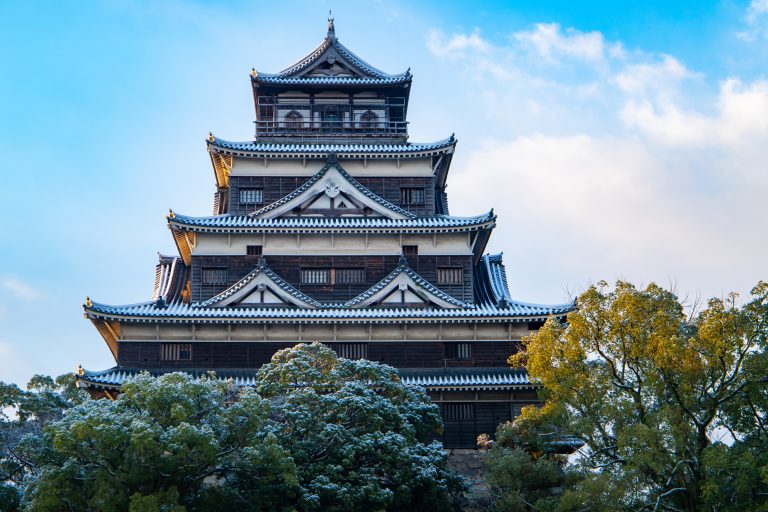
Hiroshima Castle was built in the year 1599 by Hiroshima’s most powerful warrior and leader at the time, Mori Terumoto. The castle featured a five-story Castle Tower, a Honmaru Palace, and a moat that flows like a river. Unfortunately, both the Castle Tower and the Honmaru Palace were destroyed by the atomic bombing in 1945, and only the Castle Tower has been reconstructed. The castle tower now houses the Hiroshima Castle Museum, which exhibits materials related to Hiroshima’s history, the Mori family, local folklore, and natural history.
(Entry fee)
18+ – ¥370
Senior citizen – ¥180
High School student – ¥180
Junior High School student
or under – Free
※ For students and senior
citizens, please present
identification to verify your age
such as your passport, or
school ID, at reception when
purchasing your ticket.
- Address
- 21-1 Motomachi, Naka Ward, Hiroshima City, Hiroshima Prefecture, JAPAN
07 Hiroshima Gokoku Shrine (広島護国神社)
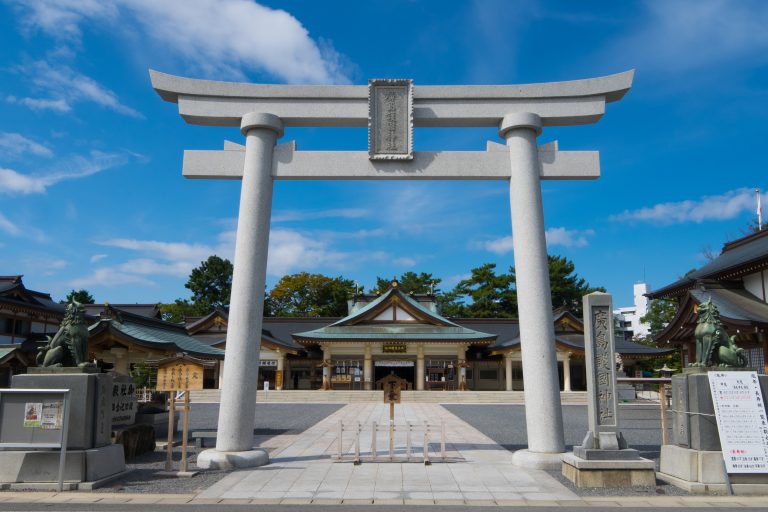
The Hiroshima Gokoku Shrine is located on the site of Hiroshima Castle, and is the largest shrine in the city center. Various festivals are held at the shrine, including the Especially 600,000 people visit the shrine in January As Hatsumoude (first visit of the new year) . Another popular festival is the Tondomatsuri. Held on January 15, every year it attracts many people who come to see the huge bonfires to pray for good health and family safety. If you are lucky, you might also see a wedding ceremony in the traditional Japanese kimono style, however you will have to watch from a distance.
- Address
- 21-2 Motomachi, Naka Ward, Hiroshima City, Hiroshima Prefecture, JAPAN
Transportation: Genbaku Dome-mae [Meipuru~pu Bus Orange OR Lemon Route, ~5 mins.]
08 Atomic Bomb Dome: From Commercial Center to Peace Icon
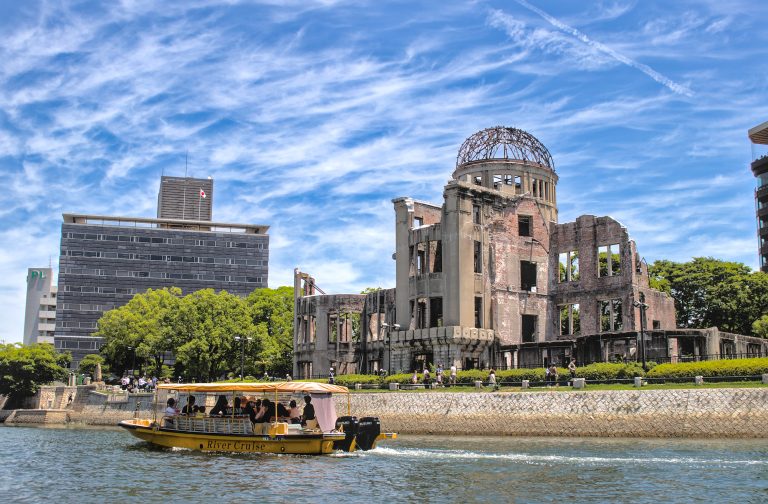
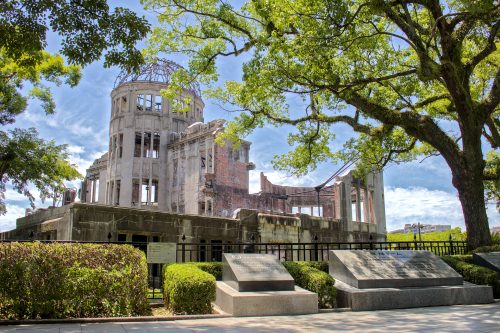
More than a ruin, Hiroshima’s Atomic Bomb Dome is a surviving fragment of the city that existed before Aug. 6, 1945. On that day at 8:15 a.m., Little Boy, a uranium bomb, exploded 160 meters (525 feet) southeast of the building and 600 meters (1,970 feet) above the ground. The blast from the bomb came down through the building’s roof and all three floors. Everyone inside was killed. However, its downward trajectory allowed some of the stone walls and steel frames to remain intact.
The Dome survived the bombing, but its survival afterward was far from certain.
(Joy Photo / Michael Farrell)
Before the Atomic Bomb
Built in 1915 by Czech architect Jan Letzel, the Atomic Bomb Dome was known by many names over the decades. It was originally called the Hiroshima Prefectural Commercial Exhibition Hall.
At the time, Japan was in love with European architecture. The industrial West was seen as prosperous, scientific and technologically advanced. European architecture was a statement of Japan’s modern development. Made of stone-clad brick and mortar with some steel framing and copper roofing, the Hiroshima Prefectural Commercial Exhibition Hall was one of the fancier, more distinguished buildings in the city — an icon of Hiroshima’s growing prosperity and modernity.
It was used to sell local goods, exhibit art and promote new products. Most famously, it is where baumkuchen was first introduced to Japan. Karl Juchheim, a former World War I prisoner of war in Japan, exhibited the German “king of cakes” at Hiroshima’s landmark exhibition hall in 1919. Today, baumkuchen is a popular gift found in supermarkets and department stores across Japan.
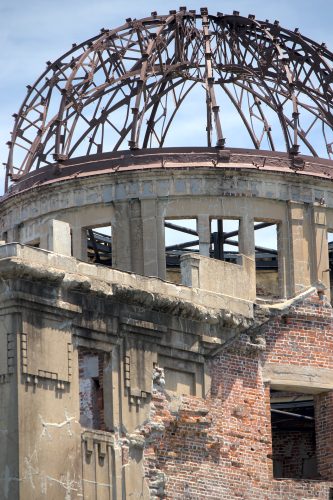
Stone cladding on the Atomic Bomb Dome with the brick and mortal underside revealed by the bomb. (Joy Photo / Michael Farrell)
The Dome’s Architecture and Design
The Hiroshima Prefectural Commercial Exhibition Hall’s design was part of a wave of European-style buildings that became popular at the end of the Meiji and early Taisho eras. Travelers can still see intact contemporary structures today, such as Tokyo Station Marunouchi Building (1914) and Osaka Central Public Hall (1918).
Letzel’s design incorporated a mix of European architectural influences present in Central Europe at the time. Design philosophies such as Neo-Renaissance and Secessionism contributed visual elements including the iconic dome, symmetry, the heaviness of the walls, unusually large windows and repeated geometric motifs. Though today’s structure is gutted, these patterns can still be observed on the ruin.
Surviving Hiroshima’s Reconstruction
After the war ended, Hiroshima began dealing with the question of what to do with the remains of the old city. It was a complicated time full of hardship and strong emotions. The dome had been renamed Hiroshima Prefectural Industrial Promotion Hall in 1933, but now locals called it “Genbaku Dome” — Atomic Bomb Dome — pronounced “Gen-ba-ku Do-meh.”
There were two schools of thought about what to do with the ruins of the Dome. One side wanted to preserve it as a memorial, while the other side wanted to demolish it. For the latter group, the Dome evoked painful memories. They were also concerned about safety because the crumbling ruin had become a hazard.
Curiously, this debate continued long after Peace Memorial Park was established in 1954. At the time, the park’s lead designer, Kenzo Tange, intentionally used the ruined Dome as a key symbolic feature in the central south-to-north line that visually connected the Dome with the Peace Memorial Museum and the Cenotaph for Atomic Bomb Victims. Despite this, however, the future of the Dome was uncertain.
The debate intensified over the years as the city recovered and people discussed how to best communicate the tragic experiences of the survivors and their families. This topic gained further poignancy in the 1960s as heightened Cold War tensions threatened global nuclear armageddon.
It was during this time that public opinion in favor of keeping the Dome increased dramatically. This culminated on July 11, 1966, when the Hiroshima City Council passed a resolution to preserve the building.
“Preserving the Atomic Bomb Dome is not only a responsibility to our future generations,” wrote Hiroshima Mayor Shinso Hamai in his call for donations to save the Dome on Nov. 1, 1966. “But it is a natural mission in our good conscience as fellow members of the human race. In other words, we are not preserving this as a remnant of resentment and hostility, but as a symbol of our remorse as part of the human family, and of our prayers for peace.”
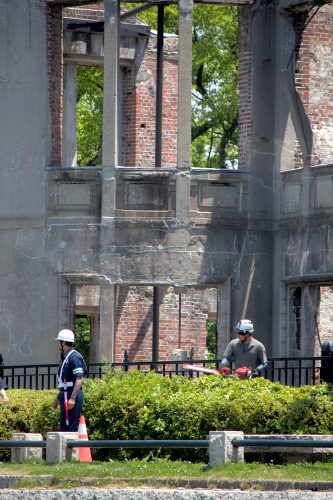
Crews maintaining the grounds around the Atomic Bomb Dome. A steel support is visible inside the Dome’s windows and white streaks reveal where cracks were filled in. (Joy Photo / Michael Farrell)
Preserving the Atomic Bomb Dome
The fundraising campaign was started with the goal of collecting ¥40 million. Support for the project was so strong that the city collected ¥66,197,816 (roughly equal to $1.9 million today) from more than 1.3 million donations raised across the world.
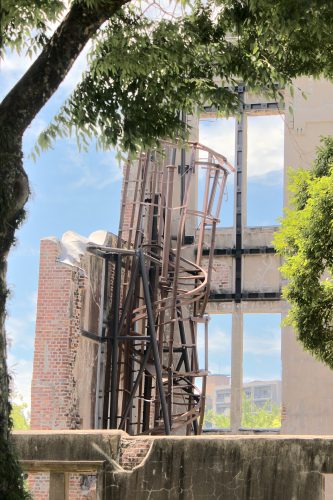
Preservation work began in 1967 and continued off and on over the decades until the most recent update in 2020. To keep the Dome in the same condition it was after the nuclear bombing, minimal steel reinforcement was added. You can see the steel bars today holding up the walls from the inside. Epoxy resins and mortars were used to fill cracks. Less visibly, synthetic waterproofing compounds were applied to prevent rain from further eroding the structure.
The Dome’s Symbolism Today
In 1996, the Dome was declared a UNESCO World Heritage site despite the official reservations of China and the United States. China was concerned the monument would distract from Japan’s atrocities against other Asian nations. The United States was concerned the monument would be interpreted in isolation from the context of the war Japan started in the Pacific.
UNESCO, however, accepted the site under Cultural Criterion VI, which at the time described places that are “directly or tangibly associated with events or living traditions, with ideas, or with beliefs … of outstanding universal significance.” In this case, that event of outstanding universal significance was the first atomic bombing, and the corresponding idea was peace.
In the words of the UNESCO World Heritage Convention site, “[The Atomic Bomb Dome] symbolizes the tremendous destructive power, which humankind can invent on the one hand; on the other hand, it also reminds us of the hope for world permanent peace.”
(Joy Photo / Michael Farrell)
Getting There
The Atomic Bomb Dome is one of the easiest sites in Hiroshima to visit. Take Hiroden tram line 2 or 6 from Hiroshima Station to Genbaku Dome-mae Station. The flat fare is ¥240 for adults and ¥120 for children 6 and older. Children below elementary school age ride for free.
The Atomic Bomb Dome is immediately visible on the left once you arrive at Genbaku Dome-mae Station.
However, if you plan to explore Peace Park as well, we recommend you delay seeing the Atomic Bomb Dome and take the Maple Loop bus from Hiroshima Station to the park’s main entrance on the opposite side of the park. The south-to-north path is the way the park’s designer, Kenzo Tange, expected visitors to experience the park.
After Visiting
The Atomic Bomb Dome is a sobering tourist site. However, lighter parts of the city are just a few minutes’ walk away in Gate Park, opposite the Hiroden tram tracks from the Dome. Grab a Japanese-Italian lunch at Goodspoon. This restaurant serves pasta and stone-oven pizza topped with its own house-made Italian cheeses. After filling up on pasta and cheese, grab a drink and chill out with 33 domestic cats at nearby Cat Café MOFF SHIMINT HIROSHIMA. If you are traveling as a family, 5-Days Children’s Cultural Science Museum is on the northern side of the park. Admission is free to experience dozens of hands-on science experiments and a two-story indoor play structure that would make the cats at MOFF jealous of your kids.
Interested in Learning More?
Visitors seeking deeper historical information may wish to consult the Hiroshima Peace Memorial Museum, UNESCO World Heritage Centre records and Hiroshima City archival material.
- Address
- 1-10 Otemachi, Naka Ward, Hiroshima City, Hiroshima Prefecture, JAPAN
09 Hiroshima Peace Memorial Museum: What to Know Before You Visit
Hiroshima Peace Memorial Museum is more than a collection of artifacts related to the first atomic bombing. It is a tightly controlled narrative with a rhetorical end.
Quick Facts
- ▪️Admission: ¥200 (Adults), ¥180 (High Schoolers), Free (Junior High and below).
- ▪️Time Needed: One to three hours or more depending on how deep you want to go.
- ▪️Reservations: Needed for expanded museum hours at the start and end of the day. Needed all day between August 8 and 16.
- ▪️Best Times to Visit: 7:30 to 9 a.m. / ~4:30 p.m. to half an hour before closing / 11 a.m. to 3 p.m. is the most crowded.
- ▪️Emotional Impact: High
- ▪️Suitability for Children: Contains graphic and disturbing content.
- ▪️Location: Hiroshima Peace Memorial Park / Downtown Hiroshima
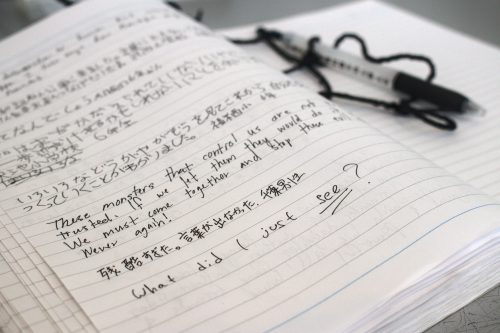
Visitors leave messages about their feelings in Peace Memorial Museum’s guest book. (Joy Photo / Michael Farrell)
A Museum with a Narrative Structure
Depending on the season, hundreds to thousands of people move pensively through the dark halls of Hiroshima Peace Memorial Museum. Some wipe away tears. Others hold their hands to their mouths in shock. Most walk through in silent reflection as they discover in graphic and sobering detail what happened in Hiroshima when the atomic bomb exploded on August 6, 1945.
While visitors can casually wander between classical works of art at Hiroshima’s Museum of Art or Five Days Children’s Cultural Science Museum, that is not how people move through Peace Memorial Museum. This museum immediately grabs you and takes you on an emotionally wrenching journey one exhibit room at a time. The layout along with the crowds direct your movement forward. Backtracking can feel like swimming upstream. Moreover, each exhibition room builds on the content of the last, forming a coherent picture of what the city and its people endured. Structured more like a novel than an encyclopedia, the organization is designed to facilitate the core message of the museum: “No more Hiroshimas.”
Peace Memorial Museum: Revised Edition
Following a major renovation and redesign completed in April 2019, the museum places the impact of the bomb on the city and its people front and center. While the former exhibit was known for graphic recreations of mutilated bodies, the current exhibit relies on a narrative structure told through historical images, A-bombed artifacts, the belongings of victims and the testimonies of survivors.
The exhibit is crafted for maximum emotional impact as it leads visitors from what the city was like before the bomb to the explosion at 8:15 a.m., then on through the aftermath and the consequences for the survivors. It concludes with the science of nuclear weapons, the historical events leading up to the bomb, the history of Hiroshima’s recovery, and the nuclear abolition movement today.
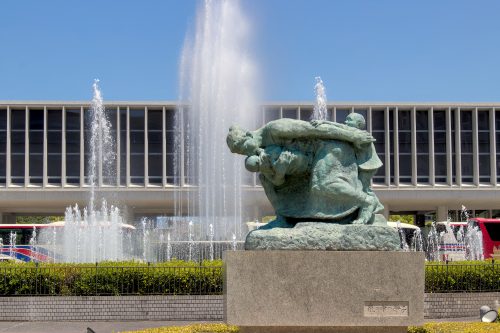
Peace Memorial Museum’s Main Building rises behind The Statue of Mother and Child in the Storm at the main entrance to Hiroshima Peace Memorial Park. (Joy Photo / Michael Farrell)
Entering the Museum
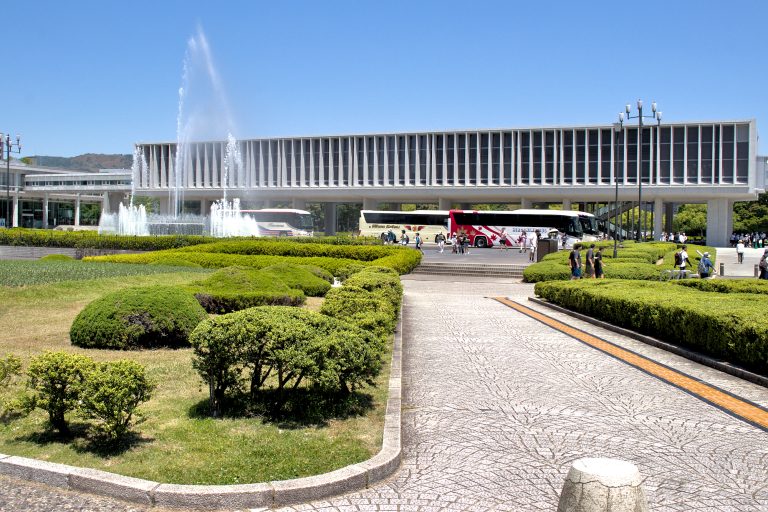
Approaching from the outside, one can’t help noticing the distinctive architecture of the museum designed by famed architect Kenzo Tange in 1949. Le Corbusier-inspired pillars (called pilotis) hold the ribbed Main Building roughly six meters (~19.5 feet) over the park. It rises above nearby tour buses and shades neat groups of school children seated on the pavement while they wait for directions from their teachers.
Upon walking in, visitors are directed to reserved or unreserved ticket lines. Those who did not make a reservation (which can be done through the museum website) arrive at automated ticket machines. Adults drop in ¥200 or use an e-payment and a ticket is printed on receipt paper.
At 11 a.m. in mid June, the floor is busy but not crowded. Natural light pours in from the wall-sized windows of the East Building.
A look to the left shows a group at the main desk renting audio guides for ¥500. The guides, resembling old music players with wired headphones and a shoulder strap, explain the exhibit as you walk through. Available in 15 languages, they hold 70 minutes of content activated by QR codes found throughout the museum.
A security guard invites visitors to scan ticket barcodes at a terminal before ascending a long escalator to the main exhibit. The lighting instantly darkens and becomes creamy as the exhibit begins.
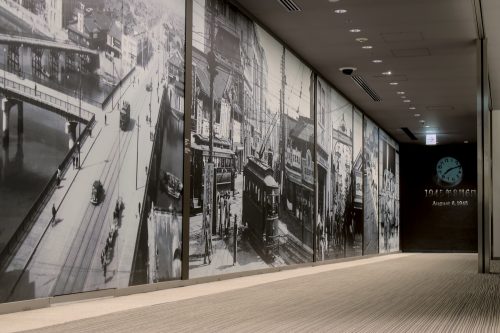
Scenes from 1930s Hiroshima cover the walls of the hall leading to the August 6, 1945 exhibition room. (Joy Photo / Michael Farrell)
Hiroshima Before the Bomb
At the top of the escalator, visitors come to a long hall with five ceiling-to-floor-sized photos of Hiroshima in the 1930s. The old city stands as big as if you had traveled back in time and witnessed it through a shop’s large windows.
Upon arrival, visitors are immediately drawn to the first image. “Is that the dome?” asks a boy to his father after their family glides up. The photo, apparently taken from the top of a tall building, shows Hiroshima’s former Nakajima District, the area now known as Peace Memorial Park. A trolley rolls over the bridge that a couple of decades later will be the Enola Gay’s target for the atomic bomb. And on the left along the Motoyasu River, standing intact, is Hiroshima Prefectural Industrial Promotion Hall, today’s Atomic Bomb Dome.
Most skim through the rest of the photos while on their way to the next exhibition room. A few are stopped by a photo of a young teacher posing with his elementary school class at the end of the display.
The size of the photos naturally encourages people to walk closer to the opposite wall so they can take it all in. However, in doing so they miss out on the captions. They are written in small text in the narrow space between the pictures. The captions describe historic scenes from well-known parts of the city that many tourists pass on their way to the museum like the intersection at Kamiyacho and Hondori Shopping Street.
In 15 minutes approximately 100 visitors passed through. Nobody stopped to read the captions.
Several walked through wearing audio guides. However, the first entry in the audio guide does not start until the next exhibit.
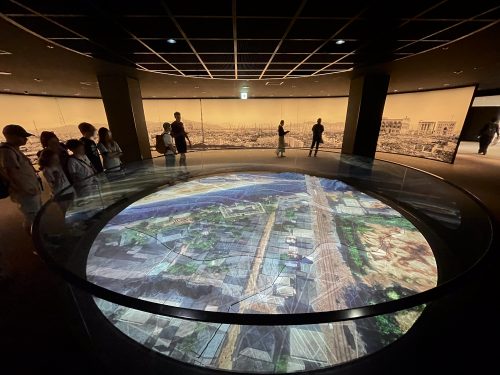
Visitors watch a recreation of the atomic bomb fall on Hiroshima. (Joy Photo / Michael Farrell)
August 6, 1945
The already dim lights get darker in the next exhibition room. Most people head for the center of the room where a circular, digital display on the floor simulates the dropping and explosion of the atomic bomb. People stand transfixed. The audible conversation of the last section is reduced to silence and whispers. Many stay and watch the tragedy unfold multiple times. Others leave for the next exhibit.
Meanwhile, the wall-sized image that wraps around the display is the least deeply examined. It is another ceiling-to-floor photo. This one is a panoramic photo of the destroyed city as taken from the hypocenter by the U.S. Army in 1945. It is the same image memorialized inside Hiroshima National Peace Memorial Hall for the Atomic Bomb Victims, a museum deeper in the park. The image covers much of the Nakajima District seen in the last exhibit. A thoughtful comparison of the two images reinforces the dramatic effects of the atomic bomb on the city.
From here, one passes down a long, dark corridor into the Main Building.
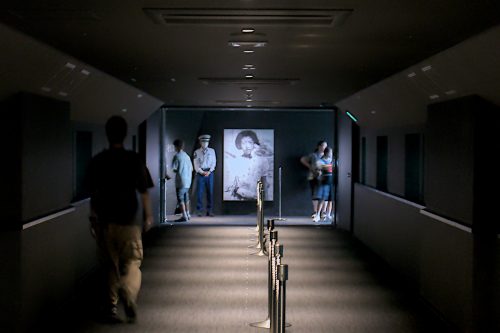
Visitors pass through a long dark hall to get to the permanent exhibits in the Main Building. (Joy Photo / Michael Farrell)
Reality of the Bombing
The Main Building is where visitors really slow down. It contains the museum’s core exhibits divided into four sections: “Devastation on August 6,” “Damage from Radiation,” “Cries of the Soul,” and “To Live.”
The arrested movement begins right away as visitors are stopped in their tracks by the photos of Yoshito Matsushige, a photojournalist for Hiroshima’s Chugoku Shimbun (which is still in publication). Matsushige miraculously survived the bomb and immediately went outside to take pictures. Matsushige was the only person to capture the situation on film immediately after the bombing. Other photographers were present, but the scenes were so horrific they couldn’t bring themselves to press the shutter.
In the museum, people start pausing in front of pictures and captions. After looking deeply, an older man shakes his head.
The photos themselves only reveal half the story. The emotional depth comes from the quotations.
One set of quotes injects sounds into the scene the photos create. People shouting, “Help me!” and “Water please!” A “half-crazed” mother holds her small child, calls its name repeatedly and cries, “Open your eyes! Open your eyes!”
Another quote shows you what the photographer decided not to. Matsushige wrote this about a group of victims he photographed:
“Their hair was scorched and frizzy. Their faces, arms, backs, legs — their whole bodies were badly burnt. Blisters had burst and sheets of burnt skin hung from them like rags.”
From here until the end of the exhibit, visitors are confronted with about 500 artifacts that cannot be understood on their own. Some visitors have audio guides, but most do not. These visitors have to read. Most do.
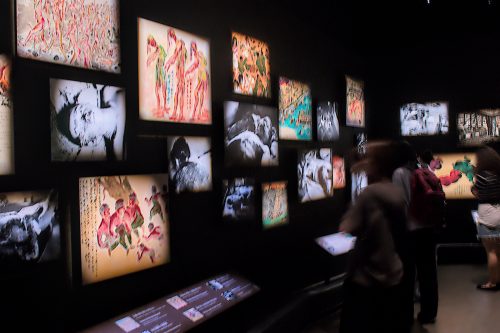
Photos and paintings from survivors shine from the wall in one of the most graphic displays at the museum. (Joy Photo / Michael Farrell)
Graphic Content
Few go through the next set of exhibits quickly. More than previous sections, the Main Building’s graphic content warning to parents and educators becomes relevant. They advise “parents and teachers prep children well and pay close attention to their response.”
A large crowd of visitors stares at a wall of photographs and artwork from survivors. The naked, burned and mutilated forms of human beings in the most dire situations glow from those images illuminated in the dark room from behind. The vividly colored paintings give context for the lack of color in the black-and-white photographs.
Across the hall lie collections of twisted, sheared, fused and melted architectural materials.
Less people stand and linger around the center exhibit. There lie the shredded school uniforms of 22 children aged 12 and 13 who died in agony from severe burns. The children’s names and 18 of their photos are displayed next to the case.
A tall man stifles tears while looking at the list.
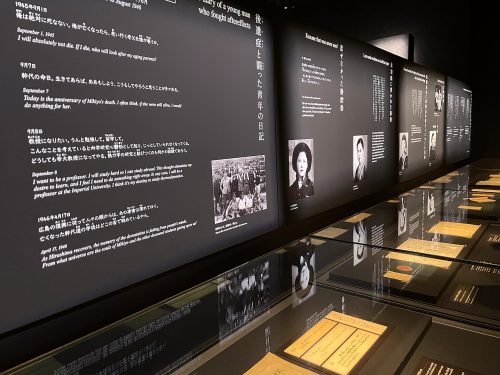
Written materials are on display such as diary entries of survivors of the atomic bombing in Hiroshima. (Joy Photo / Michael Farrell)
Dense Reading
The amount of reading needed to understand what you see increases, further slowing down lines of visitors.
“Cries of the Soul” gets deeper into the stories of the victims. The line of visitors curves to the left past portraits of victims and display cases of their abandoned belongings.
It is 2 p.m. The crowd is getting thicker as people start arriving from lunch.
Fewer visitors take a deep look at the glass display case in the center. It holds a corroded tricycle and a helmet that belonged to 3-year-old Shinichi Tetsutani who, though 1,500 meters from the hypocenter, died from severe injuries and burns. The photo behind the case shows Shinichi with his older sister Michiko, who was trapped in their burning house.
In the next room, people pause over diary entries of victims, people who survived but suffered from crushing loss, severe health issues, and struggles for basic day-to-day survival.
Among these is the story of Sadako Sasaki, who was a toddler when the bomb detonated yet developed leukemia two months before her 12th birthday. Hoping that her prayer for healing would be granted, she folded over 1,000 paper cranes. She died 11 months later in 1955. Her classmates erected the park’s Children’s Peace Monument in her memory. Some of Sasaki’s paper cranes are on display at the museum.
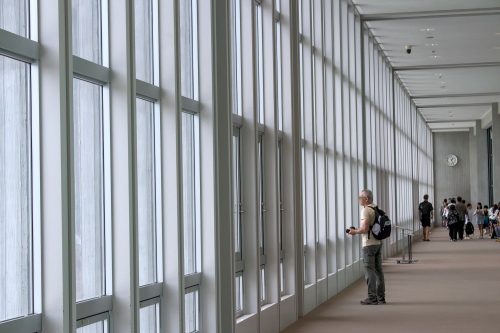
A man looks out at Peace Memorial Park in the north-facing gallery at Peace Memorial Museum. (Joy Photo / Michael Farrell)
In the Light of Peace Park
When visitors emerge from the main exhibit, they come to a long gallery with tall windows. The room stretches the length of the main building on the side facing Peace Park. After emerging from the visually and emotionally dark exhibit, the open space and natural light provide needed relief.
Some walk straight through to the other side. Others sit on the padded benches checking their phones. A handful notice the expansive view over Peace Park and take out their cameras. In the distance, school groups take turns getting their photo taken in front of the Cenotaph for the Atomic Bomb Victims. Behind it lies the Pond of Peace and the Flame of Peace. Beyond them rises the Atomic Bomb Dome. In the original design of the park, this is where people were expected to explore after visiting the museum. After learning about what happened, visitors can better understand the rest of the park.
There is much more to this space than a place to rest and watch the park, though. Along the back wall, some unobtrusive posters illustrate the construction history of the museum. Halfway down the hall directly opposite the Cenotaph is a map of the park, and opposite the map rises a roughly 3.5 meter (12 ft) high bronze map of Nakajima District.
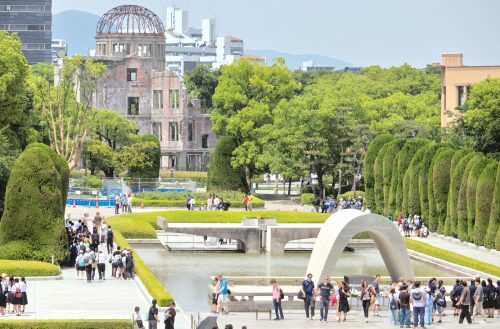
The view of Peace Park from the north-facing gallery windows of the Main Building of Peace Memorial Museum. (Joy Photo / Michael Farrell)
Not Finished Yet
The Main Hall of Peace Memorial Museum can take anywhere from 30 minutes to three hours to complete, depending on how deep you want to go, how fast you can read, and how crowded it is.
Emerging from the dimly lit exhibit feels like coming out of the cinema after an emotional film. However, the story is not over yet. Down the hall, back in the museum’s East Building, are even more exhibits, enough to fill another hour or two.
In total, one should reserve two to five hours to explore the entire museum.
For those who start exploring between 10 and 11 in the morning, the gallery is where many start facing logistical hurdles and basic human needs like lunch. However, there are no cafés or restaurants inside the exhibit area. Many rush through the rest of the museum on their way to their next meal, their next train, or to see the rest of Peace Park before they run out of time.
This is intentional on the part of the museum. The exhibits that follow, while important, are not as impactful as the main exhibit. Before the 2019 renovation, people passed through these sections first. However, this meant that people often ran out of time in the main exhibit and rushed through the most important part.
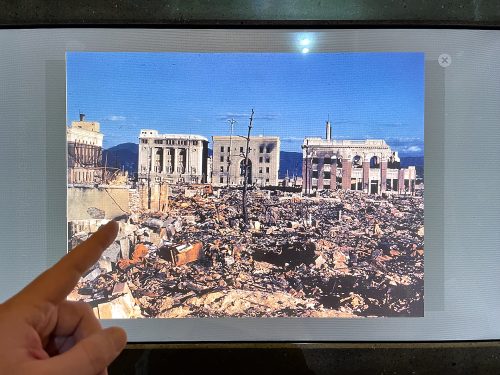
A color photo of Hiroshima’s condition after the atomic bombing as seen from an interactive screen in the Dangers of Nuclear Weapons exhibit on the third floor of the East Building. (Joy Photo / Michael Farrell)
Rushing Through: What You Miss
Just as you arrive back in the East Building, there is a lounging area on the left with a large TV screen. This is the A-bomb Survivor Video Testimonies section. In contrast to the crowded main exhibit, no more than a dozen people are lounging. Only seven of them actively watch the testimony playing on the screen. Invisible from the main walkway, at the far end of the lounge, a hallway cuts right along the outside wall. It is just after the restrooms. Along that corridor are individual booths for watching video testimonies.
Continuing straight, you end up in a wide hall dedicated to explaining the dangers of nuclear weapons and the nuclear abolition movement. Most visitors are making their way along the wall reading the many exhibit plaques. Fewer are taking advantage of the interactive media table in the center of the room where visitors can find unique media like color images of the city after the destruction.
The final permanent exhibition area explores Hiroshima’s history from the start of the war through its recovery and its mission to build a peaceful world. The layout is identical to the previous exhibit with most of the content on the walls and a touch-screen media table in the center. However, a frequently overlooked feature is a slide-show projected high on the wall over the main displays. Scenes from Hiroshima’s growth and return to life flicker across the wall, revealing scenes of the old Hiroshima Station, a survivor running a street stall, and more.
Back on the ground floor, you can find a special exhibition hall. There is also a gift shop and a café. The café sells ¥500 ice cream flavors such as matcha, black sesame and banana chocolate milk. One wall is lined with a variety of drink vending machines. Hiroshima souvenirs like paper crane magnets can also be bought. At 3 p.m., all the café tables are taken and people are sitting outside along the wall on benches.
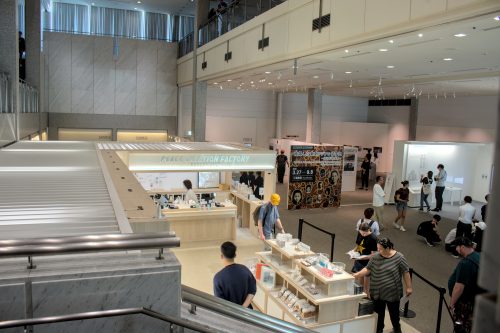
Peace Memorial Museum’s gift shop (Joy Photo / Michael Farrell
Getting There
Depending on the experience you are aiming for, there are multiple ways to get to Peace Memorial Park from Hiroshima Station.
The most direct way is to take the Maple Loop bus. This is the best choice for people on a tight schedule or who want to experience Peace Memorial Park the way the architect designed it to be experienced. From 9 a.m. to 6 p.m., a bus leaves about every 15 minutes. The routes are different, but they all lead to the Peace Memorial Park (Hiroshima Peace Memorial Museum) bus stop in about 15 minutes.
If you want to explore Peace Park and save the museum for last, take Hiroden Tram Line 2 or 6 to Genbaku Dome-mae Station. The northern end of Peace Park is on your left as you pull into the station. The museum is on the southernmost end of the park.
If you intend to go shopping in Hondori before visiting the museum, take Hiroden Tram Line 2, 6 or 1 to Hatchobori Station. Hondori is one block south. If you explore walking west along Hondori, you’ll eventually end up at Peace Park. Bear in mind that the 850-meter walk to the Peace Park from the eastern end of Hondori takes 12 minutes without distractions and crowds.
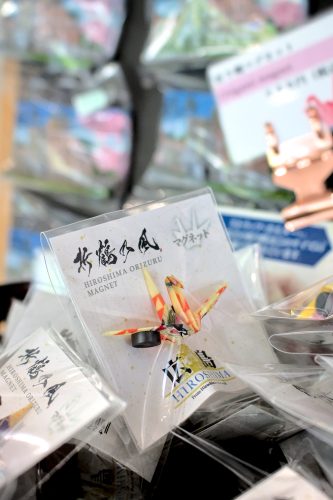
Souvenirs on sale at the first floor café at Peace Memorial Museum. (Joy Photo / Michael Farrell)
Quick Lunch Nearby
If you get lost in the story of the museum and skip lunch, here are some nearby stops to refuel before continuing your exploration of the park.
Most eateries near Peace Memorial Museum close between lunch and dinner. However, a few have more flexible hours while also having great food.
Five minutes to the south is Hiroshima Tsukemen & Abura Soba Karapokkuru. Open from 11 a.m. to 10 p.m., this second story shop specializes in tsukemen, a local style of brothless ramen served with a spicy noodle dipping sauce. The menu is in English and the prices are reasonable by local standards.
For a lighter meal, around the corner is Wildman Bagel — one of Hiroshima’s highest rated bagel shops. With over 15 flavors of bagels like Zunda Pepper Cheese, Matcha and Black Bean, and Iyokan with Lemon Cream Cheese, the selection here breaks North American expectations of what a bagel is. There is no seating, but nearby Peace Park has many shaded benches and trash bins. Wildman is open from 9 a.m. to 5 p.m.
Open Hours
Peace Memorial Museum’s Hours change seasonally. It is closed from Dec. 30 to 31 and in the middle of February. Admission ends 30 minutes before closing.
▪️Dec. to Feb.: 7:30 a.m. to 6:00 p.m.
▪️March to July: 7:30 a.m. to 7:00 p.m.
▪️Aug.: 7:30 a.m. to 8:00 p.m.(to 9:00 p.m. on Aug. 5 and 6)
▪️Sept. to Nov.: 7:30 a.m. to 7:00 p.m.
- Address
- 1-2 Nakajima-cho, Naka Ward, Hiroshima City, Hiroshima Prefecture, JAPAN
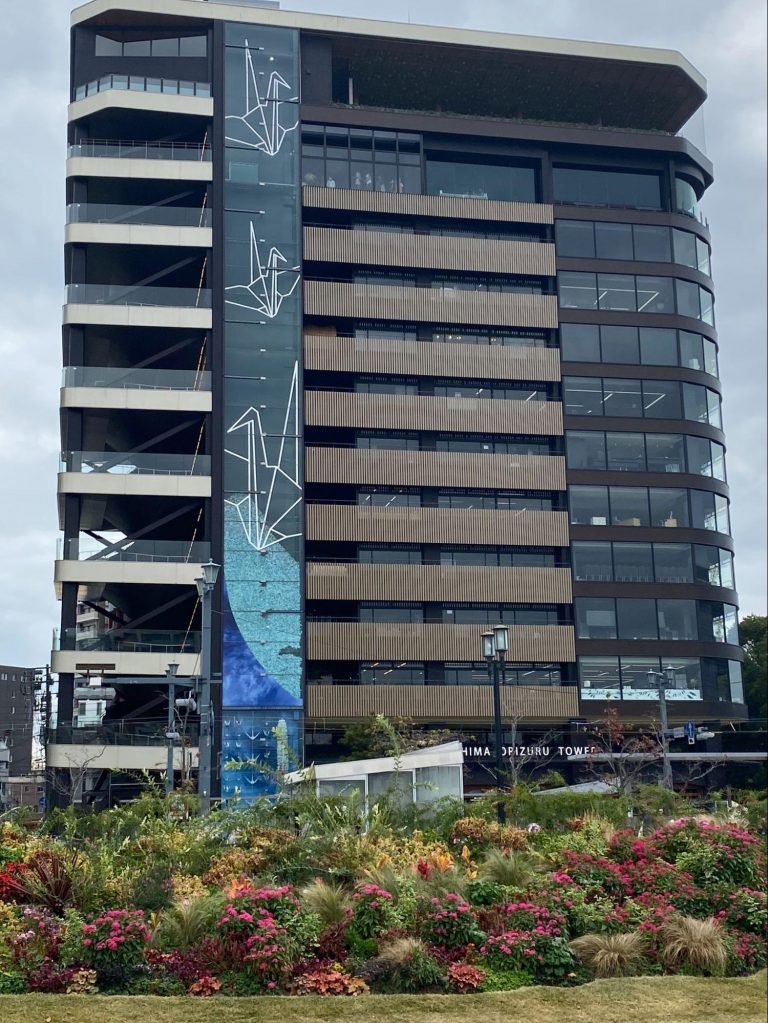
10 Orizuru Tower (おりづるタワー)
HIROSHIMA ORIZURU TOWER is a tourist attraction located next to the Atomic Bomb Dome. The north walls of the building are decorated with illustrations of ‘Orizuru’ paper cranes, which symbolize peace. The building also occasionally plays host to seasonal events. The first floor has a café and souvenir shop, and the 12th floor is “ORIZURU SQUARE,” where visitors can try their hand at making paper cranes. On the rooftop, there is an observation deck called “HIROSHIMA HILLS,” where you can enjoy a panoramic view of Hiroshima City and spend time relaxing.
The most attractive part of HIROSHIMA ORIZURU TOWER is the spectacular view of Hiroshima from the rooftop observation deck, from which you can enjoy a breathtaking view of the the Wolrd Heritage A-bomb Dome Site, Peace Memorial Park, Hiroshima Castle, and other parts of the city. The observation deck is covered, so you can enjoy the view even in the rain. Also, at the “ORIZURU SQUARE” on the 12th floor, you can enjoy making ‘Orizuru’ paper cranes. You can then throw your ‘Orizuru’ into the “ORIZURU WALL.”- a distinct glass display filled with paper cranes and the hopes and wishes that accompany them from all around the world!
- Address
- 1-2-1 Otemachi, Naka Ward, Hiroshima City, Hiroshima Prefecture, JAPAN
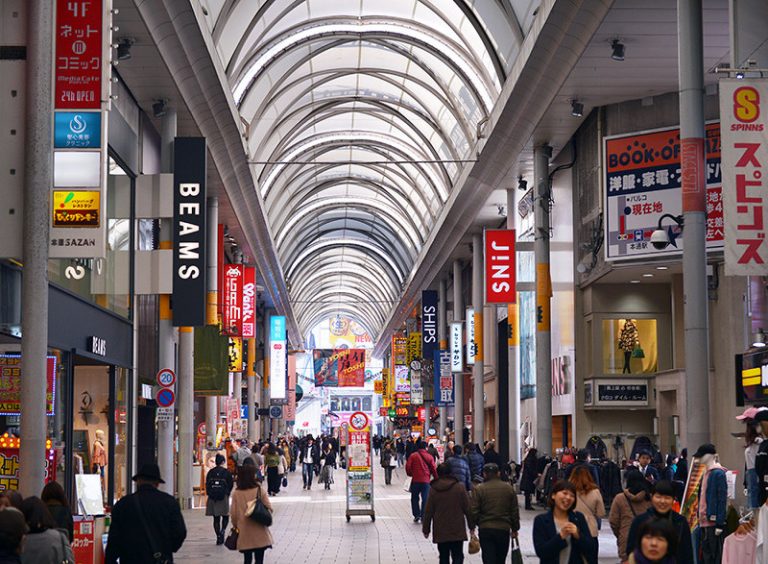
11 Hondori Shopping Street (本通商店街)
The bustling downtown area called Hondori is named after the pedestrian-only arcade shopping street that symbolizes the city. This shopping street is lined with clothing stores representing Japan and countries around the world. At night, the neon lights of izakaya (Japanese pubs) and pubs come on all at once. Ramen specialty stores and sushi restaurants with counter seating are open until midnight. Nearby, Okonomimura is a collection of restaurants specializing in Hiroshima’s special okonomiyaki.
- Address
- Hondori, Naka Ward, Hiroshima City, Hiroshima Prefecture, JAPAN
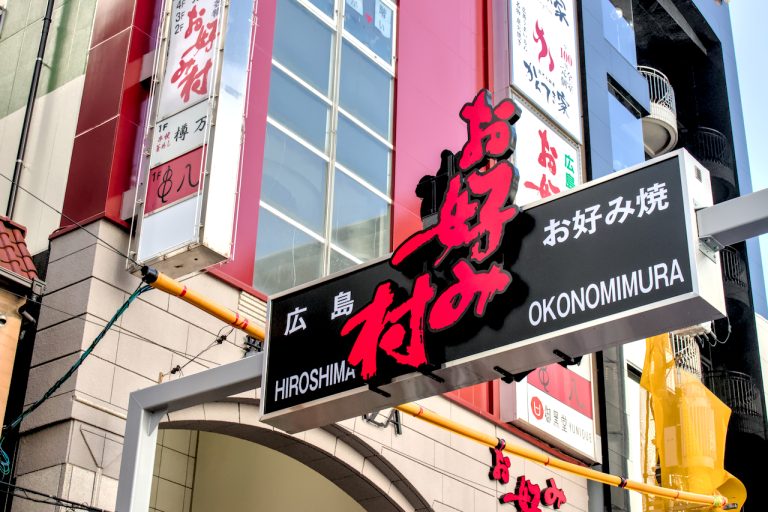
12 Okonomimura – Hiroshima’s Cultural Okonomiyaki HQ
Hiroshima’s Okonomimura, “Okonomi Village” in English, is a seven-story building near Parco filled to the brim with vendors selling the exact same product: okonomiyaki and teppanyaki with alcoholic beverages and soft drinks. Pretty much every store inside has a history behind it, and while some establishments’ okonomiyaki may taste better than others’, you won’t find a terrible okonomiyaki here. Lots of locals swing by during lunch breaks or on the way home from work, and some undoubtedly have found a store that they swear by.
Heritage Okonomiyaki Shops
The modern seven-story building is the cultural headquarters of Hiroshima style okonomiyaki, a dish the locals like to
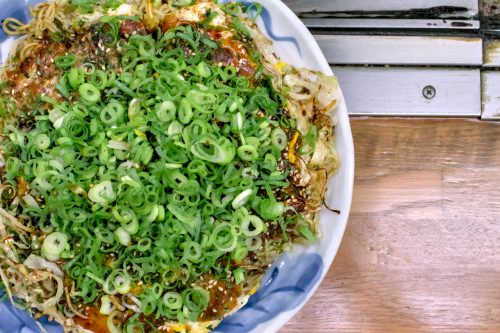
The “Tabete Minsai-yaki” okonomiyaki from Kaeruttei. Owner, Reiko Hirata, says they use Marubayashi noodles. Marubayashi is a Hiroshima-based noodle company that has been making noodles since 1948. (Joy Photo / Michael Farrell)
call “Hiroshima’s soul food.” It is the direct descendant of the 1950s era street-food bazaars that once filled Nishi Shintechi Square—the modern Alice Garden plaza, right next to Okonomimura. Back then, up to 50 food stands filled the square selling mostly okonomiyaki on griddles pulled out of the rubble.
War Reconstruction Food
Okonomiyaki is the city’s reconstruction food. It grew out of the ashes of the atomic bomb as people scrounged to reassemble their lives and put food on the table. After the bomb, as lives started coming back together, people started innovating on a popular pre-war snack known as issen yoshoku—literally “one hundredth of a yen Western food.” Issen yoshoku was a flour-based batter cooked with dried shrimp, onions and various condiments. On top of this, locals began layering whatever they had on hand. In fact, the name “okonomiyaki” translates to “fried whatever-you-like.” With wheat flour plentiful from U.S. aid, wheat soba noodles became a popular addition. Cabbage, a source of vitamin C and an easy vegetable to grow, also became an essential ingredient. Eventually strips of pork were added along with eggs and a thick, brown sauce.
A solace and a rock in hard times, okonomiyaki was massively popular, becoming synonymous with reconstruction and Hiroshima’s enduring spirit. “[Nishi-Shintenchi Square] was lively until late at night, with people coming after work, taxi drivers, and newspaper workers,” Kyoko Okita told the Chugoku Shimbun in 2023. Okita, 82 when she spoke to the paper, helped out at the original Rei-chan okonomiyaki stall, now located in Hiroshima Station.
Birth of “Okonomimura”
It was during this time that the writer, Minoru Kida, saw the vibrant scene of glowing food stall tents clustered together in Nishi-Shintenchi Square and exclaimed, “It’s just like an okonomi village,” and the name was born.
However, in 1965 Nishi-Shintenchi Square was closed to street vendors to crack down on unauthorized shops and late-night noise. The shops needed a place to go. Many of them moved into the first Okonomimura building, built the same year. It quickly became a hit and even attracted school groups and visitors from other cities when they came to tour Hiroshima.
Due to safety concerns, the original building was closed in 1990. The current building, Shintenchi Plaza, opened in 1992
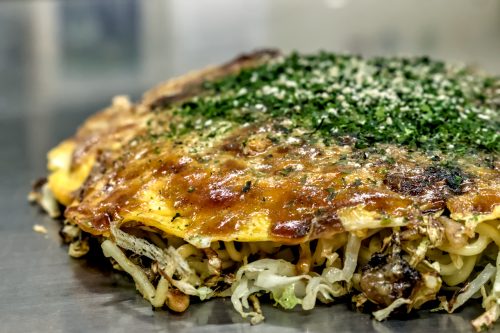
Close up of “The Hiroshima Special” from Sarashina. Sarashina’s okonomiyaki is unique for using fish powder and dried seaweed to season their okonomiyaki. (Joy Photos / Michael Farrell)
in the same spot.
Not Just Okonomiyaki
just as the original street food bazaar included a variety of restaurants, not all the shops in Okonomimura are okonomiyaki shops. The 1st floor includes an oyster bar, an izakaya and a beef bowl shop. The upper floors typically house izakayas. However, as the core has always been okonomiyaki, the 2nd through 4th floors are filled with 25 different okonomiyaki shops, some of which, like Sarashina (founded in 1951), can trace their origins to the original street food stands in Nishi-Shintenchi Square.
Currently, the 6th and 7th floors of Shintenchi Plaza do not have active businesses.
Celebrating 60 Years of Okonomiyaki
In 2025, Okonomimura celebrated its 60th anniversary — carrying forward a legacy of survival, ingenuity, community, love and joy from the survivors of the unimaginable.
For Travelers Short on Time
If your travel plans don’t take you into downtown Hiroshima, and you still want to try Hiroshima style okonomiyaki, there are many options around Hiroshima Station, like Rei-chan, a Shintenchi original shop, located on the 1st floor of the station’s Ekie Dining area. And then there is Okonomi Story Ekimae Hiroba, a modern recreation of the old okonomiyaki street food stands. It can be found on the 6th floor of the Hiroshima Full Focus Building across from Hiroshima Station.
Additional reporting by Kevin Peng
- Address
- 5-13 Shintenchi, Naka-ku, Hiroshima 730-0034 Hiroshima Prefecture
Lodging: RIHGA Royal Hotel Hiroshima
Day 2

01 RIHGA Royal Hotel Hiroshima (リーガロイヤルホテル広島)
The RIHGA Royal Hotel Hiroshima is attached to the Pacela shopping center downtown, and also well renowned by Hiroshimarians. There is a plethora of eateries to be found within the hotel itself, so even those who don’t stay overnight have a good reason to visit. In addition, the hotel is right across the street from the Hiroshima Museum of Art and near the Hiroshima Bus Center, making it a near-perfect choice of accommodation for tourists.
- Address
- 6-78 Motomachi, Naka Ward, Hiroshima City, Hiroshima Prefecture, JAPAN
Transportation: Mihara Station [Bus & JR Sanyo Line, ~90 minutes]
02 Mihara Castle Ruins (三原城跡)
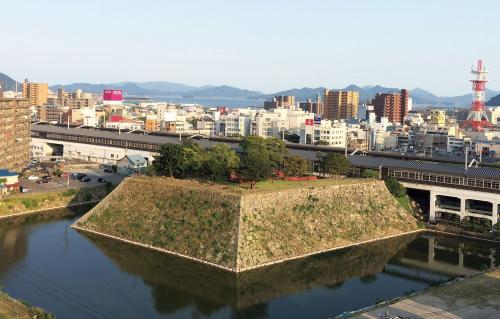
The Mihara Castle Ruins are the ruins of the great Mihara Castle that once existed in Mihara City, Hiroshima Prefecture. Although only a part of the castle still exists, such as the castle tower (the stone foundation of the castle tower), the moat surrounding the castle, and the Funairi Tower, it is known as a popular tourist spot visited by most of the tourists who come to Mihara City for sightseeing due to its convenience of being just a short walk from JR Mihara Station. This is one of the few places in Japan where you can see part of the castle ruins from the platform of JR Mihara Station, or even from the JR train.
- Address
- 1-1 Shiromachi, Mihara, Hiroshima Prefecture, JAPAN
03 Suishin Yamane Flagship Store (酔心山根本店)
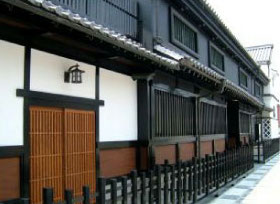
Suishin is a sake manufacturer based in Mihara with a history dating back to 1860. While the technology involved in making sake has evolved, the base recipe and high quality have not changed one bit. Since Suishin is so famous in Hiroshima Prefecture, sometimes they set up a temporary stand in other cities like Hiroshima or Fukuyama and hold sake tasting events.
- Address
- 1-5-58 Higashimachi, Mihara, Hiroshima Prefecture, JAPAN

04 Okonomiyaki Tetchan (お好み焼 てっちゃん)
Okonomiyaki Tetchan is a popular okonomiyaki restaurant in Mihara City. There are 7 other restaurants all thoughout Japan including Hiroshima, Osaka, Tokyo, boasting nationwide popularity. Okonomiyaki Tetchan offers a wide variety of okonomiyaki, including modern-yaki (Osaka-style but with noodles) and Mihara-yaki topped with chicken offal. Mihara-yaki is a very rare dish that can only be found in the Mihara okonomiyaki restaurants in Hiroshima Prefecture.
- Address
- 1-5-25 Shiro-machi, Mihara, Hiroshima Prefecture, JAPAN
Transportation: Takehara Station [JR Kure Line, ~35 minutes]
05 Takehara Preserved Historic District (たけはら町並み保存地区)
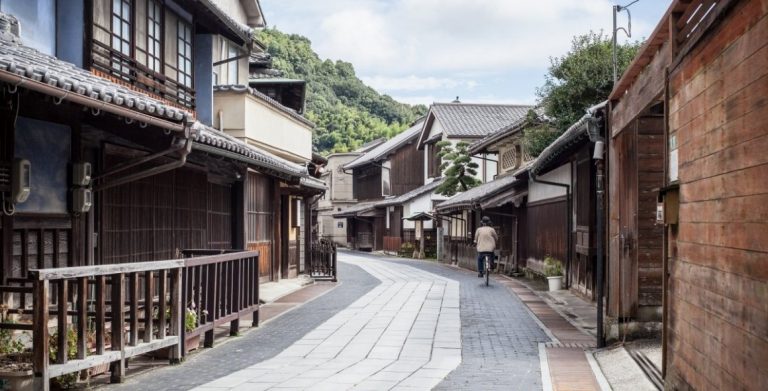
Known as “Aki’s Little Kyoto,” the Takehara Preserved Historic District is a tourist spot where you can see the old streets of Takehara City, which has prospered since ancient times. Lined with old houses and warehouses that are over several hundred years old the area has been selected as a national important traditional building preservation district. Once you step into the district, you will feel as if you have taken a step back in time to traditional Japan.
- Address
- 3-11-7 Honmachi, Takehara, Hiroshima Prefecture, JAPAN
Transportation: Kure Station [JR Kure Line, ~75 minutes]
06 Yamato Museum, a.k.a. Kure Maritime Museum (大和ミュージアム、又の名を呉市海事歴史科学館)
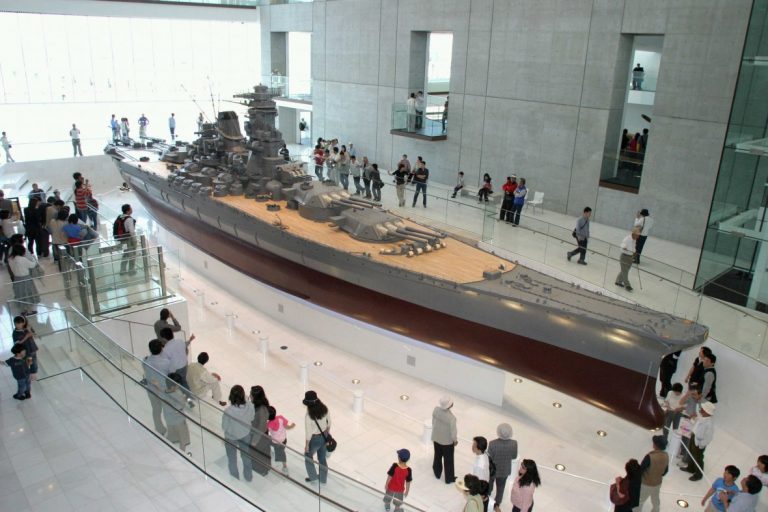
Kure City was once the location of the largest naval arsenal in Japan. During World War II, the city built the great Battleship Yamato, which was one of the world’s largest battleships at the time. After the war, the city built many of the world’s largest trading tankers, and today Kure continues to flourish as a shipbuilding town. The Yamato Museum, located a five-minute walk from Kure Station, is a museum that introduces the modern history of Kure’s use as a military port and Kure’s world-class shipbuilding and their application of science and technology over the ages. The museum has valuable artifacts such as a full-size Type 62 Zero fighter plane and an exhibition room that explains shipbuilding and other scientific advancements in a step-by-step manner that is easy to understand for everyone.
(Exhibition Admission Fee)
General (University students
and above) – ¥500
High School students – ¥300
Elementary/Junior High School
students – ¥200
Preschoolers – Free
※ If you are a student, please
present your passport or
school ID at reception when
purchasing your ticket.
- Address
- 5-20 Takara-cho, Kure, Hiroshima Prefecture, JAPAN
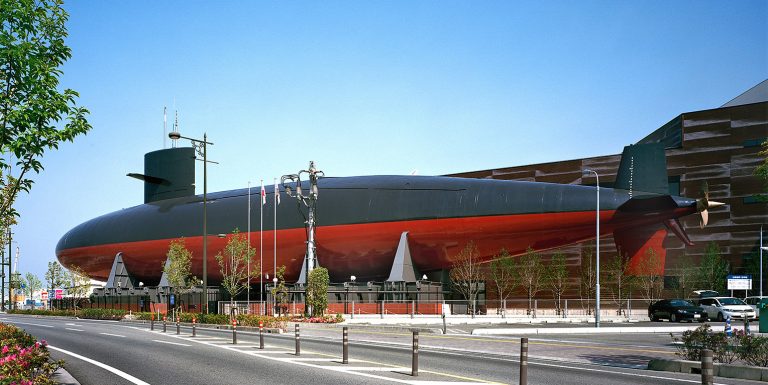
07 Japan Maritime Self-Defense Force Kure Museum, a.k.a. Iron Whale Museum (海上自衛隊呉史料館、又の名をてつのくじら館)
The Japan Maritime Self-Defense Force Kure Museum (also known as the Iron Whale Museum) is the only museum in Japan that displays an actual full-size submarine above water. The museum has documents on the Maritime Self-Defense Force’s history, which still has its main base in Kure. The museum also has information on the functions of the underwater minesweeping taskforce, whose mission is to find and dispose of mines and other hazardous materials. There is also information on the history and technologies used in submarines and daily activities on board the vessels.
Free admission
- Address
- 5-32 Takaracho, Kure, Hiroshima Prefecture, JAPAN
Return to Hiroshima Station to stay another night or catch a Shinkansen to your next destination.
Hiroshima Station (広島駅)
2-37 Matsubaracho, Minami Ward, Hiroshima City, Hiroshima Prefecture, JAPAN
Itsukushima Shrine: Walk Through Living History
1-1 Miyajima-cho, Hatsukaichi, Hiroshima Prefecture, JAPAN
Miyajima Omotesando Shopping Street (宮島表参道商店街)
535 Miyajimacho, Hatsukaichi, Hiroshima Prefecture, JAPAN
etto (エット)
1-11-8 Miyajimaguchi, Hatsukaichi, Hiroshima Prefecture, JAPAN
Anago-meshi Ueno Miyajimaguchi Flagship Store (あなごめしうえの宮島口本店)
1-5-11 Miyajimaguchi, Hatsukaichi, Hiroshima Prefecture, JAPAN
Hiroshima Castle (広島城)
21-1 Motomachi, Naka Ward, Hiroshima City, Hiroshima Prefecture, JAPAN
Hiroshima Gokoku Shrine (広島護国神社)
21-2 Motomachi, Naka Ward, Hiroshima City, Hiroshima Prefecture, JAPAN
Atomic Bomb Dome: From Commercial Center to Peace Icon
1-10 Otemachi, Naka Ward, Hiroshima City, Hiroshima Prefecture, JAPAN
Hiroshima Peace Memorial Museum: What to Know Before You Visit
1-2 Nakajima-cho, Naka Ward, Hiroshima City, Hiroshima Prefecture, JAPAN
Orizuru Tower (おりづるタワー)
1-2-1 Otemachi, Naka Ward, Hiroshima City, Hiroshima Prefecture, JAPAN
Hondori Shopping Street (本通商店街)
Hondori, Naka Ward, Hiroshima City, Hiroshima Prefecture, JAPAN
Okonomimura – Hiroshima’s Cultural Okonomiyaki HQ
5-13 Shintenchi, Naka-ku, Hiroshima 730-0034 Hiroshima Prefecture
RIHGA Royal Hotel Hiroshima (リーガロイヤルホテル広島)
6-78 Motomachi, Naka Ward, Hiroshima City, Hiroshima Prefecture, JAPAN
Mihara Castle Ruins (三原城跡)
1-1 Shiromachi, Mihara, Hiroshima Prefecture, JAPAN
Suishin Yamane Flagship Store (酔心山根本店)
1-5-58 Higashimachi, Mihara, Hiroshima Prefecture, JAPAN
Okonomiyaki Tetchan (お好み焼 てっちゃん)
1-5-25 Shiro-machi, Mihara, Hiroshima Prefecture, JAPAN
Takehara Preserved Historic District (たけはら町並み保存地区)
3-11-7 Honmachi, Takehara, Hiroshima Prefecture, JAPAN
Yamato Museum, a.k.a. Kure Maritime Museum (大和ミュージアム、又の名を呉市海事歴史科学館)
5-20 Takara-cho, Kure, Hiroshima Prefecture, JAPAN
Japan Maritime Self-Defense Force Kure Museum, a.k.a. Iron Whale Museum (海上自衛隊呉史料館、又の名をてつのくじら館)
5-32 Takaracho, Kure, Hiroshima Prefecture, JAPAN