
100 Stories
Kintaikyo: Elegant Simplicity Just Outside Hiroshima
014 / 100
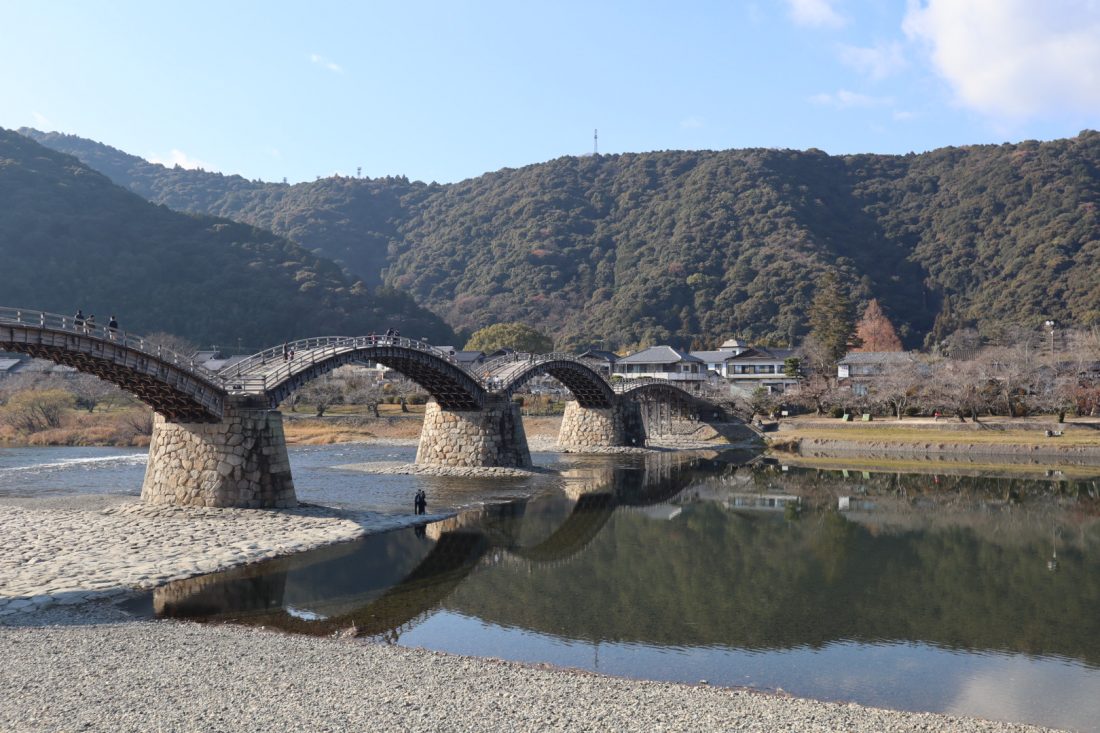
Yamaguchi Prefecture is famous for the city of Iwakuni, and its 5-span, wooden-arched bridge built in the 17th century (around 1673) by the local feudal clan of the Kikkawa Family. It is a short trip from Hiroshima, and well worth a look, with a beautiful park adjacent to the bridge that spreads out all around the base of the local mountain and a local castle on top of it. There are a few ways to travel there that I recommend – train, bus, and car. Each mode of transportation takes about 1 hour or less from downtown Hiroshima.


Travel Options
- The simplest travel option in my opinion to get to Kintaikyo is by bus, which leaves from the Hiroshima City Bus Center located on the third floor of the SOGO Department Store near the Atomic Bomb Dome and Peace Park in central Hiroshima. The one-way journey costs about ¥950, and you will be dropped off directly in front of the bridge.
- Option two is by train using the Red Sanyo Line from Hiroshima Station to Iwakuni Station. Then switch to the Gantoku Line for two stops to Kawanishi Station. The cost is about ¥860 (including the Gantoku Line transfer fee), and then there is about a 1-kilometer walk to get to the bridge; it will take 15-20 minutes to get there.
- The third choice would be to drive a car to the bridge area. You can drive using highway route number 2, which is free, or use the Sanyo Expressway to Iwakuni. The toll cost is around ¥900-¥1000 using the highway depending on where you enter the highway. Once off the highway, there are plenty of English-language signs leading to the bridge inside Iwakuni City limits. There is ¥300 parking below the bridge next to the river, or free parking located a few hundred meters further from the bridge and also at the river level.
Exploration (Bus)
If you opt for the bus, you can view and explore the bridge and surrounding area immediately upon alighting from the bus. The fee to traverse the bridge is ¥310 for adults and ¥160 for children. The bridge open times are from 8:00 a.m. until 5 p.m. every day. If you wish to cross before or after these times, the bridge is still open and there is no fee. Thus, maybe a sunrise or sunset crossing would save you a few yen!
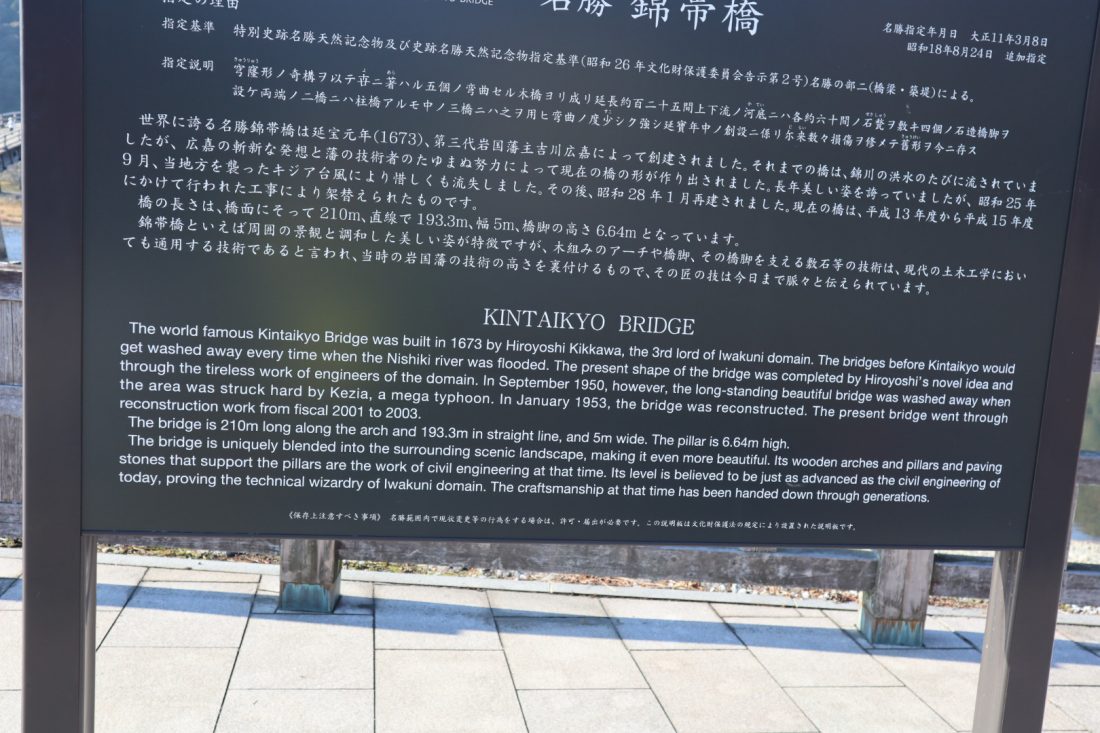
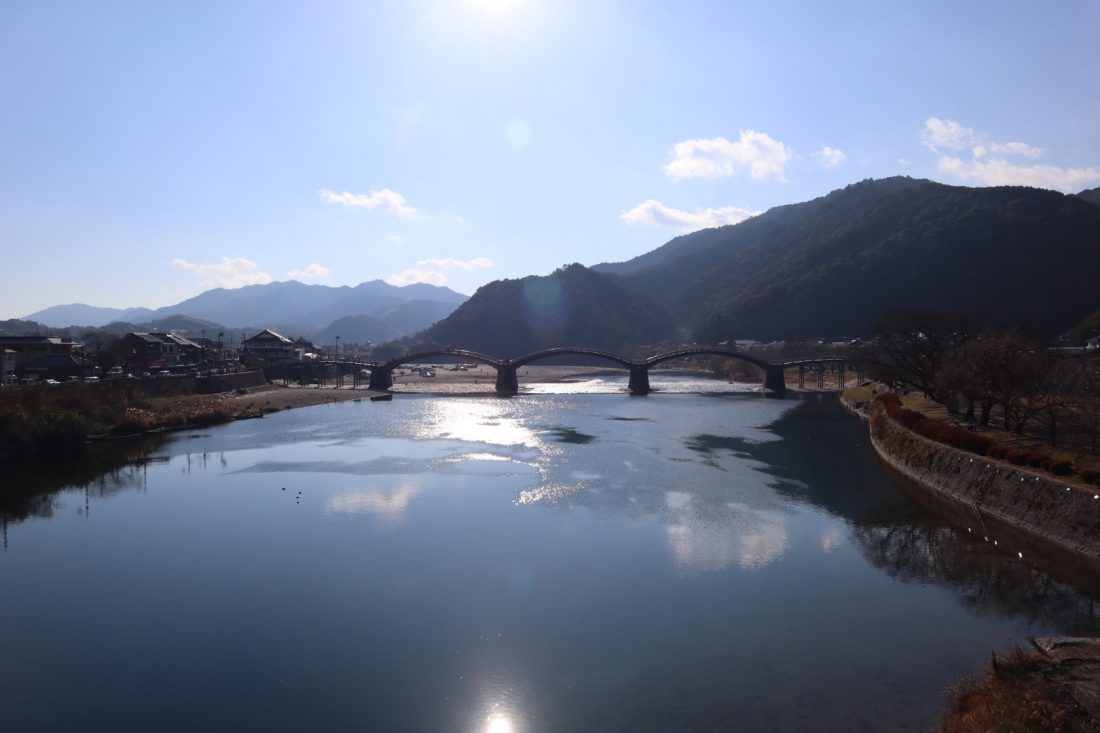
The bridge is built over the Nishiki River that runs through Iwakuni. It has 5 wooden arches that span across the river and was originally built without using any nails, a major architectural feat for the times in the 17th century.
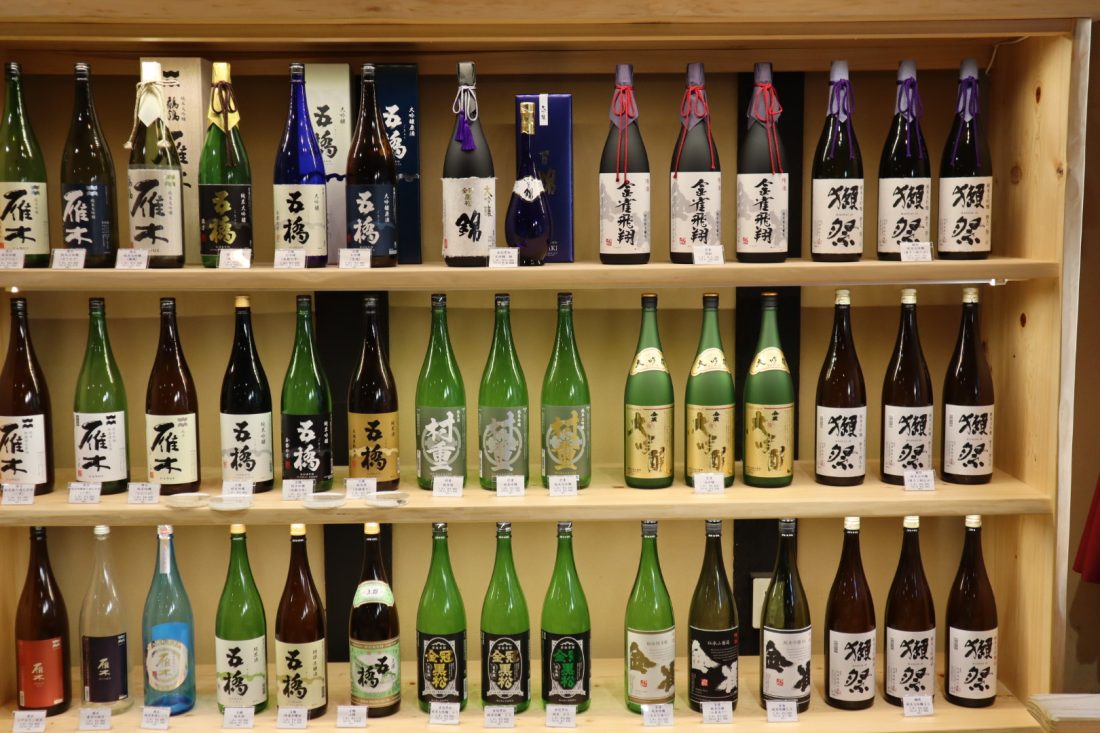
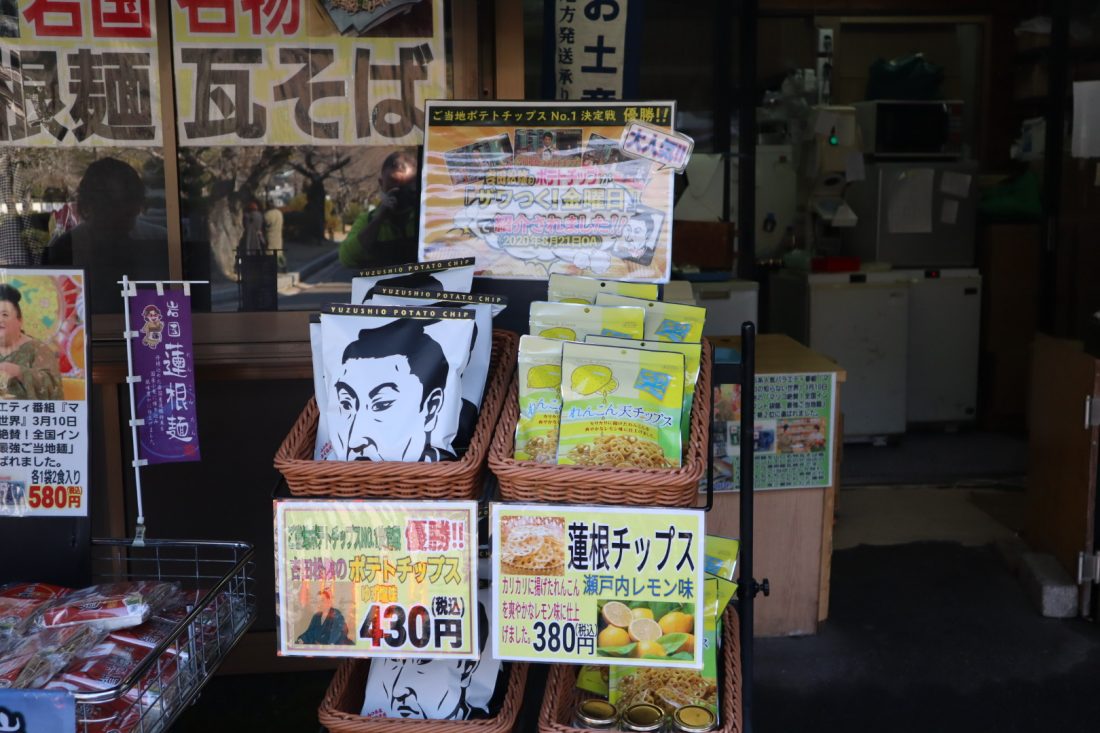
Before you cross the bridge, you may want to check out the local shops near the bus depot selling various local Iwakuni commodities such as sweets, knick-knacks, and sake. The shops are directly in front of the bridge and across the street. Also at the river level (where you can descend using the stairs next to the bridge) are a few street stalls selling snacks – both hot and cold.
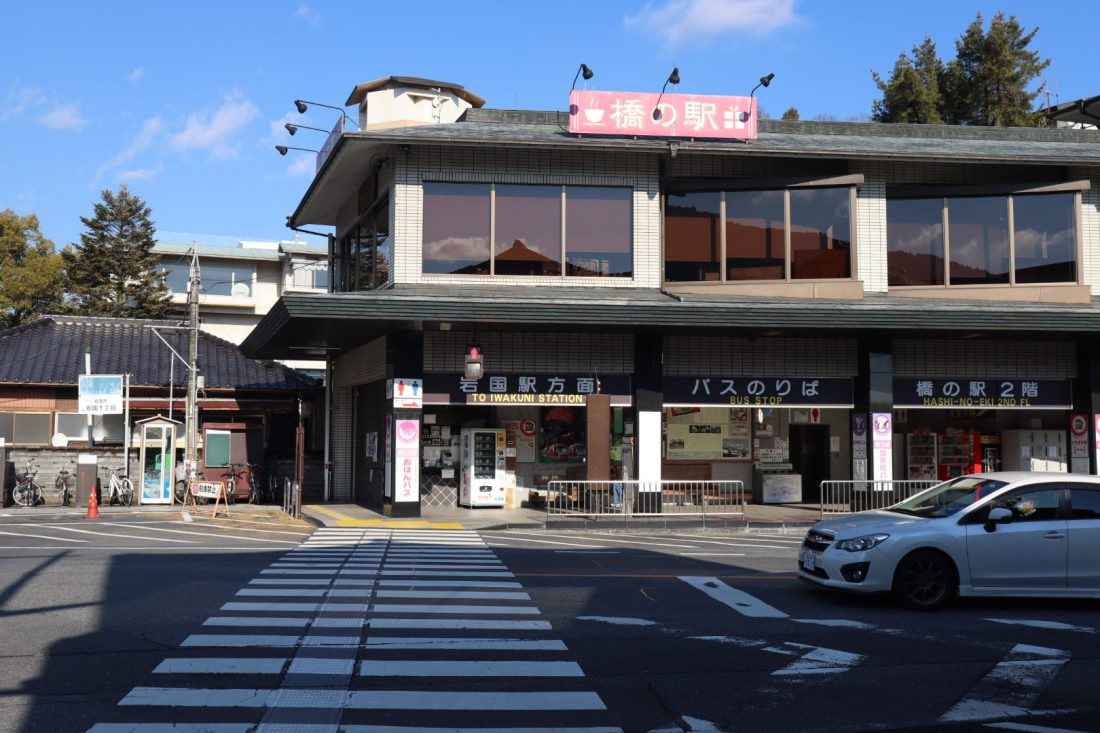
I would also recommend you visit the bus stop building on the second floor where there is a shop called Hashi no Eki (橋の駅 – Bridge Station). They have local sake, sweets, souvenirs, a tea and cake shop, and photos as well as crafts. There is a big window facing the bridge and river where you can sit, drink and eat while you take in the view of Kintaikyo.
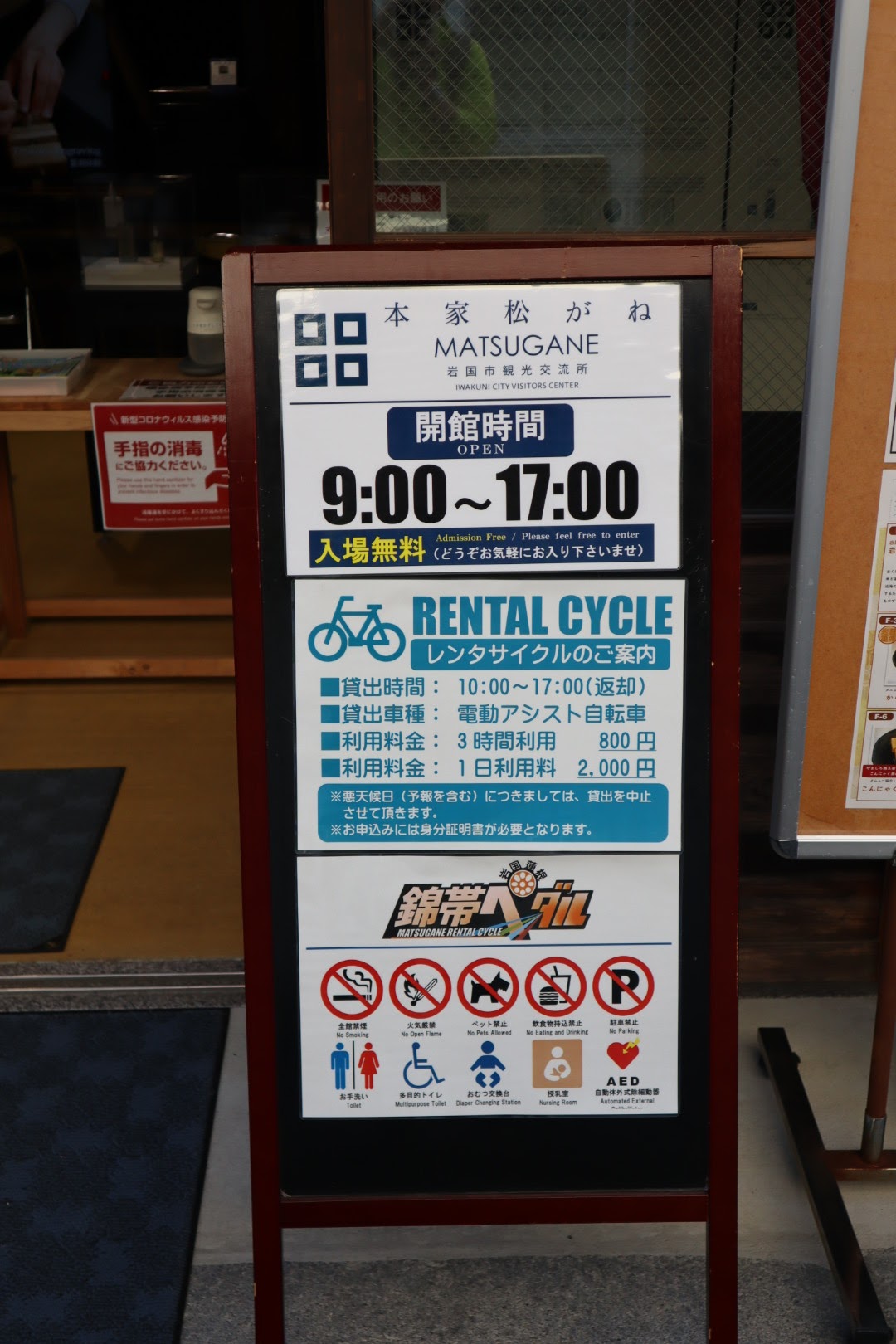
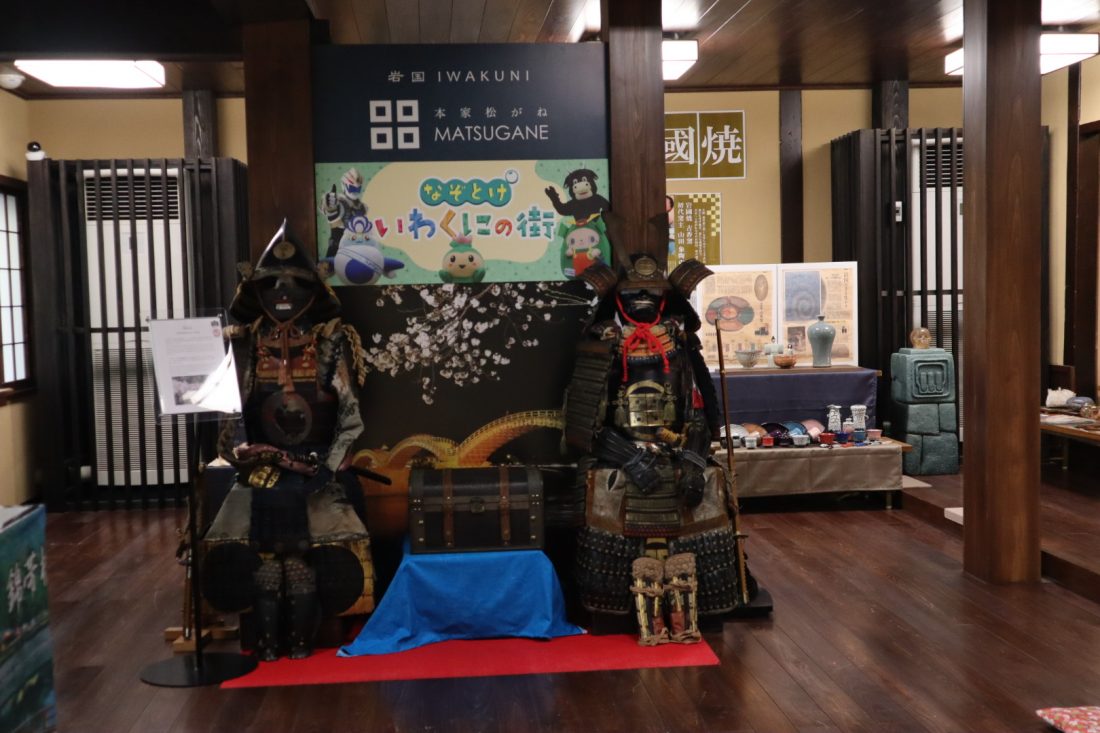
Just down the road from the bus stop is the local Iwakuni Tourist Center called Matsugane (about a 200-meter walk). Just walk straight past the shops on the left side of the road and keep to the left when the road forks. At the first street, turn left and you will see an old building on the right with a purple hanging banner – this is the Tourist Center. They have rental bikes, info in English on area things to do, as well as sake purchase and tasting. This place is worth a look before beginning your trip around the area or if you need basic info about the bridge and surrounding area.
There is also a very nice hotel in the area called Iwakuni Kokusai Kanko Hotel. It is about 200 meters from the bridge (when facing the bridge from the bus station side just turn right and walk about 1 minute). It has a Chinese restaurant, a souvenir shop, and an open air/enclosed hot spring (located on top floor) open to the public from 11:00 a.m. to 10:00 p.m. The cost is ¥1700 per person to visit.
Train (Walk)
If you choose to go by train, you can get off at Kawanishi Station and walk down the stairs towards the left. You will cross the street at the light and go straight towards the bridge. After a few meters, you will see a street that will take you directly into a supermarket (MaruKyu). You can stop there to pick up snacks or a bento lunch for a reasonable price if you wish. There is also an Italian restaurant next to the supermarket in case you wish to have lunch/dinner there.
If you continue back on the main road, you will see a traffic light that crosses to your right. This will take you across the Nishiki River and the view of Kintaikyo on your left a few hundred meters away. Once across the bridge, on your right is a drugstore/supermarket called Cosmos, which carries lots of inexpensive food and other sundry items you may need for your journey. On the left side of the road is a 7-Eleven.
Once you cross the bridge and go left before 7-Eleven, you will be headed directly for the bridge with the river on your left. After about a 5-minute walk you will come to the bridge on your left and bus stop on your right-hand side.
Hike
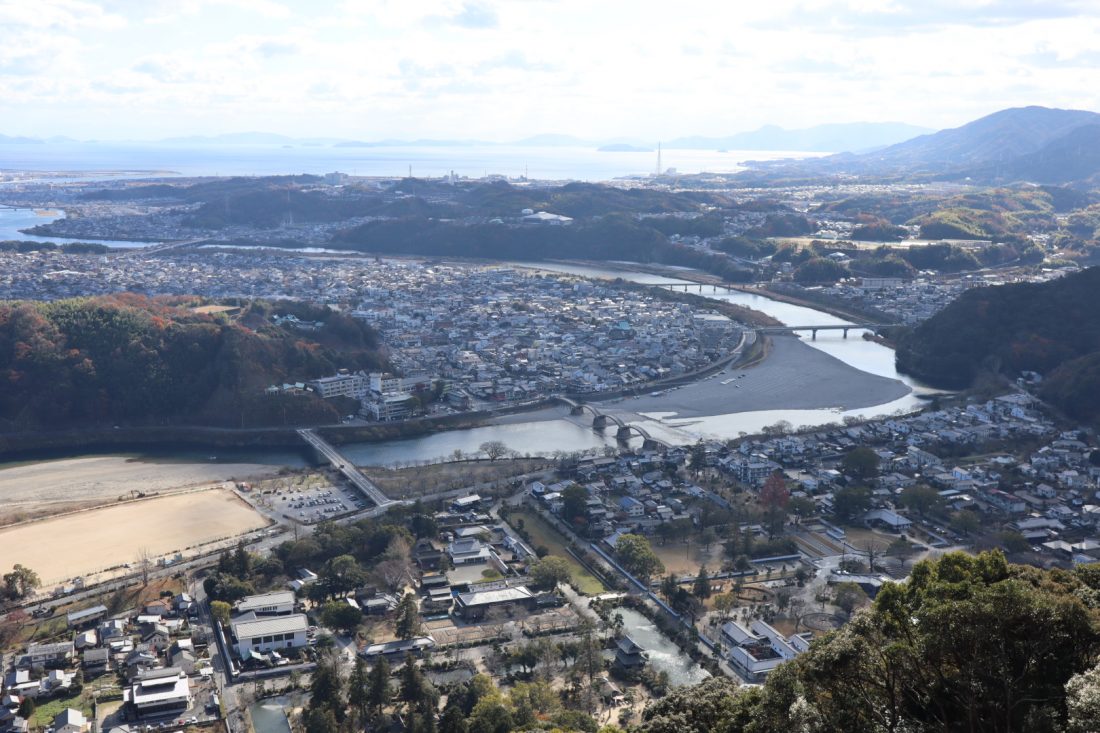
If hiking is more to your liking, I suggest exiting the train, crossing the street, and take the second street on your left (the one after the MaruKyu street, which has an orange pole with a mirror). Once you turn left and walk about 100 meters, there is a right turn in front of a Buddhist temple. Take this turn and walk up the road following it to the end. At the top of the hill is an old, private, samurai-style house on your left. On your right there is a small road with a sign that leads up to Iwakuni Castle. The sign says it takes about 40 minutes to hike. I have done the hike, and the views of the city and surrounding area are worth the time in my estimation.
Stroll/Kikko Park
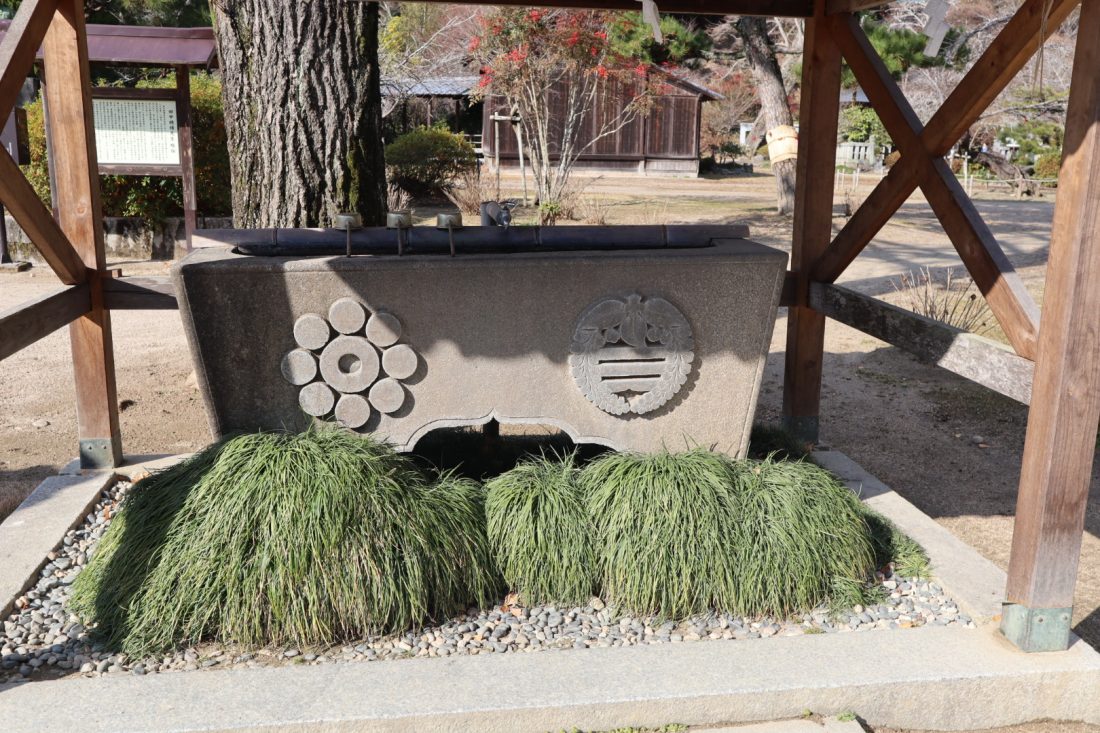
If you wish to head directly for the bridge and skip the hike, then please walk straight ahead and past the second traffic light that goes right and crosses a bridge. The road is narrow and you must walk carefully on the left side, but cars will slow down to let you pass. The road winds along the mountainside on your left and river on your right.
After a few hundred meters walk past the second traffic light, you will come to a small fork in the road. The way to the right takes you directly to Kintaikyo and the river. The way to your left takes you through a small, residential area and straight into a Buddhist temple at the road’s end. You can enter the grounds if you wish and look around.
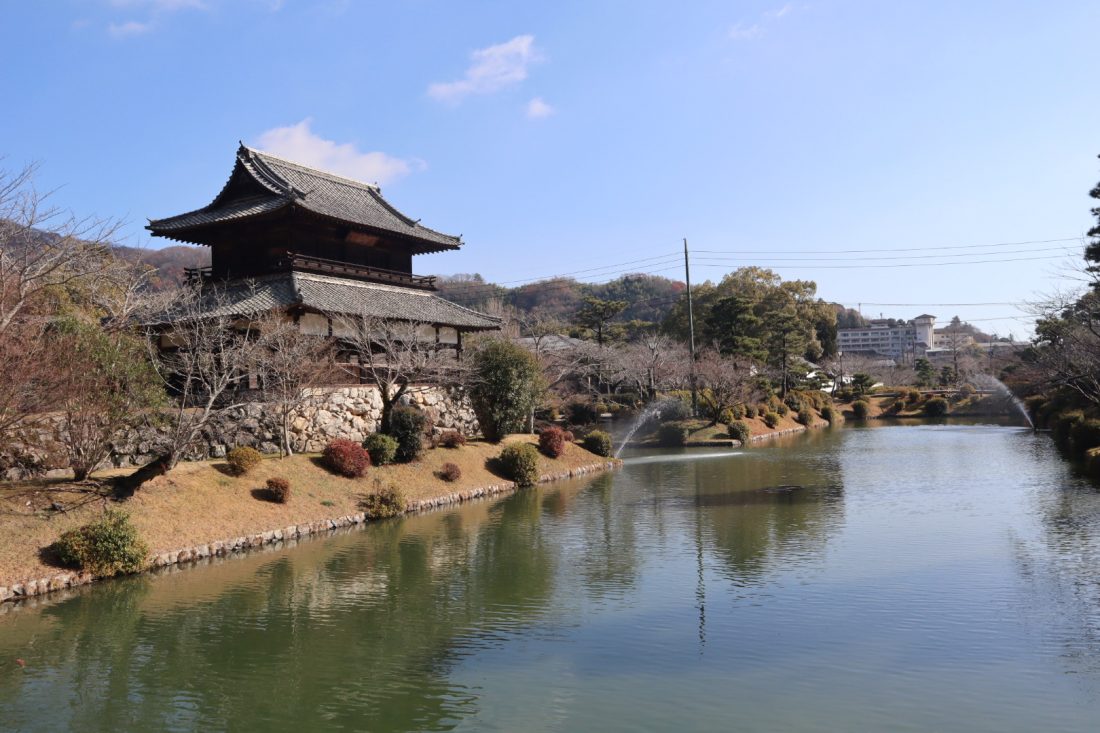
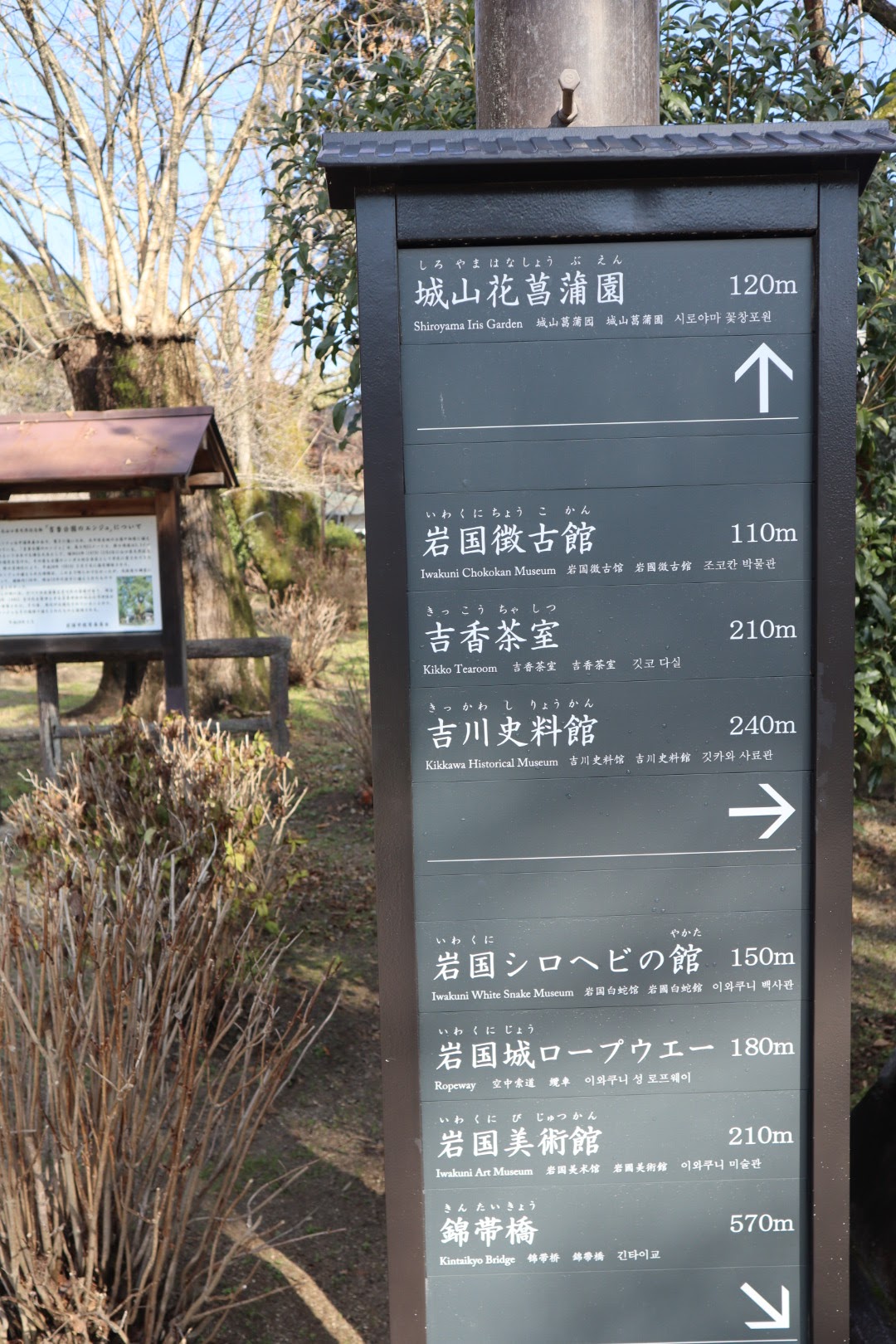
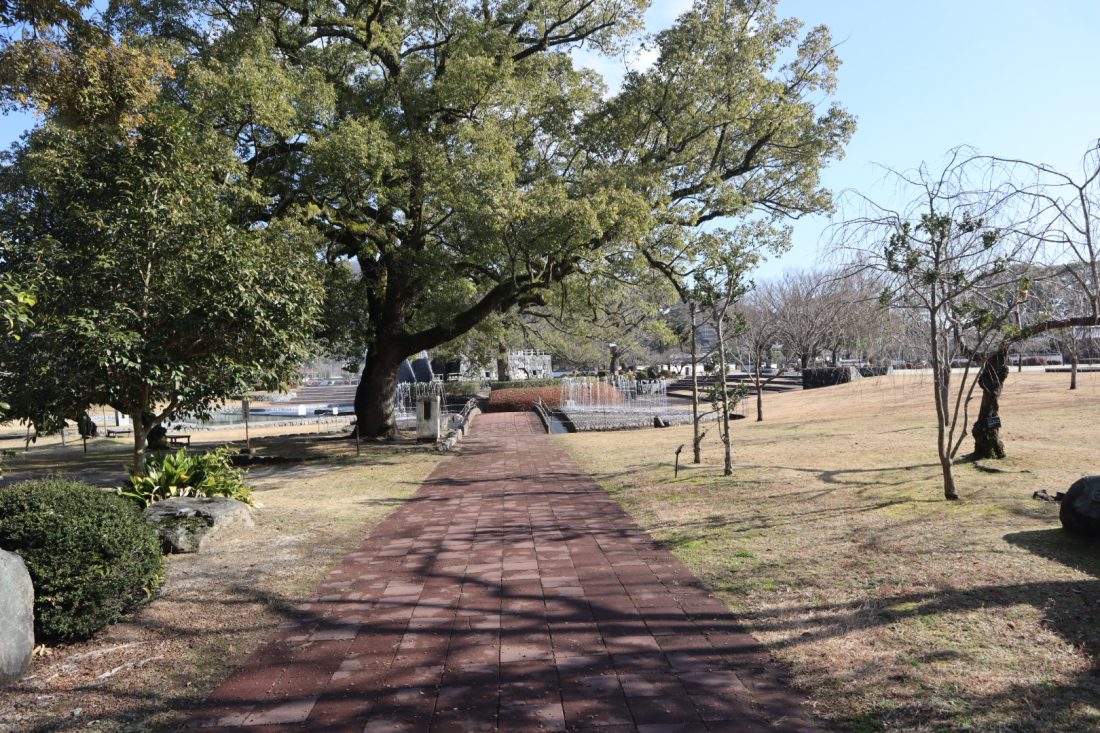
If you turn right before you enter the temple, you will walk directly into Kikko Park. This park is massive and encompasses most of the surrounding area of the bridge. There are many benches to sit on, large grassy areas perfect for picnics, and a small waterfall area cascading down a concrete façade. If you continue straight, you will see the local ropeway up to Iwakuni Castle on your left. It leaves every 15 minutes both up and down. The one-way cost is¥330 for adults and ¥150 for children. There are discounts for round trip fares, and also a combination ticket that includes crossing over Kintaikyo included with the ropeway and castle costs. They have English language signs and pamphlets at the ropeway entrance.
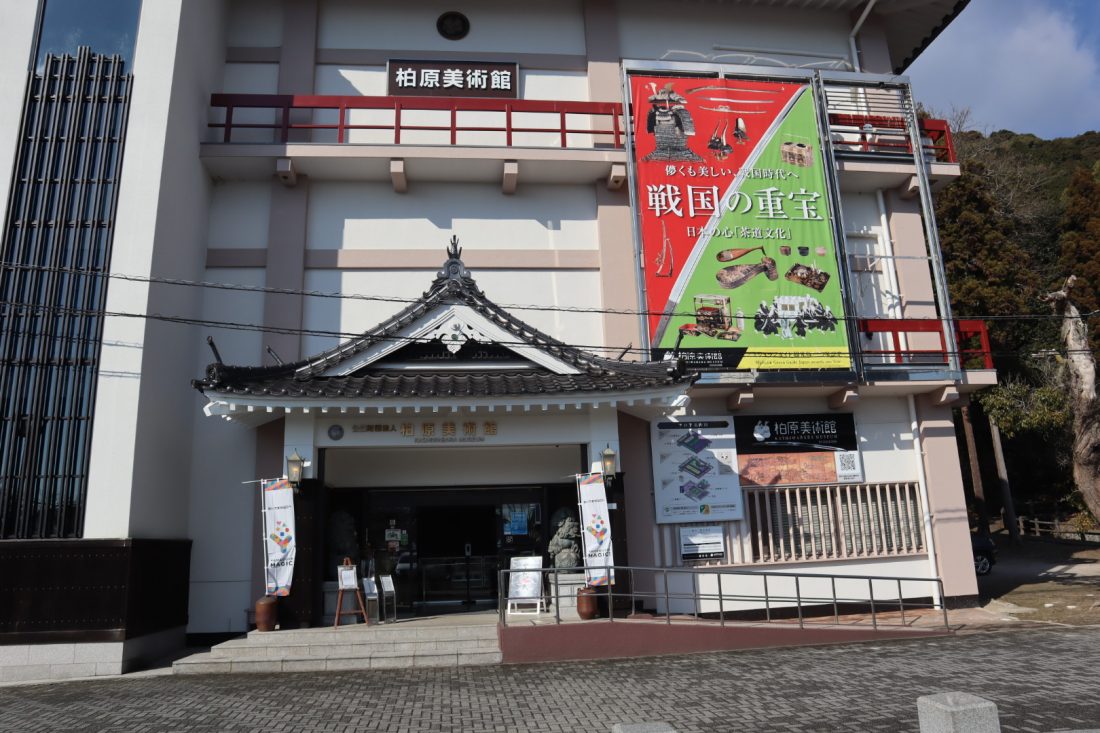
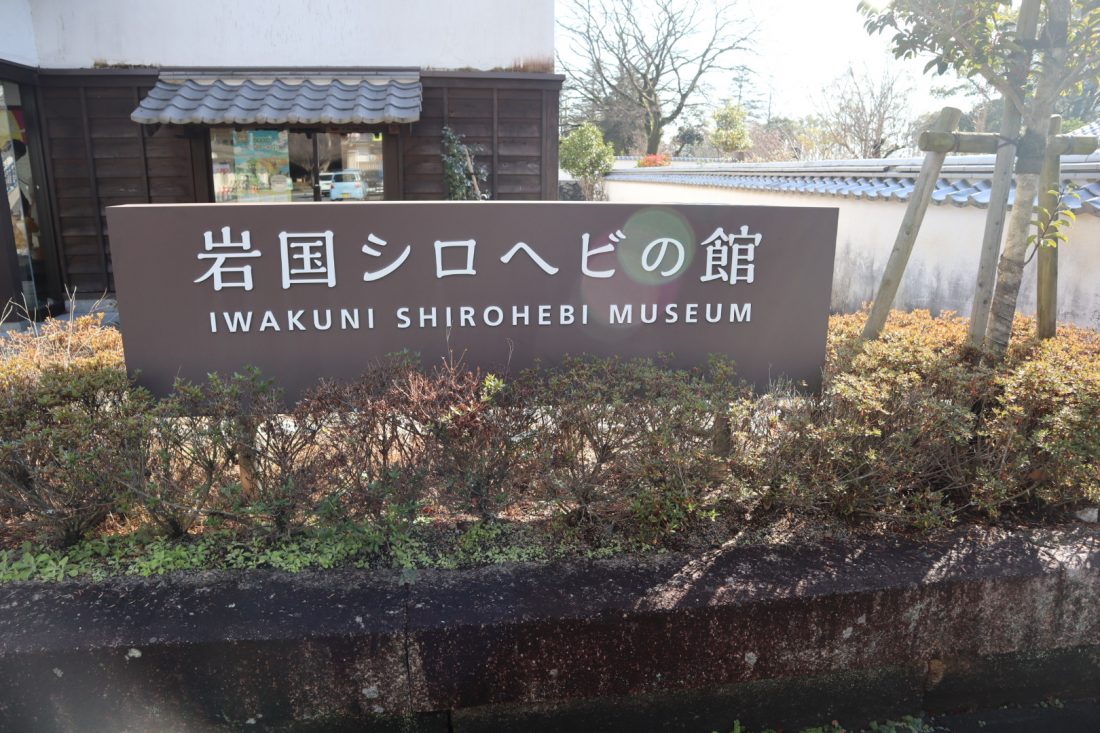
Just to the left of the ropeway is an Edo Period Museum that houses samurai artifacts and a history of the local area. And just to the right of the ropeway is a museum of snakes – white snakes are famous in the area and considered good luck. Next to the snake museum is a local café with sit-down service.
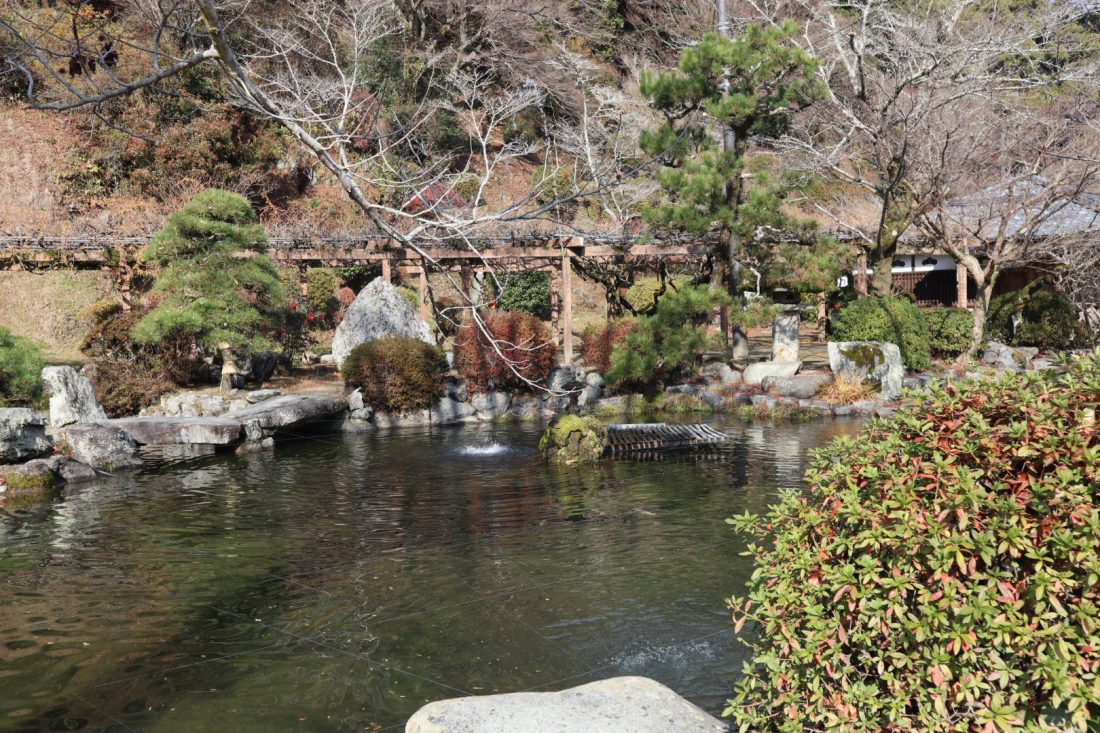
If you continue straight past the rope way and white snake museum you will come to a pond with a bridge. Lots of ducks and carp are situated there. It’s a beautiful area for taking photos. After crossing the bridge, you will see a free, local history museum on your right that has English signs. It is closed on Mondays and some holidays.
Continue straight on and you will come to a Shinto shrine where you can make offerings and prayers.
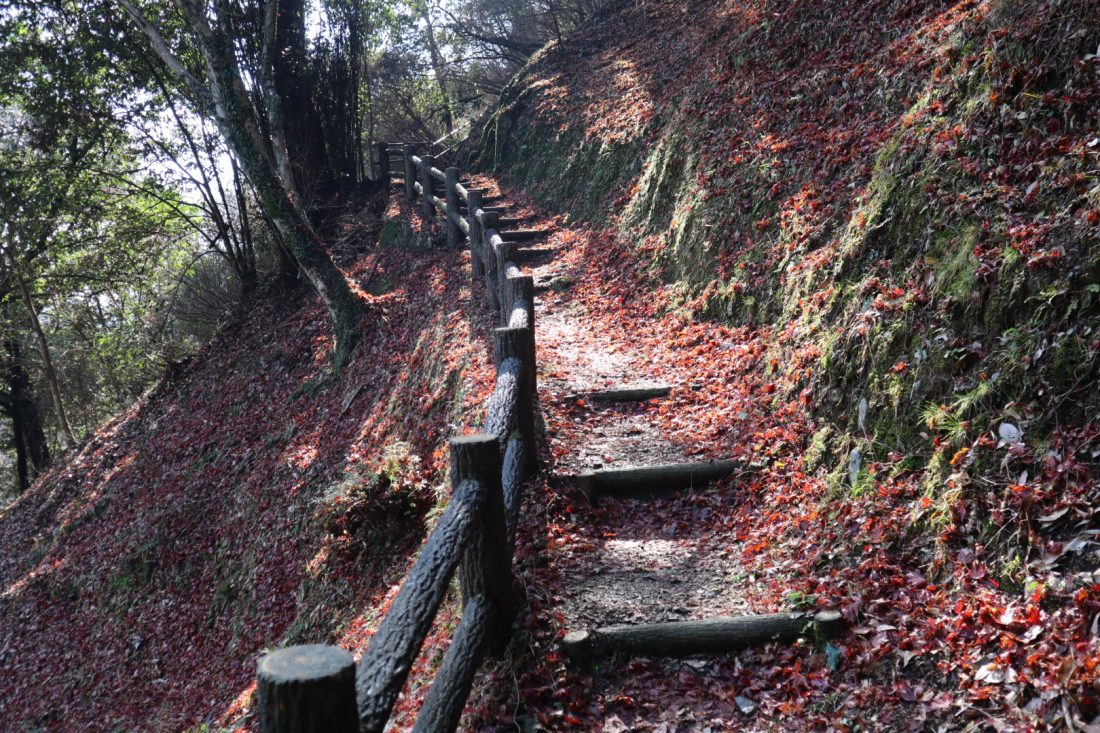
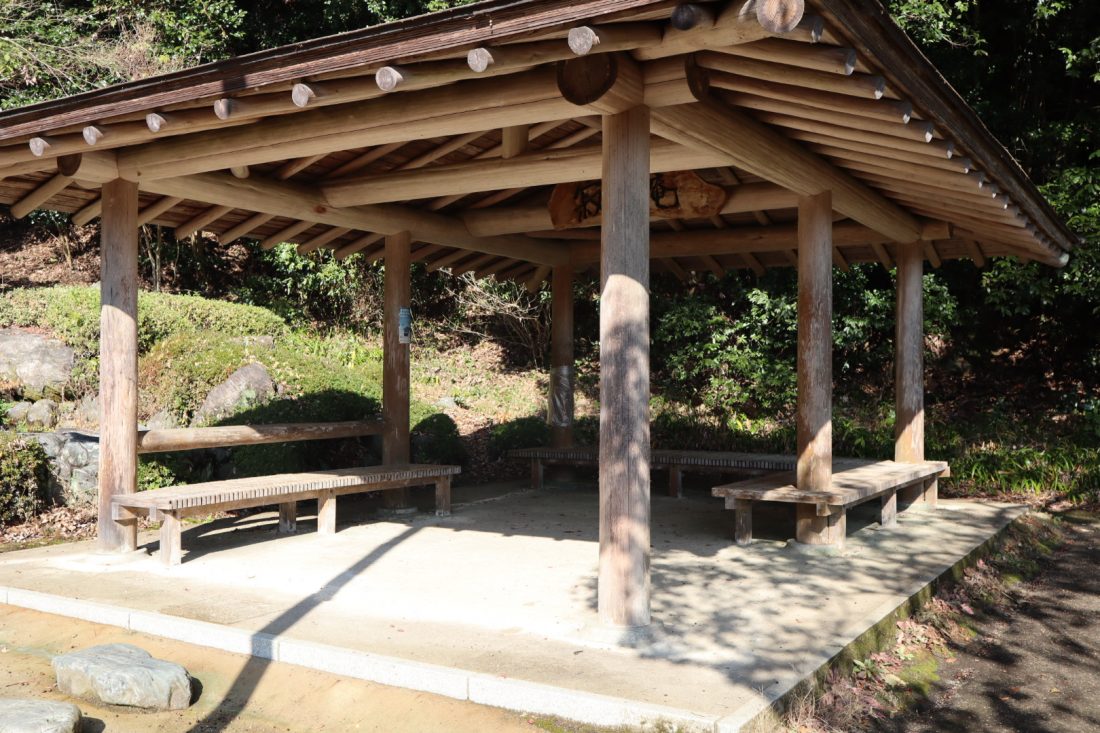
Just to the left of the shrine is a path that leads to an end of the park where a small, covered area sits on a small hill and overlooks a small garden of flowers. It would be a nice place for a picnic or barbecue. The path winds up the hill towards the left, but I am not sure that it goes to the top of the castle. I walked about 500 meters up but did not see any signs. If you are adventurous, then possibly an exploratory hike might reveal some interesting sights on your way up.
The Bridge
If you walk towards Kintaikyo from inside Kikko Park, as you exit the park you will see some local shops, restaurants, and even a traditional tea house. The bridge itself is surrounded on the park side with a grassy, park-style area that has a free parking area, as well as direct access to the Nishiki River’s edge. You are invited by the simple sights and sounds that surround you in nature to sit, reflect, and take in all of the emotions that the area offers. You may also pass under the bridge or just sit at the water’s edge. There are also fishermen both alongside and in the river, waiting for their daily catch and likely their evening dinner. You will likely see the local cormorant birds that dive into the river to catch fish.
Directly across from the bridge on the park side is an area loaded with small shops with local delicacies such as lotus root, a layered type of local Iwakuni sushi, and numerous varieties of soft serve ice cream stands with over 100 flavors. There are also benches to sit on in this area (which is the main park entrance), and the park entrance and the interior are covered with cherry trees which bloom in late March or early April.
I have been to the park and bridge many times, and each time I discover something new. This is a fabulous place to just hang out, picnic, read, or just relax and take a nap. To people outside of Iwakuni this place is an undiscovered gem!
Moment of Joy
For me, I was quickly taken in by the vision of the bridge spanning 5 separate arches across the river in the mid-afternoon sun. It was elegant simplicity at its most poignant moment. The bridge struck me as both an engineering masterpiece and a brilliant and useful addition to the utility of crossing the river in the 17th century on a normal day. No colors, decorations, or adornments. Just a simple, unique bridge sitting in the sun in harmony with its setting – just as it has done for almost 400 years. You can almost visualize the Edo Period and people crossing the bridge, going about their daily routine.
For me, simple is always best, and the initial view of Kintaikyo just filled me with simple appreciation of its creation and functionality. I felt an immediate connection to the river and bridge; the view and its surroundings evoked a short but sweet wash of joy and pleasure at getting to see it!
Commune with Nature
The whole adventure to Iwakuni and Kintaikyo is packed with the simple beauty of nature. Japan has its share of large cities with restaurants, bars, clubs, etc. But Japan’s real allure is its natural beauty and the connection that local people have with their surroundings. From the fruit, vegetables, and rice to the rivers and mountains, Japan abounds with nature. If a short trip outside of the Hiroshima City limits is in your plans, it will be well worth it to travel to the Kintaikyo area to view the bridge and its surroundings. I believe that it will be well worth your time!