
Itineraries 3day
Seaside Stays
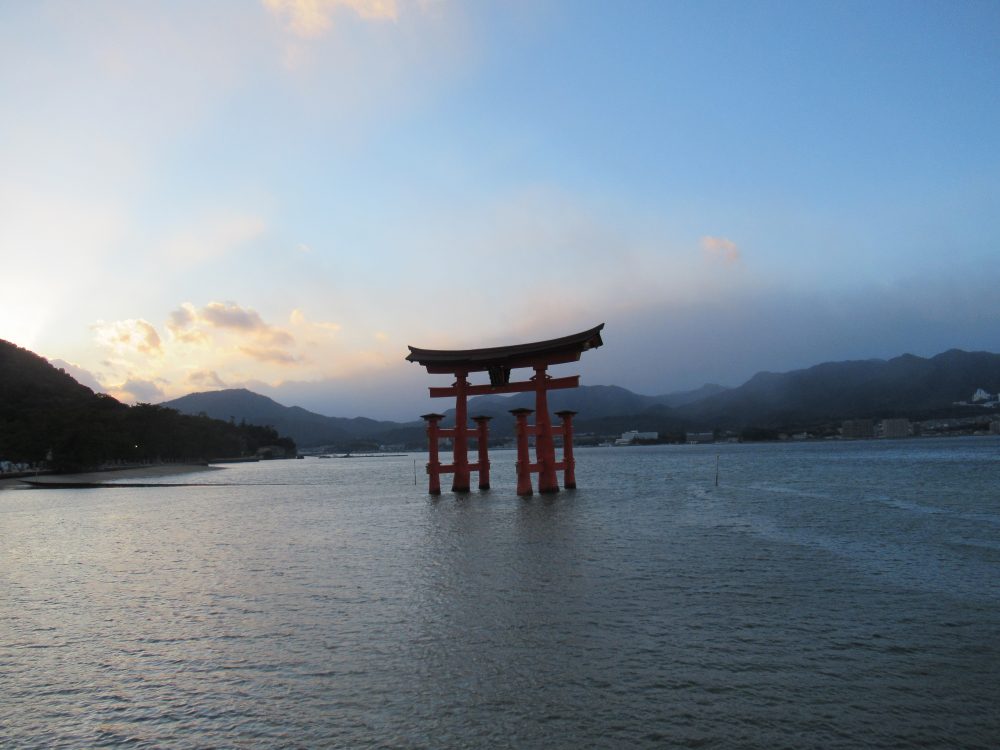
It’s one thing to watch the waves when visiting coastal Hiroshima Prefecture, but it’s another to stay the night by the sea and stare at it from your own room. Try a trip to some of Hiroshima Prefecture’s iconic sites while staying in locally famous hotels! The extra exposure to the waves at night is sure to leave a lasting impression long after the vacation ends.
Day 1
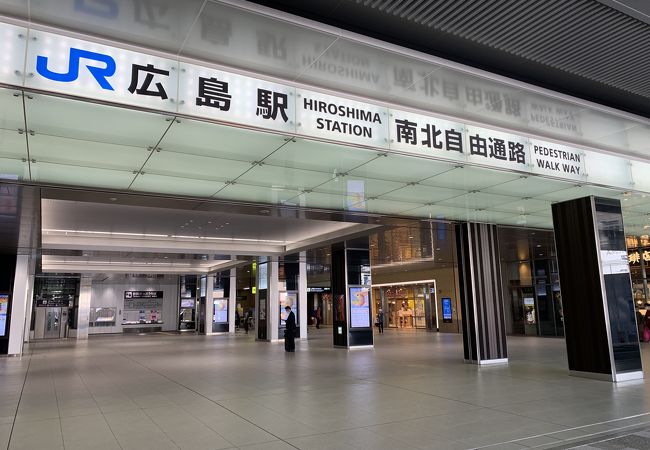
01 Hiroshima Station (広島駅)
Hiroshima Station is the bustling transportation hub of our peaceful city, and one of the principal entertainment hubs as well. All JR lines in the city stop here, and from here, people can take numerous buses and streetcars anywhere in the city, or even out of town. The ekie shopping complex located inside the station building also has no shortage of restaurants and souvenir shops to keep visitors busy for hours.
- Address
- 2-37 Matsubaracho, Minami Ward, Hiroshima City, Hiroshima Prefecture, JAPAN
Transportation: Miyajima Pier [JR Sanyo Line & JR Ferry, ~50 minutes]
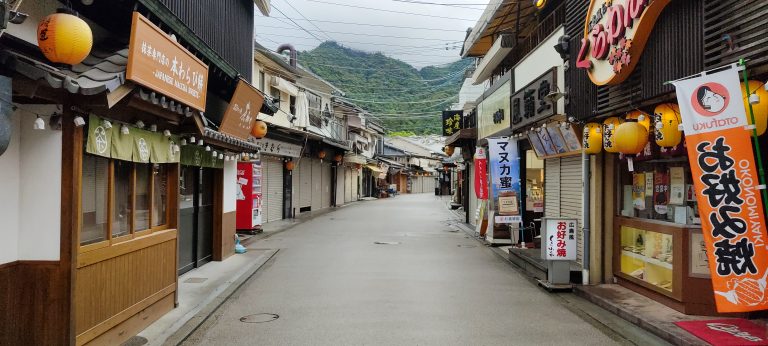
02 Miyajima Omotesando Shopping Street (宮島表参道商店街)
Omotesando shopping street is the main street of Miyajima, with many souvenir stores, cafés, and restaurants. On weekends and holidays the street becomes crowded with tourists, as there are many nearby tourist attractions like Itsukushima Shrine or Senjokaku five-storied pagoda. There are many stores lined along the street where you can and walk around, eat and enjoy many specialties such as “agemomiji,” which are deep-fried momiji manju, and “anago chikuwa,” which is grilled conger eel fish paste on a (traditionally bamboo but now cardboard) tube.
- Address
- 535 Miyajimacho, Hatsukaichi, Hiroshima Prefecture, JAPAN
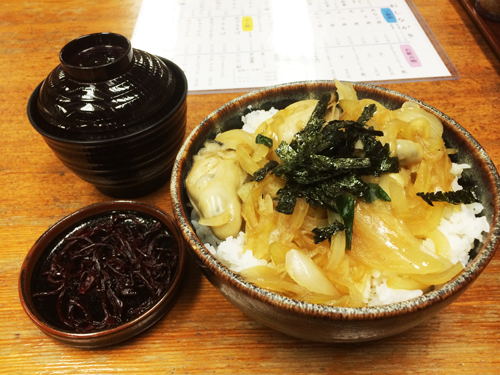
03 Tachibana (たち花)
Tachibana, which is located on Miyajima’s Omotesando shopping street, is a teishoku (set meal) restaurant where one can feel a nostalgic air. The picture of a deer placed at the entrance serves as a marker for the store. Inside the restaurant, diners can eat Miyajima specialties such as conger eel rice, recipes made with Hiroshima-harvested oysters, and Japanese-style curry. The menu places a specific emphasis on oyster-based dishes like raw or grilled oysters in the shell, fried oysters, and oyster udon.
- Address
- 566-1 Miyajima-cho, Hatsukaichi, Hiroshima Prefecture, JAPAN
Check into Kinsuikan, then put down your baggage before continuing your adventure.
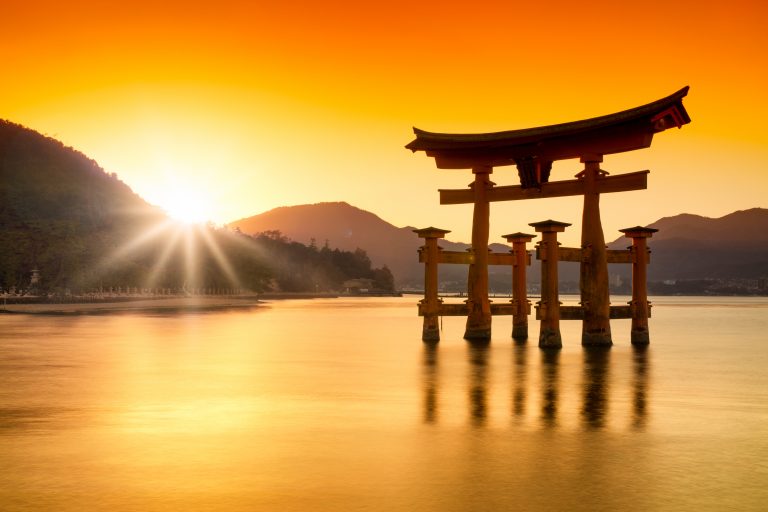
04 Itsukushima Shrine: Walk Through Living History
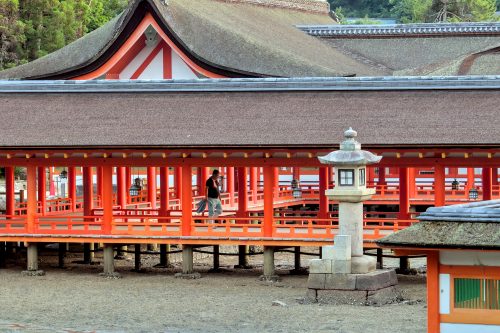
Located a short train ride from Hiroshima City, Itsukushima Shrine is a centuries-old Shinto shrine on the island of Miyajima in the Seto Inland Sea. It is a culturally rich location that is deeply woven into the fabric of Japanese history while remaining an active religious site for the local people.
Quick Facts
▪️Miyajima’s Itsukushima Shrine is an active site of Shinto worship.
▪️It enshrines three mythical Shinto deities: the goddesses Ichikishimahime-no-mikoto, Tagorihime-no-mikoto, and Tagitsuhime-no-mikoto.
▪️The shrine’s traditional founding year is 593, but the island itself was worshiped as a kami separately from the shinto goddesses long before that.
▪️The main shrine’s main buildings were constructed in the Shinden-zukuri style of the Heian period (794 to 1185).
▪️Because of the shrine’s unique history, architecture, and beauty, along with its unique artistic and cultural value, it was registered as an UNESCO World Heritage Site in 1996.
(Joy Photo / Michael Farrell)
Itsukushima Shrine: An Enduring Vision of Beauty
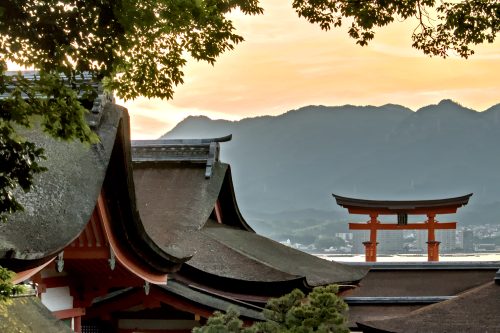
Since the Edo period, Miyajima has been regarded as one of “The Three Most Scenic Views of Japan.” The interplay between sky, island, sea and shrine creates a one-of-a-kind view that has influenced Japanese principles of beauty for centuries. Integral to this view is Itsukushima Shrine. A site of continuous Shinto worship for over 1,500 years, this sacred site appears to float on the waters of the Seto Inland Sea below the primeval forests of Mt. Misen. Over the centuries, it inspired the patronage of some of Japan’s most famous leaders, embedding itself deeply in Japanese culture and history. Today, it stands as a beautiful example of Heian-period aesthetics while continuing to serve the spiritual needs of Shinto practitioners.
(Joy Photo / Michael Farrell)
A Center of Shinto Worship
Shinto belief holds that Itsukushima Shrine is the dwelling place of three goddesses: Ichikishimahime-no-mikoto, Tagorihime-no-mikoto, and Tagitsuhime-no-mikoto. They are known collectively as the Munakata Sanjoshin or the Three Goddesses of Munakata because the tradition of their worship comes from Munakata City near Fukuoka.
The Munakata kami are revered as protectors of the Japanese imperial family, sailors, and warriors. They are deeply tied to water routes because their cult originally grew out of ancient protection rites for merchants sailing to Korea from Munakata.
According to legend, they were brought to Itsukushima Shrine in 593, where they have been revered though their identity changed over the centuries. After the arrival of Buddhism in Japan in the fifth century, the new religion gradually reinterpreted Shinto beliefs along Buddhist lines. As a result, for most of Japanese history, many believed that the Munakata Sanjoshin were manifestations of Kannon — the bodhisattva of mercy — or other Buddhist deities.
It was not until the Meiji separation of the two religions with the Shinto-Buddhist Separation Decree that the kami of Itsukushima were identified solely with Shinto deities again.
Today, Itsukushima Shrine is the head shrine of a system of about 1,425 Itsukushima shrines throughout Japan.
(Joy Photo / Michael Farrell)
A One-of-a-kind Structure Steeped in History
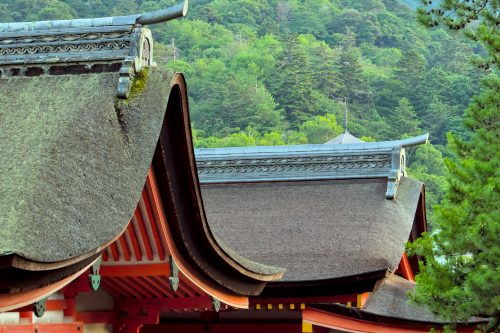
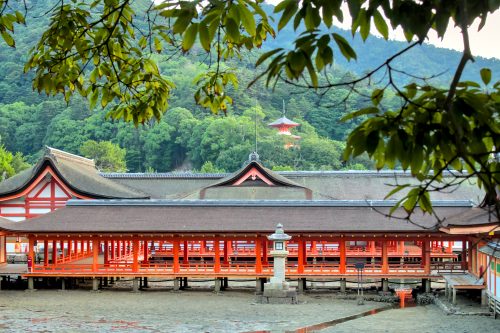
While Shinto tradition holds that Itsukushima Shrine was founded in 593, the buildings themselves are not from the 6th century. The architectural style of the main complex dates to a massive renovation of the shrine around 1168 under the patronage of the warlord Taira no Kiyomori, the first samurai to become Japan’s de-facto ruler.
Kiyomori had the shrine redesigned according to the architectural style of Heian aristocratic homes in Kyoto. The style, called Shinden-zukuri, became popular as a uniquely Japanese architectural style. It incorporated fewer Chinese influences from the time, tailoring itself to the Japanese climate and local aesthetics.
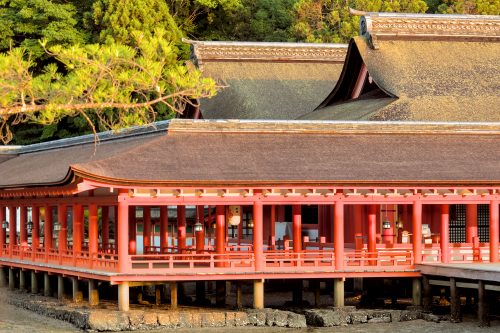
The style emphasized balance and harmony with the environment. Buildings were elevated on wooden stilts to keep living spaces off the damp earth. Open-air construction helped residents stay cool during Japan’s hot and humid summers. Various kinds of screens were used for privacy. Meanwhile, a formal garden provided a central orientation for the overall design.
The Shinden movement provided the DNA of many features that are still seen in Japanese homes today. And Itsukushima Shrine — raised on stilts, open to the air, and featuring the sea like a central garden — is a beautiful example of this.
The shrine is also a premier architectural example of Shinbutsu-shugo, the syncretism of Buddhism and Shinto that flourished until the Meiji government forcefully separated the two faiths in 1868. Kiyomori’s redesign elicited layered spiritual interpretations. On the one hand, it resembled Ryugo-jo, the undersea Dragon Palace of Shinto mythology. At the same time, with vermilion pavilions appearing to float on the water, the shrine elicited Pure Land Buddhism’s Gokuraku Jodo — the Western Paradise of Amida Buddha.
(Joy Photo / Michael Farrell)
Development Over the Centuries
(Joy Photo / Michael Farrell)
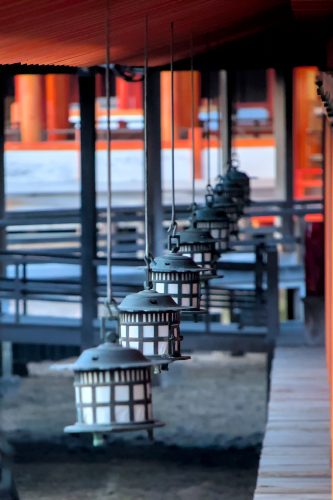
What you see today, however, is not Kiyomori’s shrine. It was destroyed by fire in 1207 and again in 1223, and faithfully rebuilt each time. Today the oldest structure is the Guest Shrine hall, called the Massha Kyakujinja. It dates to 1241 during the shrine’s reconstruction after the second fire. You can find it immediately after you enter the shrine. It is the first big building on your left after you buy your entry ticket and start walking down the open corridor.
While other structures, however, continue the Heian aesthetic, they are not as old. The Main Shrine Building, called Gohonsha Honden, dates to a total reconstruction in 1571 by the Sengoku period warlord Mori Motonari to maintain its sacredness after two brothers were slain there on suspicion of treason. Instead of incorporating contemporary architecture into the new Honden, Motonari had the former building precisely reproduced. Today, it is the largest hall of its kind in Japan.
Additional structures depart from the Shinden style because they were not reconstructions but additions at different periods in history. Nearby Senjokaku, the bare-wood temple that overlooks the main shrine from the east, is enormous yet strikingly austere and weathered in contrast to the main shrine. It was built by the legendary samurai Toyotomi Hideyoshi in 1587. Another famous addition is the sacred Noh Stage built in 1680. Built over the sea, it is the only Noh stage of its kind. It was built in the Ichiju-kiritsuma style and includes unique features like a floor that resonates like a drum, thereby boosting the sounds of the Noh performers.
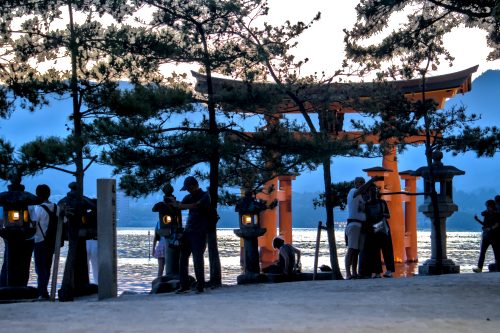
Even the most iconic structure at the shrine, the Otorii (the large shrine gate) was rebuilt nine times over the centuries. Measuring 16 meters tall and 42 meters wide, this symbol of the transition from the profane to the sacred is one of the largest wooden torii gates in Japan. The current Otorii was built in 1875 after the former gate was destroyed by high winds in 1850. It recently completed a three-year restoration project that finished in 2022.
Overall, the various structures of the shrine range in origin from 1241 to 1850 with the main buildings of the shrine fairly well established by the Edo period.
(Joy Photo / Michael Farrell)
Modern Worship
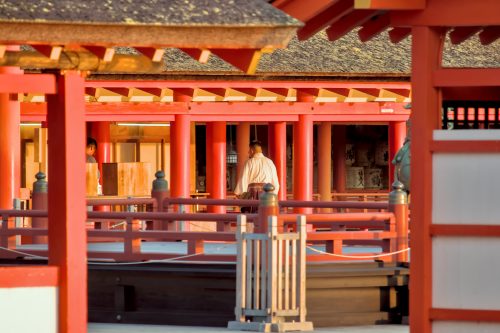
The modern shrine is deeply intertwined in the ritual and ceremonial life of the local communities.
It is a popular pilgrimage for Hatsumode. In this tradition, popularized in the Meiji period by train companies seeking more customers, locals make their first shrine visit of the New Year to give thanks and pray for the coming year. Every year, the shrine draws around 100,000 worshippers.
Over the rest of the year, Itsukushima Shrine hosts a variety of public religious ceremonies and events. Summer is particularly full with important events like the Miyajima Odori, a traditional bon dance festival, and the Tamatori Festival, where men in loincloths battle in the water to grab a lucky ball suspended high above their heads. Summer is also when the shrine holds its grandest ceremony, Kangen-sai. Amid fluttering Heian-era accouterments, this event ceremonially reenacts the arrival of the three goddesses to the shrine by boat in 593.
Visitors pose with the Otorii just after sunset. (Joy Photo / Michael Farrell)
Tips for Travelers
▪️ Bring physical money. Admission to the main shrine is ¥300 — less than $2. However, the shrine only accepts cash.
▪️ Check the tides before you go. Depending on the photos you want to take and what you want to do and see, the tides change the experience. High tide is best to experience the shrine appearing to float on the water. Low tide reveals hidden features like ponds and the unique foundations of the building. It also lets you walk right up to the Otorii.
▪️ Bring a plastic bag for your socks and shoes plus a towel for your feet if you plan to walk to the Otorii at low tide. The earth under the retreating sea is more mud than sand.
▪️ Securely pack away any paper goods or bags while visiting. While the island’s tame deer do not typically enter the main shrine, they do walk around the rest of the shrine properties, and they are notoriously brazen thieves.
▪️ It takes 15 to 30 minutes to walk through the main shrine, admire the structure and take photos. To completely explore Itsukushima Shrine, including Senjokaku, the Five Story Pagoda and the shrine’s Treasure Hall takes 60 to 90 minutes. If you practice Shinto and want to pray to the Munaka kami and buy religious items, add 15 to 30 minutes to your time.
▪️ Stay aware of the time if you arrive in the late afternoon and want to enjoy Miyajima’s shops after exploring the shrine. Depending on the time of year, the shrine closes between 5 and 6:30 p.m. However, most of the shops and restaurants on the island also close around the same time. Please check the shrine website for specific closing details.
(Joy Photo / Michael Farrell)
How to Get There
There are many ways to get to Itsukushima Shrine. First, you need to get to Hatsukaichi, the city that Miyajima belongs to. From Hiroshima Station, take the JR Sanyo Line towards Iwakuni. It leaves from platform 1. That is the last platform on your left after you go through the JR ticket gate. Get off at JR Miyajima-guchi Station — a five minute walk from the ferry terminal. The trip takes about half an hour and costs ¥420. You can also take the Hiroden streetcar from Hiroshima Station. It stops at Hiroden Miyajima-guchi Station and costs ¥240. The Hiroden station is right next to the ferry terminal to Miyajima. However, the Hiroden journey takes about 80 minutes.
Next, you need to get to Miyajima. The ferry terminal is inside a small shopping plaza called Etto. It is a popular place to use the restroom, grab a snack and buy local souvenirs. Two different ferry companies operate out of the terminal: JR West Miyajima Ferry and Miyajima Matsudai Kisen. Visitors with a Japan Rail Pass or JR-WEST Rail Pass can use their passes to board the JR ferry but not the Matsudai ferry. Besides that, the experience and fare is identical for each operator. Locals usually take whichever ferry leaves next.
Optionally, visitors at Peace Memorial Park can take advantage of direct ferry service to and from Miyajima. AQUANET operates high speed ferries from their berth on the Motoyasu River in Peace Park. It takes visitors to the island in about 45 minutes — ¥2,400 for a one-way adult ticket. The round-trip fare is double that. Plus, the ferry operates at the mercy of the tides, so if the water is not high enough, there is no ride. If you plan to use the AQUANET ferry to Miyajima from Peace Park, please check AQUANET’s schedule in advance to confirm the ferry times fit your trip.
Once you are on the island, leave the ferry terminal and turn right. Keep on following the coast westward. You’ll arrive at Itsukushima Shrine in around 12 minutes if you do not stop along the way, and there are many things to distract you.
(Joy Photo / Michael Farrell)
Nearby Distractions We Love
While on Miyajima, either before or after visiting the shrine, consider these fun diversions.
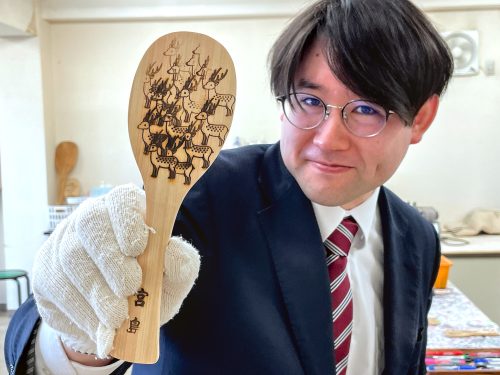
Just to the left of the ferry terminal, you can make all of the traditional crafts that the island has to offer visitors. At Miyajima Traditional Crafts Center you can cook momiji manju, decorate wooden shakushi rice scoops with hot irons, and carve a wooden plate with techniques inherited from the craftsmen who built Itsukushima Shrine.
For even more fun things to do on the island, check out our article, The Top 10 Things to Do in Miyajima.
- Address
- 1-1 Miyajima-cho, Hatsukaichi, Hiroshima Prefecture, JAPAN
05 Itsukushima Shrine Treasure Hall (厳島神社宝物館)
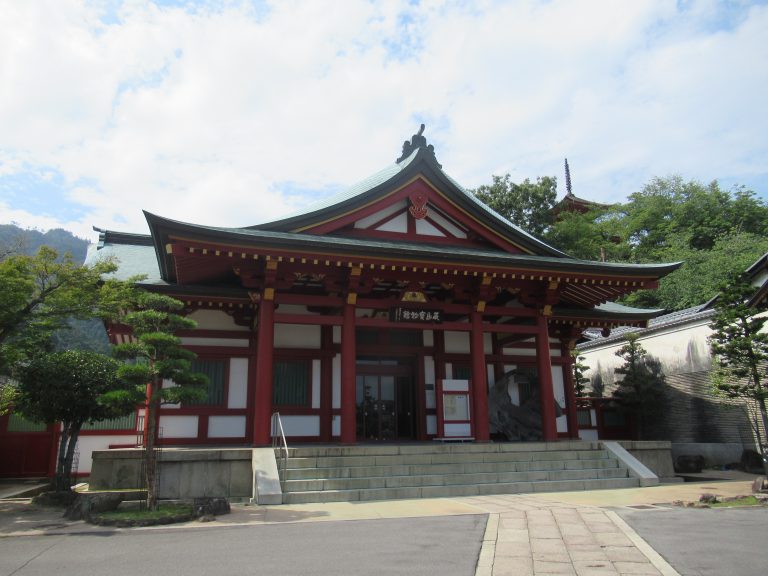
Ever since the Itsukushima Shrine on Miyajima was built in its current state in the 12th century, many fine artifacts and historical documents were offered to it as tribute. At the Itsukushima Shrine Treasure Hall, a fraction of these precious offerings to the shrine are put on display. The Treasure Hall is located a mere few paces from the exit of the shrine so visitors can pay a visit to both as a set (state at the shrine ticket counter that you wish to see both). Inside the Treasure Hall is a hand-copied sutra that was written in the 12th century and designated as a National Treasure, as well as numerous blades and Noh masks on display; the collection attracts a bevy of tourists.
- Address
- 1-1 Miyajima-cho, Hatsukaichi, Hiroshima Prefecture, JAPAN
06 Momijidani Park (紅葉谷公園)
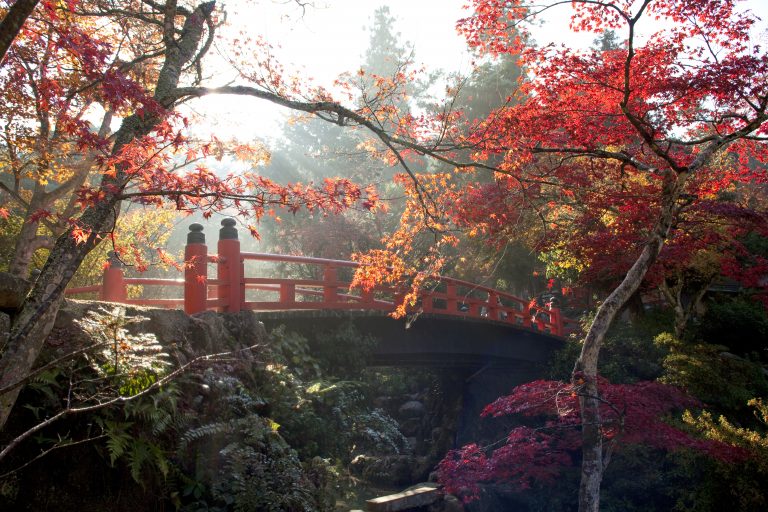
Momijidani Park is a beautiful park located at the foot of Mt. Misen. More than 700 maple trees thrive in the park, making it a popular spot to enjoy the autumn colors. There is also an old-fashioned tea house within the park where you can rest during your walk or climb around the island. During certain times of the year, many photographers come to the park from all around to take beautiful pictures of the colored leaves and the wild animals that live on the island.
- Address
- 345 Miyajima-cho, Hatsukaichi, Hiroshima Prefecture, JAPAN
Transportation: Shishi-iwa Station [Miyajima Ropeway; ~15 minutes]
07 Mount Misen (弥山)
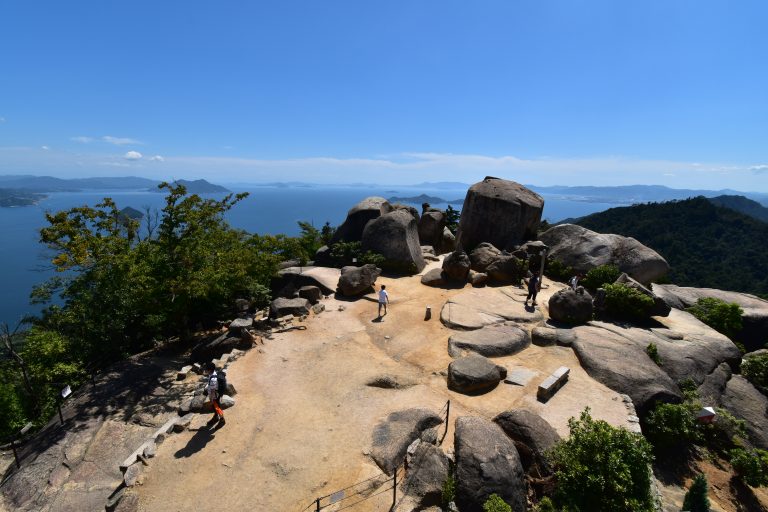
Mount Misen is the principal mountain on the island, standing tall at 535m. Since Miyajima was known since ancient times as a sacred island where gods dwell, Mount Misen has been virtually untouched by humans, leaving intact a unique ecosystem of rare plants and wildlife in their natural habitat. For this reason, the entire mountain has been designated as a national natural monument.
- Address
- Misen, Miyajima-cho, Hatsukaichi, Hiroshima Prefecture, JAPAN
Transportation: Momijidani Station [Miyajima Ropeway; ~15 minutes] or hike down to Momijidani Park in ~90 minutes
08 Sarasvati (サラスヴァティ)
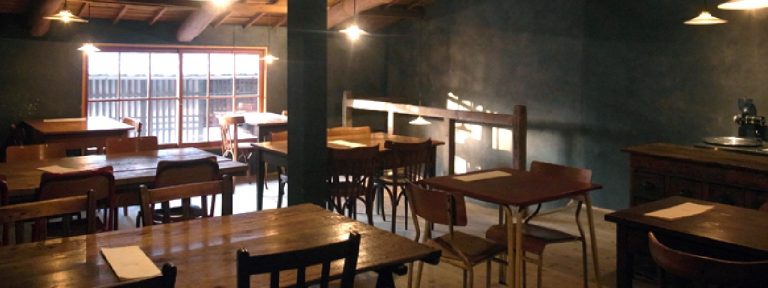
Sarasvati is a café-restaurant located near the Five-storied Pagoda and the Senjokaku Pavilion on Miyajima. The restaurant is owned by Itsuki Coffee, a specialty coffee shop born on Miyajima, and serves spaghetti and pâté de champagne along with specialty coffee roasted in the store. The restaurant also offers fresh and tasty oyster dishes, making the most of its location on Miyajima. The combination of great food in a beautiful location makes it a popular restaurant visited by both tourists and locals living in Hiroshima.
- Address
- 407 Miyajima-cho, Hatsukaichi, Hiroshima Prefecture, JAPAN
Lodging: Kinsuikan
Day 2
01 Kinsuikan (錦水館)
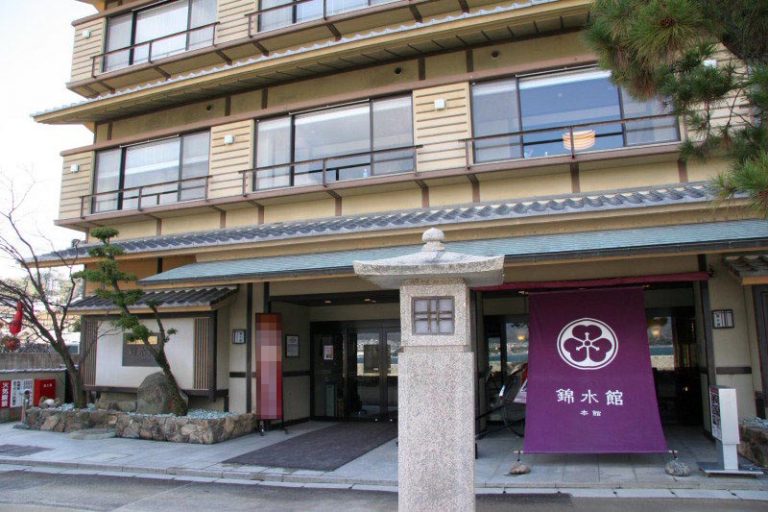
Kinsuikan is a fancy, traditional ryokan located minutes away from Miyajima’s famed Itsukushima Shrine and bustling Omotesando shopping arcade. As one would expect from any ryokan, Kinsuikan offers exquisite meals in lavish dining rooms as well as hot springs with healing properties, and even day trippers can bathe in the afternoon or evening. The rooms also feature views of either the Seto Inland Sea or the town, and guests can even order room service so they can enjoy the high life in solitude.
- Address
- 1133 Miyajimacho, Hatsukaichi, Hiroshima Prefecture, JAPAN
Transportation: Onomichi Station [JR Ferry & JR Sanyo Line; ~165 minutes]
02 Oyatsu-to-Yamaneko (おやつとやまねこ)
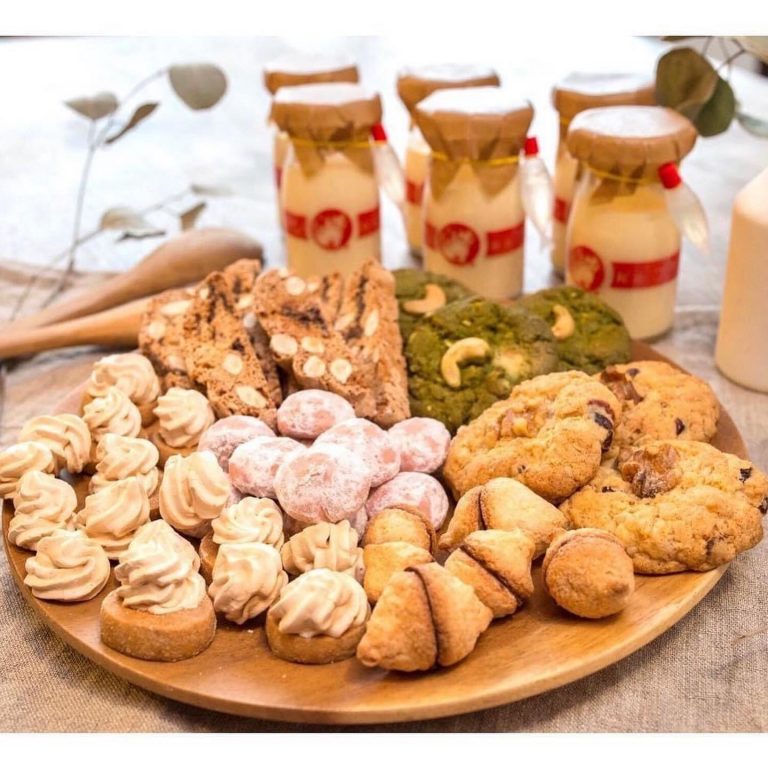
The store specializes in sweets and is located a three-minute walk from JR Onomichi Station. The store does not have a café space, so you must take your sweets home and eat them at your hotel or eat while walking. The store’s showcase features the signature “Onomichi Pudding” as well as baked goods such as cookies, biscotti, and scones, all of which are made with the finest ingredients and are healthy for the body.
- Address
- 3-1 Higashigosho-cho, Onomichi, Hiroshima Prefecture, JAPAN
Transportation: Senkoji Summit Observatory PEAK [Senkoji Ropeway, ~10 minutes]
03 Cat Alley (猫の細道)
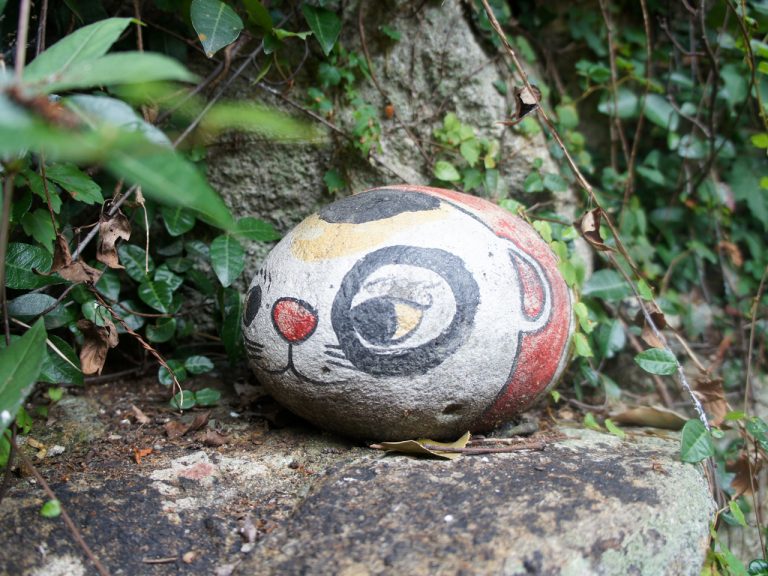
Cat Alley (Neko no Hosomichi) is a narrow alleyway that stretches about 200 meters from the Ushitora Shrine to the three-story pagoda of Tenneji Temple in Onomichi. It is a tourist attraction nicknamed “Neko no Hosomichi” (the narrow path of cats) as the number of Fukuseki Neko, the works of author Shunji Sonoyama, started to increase in this alley. As the number of these cats increased, the area was nicknamed “Neko no Hosomichi (Cat Alley).”
This is located in a residential area,
so we encourage that you visit
during the daytime.
- Address
- 19-26, Higashitsuchido-cho, Onomichi, Hiroshima Prefecture, JAPAN
04 Miyachi (めん処みやち)
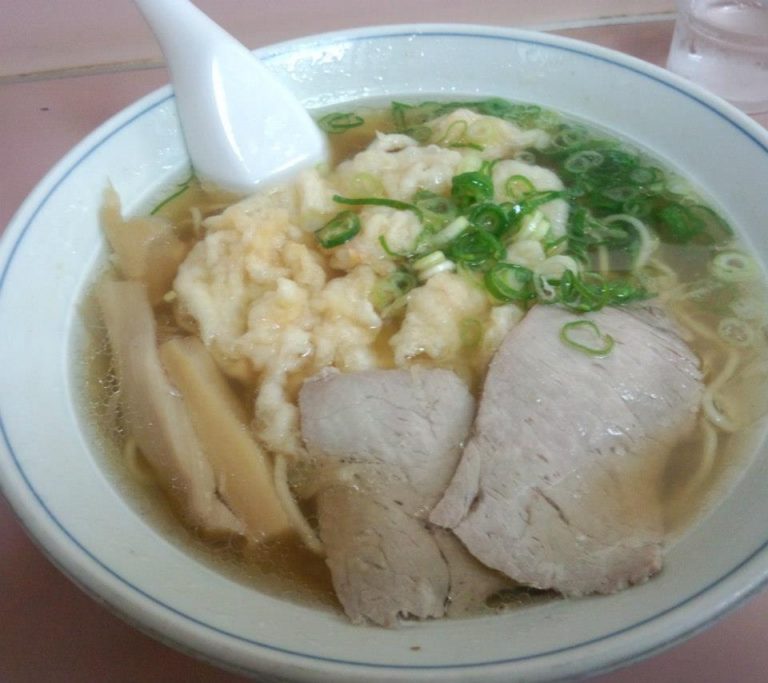
Miyachi is a long-established restaurant in Onomichi that has been in business for over 75 years. The menu includes udon, soba, ramen, and almost all other types of noodles, but the most popular menu item is the chuka soba (ramen), a simple dish topped with char siu pork, pickled bamboo shoots, and green onions. The soup is so good that word of mouth has spread and it has become a popular restaurant visited by many tourists.
- Address
- 1-6-22 Tsuchido, Onomichi, Hiroshima Prefecture, JAPAN
Transportation: Kyogahama Bus Stop [JR Sanyo Line & Bus; ~50 minutes
Lodging: Bella Vista Spa & Marina Onomichi
Day 3
01 Bella Vista Spa & Marina Onomichi (ベラビスタ スパ・アンド・マリーナ 尾道)
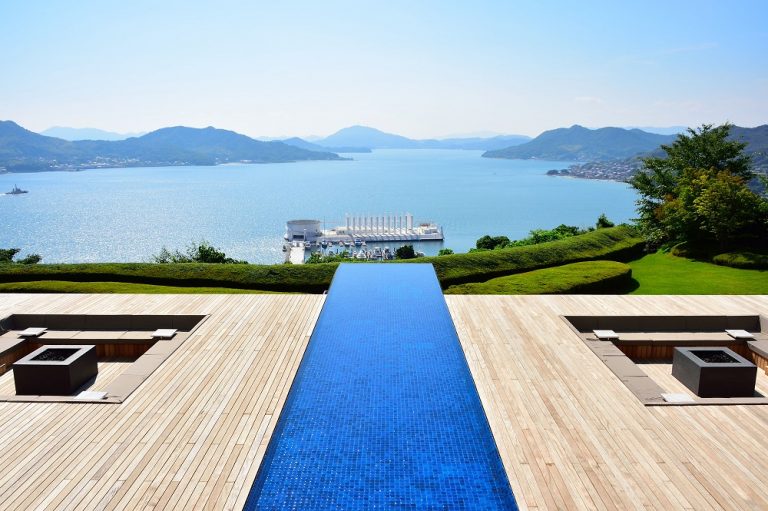
Bella Vista Spa & Marina Onomichi is a seaside resort located on the eastern extreme of Onomichi City, actually closer to Fukuyama than to Onomichi’s city center. A free shuttle bus at Onomichi Station whisks overnight guests away to a coastal paradise equipped with hot springs, massage parlors, delectable dining options, and much more! As it is a significant distance away from the hubbub of the usual tourist sites, this resort is fit for those who wish for a serene and classy vacation to Onomichi.
- Address
- 1344-2 Urasaki-cho Obiraki, Onomichi, Hiroshima Prefecture, JAPAN
Transportation: Tomonoura [Bus & JR Sanyo Line; ~85 minutes]
02 Tomonoura (鞆の浦)
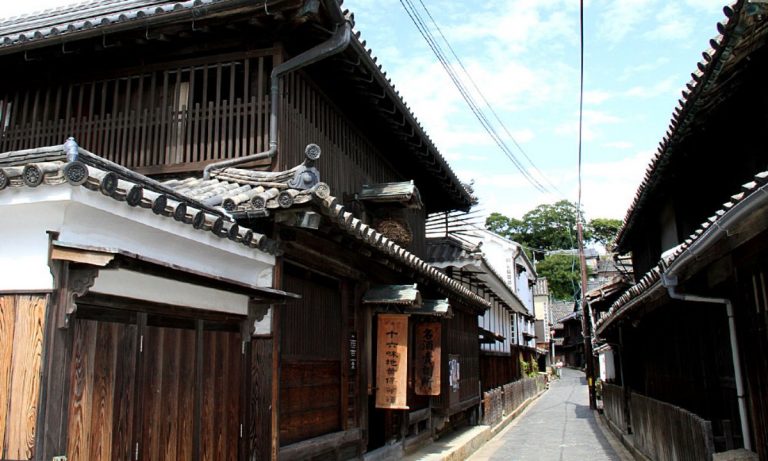
Tomonoura is a port town located along the coast of Fukuyama City. The city is also home to the Tomonoura Museum, which is one of the most popular tourist attractions in Japan. Tomonoura is often used as a stage for movies and anime, and has appeared in such masterpieces as Marvel’s “The Wolverine” and Ghibli’s “Ponyo.”
- Address
- 416-1 Tomo, Tomo-cho, Fukuyama, Hiroshima Prefecture, JAPAN
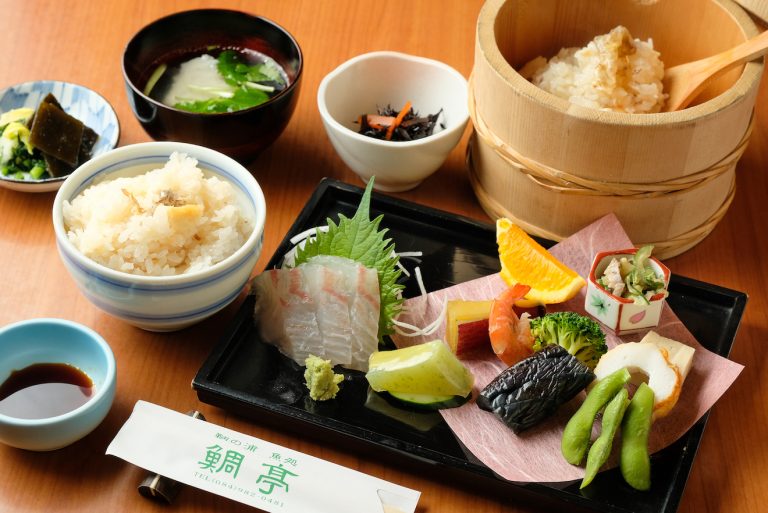
03 Tai Tei (鯛亭)
Tai Tei is a Japanese restaurant located in the Tomonoura area of Fukuyama City. As the name “Tai Tei” implies (Tai being the Japanese word for red snapper), Japanese dishes such as tai-meshi (rice with red snapper) and tai-zukuri (red snapper sashimi), both of which use the famous Tomonoura red snapper, are popular as specialty dishes. The restaurant also offers a wide selection of alcoholic beverages that go well with the light flavor of the Japanese dishes, and at dinner time the restaurant has a lively atmosphere full of the local regulars as well as tourists visiting the Tomonoura area.
- Address
- 550-4 Tomo-cho Tomo, Fukuyama, Hiroshima Prefecture, JAPAN
Transportation: Fukuyama Station [Bus; ~35 minutes]
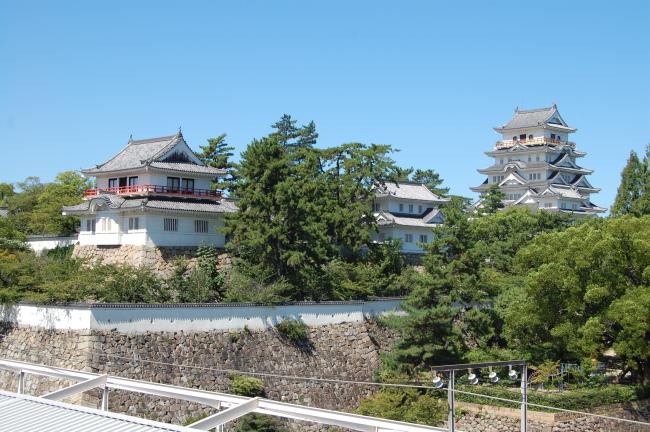
04 Fukuyama Castle (福山城)
Fukuyama Castle is a castle located in Fukuyama City, Hiroshima Prefecture, just a five-minute walk from JR Fukuyama Station, making it one of the few castles in Japan where you can see the castle tower from the platform of a train or bullet train. Because of its beautiful appearance, the castle has been selected as one of the 100 best castles in Japan. The area around the castle has been developed as a park, and art galleries and museums have been built there. In 2022, the castle will celebrate its 400th anniversary and various commemorative events are scheduled to be held.
Until the beginning of August 2022,
due to ongoing earthquake-resistant
construction only outdoor tours will
be available.
- Address
- 1-8 Marunouchi, Fukuyama, Hiroshima Prefecture, JAPAN
Board a Shinkansen at Fukuyama Station bound for your next destination.
Hiroshima Station (広島駅)
2-37 Matsubaracho, Minami Ward, Hiroshima City, Hiroshima Prefecture, JAPAN
Miyajima Omotesando Shopping Street (宮島表参道商店街)
535 Miyajimacho, Hatsukaichi, Hiroshima Prefecture, JAPAN
Tachibana (たち花)
566-1 Miyajima-cho, Hatsukaichi, Hiroshima Prefecture, JAPAN
Itsukushima Shrine: Walk Through Living History
1-1 Miyajima-cho, Hatsukaichi, Hiroshima Prefecture, JAPAN
Itsukushima Shrine Treasure Hall (厳島神社宝物館)
1-1 Miyajima-cho, Hatsukaichi, Hiroshima Prefecture, JAPAN
Momijidani Park (紅葉谷公園)
345 Miyajima-cho, Hatsukaichi, Hiroshima Prefecture, JAPAN
Mount Misen (弥山)
Misen, Miyajima-cho, Hatsukaichi, Hiroshima Prefecture, JAPAN
Sarasvati (サラスヴァティ)
407 Miyajima-cho, Hatsukaichi, Hiroshima Prefecture, JAPAN
Oyatsu-to-Yamaneko (おやつとやまねこ)
3-1 Higashigosho-cho, Onomichi, Hiroshima Prefecture, JAPAN
Cat Alley (猫の細道)
19-26, Higashitsuchido-cho, Onomichi, Hiroshima Prefecture, JAPAN
Miyachi (めん処みやち)
1-6-22 Tsuchido, Onomichi, Hiroshima Prefecture, JAPAN
Bella Vista Spa & Marina Onomichi (ベラビスタ スパ・アンド・マリーナ 尾道)
1344-2 Urasaki-cho Obiraki, Onomichi, Hiroshima Prefecture, JAPAN
Tomonoura (鞆の浦)
416-1 Tomo, Tomo-cho, Fukuyama, Hiroshima Prefecture, JAPAN
Tai Tei (鯛亭)
550-4 Tomo-cho Tomo, Fukuyama, Hiroshima Prefecture, JAPAN
Fukuyama Castle (福山城)
1-8 Marunouchi, Fukuyama, Hiroshima Prefecture, JAPAN