
Now & New
Hiroshima Motomachi Aquarium: Aqua Alive Museum Demo Dive
It should come as no surprise that Japan, being an island country, places a huge emphasis on the surrounding seas and their wildlife. Additionally, Hiroshima is often touted as a city of water due to its six major rivers, and its famous aquacultural products—oysters and conger eel—definitely help that reputation too. Naturally, this means that waterside Hiroshima ought to have a reputable aquarium, but unfortunately, our aquariums have always been on the more modest side. Up until December 2024, there were only two facilities close to the city center of Hiroshima: the Miyajima Aquarium on the island of Miyajima and the Marina Hop Aquarium on the edge of Hiroshima Bay.
The Miyajima Aquarium is decent but obviously eclipsed by other tourist sites on Miyajima, such as the Itsukushima Shrine, Daisho-in, and Mount Misen. On the other hand, the Mariho Aquarium, despite being smaller and on the edge of Hiroshima City, stood out more due to being cheaper, less crowded, and surrounded by shops as well as an amusement park. Much to the public’s dismay, the Mariho Aquarium ceased operation on December 1st, 2024, and for almost a year, Hiroshima City was without an aquarium. In the meantime, the Pacela shopping center saw the sudden closure of a couple of restaurants in anticipation of something new, and on October 31st, 2025, the Hiroshima Motomachi Aquarium: Aqua Alive Museum opened its doors.
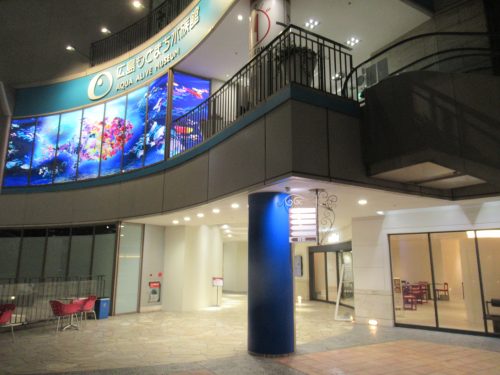 Hiroshima Motomachi Aquarium is right above re:Dine Hiroshima. (Joy Photo / Kevin Peng)
As someone who was a longtime fan of the Mariho Aquarium, I was enthusiastic about investigating its spiritual successor, so after having a light lunch at reDine Hiroshima on the sixth floor of Pacela, I took an escalator up to the seventh floor to scope out the scene.
Outside the Aquarium
Before even entering the Motomachi Aquarium, visitors to Pacela will already be able to see marine animals in the form of pictures and an aquaponics exhibit on the mall’s second floor. What is aquaponics, you ask? I didn’t know either, but the bilingual informational plaque informs shoppers that it is an agricultural system in which fish tanks and gardens coexist to each other’s benefit. Fish waste and leftover fish food and transferred to the soil of a garden, helping vegetables and other plants grow. The water used in the garden runs into a pump filter that cleans the water and directs it back into the fish tanks. Aquaponics saves farmers money and benefits the environment by minimizing resources required for agriculture.
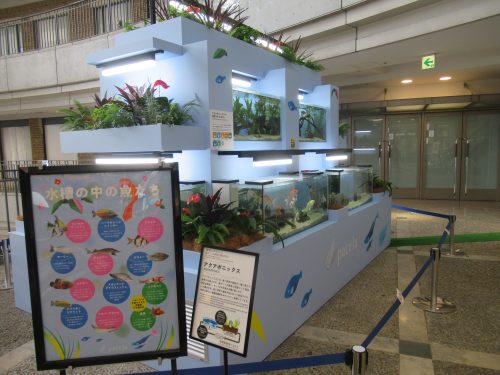 The education begins on Pacela’s second floor. (Joy Photo / Kevin Peng)
That’s not all, though. In the lobby of the Motomachi Aquarium is a free area occupied by the ticket counter, gift shop, to-go counter for the café (the rest of the café is inside the paid area), and the Aqua Alive Gallery, which features photographs of marine life taken by a professional photographer. The photo exhibit I saw lasted from Halloween to January 12th, 2026, and on display were pictures taken by the photographer of aquarium exhibits all over Japan (besides Hiroshima Prefecture). He must have had an expensive camera to have taken such impressive photos; my favorite picture was this one of a fish squirting water from its mouth.
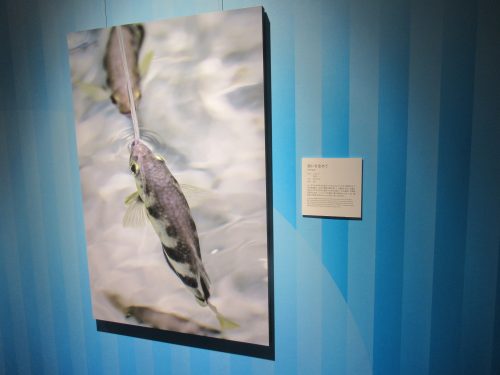 Yes, real life fish can use Water Gun too! (Joy Photo / Kevin Peng)
After seeing all the photos in the gallery, I made my way over to the ticket counter, where I was delighted to find out that it is indeed possible to upgrade one’s single ticket to an annual pass within the same day, just like at the former Mariho Aquarium. Single tickets and annual passes for this aquarium are more expensive than they were at Mariho, but with an annual pass, the more one visits, the more one gets one’s money’s worth. I decided to go for a single ticket first and decide upon leaving whether to upgrade. The woman at the counter showed me into the first room of the aquarium, which was a dark corridor with carp ponds on either side and a mesmerizing projection of autumn leaves on the walls.
Turf, Not Just Surf
The curtain at the end of the Welcome Chamber led to the second area, modeled after a lush, green forest. Here, there were not only fish, but plenty of reptiles, amphibians, and even mammals awaiting visitors. I loved so many of the animals here, but a couple that stood out to me were these poison arrow frogs that reminded me of toys I used to play with when I was little. The blue one on the left evoked memories of some juice drink I used to enjoy, and the one on the right had a distinct pattern loosely resembling a week-old, expired tamagoyaki (Japanese rolled omelet).
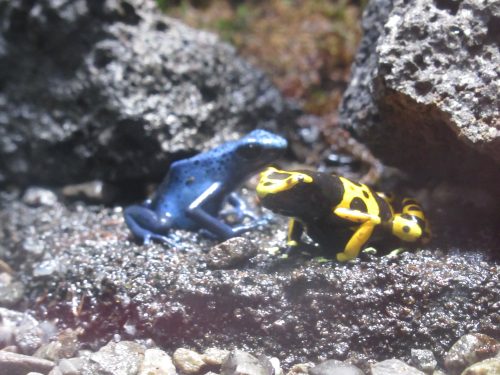 The frogs were so realistic they looked like toys. (Joy Photo / Kevin Peng)
I have a penchant for endothermic creatures, so this blue speckled tree monitor also drew my attention. Reptiles on display at zoos and aquariums are typically sedentary for the duration of my visit, so being able to see this one move made me and the other guests giddy.
In the same area, they also had some colorful birds and green chameleons that blended with their surrounding vegetation. As for other land animals, further ahead in the aquarium was the meerkat enclosure, which is a big hit with visitors of all ages. This one seemed to be diligently standing guard.
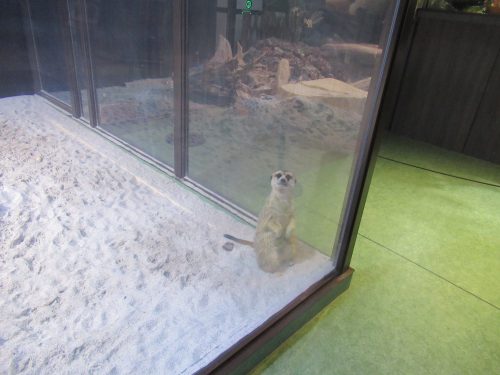 Timon is on the lookout for Puumba. (Joy Photo / Kevin Peng)
Of course, every single one of these animals has to eat sometime during the day, right? If visitors are lucky, they may get to catch a glimpse of an employee feeding an animal. I happened upon these sea turtles munching on pellets, but apparently their eyesight is bad because it took so many tries for one to get the pellet in its mouth. It reminded me of the rabbits on Okunoshima that also have poor vision, but these sea turtles had it worse.
Wander the Sea
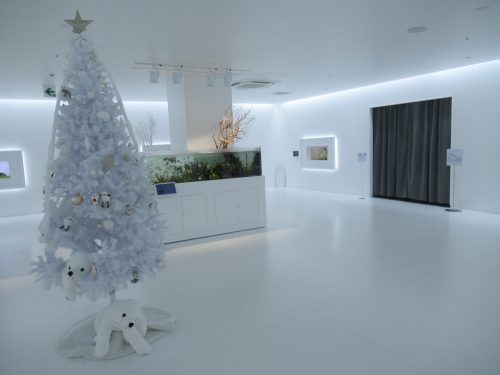
They don’t even need fake snow for this setup. (Joy Photo / Kevin Peng)
The chamber after the Forest was the White room, vibrant and somber at the same time. This room, like some others, has a distinct decoration scheme with props that change with the seasons. Case in point, the room above had a white Christmas tree since it was December, but were I to visit a few months later, I could imagine decorations related to Valentine’s Day or sakura season. It’s not just the rooms that are special, either—the Motomachi Aquarium also houses some unique tank shapes that let visitors view these marine organisms from interesting angles. Check out the clownfish in this spherical tank; this combined with the projected flowers in the background make the whole room a great selfie opportunity!
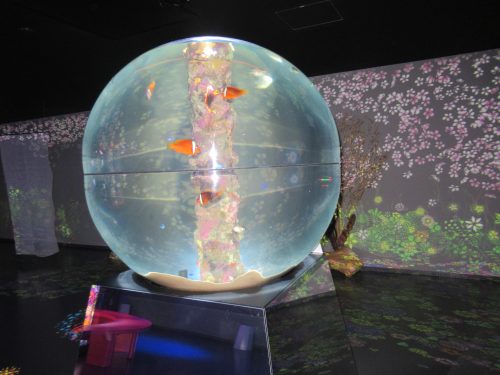
What a waterful world! (Joy Photo / Kevin Peng)
Speaking of clownfish, I also noticed that a considerable number of species from Pixar’s Finding Nemo have taken up residence in this aquarium. In another chamber I found some fish resembling Gill, the leader of the tank gang, and one individual even locked eyes with my camera.
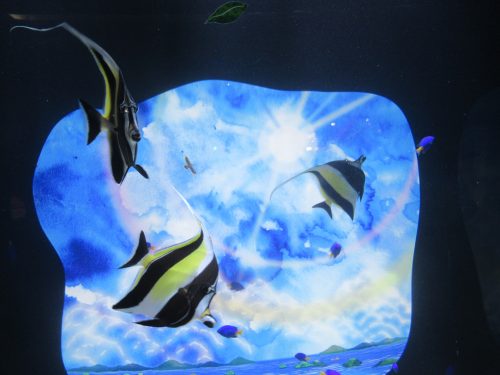 “You in on my escape plan, Sharkbait?” (Joy Photo / Kevin Peng)
For those who wonder if this aquarium has the iconic species from the Mariho Aquarium, rejoice, for the same lovable splendid garden eels have also made their home here. Besides them, there are jellyfish, lionfish and mudskippers to be found at the Motomachi Aquarium, though I doubt they are the same individuals from Mariho.
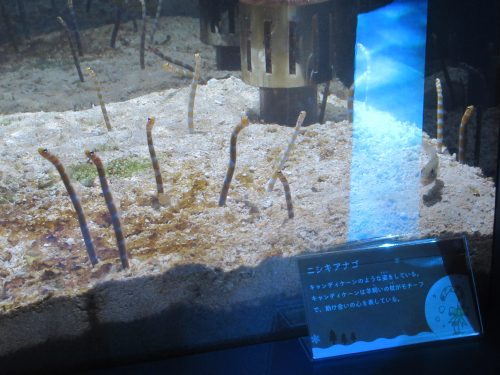
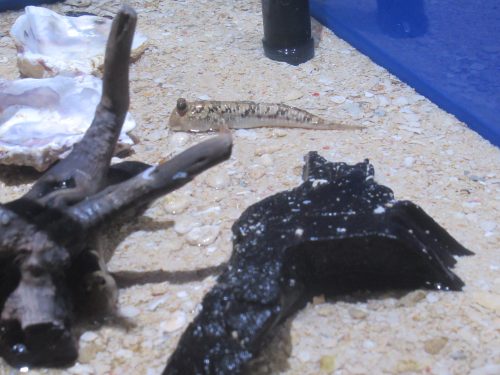
Serpentine fish on the left, jumping fish on the right. (Joy Photo / Kevin Peng)
Elsewhere in the facility was a counter where customers can try their hand at pearl extraction from live oysters. For a small fee, you too can pick one fresh oyster, then, with the guidance of a staff member, pry it open to hopefully reveal a pearl you can take home with you.
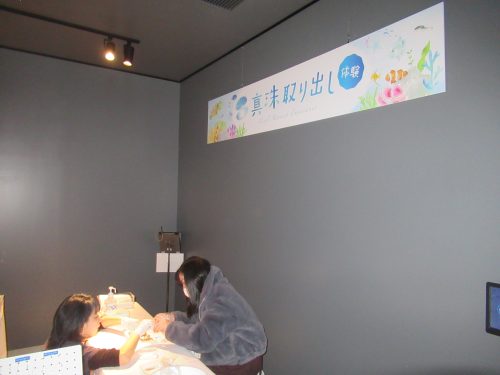 Yes, you can indeed buy jewelry at the aquarium. (Joy Photo / Kevin Peng)
Eventually I came upon the penultimate room, called “Zipangu,” which had a traditional Japanese motif. There were goldfish bowls, Hiroshima Castle paraphernalia, and even a suit of armor worn by Mori Motonari, the twelfth daimyo (大名 – feudal lord) of the Mori clan. The café—which has tables for customers to stand while eating—is also located here. I placed my order at the counter and explored the room while they made my food.
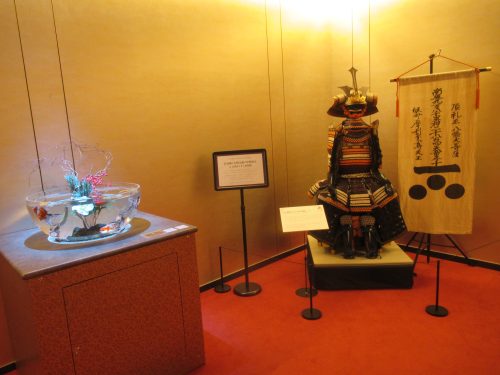 Visitors feel New Year vibes even outside of January. (Joy Photo / Kevin Peng)
As I observed the carp in the big tank, it would seem I was not the only one having a meal in here. I was just in time to watch the aquarium staff feed the carp, which I didn’t plan in the slightest. Before I knew it, my order was ready to be picked up and I could eat alongside the fish, but not before taking a commemorative photo of my food.
Moment of Joy: Mimicry Mealtime
Remember how I said the yellow poison arrow frog looked like a spoiled Japanese omelet? It turns out the Motomachi Aquarium turned the color palette into a chili cheese hot dog! Next to that was a berry cheesecake ice cream sundae made to look like a harlequin shrimp, a star in both the Mariho and Motomachi Aquariums. I not only had a fun time photographing this cute cuisine but highly appreciated the break I got after exploring this aquarium and taking part in the reDine photoshoot below (splitting the food there between all the team members meant I barely ate anything). Another thing worth mentioning is that the café menu is rather extensive considering the humble size of the facility and could compete with the café menus of bigger aquariums in terms of food creativity and diversity. The array of options makes me want to come back again to try some of the other foods on the menu.
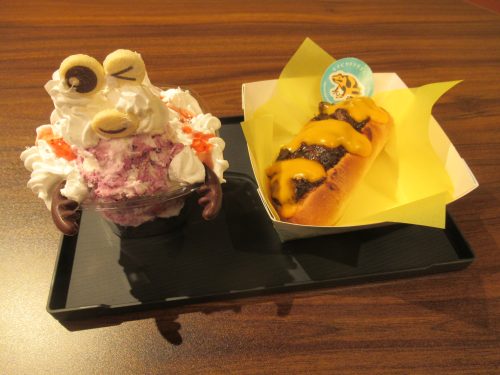
There’s more fun food where this came from. (Joy Photo / Kevin Peng)
Resurfacing With Memories
Before talking about the final room, let me first mention the gift shop back outside in the lobby. Most of the goods for sale are generic aquarium-esque souvenirs that don’t have the name “Motomachi” or even “Hiroshima” on them. However, there are three T-shirts that mention the name of this aquarium, and the red one is actually a collaboration with the Hiroshima Toyo Carp baseball team.
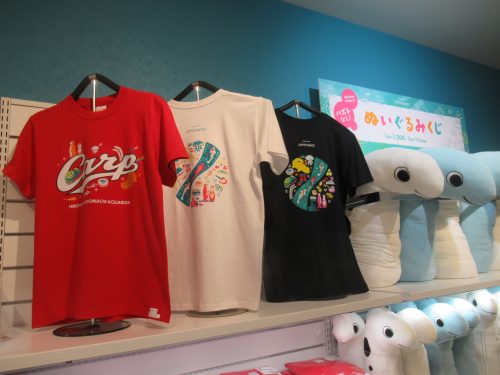 These are two of the best souvenirs in the gift shop. (Joy Photo / Kevin Peng)
Next to the T-shirts on display was the stuffed garden eel plushie lottery game, which is popular with families that bring their small children. It costs ¥1,200 to play, and everyone is a winner. Participants pull a lottery ticket from a big, plastic sphere with air constantly blowing through to make the tickets fly and circulate in midair. After snatching a ticket from the air inside, the participant opens the ticket to reveal the level of prize won. The stuffed eels on the top shelf are the grand prize, the second shelf houses the second-prize eels, and stuffed eels about half the thickness of the second-prize ones are given out as third prize (or a consolation prize, depending on how you want to look at it). Given the average price of a stuffed animal in a gift shop, I would say that even the third prize is worth the cost of playing this lottery, so whether one visits with kids or not is irrelevant.
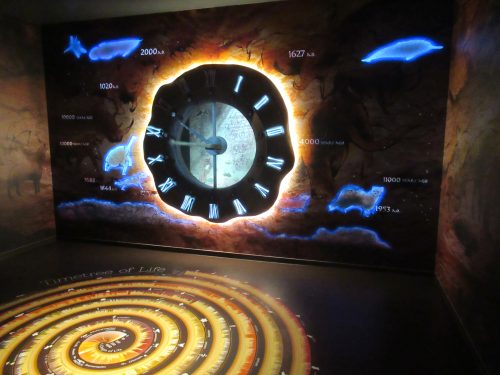 Only time will tell which species stay and which ones go. (Joy Photo / Kevin Peng)
I’d like to conclude this story with what I experienced in the final room of the aquarium: a message regarding the history and potential future of life forms on Earth. A seemingly British man who gave narrated in both Japanese and English stated that on average, a species goes extinct every twelve minutes. The display shows animals going as far back as the ice age, and how countless creatures—familiar and unfamiliar—have vanished forever over the course of natural history. One last informational plaque by the exit reminds visitors to contemplate the value of every species on Earth as well as life itself—an impactful message to wrap up an aquarium visit.
Needless to say, I decided to upgrade my single ticket to an annual pass that evening. It was a bit of a lengthy process since the annual pass is digital and must be purchased online, but at least I know I won’t ever have the problem of forgetting a card at home (which could happen with the Mariho Aquarium’s physical annual pass).
And now, to answer the question I had on my mind before entering: is the Motomachi Aquarium a worthy successor to the Mariho Aquarium? The short answer is no on account of the price, resident species, and surrounding facilities, but it gets pretty close. Some merits Motomachi has that Mariho didn’t have include: a café inside the aquarium, a more convenient location downtown, and a digital annual pass that one can keep as a shortcut on one’s smartphone. Overall, my demo dive left me with a great first impression of the Motomachi Aquarium, and with my annual pass in hand, I look forward to repeat visits in different seasons to see how it changes over the course of a year, just like I used to do with Mariho. If you’re in downtown Hiroshima with kids and are looking for brief intermission between shopping malls, now is a better time than any to go on an aquatic excursion on Pacela’s seventh floor!
Written by the Joy in Hiroshima Team